Saturday, January 24, 2015

The Happiest Place on Earth and Measles


 A recent outbreak of measles has been linked to the Happiest Place on Earth--Disneyland. 48 of the 68 reported cases of measles has been linked to visits to Disneyland between December 15-20 and Disney has confirmed that 5 of its employees have also contracted measles.
    In 2000, the US had declared that measles had been eliminated from inside its borders. However, last year was a record breaking year of reported cases of measles. Turns out, “elimination” means does not mean that there were not and will not be more cases of measles inside its borders. Rather, it means that the it is no longer endemic and any more cases would be from those visiting the country. In fact, the CDC defines measles elimination as 12 months or more without “continuous disease transmission” in a geographic area.

    Before 1963, when vaccinations become relatively more routine, measles infected 3-4 million people each year. Since the elimination in 2000, roughly 37-220 cases have been reported in the US each year. In 2014, however, the number increased to 644 cases.
   
 This recent outbreak has brought back the debate about vaccinations. After a paper came out in 1998 arguing against vaccinations (which was retracted in 2012), the anti-vaccination movement has arisen. Many argue that getting vaccinations would be similar to injecting their children with “poison”. Some even cite the retracted paper and claim that by getting their children vaccinated they are setting them up for autism (even though research done since then has proven that vaccinations are not directly linked to those who develop autism later).
    The vaccination records of only 34 of the infected are known, and all but 6 of these 34 are not vaccinated. California public health officials are telling the public that the best way to prevent yourself from contracting measles is to get vaccinated. If you already got the vaccine, then you have nothing to worry about when it comes to the measles outbreak.


My Question to You:
Do you agree or disagree with parents getting their children vaccinated? Why?
Would you still go to Disneyland despite the outbreak? Why or why not?


Friday, January 23, 2015

Are Relations with Cuba Even Possible?

       
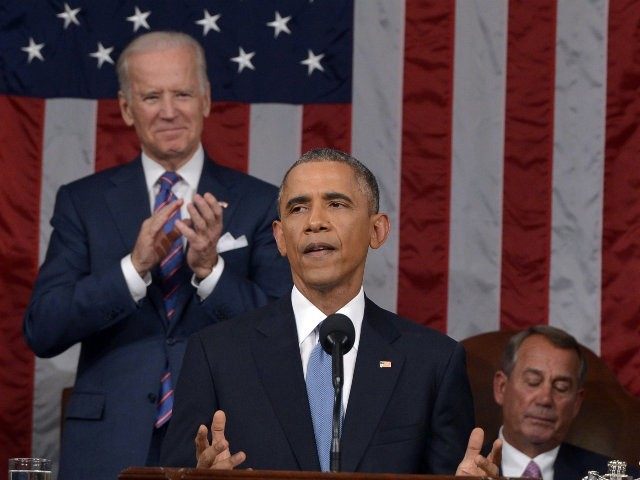
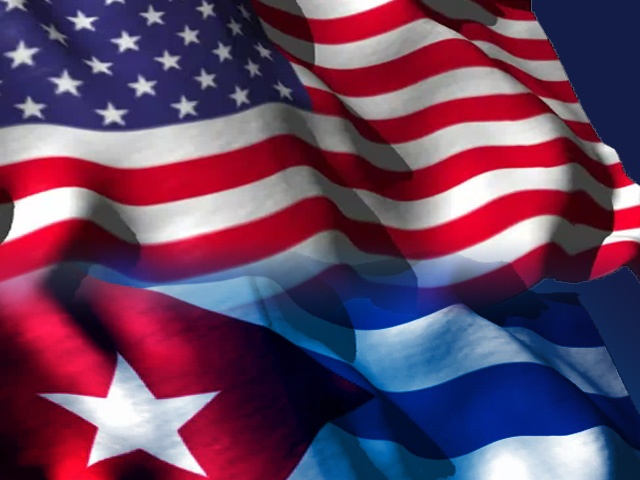
After Obama’s State of the Union speech, it left many very optimistic for the future of foreign policy especially for the reuniting of the governments of the US and Cuba. (Personally I believed this proposal to be a no brainer; It would be a bipartisan agreement and that we would just resume our previous relationship.) This is however a much more difficult situation then the very optimistic president originally gave off. Though both governments are optimistic in resuming a relationship, there are large matters where both countries hold very different points of view. Such matters include human rights violations and the fact that Cuba is a socialist single party country or in other words a dictatorship. Cuba has also been known in the past to aiding terrorist and therefore is on a US list of countries that we directly say we do not trust. Beyond these large points of controversy; there are matters of establishing embassies and determining how migration will work between the two countries. Regardless of how optimistic the two countries are there is going to be a long path in negotiations and the usual plan of pressuring another country will not work in changing Cuba’s policies.

Other than lifting the embargo, what do you believe is the most important steps in resuming a healthy relation with Cuba?
Assuming that congress lifts the embargo, how will this new economic relation effect our own economy?

Do you believe that Obama’s main intent to resume relations with Cuba is to ensure its end of supporting terrorist activities such as aiding ISIS, Russia, and North Korea; will the US even be able to change Cuban foreign policy if they still do knowing that or 50 year embargo was not successful and we have very little leverage now.

http://www.washingtonpost.com/world/the_americas/us-cuba-begin-talks-aimed-at-ending-decades-long-estrangement/2015/01/22/cda610b6-a1ba-11e4-91fc-7dff95a14458_story.html?hpid=z1

Thursday, January 22, 2015

Half of America likes Obama!


(thedailybanter.com)
New polls have come out showing that President Obama's approval rating has reached 50%, almost a 10% increase from his 41% approval rating in November during the midterm elections. This is the biggest approval bump since the mission that killed Osama bin Laden in 2011 (Washington Post).

While these numbers still lie under a majority, as we've learned in class, it's extremely common for president approval ratings to fall during the 2nd year of his second term. This is because people generally are ready for a "change" by this point and the initial hype of the president has subsided, along with the initial hope that this president shall be the one who turns everything around. After the once idealistic goals become implemented into real programs and legislation, people will inevitably get pissed off that it wasn't exactly what they were promised or it isn't working the rosy way they believed it would.

The Washington Post article also correlates this approval bump with the prospering economy. As we've learned in class, "It's the economy, stupid." In October, 27 of the sample size rated the economy in a positive light; this recent poll revealed that that number has now jumped to 41%. Furthermore, 91% of those who support Obama's economic record also approve of him in general. When the economy is doing well, everyone loves the president.

Questions:

1. Do you think there are any other reasons behind the spike in approval?
2. Do you think Obama is deserving of this high rating (due to his successful economic endeavors) or do you think he just got lucky?

Obama's free two-year community college proposal

(Denver Post)


In his State of the Union Address on Tuesday night, President Obama called for free community college education as part of many new, bold steps to helping the middle class economically and socially.

On the surface, this plan seems laudable and promising. It is not hard to believe, after all, that a high school degree promises less and less success in the job market as it used to, and not only drags people behind individually but as a nation as well. In his speech, Obama claimed that "by the end of this decade two in three jobs will require a some higher education." This program would save the average student almost $4,000 and help anyone from teenagers to veterans. However, proposals in speeches like this one are always given to simplicity and ambiguity, so I think it's ultimately too early to deem this program good or bad or viable.

First, I fear that without stricter guidelines this program may waste tax dollars on students who are not actually in need of financial aid, since this applies to all students. Many times students go to community college because they cannot afford private colleges, but can afford community college. Furthermore, the administration claims that the average full-time student would save $3,800 in tuition per year, which is applied before other federal aid is calculated, such as additional Pell Grants, for example (insidehighered). The lack of targeting funds may lead the American government to spending money where it isn't most needed.

Another one of my concerns is the fact that accessibility is only one aspect of getting a college education. It is important to make sure that the students not only can enroll, but that they are also able to succeed in their courses, graduate in a timely matter, and be able to easily apply their degrees into the job market. Obama did mention that community colleges would work directly with companies to make sure the degrees fit the jobs in high demand right now, which I think is a commendable move. However, in the Tennessee and Chicago free tuition policies (which Obama saw as promising, smaller projects of his own) not only reformed the price of a college education, but also offered "close monitoring of student progress, careful alignment of courses to transfer and job requirements, clearer and more coherent programs of study" etc as a part of a larger reform initiative (TIME). I think this is the way to go to guarantee educational prosperity, since it completely follows the student from enrollment to graduation, whereas a $0 price tag only initiates the education process.

My last concern is the cost. The White House estimates this program costing $6 billion a year, with states paying for 25% of this subsidy (TIME). I fear that either states will refuse to raise that much money or that money will only be shifted in the bureaucracy so that previous funds are reallocated to other departments, ultimately not giving the colleges and program much new money.

Despite these concerns, I think President Obama is taking an admirable step forward and creates an open discussion in the democratic party (especially possible presidency candidates) on higher education for all citizens.

Reference:
http://www.whitehouse.gov/the-press-office/2015/01/09/fact-sheet-white-house-unveils-america-s-college-promise-proposal-tuitio

Questions:
1. Do you support Obama's proposal?
2. What concerns do you have for his plan?
3. Why do you think he'd propose such a bold plan when the Republican-controlled Congress will (very likely) not pass it through?

Wednesday, January 21, 2015

2015 SOTU The Economy- Is There Any Hope On Bipartisan Agreement?

With the Recent State of the Union ,Obama spoke extremely positively of his government in all areas especially in the economy and spoke about how bipartisan the parties should agree on his newest reform ideas. For this first blog post I will only be concerned on his ideas regarding the economy.
His biggest concern was improving the economy for the middle class. His plan to do this is with a number of reforms starting with the proposal of mandatory paid sick leave for all employs over a period of seven days. This proposal on the surface sounds like a great idea but the more I thought about it the more I thought that it could really hurt smaller, family businesses that could not afford to have such cover, something I have seen with my grandmothers business.
His next proposal was a bill that would ensure that all women would be guaranteed to be paid the same as men. Something that many think is no longer a problem though when one looks at the statistics it is undeniable that women are being paid less than men for the same job. I believe this could definitely be a bipartisan agreement no only for its great effects in wage equality but its reminder that sexism still exists.
The following proposal instructed a raise to the minimum wage something that he stated was a clear necessity for people to survive in today's economy. I agree that today's minimum wage is not at a necessary level to be able to live off of however with raising the minimum wage does raise concerns of the effects on inflation and its effects on small businesses; will it be beneficial for the lower class and detrimental on the middle class and upper class business owner or will it simply improve the average quality of life- only time will tell.
Obama touched on education afterwards and its necessity for it to be cheaper to solve this problem he is proposing to make community college free. Once again on the surface this sounds amazing however community college is already relatively cheap, people don’t tend having trouble paying for community college, it is universities where people struggle to pay for college and garner up large amounts of debts and is where I believe many wish Obama was lower tuition.  
In accordance with this making education cheaper Obama also proposed being able to lower ones payments  on student loan, 10% of their disposable income once again this raises my question in how he plans on paying for this program and how he would get republican support.
Lastly Obama wanted to help lower income families. He plans on doing this through better child support policies and by ending the tax loopholes for the rich which he states the money could be used for programs such as this child support. My inquiries regarding this how would he get republican support on ending tax cuts for the rich and how will he get support from the republican on the 320 million dollar budget which will be taxing the rich harder than ever necessary to pay for this new child support. While a lot of these programs sound great, I’m not sure how beneficial most of these programs are let alone how he will get republican support on all of the new taxes required to pay for all programs.

How do you feel about Obama’s Economic proposals?( Paid sick leave, women payed the same as men, raise of the minimum wage, free community college, lowering of student loan payments, child support increase, cutting of tax loopholes), What do you like?, what are your concerns? What programs do you think the republicans will pass?

2015 SOTU Address


http://www.cbsnews.com/news/obamas-2015-state-of-the-union-to-do-list/
http://www.huffingtonpost.com/2015/01/21/obama-state-of-the-union-address-_n_6471266.html

     Last night, President Obama gave his annual State of the Union Address. In his address, Obama laid out his to-do list for 2015. This list included making the first two years of community college free, a minimum wage increase, reduction of student loan payments, an infrastructure plan, etc. 
     While many Democrats seemed to appreciate and applaud Obama's speech, Republicans were not as excited. Many leading Republicans shot back at Obama, claiming that he did not address middle class issues. House Speaker John Boehner declared that Obama's "regulatory onslaught squeezes the very middle-class families he claims to be trying to help." While freshman Republican Joni Ernst claims that "The new Republican Congress also understands how difficult these past six years have been." Others voiced their concerns over the fact that President Obama did not address the middle class enough in last night's speech.

My Question to you: In his address, President Obama proposed ideas that have the possibility of helping the middle class (i.e minimum wage increase) but Republicans still claim that he is hurting them. Do you agree with the Republicans on this issue or the Democrats? Why? 

PS: Watch this video of John Boehner's best faces during the SOTU Address


Tuesday, January 20, 2015

Anti-Terrorism- Beneficial or destructive?

David Cameron speaking at a press conference with Barack Obama in the White House
http://www.bbc.com/news/uk-politics-30856793

After the recent Charlie Hebdo attacks in France, anti-terrorism defense has increased exponentially along side with anti islamic sentiments. After the massacre in paris, belgium police officers had another fire fight with suspected islamic extremist leading to multiple deaths and wounded- further escalating the anti-islamic sentiments. Such sentiments have also led to anti islam protest in Prague along with another anti islam protest in Germany that was called off because of threats of violence. There have also been protest against Charlie Hebdo in Palestine where the french flag was burned and in Gonzy where there is a large muslim community in Russia. With this growing tension, EU foreign policy chief Federica Mogherini has announced that they will start to reach out to other countries affected with terrorism such as Turkey, Egypt and Yemen to share intelligence on activities and airliner passenger information to aide with “security and anti-terror co-operation". she also added the necessity to improve communication with the arab speaking world to better understand their culture and there messages.


However peaceful those action plans have been there are also more direct action taking place as a result of the recent terrorist attacks beyond the massive increase of police in the EU. David Cameron the English Prime minister has recently visited the US to have discussions with Obama over the anti terrorism push back. They spoke of the poisonous fanatical extremism and how they will fight the long struggle to patiently defeat terrorism, and states that they will confront terrorism wherever it appears. Though both the EU and David Cameron's discussion were mostly directed about confrontation of terrorism domestically, with his language such as "confrontation" does not stop me from thinking that with these growing escalation and the recent attacks has acted as a catalyst for future “war against terrorism” or continuation of such war against such groups as ISIS. With police and anti terrorism forces quick to the trigger  we may being seeing a lot more violence to come as we have seen in belgium.


On the positive side with these attacks we may be merely bringing up wounds and hatred from the past more to light and give such communities a chance to correctly heal such wounds and gain better connection with the arab world as the EU foreign policy chief has proposed.


Do you believe these past events mark the beginning to better relation with arab countries to prevent terrorism or are merely acting as a precursor to future war and violence between US and EU forces against terrorist and Arab countries with large Muslim communities.

With The last visit of Cameron Davids Prime Minister of England in the US, do you think this marks a point of growth of US intervention in anti terrorism activity, if so to what extent?

http://www.bbc.com/news/world-europe-30875705
http://www.bbc.com/news/uk-politics-30856793

Open Thread for SOTU Responses

Use this space to respond to the SOTU speech live or immediately afterwards if you wish. Once the official bloggers for this week post about the speech (presumably on Wednesday or later) then please respond or contribute to those threads.

Thursday, January 15, 2015

Do Millennials Matter in US Politics?

To put it simply, a millennial is anyone who has reached adulthood beyond the year 2000. Millennials, also known as Generation Y-ers, are the latest victim of a trend that history often repeats: the older generations blaming their problems on the latest one. And while previous generations picking on the newer is a phenomenon that has existed since the beginning of time itself, a startling trend has appeared with the newest generation-- its ability to participate in politics.

Some more left-wing political pundits are critical on the issue of millennials' recent lack of voting participation in the 2014 midterm elections. They claim that the extremely low rate of people under 30 (which is by no means unusual, as this trend pops up every now and again) had an effect on the majority-Republican House that the midterms resulted in. While there is no doubt that many millennials do have right-wing beliefs, there is also substantial evidence that younger voters are more likely to identify as Democratic in their first few votes.

As said before, though, younger voters have maintained their absence in major elections not withstanding the Presidential elections every four years. This has lead to some believing that millennial's poor participation in the 2014 midterms would not have affected the elections any more than it would have the past midterms as well. A multitude of factors play into young Americans withholding their voting powers, such as low approval rating of government, lack of time in juggling school or work, or general apathy.

Questions:

Would a higher percentage of young voters participating in the 2014 midterms have changed the outcome of the election?

Why do you think millennials aren't voting?

Do you believe young voters have little effect on politics?

Wednesday, January 14, 2015

New Year, New Goals

(Washington Post)

The Democratic leaders are taking a bold step ahead by starting this year off with an aggressive new "action plan" to reallocate much of the wealth from the extremely rich to the middle class through new taxes on the former and more tax breaks on the latter. Last year, Democrats were criticized for having a lacking or weak approach to income inequality issues, so many see this as a way to toughen up and readjust their stance on the issue.

This plan hopes to also help boost wages and share economic growth (a growth that has recently been only heading more and more towards the top 1%). Many Democrats, such as Sen. Elizabeth Warren, believes that this bill is only evening out a rigged playing field that is in favor of the rich and powerful through special interests and loopholes (see Wall Street bankers).

With the Republican party majority in Congress, it is evidently unlikely that this radical bill will pass through either chamber. However, as we've learned in class, the motive for proposing a bill in Congress isn't always for it to just get passed. Often times, one party will draft particularly partisan bills just to make a bold statement and set the grounds for debate, which is what I think they're doing in this case. This article also mentions that the Democrats in Congress are hoping to use this bill as a leeway into crafting an alternative, less severe, bill that stops GOP plans to cut tax rates for top earners.

http://www.washingtonpost.com/business/economy/democrats-in-a-stark-shift-in-messaging-to-make-big-tax-break-pitch-for-middle-class/2015/01/11/d4438468-9999-11e4-a7ee-526210d665b4_story.html
http://money.cnn.com/2015/01/12/pf/taxes/taxes-middle-class/

Your turn!

1. What other motives do you think the Democrats have to unveil this bill (that will likely get shot down)?

2. Do you agree with this plan?

3. What are other ways the Democrats could possibly go about their goal of evening out income equality through tax cuts?

Is Warren Running for President? Who Knows at This Point


Elizabeth Warren has given conflicting signs on whether she will be contending as a Democratic candidate for the 2016 Presidential election. The Massachusetts Senator and former Harvard professor is seen by political pundits as an ideal choice for the next Democrat to run for the seat in the Oval Office, but so far, there isn't quite enough evidence to prove she desires to go for it at all.

Washington Post's The Fix, among other political blogs, has been covering Warren's supposed consideration for Democratic nominee since rumors began to spread among the politically savvy that the "liberal favorite" was thinking about joining the race as early as 2011. Whether conservative or as liberal as many people claim Warren to be, political bloggers all over the spectrum are going nuts over the Senator's "candidacy."

Of course, Warren is no stranger to being compared or pitted against her supposed rival in the race, Hillary Clinton. The two are strong contenders for the 2016 Presidential race, and while Clinton hasn't 100% confirmed her running, the former Secretary of State has much more of a chance of running than her Massachusetts counterpart.

As a matter of fact, Elizabeth Warren continues to deny running for President, and adamantly at that. Several times over, interview after interview, Warren refutes the possibility of even considering joining the race; like other possible candidates such as former Republican candidate Mitt Romney, skeptics in the blogging world can't quite believe that she's telling the truth, however.

Questions:

Why do you think Warren is denying running for Democratic nominee?

What is your opinion of the media's pitting Warren and Clinton against each other?

Is the media particularly obsessed with Warren's possible candidacy, or do you think other supposed candidates are being treated the same way?

Monday, January 12, 2015

Equal Marriage Advocates Hit a SCOTUS Roadbump in Louisiana


36 states now adorn the legal permission to wed same-gender partners as of 2014. The striking down of the Defense of Marriage Act in 2013 led to almost quadruple the states allowing same-gender marriages. Multiple victories for LGBTQIA couples granted equal marriage rights to states including Colorado, Oklahoma, Kansas, and both Carolinas. The Supreme Court of the United States had been on a roll, striking down ban after ban throughout the year; ten of the 14 states still without equal marriage are currently seeking Supreme Court review to appeal the ban.

Recently, however, marriage equality advocates have lost momentum in one of the newer states to appeal the marriage ban in Louisiana. On Friday, the Supreme Court announced that they have decided to not take the case despite a pending appeal from the 5th Circuit Court of Appeals in New Orleans. LGBTQ rights advocates representing the Louisiana plaintiffs stated in court documents that there is an "intense need” to resolve the issue, which has faced controversy from locals across the state since DOMA had been repealed, and in October, the state court upheld the ban on gay marriage.

According to Supreme Court press releases, none of the other four states will have no action taken on their bans. Equal marriage advocates remain stumped at the decision, but nevertheless will continue to fight the bans until the SCOTUS returns to the cases, if possible.

Questions:

Why do you think the SCOTUS decided not to take the cases in Louisiana or the other four states?

Will this decision stop momentum in gaining equal marriage rights in other states?

Should the SCOTUS return to these cases soon? Why or why not?


Where was Obama?

(us.hellomagazine.com)

This past Sunday, a unity march was held in Paris to honor those recently lost in the deadly terrorist attacks. Over 40 world leaders came together in solidarity with over 1 million people on the streets. However, the United States did not send any senior administrative members to the event. On one hand, the event was planned in only 36 hours, and thus planning a trip for the president to visit on such short notice would have been difficult. On the other hand, both President Obama and Vice President Biden had relatively free schedules that weekend, and Attorney General Eric Holder was in Paris already for security meetings, yet none attended the march.

White House Press Secretary Josh Earnest has publicly announced the administration's regret and mistake in not sending anyone of higher standing to the event. However, many are still upset with the decision, and potential 2016 GOP contenders have been using it as a strong point of blame towards the president and his administration.

Although it was unfortunate that the United States didn't send a higher-ranking representative to the march, I don't think its a terrible deed. It is evident that there is no ill-intent in the decision, and the administration has apologized publicly and honestly for its mistake. It is important to point out errors and blunders that the government makes, but I think this is blown out of proportion (it is/was on the homepage of CNN.) What happened in Paris is horrendous, and President Obama and other officials have offered support and given their condolences. Yes, they messed up, but I think to not accept the apology and instead point blame at Obama (like the possible GOP contenders are doing) is silly and unnecessary. Ultimately, this is about the French people and the horrors they have endured these past weeks. Our focus and concern should be on them, not the U.S. leaders.

http://www.cnn.com/2015/01/12/politics/obama-kerry-paris/index.html

A few questions to ponder:

1. Assuming that you agree the administration made a mistake, (feel free to argue that point as well) do you think the administration's apology was enough?

2. What do you think the administration should have done instead?

3. Do you think the media / certain officials are being over-dramatic about the issue, or are they rightly outraged?

A nation in debt, an American trait or universal?

The year 2015 is still anew for it has only been recently its new years celebration. This doesn't seem to affect Prime Minister David Cameron. Cameron has already devised a purpose for the year. He wants the voters to end the line of debt throughout the ages.

David Cameron did not give a speech about the importance of following a good party or a persuasion for reforms. Cameron instead reminded the voters that the decisions are in their hands because they have the power to vote. He lights the flames of democracy in this manner by creating an illusion of direct democracy. His words although are not absolute in public acknowledgement, he employs tactics of shame into the populace by making them the navigators of the economic train. He says to stay on the road towards recovery or take the path to ruin but really he means if the economic situation worsens it's on the people.

The United States is quite the same. The use of these tactics do not bring consequences one-hundred percent of the time. It has even been used to carve out the United States structure and to refine the government's mechanisms. Franklin Delano Roosevelt's presidency stands as a notable example as he attained three terms while increasing the scope of government along with its power. Currently the economy is doing great but not the people in it. This is do to the delay between recovery and effect. There are risky plans to accelerate it but can those plans end up being the paths towards ruin.

Questions:

How can the people of the United States end the tradition of debt?

What do you think about the economic situation?

What impact does public awareness have on governmental acquisition?

Saturday, January 10, 2015

Political Correctness, Does it hurt the war on terror?

There is a new name for ISIS and it is Daesh. The group has been labeled as Daesh by the pentagon but it only has angered the group itself. Members of ISIS have begun to cut out the tongues of those who are bold enough to use it. Daesh is only a highlight of the power titles can have on individuals and plans.

Herd mentality is possibly arising from the collective calls that have been tossed onto the members of ISIS. People in Islam who do not see the United States as enemies are being corralled into a terrorist group. The government has been quick to make these corrals and the most recent corral is islamic radical terrorists. As a consequence those who are not part of ISIS are finding hostility to be persuaded to join. Not all islamists are bad, surrounding countries with sunni concentrations are not all bad but should they be considered part of the enemy? They are unintentionally providing aid by housing them. Condemn them to a search, jail them and kill them in dozens because of their instigations. Is this what the government is fearing? Hate crimes becoming the center of the priorities is likely but not realistic. This is likely because the government isn't picking a good corral. There needs to be more specificity. Extremists constitute parts of great majorities and there needs to be a straightforward name for the enemy.

Over the years the threat of radicalism has spread like an infection. This new form of terrorism is being fueled by the governments political correctness. Innocent individuals are becoming self radicalized and living in fear isn't helping them stay in neutrality.

Questions:

Can the political correctness drive a Sunni uprising?

How will this play out with the United States effectively calling out to ISIS to come and get it?

What other examples support an argument for either side of political correctness being an obstacle to success?

Bad World, Good Politics

The G.O.P. are now praying for a world spinning out of control in an effort to retain power for the upcoming elections in 2016. In times when the government has been entrusted with great national responsibility in international security affairs, the G.O.P. has been the most likely to be in power.

Some examples that support a world growing chaotic are: the Charlie Hebdo shootingKansas City Gun Shop, and the Fort Bliss shooting. As these issues stack, so will the opportunities for the G.O.P. to earn a continuous status of reign with their advantage in national security. Their dream plan can also end up in the opposite direction. Democrats built up an image of protection with presidents such as Kennedy and Franklin Roosevelt, their image can end up a lot bigger if they end up answering the people's call that arises from G.O.P.'s failure to export stability overseas.

The G.O.P. now has to overcome it's internal struggle within the congressional houses, a developing cyber war and nuclear threats from North Korea, and rising hostility from Russia.

Questions:

Is there a new cold war lurking in the future?

How likely do you think the G.O.P. is to be able to secure a win in 2016?

What campaign tactics will the Democratic Party use to counteract the G.O.P.'s advantage in National Security?

Wednesday, January 7, 2015

John Boehner dodges the Boot, G.O.P. on the road towards dissidence.

G.O.P.'s elating Tuesday took a turn for the worst when Boehner's reelection as speaker suffered a loss of majority vote. Another organized attempt to kick him off his seat nearly created a downfall for John Boehner but the opposition failed to keep unity and high numbers.

Boehner won his reelection as Speaker of the House will this less than a majority vote. Wins like these are rare for Speakers of the House and it has only happened on four occasions since 1917. Daniel Webster's sudden addition near the end provided a huge blow to Boehner's leadership. Ultimately, Boehner continues to possess the gavel and within the same day he penalized webster for his actions. Daniel Webster no longer holds a position in the Rules Committee effectively losing a great deal of power.


This quarrel has made evident that the G.O.P. is divided to an extant and since they control the majority in both house, the senate is in a state of division. Legislature will be traveling on tough terrain as long as the division persists. With Fiscal conservatives and Tea Party augmentations lurking in the back, the G.O.P. is headed for public dissatisfaction. With the people's habit of blaming the majority party, the G.O.P. is destined to face another streak of election losses.


Questions:

What tactics will the G.O.P. issue to prevent public opinion from reducing their reign?

FreedomWorks’ Matt Kibbe said, "We knew going into this fight that it would be a David versus Goliath effort...," What reasons do they have for fighting a battle they can't win?


What justifies the opposition to eliminate Boehner?

Tuesday, January 6, 2015

North Korea has a 6,000 member Cyber Army in storage

The United States has punished North Korea with additional sanctions in response to the Sony hack. These sanctions aim to go after the North Korean government officials, and the Intelligence and cyber operations. These are suspected of being behind the Cyber attacks but now South Korea reveals the 6,ooo member Cyber Army.

The number alone is overwhelming but added to the threat is North Korea's possible mainland nuclear strike on the United States. The power of North Korea's grip on cyber specialties has been experienced and if the Nuclear Research is anywhere near the same, should we truly find discouragement and develop fear? North Korea's nuclear tests since 2006 have fallen short of capability and have been expected to remain the same.

Despite being in a stasis of reserve, the North Korean Cyber Army enacts detrimental delays to South Korea in its development. The nuclear age of warfare is now capable of fully transitioning into an age of cyber annihilation with North Korea being the most equipped to stand on top. In 2013, the force used against South Korea had been 3,000; therefore, in one year alone the collective power doubled. North Korea denies the Sony hack but mysteriously warns of greater threats in the mist ahead.

Questions:

If North Korea continues to carry out attacks in the United States through the cyber world, will the next potential target be another warning or will it be aimed at substantial damage?

Is North Korea's nuclear development and cyber superiority capable of causing enough damage to cause North Korea to be added to the list of terrorism?

Further sanctions are only failing to quell the problem, the economic squeeze placed on North Korea long ago has not been able to render it dead in its tracks in acts of cyber vandalism, with this in mind, what new course of plan can be carried out to deal with the pimple to progress?

Saturday, January 3, 2015

In an effort to change legislation, the G.O.P. turns to the courts


As they prepare for their upcoming Tuesday takeover of congress, Republicans are looking to aggressively limit and undo Obama's legislative actions, not through legislation, but through the courts.

From the ACA to environmental regulations on power plants to immigration, the Republicans have been adamant about achieving repeal. In December alone, an amicus brief representing nearly 70 members of congress was submitted saying that the Obama administration had "exceeded the bounds of their prosecutorial discretion and abdicated their duty to faithfully execute the law," while another on the topic of health care subsidies read as saying they were the "most egregious example of the administration’s make-it-up-as-we-go approach to implementing."

It may draw parallels with progressive judges creating new rights through legal interpretation a.k.a. "judicial activism", but there are conservative legal scholars that argue otherwise. Instead, they say, it's asking the courts to restrain the President's erroneous uses of authority or as Patrick Morrisey, the attorney general of West Virginia put it, "it's a call for adhering to the rule of law."

Questions:
Is this new G.O.P. strategy of trying to influence the law through the court system more than just a reminiscent shadow of the judicial activism that was so condemned by conservatives before?
Is this merely congress trying to get another shot at Obama's legislation or do they have a significant point with it's legality?


Gun control advocates taking their battles to the state ballot

A November ballot victory in Washington had confirmed the gun-control movement's new strategy, focus on states in which they can introduce ballot measures. Their introduction of broader background checks in Washington has set the stage for what they hope will be a flourishing point as they embrace their growing support and a bit of an image change (i.e. using gun safety instead of gun control).

After the tragedies of the Gabrielle Giffords shooting in 2011 and Sandy Hook in 2012, gun control group have said that their grass roots support is stronger than ever, even to the point that they outspent the NRA in the Washington election. In 2016, they are already looking to introduce measures in regions such as Maine, Arizona and Oregon.

As they work to refocus their strategy away from the federal government, the National Rifle Association has followed. The extremely vocal interest group has been so far successful in blocking most gun control legislation and even having a part in electing supporters out of office. Already the NRA has headed to court to fight this most recent ballot.

Some of the most recent pew surveys reveal a greater complexity to the american public's' overall opinion. A December 2014 Pew Poll reveals that, for the first time in two decades, over 50% of those polled supported gun ownership over gun control, but a 2013 poll found that three quarters of Americans support an extension of background checks. It makes sense that Americans see value in their right to bear arms, especially in cases of self defense, as well as wanting to keep guns out of the hands of those deemed not responsibly by society, but I'll ask "what do you think?"

Do you support an expansion of background checks?
What's your opinion on gun control advocates changing their chosen route of legislation?
If you support gun control, where should the line be drawn?