Wednesday, September 22, 2010

Short-termitis

Tom Friedman in the NYT:

Studying China’s ability to invest for the future doesn’t make me feel we have the wrong system. It makes me feel that we are abusing our right system. There is absolutely no reason our democracy should not be able to generate the kind of focus, legitimacy, unity and stick-to-it-iveness to do big things — democratically — that China does autocratically. We’ve done it before. But we’re not doing it now because too many of our poll-driven, toxically partisan, cable-TV-addicted, money-corrupted political class are more interested in what keeps them in power than what would again make America powerful, more interested in defeating each other than saving the country.

I agree with Friedman but wonder if he is living in a Cold War era box of relative consensus amongst elites and unable to accept that partisan bickering is actually normal.

On the other hand, previous generations of partisan bickering did not have the automatic feedback loop of polling and a daily news cycle.

Tuesday, September 21, 2010

Has the Tea Party Lost its Grassroots Cred?

This headline caught my attention because we recently talked about this in class. The article says that last week the Tea Party accepted a million dollar anonymous donation. There was a lot of criticism that even though the money was supposed to go to local groups, the central organization was granting the money, so it is still very much led from the top, not the bottom-up.
Do you think they have lost their grassroots reputation? Does the donation have an effect on their claimed grassroots ideals? How do you think will this change in image will effect their efforts as a party?

http://www.cbsnews.com/8301-503544_162-20017179-503544.html?tag=cbsnewsMainColumnArea

Torn Apart - Immigration Helping (?)

This past Sunday edition of the San Jose Mercury devoted the headline and a two page spread to a story called Torn Apart, a piece where a reporter followed the Jimenez-Mota family for a year.

The article and 30-minute documentary can be seen here:
http://www.mercurynews.com/torn-apart

I found it interesting, becuase two of the six children are Aragon students, and another recently graduated. The story follows the family through their struggles in a case for their mother to stay in the country (their father had already been deported).
I think that it is unfair of immigration Enforcements to target families. these people, regardless of their citizenship, claim America as their home and raise their children to take advantage of the opportunities avaliable. they work, and participate in the communtiy like any other American family. I think that the government should create a better system to allow these people to pursue citizenship, rather than live in fear and struggle.

So I want to know your opinion. Should ICE be targetting these families as they do? What should they be doing? Do you think they understand the impact they're having on these families?

27 States Get Bitten By Unemployment Bug

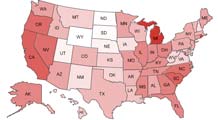
The month of August doesn't seem to have been a good one for those job-seekers out there. Although the national unemployment rate increased only a little last month, on a state-by-state basis, the job picture continued to look grim for states like Nevada, Michigan, and our very own California. These states reported unemployment rates higher than a whopping 12%, while the national average rate is only 9.6%. A total of 27 states recorded higher unemployment rates in August (compared to only 14 states for July).
Nevada had the worst rate for the fourth month in a row (with 14.4%, a record high), while Michigan followed with a close 13.1%. California recorded a 12.4% unemployment rate, and rounded out the top three states with the highest rates.
The western states seemed to be hit particularly hard, with its jobless rate rising to 10.8%. For Western states, "nothing really gets better until the housing market stabilizes," said Steve Cochrane, an economist at Moody's Analytics.
Based on the map below, the more red the state, the higher the unemployment rate.

Is there a light at the end of the tunnel? Or will our battle with unemployment rage on?

To Label, or Not to Label?


As Courtney mentioned earlier, genetically modified salmon from AquaBounty Technologies Inc. may be the first genetically modified animal that is meant to be eaten (with the approval of the FDA). There is now a debate about whether or not the genetically modified salmon should be labeled to notify consumers that the salmon has been genetically altered. The industry representatives want the FDA to continue following the current labeling rules, which only requires GMOs to be labeled if there is "something materially different about the product" (Jennifer Corbett Dooren, Wall Street Journal). The industry representatives would not be in favor of labeling the genetically modified salmon because the labels will cause consumers to think twice about what they are buying and could deter the consumers from buying the genetically modified salmon even though there is no significant "material" difference, it just grows twice as fast as a normal salmon. No, the engineered salmon may not be different if we are talking about the "level of fatty acids," which is the same as conventional salmon, but there is a "material" difference in every single cell of the salmon. And, that "material" is DNA and there is a difference in the nucleic acids of the fish. True, if we considered DNA and the nucleic acids, all GMOs would need to be labeled, but there is a difference that consumers should know about because consumers should also have the right to know that their food has been genetically modified. This is different from the example in the Wall Street Journal article about the labeling of milk from cows that were given a growth hormone to produce more milk because the "milk produced by treated and untreated cows is exactly the same" (www.dairycouncilof ca.org) and the hormones only affect the cow to make it produce more milk. The salmon on the other hand is genetically different in every cell, and consumers ought to know if the salmon they are buying is genetically modified.


Did PG&E Do Enough?


As we all know, there was a catastrophic gas line explosion in San Bruno a couple of weeks ago that was very tragic and devastating. No one debates that fact. But now that we have acknowledge what happened, it is time to look at what happened and analyze what could have been done and/or what should be done now. Unlike the BP in the gulf Oil Spill which caused months worth of "exciting" news for the media to report, in my opinion, PG&E has taken ownership of the problem and has taken appropriate action to counter their mistake.

I don't believe that PG&E was negligent in its handling of the situation. According to fire crews, PG&E was extremely helpful in fixing the immediate problem. Despite this, many people claim that they had reported leaking gas to PG&E without much effect or action on its part. However, at this point, nobody really knows the FACTS, and most claims against PG&E are merely alleged. That is something I cannot make judgment on. State Sen. Mark Leno has vowed to investigate said allegations to see if PG&E needs to be held to more punishments.
To remedy the situation, PG&E gave $100 Million to residents affected by the explosion which, to be honest, doesn't translate to much per household. This to me is very honorable of PG&E and I'm glad they voluntarily paid and took ownership, but to be honest, I don't know how/if that money will translate to the residents affected. I hope that PG&E remains to be faithful to fixing this situation and I hope that they continue to take responsibility for this fiasco. In the meantime I respect what PG&E has already done and I hope it continues such efforts.

Love, The Power Gay

P.S. In case you haven't seen my comments from my previous post, I hope nobody was offended by either the title or anything said in the article. I agree, the tone was rather snarky and forward and perhaps too blunt. But I stand behind the content of what was said, if not the manner in which it was presented. My intention was not to insult anybody, but as Mr. Silton correctly observed "Your intention doesn't mean jack" (irony duly noted ;) ). If you were offended PLEASE let me know so we can have a nice productive conversation on the subject. And again, my sincerest apologies if you were offended. Furthermore, the face-lift line was a JOKE. Materialistic and shallow as it was, that's my kind of humor and I'm sorry if you don't subscribe to said style. Anyway, peace 'yall.

Google Transparency: A Look Into Declining Internet Freedom

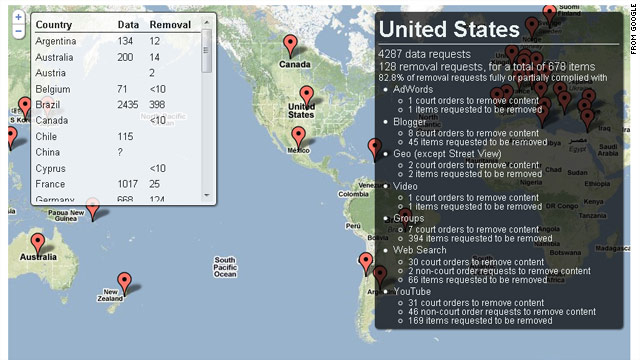
Google's done it again! The week, they released a new online tool called 'Google Transparency.' This new application is an online report that shows internet censorship around the world. And, like all things Google-related, this new tool is definitely holding the spotlight. Contrary to popular belief, countries like Iran and China aren't the only places that have internet censorship. Thanks to this new application, people are able to see that countries ranging from Germany to Turkey to Australia and even to Thailand, all have some type of internet censorship. Google Transparency includes an interactive map that shows how many requests countries have made for Google to block or remove content.
Through this tool, users are also able to explore specific censorship instances. In Thailand, for example, Google was asked to remove YouTube videos that showed the Thai king, Bhumibol Adulyadej, with his feet near his head. Since their national law bans such offensive representations, they opted for the video to be removed, and Google agreed, however the video is still available in other countries. After "Everybody Draw Mohammed Day" (an online protest in support of free speech) earlier this year, Pakistan similarly blocked YouTube for 10 days, as Google Transparency shows. Google said it hopes Transparency will help shed light on how the internet differs from country to country, and on the efforts of nations to block internet content.
However, their are some flaws in Google Transparency. Data about how many times countries have asked Google to remove content, as well as how many times they have requested information about Google users, is not uniform. It also does not include China because providing such information is illegal under Chinese law.
Dorothy Chou, a Google policy analyst who worked on the project, said, "The openness and freedom that have shaped the internet as a powerful tool has come under threats from governments who want to control that technology," and hopes that Google Transparency will be able to protect this internet freedom.
So what are your thoughts on Google's latest tool? Sure, it proves that internet censorship is happening all across the globe. But what is it doing to prevent it?

Monday, September 20, 2010

The "Don't Ask, Don't Tell" Battle Rages On!

For those of you who are unfamiliar with the "Don't Ask, Don't Tell" policy, here's a quick low-down. "Don't Ask, Don't Tell,"sometimes referred to as DADT, is the policy used to restrict the United States military from efforts to discover or reveal closeted gay, lesbian, and bisexual service members. It prohibits any homosexual or bisexual person from disclosing his or her sexual orientation while serving in the U.S. armed forces. It basically means what it's called: Don't Ask. Don't Tell.
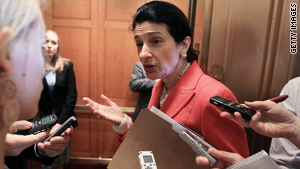
Republicans and some GOP senators are in favor of keeping sexual orientation a secret, and thereby support the DADT policy. Democrats, on the other hand, are fighting to repeal this act, but their efforts are easier said than done. They need a total of 60 votes to open debate on this matter, and the only way they stand a chance of getting the numbers is to earn the vote of either Olympia Snowe and Susan Collins, two Republican senators who are against the bill. However, it seems unlikely that either of these senators will join the Democratic stand, at least for this act.
The debate over this act has brought along hoards of people protesting and rallying for and against DADT. However, the advocate gaining the most media attention over this issue seems to be famous pop singer Lady Gaga. Fighting for the repeal of DADT, this celebrity pushed for the two senators to join the Democratic cause.

So what are your thoughts on this issue? Should DADT stay in place, or should we listen to Gaga's guidance: "If you are not honorable enough to fight without prejudice, go home."?

Genetically Modified Salmon


Although genetically modified crops have started to become more accepted in society, the FDA faces a decision about genetically modified animals. AquaBounty claims that it has genetically engineered a salmon that grows twice as fast, yet is still safe to eat. However, there are naturally many fears associated with genetically modified animals. If the FDA approves the genetically modified fish, then it will open the door to modifying other animals as well. Many also worry that genetically modified salmon may contain dangerous allergens, as it has never been eaten before. Not only a risk for humans, these new genetically modified salmon may have a detrimental effect on the normal salmon. Already a diminishing population, the normal salmon could not compete with the modified salmon. If a modified fish was to intermingle with the normal fish and procreate, then the modified ones would eat more food and have a negative effect on the natural salmon. However, AquaBounty says that the fish will be bred and contained in pools separate from the natural salmon, and will be in better conditions than many farmed salmon.

So, is this a fish or a frankenfish? Should we take advantage of these scientific advances, or stay out of nature? Although this could bring many benefits to food production, it also has the possibility of disrupting the food chain and containing dangerous allergens. This decision will have a HUGE impact on the future, with the possibility of a huge range of animals being genetically modified. Although I am extremely impressed with the Biotech industry and their accomplishments, genetic modification still makes me a little nervous. Although it is beneficial, I don't like the idea of changing nature. However, I am open to opinions and cannot wait to hear how the FDA will respond.

Sunday, September 19, 2010

North Carolina's Death Penalty

The Racial Justice Act is new piece of legislation that was added in North Carolina last year, but the consequences of the law are still being debated. The Racial Justice Act requires "judges to let any inmate off death row if the judge finds that race was a 'significant factor' in the death sentence" and allows "future capital-murder defendants to claim racial bias" (Nathan Koppel, Wall Street Journal). Instead of being on death row, if the convict's case is successful in arguing that racial bias was a major factor in the death sentence, the defendant would have life sentences without a chance of parole. Although I would like to believe that the juries that convict the defendants are not skewed by the race of the defendant, such wishful thinking is just not true. I am in favor of justifying those defendants whose death penalty may have been wrongfully determined, but the Racial Justice Act just makes it too easy for the inmates to claim racial-bias of the jury to delay their sentence. In fact, 152 of the 159 inmates on death row have filed claims about racial bias regarding their death sentence. Not only will the trials take months to process and actually finish, but it is also difficult to prove that "race was a 'significant factor' in the death sentence." Not all cases will have the concrete evidence to prove there was racial bias in the decision of the inmates' sentences. In addition the new law "allows murder defendants to try to prove bias through broad statistical evidence, such as data showing that North Carolina prosecutors. . . have sought the death penalty more frequently against black defendants or in cases involving a white victim" (Nathan Koppel, Wall Street Journal). I just think it's ridiculous that "broad statistical evidence" could even be considered evidence in the first place. It is too easy to overgeneralize and skew the statistics to favor the defendant. On one hand the North Carolina prosecutors may be using the death penalty more for black defendants because the prosecutors are bias, but on the other hand, the death penalty may be used because there are just more black defendants who deserve the death sentence. I completely agree with the North Carolina Republican legislator Sarah Stevens' remark that "you shouldn't try a case on statistics. . . [because] statistics can be manipulated."

Child Passenger Safety Week

Today is the first day of Child Passenger Safety Week. Not really much to say here, other than that the name of the week essentially summarizes its purpose. In reality, the issues of child safety, especially in vehicles, are important ones to take note of. Between January and July of this year, 23 children died as a result of being left or stuck in cars. Another 4 children are killed every day in car crashes. If you have younger siblings, cousins, neighbors, or kids you babysit, take a moment to check out this website about child safety in cars and make sure your family and friends are protecting their important cargo. And always remember: Safety First!

American "spy" back from Iran

Detained beginning in July 2009 and suspected of espionage, Sarah Shourd is finally home, safe and sound. Two other Americans, Shane Bauer and Josh Fattel, have not been so lucky and are still in an Iranian prison. All three were arrested by the Iranian government last summer when they strayed over the Iraq-Iran border on a hike. After having been detained for 410 days, Shourd was released after concerns about her health, which has turned out to be fine. While Bauer and Fattel's mothers are glad Shourd has returned, they continue to fear for and wish to see their sons.
Iranian president Mahmoud Ahmadinejad has said that he may allow the return of the two American men if Iranian nationals held in American prisons are also released. This statement has raised worries that the three innocent Americans have become pawns in an often heated international discussion about Iran's nuclear development. Since the Iranian government has determined Ms. Shourd had no "ill intention" when she crossed the border, and the three Americans were together at that time, it is clear to me that the Iranian government ought to also accept the truth that all three strayed into Iranian territory accidentally and release the remaining two prisoners. On what grounds do they still hold the men?

Christine O'Donnell and her "witchcraft"


There has been a lot of talk lately about the Tea Party and its surprising strength. Christine O'Donnell is the name often associated with this party; she is the Delaware GOP party candidate. Reflecting the conservative views of her party, she has been gaining lots of popularity and hopes to gain a seat in the Senate.

.... and she "dabbled into witchcraft"? When I saw this, I was not sure how to react. This old television clip shows her saying that not only did she experiment with witchcraft, but had a picnic on a "satanic altar." Watch the video above for more details. Should we be worried? I think no. Although this is strange and may be somewhat disturbing to some, it probably does not mean much. Everyone has their interesting backgrounds and she was a crazy teenager at one point like everyone else. Now, if this had been a more recent event, I would be a little worried. However, I am sure that she is no longer attached to these witchcraft ideals. People are always able to dig up dirt in politicians' backgrounds, and I don't think that this clip should be held against her. However, initially, I was extremely shocked.

"Dream Act"


The Development, Relief and Education for Alien Minors bill (Dream Act), which is sponsored by Senator Richard Durbin from Illinois, would give some illegal immigrants a chance to become U.S. citizens. The Dream Act would "grant six years of legal residency to high-school graduates who have lived in he U.S. continuously for five years and arrived by the age of 15. They would become eligible for citizenship if they attend college or serve in the military for two years during the legal residency period" (Miriam Jordan, Wall Street Journal). Although the Dream Act would encourage youths to go to college and join the military, the bill can be likened to an "amnesty program for children whose parents broke U.S. immigration laws" (Miriam Jordan, Wall Street Journal).

In opposition to the Dream Act, Senator Jeff Sessions of Alaska thinks that the Dream Act would encourage more people to illegally immigrate to the U.S. Sessions said, "when you take a policy that says you are going to reward people who have entered our country illegally with a guaranteed pathway to citizenship, and with billions of dollars in financial aid or benefits they would not otherwise be entitled to, what message are we sending?" First of all, to refute Sessions' argument, the Dream Act would not "guarantee" illegal immigrant youths a "pathway to citizenship." Indeed there will be a possible pathway to citizenship, but only if the youth meets the requirements of the act. The requirements include: the youth must not be "deportable under specified grounds of the Immigration and Nationality Act," "has never been under a final order of exclusion, deportation, or removal," and "is a person of good moral character." (www.govtrack.us) Personally I don't think the "person of good moral character" requirement is specific enough. Who is to say what constitutes to "good moral character?" Sure, there are some pretty objective ones like the youth should not have murdered anyone because that's a serious criminal offense, but what if the youth shoplifted once? Does that make the youth ineligible because it's bad "moral character?" The bill should be more specific and define "good moral character." I do, however, agree with Sessions in that the youths would be rewarded with financial aid and other benefits that would cost billions of dollars. Perhaps I partially oppose the bill because I am applying to college and I can use all the money that I can get, but I oppose the fact that the youths would be able to receive "higher education assistance" that would otherwise go to citizens who also need the money. Although I also don't think that we should be "reward[ing]" people who have entered the U.S. illegally, I don't have a problem letting the youths join the military if they are patriotic and want to. The college part of the bill just poses a problem to me because of the whole financial aspect of it and how funds will be distributed. It's hard to say if the Dream Act will actually encourage people to illegally immigrate to the U.S., but it definitely adds to the reasons to do so because of the increase of opportunity to not only get higher education in college, but also to gain citizenship. A striking number is that "about 825,000 youngsters in the country illegally would likely qualify for legal status under the bill" (Miriam Jordan, Wall Street Journal). The military does seem to generally support the Dream Act because, as Louis Caldera said, "recruiters at stations were telling [her] it would be extremely valuable for these patriotic people to be allowed to serve our country."

Saturday, September 18, 2010

The New American Dollar


Is the United States currency in need of a makeover? The people at the Dollar Rede$ign Project think so. They began an online project, collecting designs for new currency. The theory is that new currency, by being brighter, bolder, and new, will inspire American citizens to be more interested in the economy- and spending their money. If the new money was more interesting, the economy would be stimulated as people used their money just to try it out.
A brief history of the American dollar: Before the Revolutionary War, the colonists used English, Spanish, and French currencies. Massachusetts was the first state to issue paper currency in 1690. Our currency was named the "dollar" in 1775, and the central government first issued treasury notes (called Demand Notes) during the Civil War. Beginning in 1862, United States Notes, called "greenbacks" replaced Demand Notes and were printed until 1971. A standardized design that we now recognize was implemented in 1929, and security measures such as microprinting were first utilized in 1990.
The new designs range widely, and many are extremely different from the dark green bills we are used to. Those pictured above are vertical, reflecting a study done that revealed more people deal with their money vertically than horizontally. Others are loosely based on the Euro design in an effort to encourage cooperation with European countries. Some include images of important Americans in history, including Barack Obama, Amelia Earhart, and Martin Luther King Jr. Others list important American values: equality, liberty, justice, creativity. Some have images of transportation, others are just patterns. Each set includes a design for every bill, and each bill has the important information: "United States of American," the denomination, etc.
The people at the Dollar Rede$ign Project are no longer accepting designs, but have opened voting for the best design. They also have created petition to encourage the government to consider a redesign of our American currency to stimulate the economy. Check out the various designs, pick a favorite and vouch for it. Or, express a reason to keep our old dollar design. Is a radically new design worth it, or will it just confuse check out clerks around the country? If you support a new dollar design, what would you like to see on our cash? Why?

Lady Gaga against "Don't Ask, Don't Tell"


Whether wearing an outfit covered in lace, or a dress with meat on it, Lady Gaga attracts a lot of attention. With a wide fan base and amazing publicity, Lady Gaga manages to stay in the spotlight with her music and performances. However, she is also the topic of a lot of controversy. Recently, she has decided to go all out in her efforts to repeal the "don't ask, don't tell" policy. As we all know, the "don't ask, don't tell" policy prevents gays and lesbians from serving openly in the military. A hugely controversial topic, Lady Gaga claims that gays and lesbians are not being treated fairly and urges her "lil monsters" to lend their support. On Tuesday, she urged them to call Senate Majority Leader Harry Reid to schedule the vote. Although this was successful, many Republicans lead by Senator John McCain threaten to filibuster the "don't ask don't tell" repeal which is included in a Defense Department budget bill. On Friday morning, she created a video, to which I have linked to above, in which she urges her followers to call their senators and support the repeal of this policy. In the video, she singles out Senators John McCain, Mitch McConnel, James Inhofe, and Jeff Sessions urging the repeal of "don't ask, don't tell."

Although many people despise Lady Gaga and her attention-seeking ways, I am impressed with her efforts to repeal this policy. I think that she is smart to take advantage of her millions of fans and channel them towards something she believes in. Gay rights advocates have been trying for years with protests, demonstrations, etc to promote equality and have not been able to make a huge amount of impact. However, because Lady Gaga already has the publicity, her voice is definitely heard.

On the other hand, many people believe that this is just not her place. How does she expect to be taken seriously as she traipses around in her underwear? She does not have enough knowledge regarding this controversy to be able to make a convincing argument.

Lady Gaga is definitely an interesting character, but regarding this policy, her motives seem sincere. She actually took a group of homosexual soldiers who had been discharged from the military to the MTV video music awards as her guests. I respect her efforts, although slightly unconventional, and hope that they make a difference in the repeal of the "don't ask, don't tell" policy.

Thursday, September 16, 2010

Meg Whitman Buying Governorship

Meg Whitman gave herself another $15 million dollars today, bringing the total amount of her personal fortune spent on this race to $119 million dollars. This beats the previous record holder, Mayor Michael Bloomberg of New York, who spent $109.2 million, or $186 per voter. Meg Whitman has spent more of her own personal fortune than any politician running for any office in America (national, state, or local) in history. Her Democratic competitor, Jerry Brown, has only acquired $30 million for his entire campaign thus far.
The money Meg Whitman has spent on her campaign could pay for:
  • 1,652 full time Aragon teachers (at the 2003/04 average salary)
  • 29,750 $4,000 FASFA grants
  • 732,026 months of food stamps for 4 person families in California
  • 5,950,000 backpacks with school supplies for underprivileged children
So far, Meg Whitman has spent $3.22 on every person in California, or $5.17 on every registered voter. It seems clear to me that she is literally paying for the votes by simply spending more money than her opponent. History shows us that valid debate is what lives on in history, and results in actual forward progress for the nation. Do deep pockets and a willingness to spend money accomplish the same thing? Is it fair that Meg Whitman can outspend her competitor to such a degree?

1 in 7 Americans lives in poverty

What a shocking and deeply saddening point. 1 in 7. This means that in one of your average classes, there are 4 or 5 people who are suffering from poverty.

In 2008, the poverty rate was 13.2%, or 39.8 million people. In 2009, it had risen to 14.3%, or 43.6 million people. The percent of Americans without health coverage also rose from 15.4% to 16.7%, mostly due to a loss of employer-provided health insurance. Many people (typically Republicans) blame the Obama administration. They claim that it is his fault that the poverty rate increased since the Bush administration, and that his help plans are not working. However, Obama states that it could have been much worse. Through his Recovery Act, he believes that he has kept millions of Americans out of poverty. Although his programs include providing tax relief and income support, many Republicans argue that these are not the right solutions. They say that people need jobs, not just government benefits. The Obama administration has created a new health law that will cover millions more impoverished people, but it will not be implemented until 2014. Therefore, the situation does show signs of improving any time soon.
This is interesting because the country is facing the same issues that it has countless times throughout history. The Republicans are fighting for a "trickle down" method in which money is granted to businesses first so that impoverished people eventually have steady jobs, while the Democrats vie for the "trickle up" method in which impoverished people are given money right away. Typically, I would side with the "trickle up" method, but seeing how badly the poverty rate has increased makes me think twice. Although I understand the reasoning behind the "trickle down" method, I am still uneasy about the fact that money is not given directly to those who need it. If only there was some way to combine "trickle down" and "trickle up" so we wouldn't have to choose...
Thoughts?

Low Vaccination Rates Put Students at Risk


Although California requires that children "must be up-to-date with their immunizations for polio, diphtheria, tetanus, whooping cough, measles, mumps, rubella, hepatitis B and chickenpox" (Katharine Mieszkowski, NY Times), there are loop holes and exceptions that allow children to begin school without their shots. The exception is that the parents or guardians can sign a form that would allow children to not take the vaccines because of a "personal-belief exemption." The percent of kindergardeners who are vaccinated in schools in the bay area is about 92%, which is good because 84-95% is the range that would be considered adequate protection, but there are certain areas where there is a significantly low percent of kindergardeners who have received all their vaccinations, and that poses a risk to the students. Only 12% percent of the kindergardeners at Sebastopol Independent Charter School have all their vaccines and only 29% of the kindergardeners at Anna Yates Elementary School have their vaccines. The low percentage of students who have gotten their shots poses a serious health risk to the children. If one kindergardener falls sick with whooping cough, all the other children who have not gotten the vaccination will be in danger of catching whooping cough as well. And in the case of Sebastopol Independent Charter School, that's 88% of kindergardeners. And, let's face it, kids are dirty. They don't wash their hands if there isn't someone telling them to, they cough and sneeze all over everything, including each other, toys and crayons, and they go on sharing their germs to other kids. Sharing is definitely not caring when it comes to these illnesses. "Marin and Sonoma Counties have reported the highest rates of whooping cough in the Bay Area this year, They also have the highest local rates of personal-belief exemption." Although whooping cough may not be fatal in children over the age of 1, whooping cough can lead to bronchitis, pneumonia, and ear infections that are more serious. It's good that the state gives parents the choice to allow their child to be exempt from the vaccinations because of the "personal-belief exemption," but in this case, limiting this choice would be more reasonable because exempting children from getting the shots endangers the public health and safety.

A Venn Diagram is Worth a Thousand Words


h/t -- Sullivan (which means, a tip of the hat to Andrew Sullivan, whose blog is where I came across this content -- a nice informal way of giving credit to your sources). The diagram itself apparently was original posted at a site called Get Religion and while I believe the number of American Muslims is overstated, the point stands. The extremists control the debate, at our peril.

Wednesday, September 15, 2010

Proposition 19


One of the more controversial propositions that will be in California's November 2010 ballot is Prop 19. Prop 19 is an initiative statute that would legalize marijuana in California and allow local governments to regulate and tax commercial production, distribution, and sale of marijuana. The New York Times reported that Prop 19 gained support from "some former law enforcement officials, including police officers, judges, and prosecutors."

Although there are some viable arguments for Prop 19, Prop 19 also has many weaknesses and consequences. Those in favor of Prop 19 argue that millions of dollars that are paid by taxpayers go toward enforcing the prohibition of marijuana, the taxpayer's money can be better spent catching violent criminals, California can profit from marijuana sales because, under Prop 19, marijuana can be regulated and taxed, there are penalties for driving under the influence, only adults 21 and older can purchase it, there will be safety controls on marijuana, and the drug cartels that deal marijuana would be cut from its funding. On the other hand, the money made from marijuana taxes would probably have to go to repairing the damages caused by people driving under the influence. Even though there would be penalties for driving under the influence of marijuana, the consequences don't stop people from driving under the influence of alcohol. Although Prop 19 would only allow individuals age 21 and over to buy marijuana, I doubt that would prevent teenagers from finding access to marijuana. In addition, Prop 19 isn't specific enough about what is considered driving under the influence. While there is the DUI test and other tests to see if someone is driving under the influence of alcohol, there isn't any description about driving under the influence of marijuana. Furthermore, as opposed to the current law that a worker can be removed from a job if he or she smells of alcohol or marijuana, if Prop 19 is passed a worker who is under the influence of marijuana can't be removed from the job until an accident occurs. Even if I were in favor of legalizing marijuana, Prop 19 isn't specific enough.


For more information on Prop 19 check out:

New Regulations on Shallow-Water Drilling


I think we all remember the oil spill in the Gulf of Mexico. People were outraged as tons and tons of oil leaked into the gulf, killing animals, polluting the water, and wasting oil. Since then, the government implemented a moratorium on deep-water drilling in the gulf and several new regulations on shallow-water drilling. Obtaining a permit to drill in the Gulf used to be a quicker and easier process, but now with the new regulations, many people in the oil industry are complaining. The new requirements include detailed spill response plans and responses to worst case scenarios, which are leading to setbacks and delays. Companies claim that this is costing them millions of dollars and leading to layoffs. An extremely small number of permits have been approved since the spill, but not because regulators are being more selective. Many companies have not even submitted applications for permits because they are so confused with the new intricate rules and requirements. However, the government states that it is not trying to make it harder on the industry, it is just trying to make it safer. Although I understand the frustration of the oil companies, I am not very sympathetic. After seeing what happened in the oil spill, I want the government to take every precaution. Kieran Suckling, the director of the Center for Biological Diversity in Tucson, Arizona states that the oil industry is just going to have to get used to not having a close and personal relationship with the regulators. Being more of an environmentalist myself, I am all for taking extra precautions when it comes to oil drilling and believe that the oil industry will just have to learn to follow the new rules. Thoughts?

For more information...
http://www.sfgate.com/cgi-bin/article.cgi?f=/n/a/2010/09/14/national/a023045D68.DTL

School Via Gaming

Calling all gamers! All ye obsessed with addictinggames.com, Halo 3, World of Warcraft, and all those other games I don't play. Also paging any and all students tired of sitting in class day after day and "learning" to the test. A new form of education has been found: the video game. A New York City public school has renamed itself Quest to Learn, and has begun teaching 6th graders in a way they understand. Video games are used to teach everything from mathematics and typing to strategy and teamwork. Assignments include the creation of a new game and evaluation of other students' games.

A New York Times article compares school to a video game, noting that "school itself is one giant designed experience." As students spend more and more time playing games (an average of two hours each day, a Kaiser survey showed), they are less and less interested in a typical learning environment. Additionally, recent studies have shown what parents know to be true: kids learn outside of school in addition to inside. Kids' learning is not limited to the time they spend in the four walls of the classroom, and new educational strategies take advantage of their other activities. Learning through video games, for example, makes failing, and learning, fun. When a student loses a game, they want to try again in order to ultimately beat it. This encourages students to learn through their failures and accomplish more in depth learning.

While my middle school did not teach via video games, everything we did was about learning. Failing was fine, and our grades were ultimately a result of effort, not success. Here at Aragon, every class focuses on the final outcome; the test scores and final grades matter more than class participation. With schoolloop, every student knows exactly what his grades are all semester long; this makes it more difficult for teachers to tweak grades if they feel a student has earned a grade different from that derived from their scores. I'll be honest: I loved going to school every day during middle school, and I hate getting up for school now. That's not because Aragon is harder. If anything, I was more challenged and learned more during middle school. I hate getting up for school because I hate sitting in desks and taking notes and listening to lectures for six hours every day. I'd much rather be doing something I enjoy with a little learning thrown in.

The New York school Quest to Learn is taking my preference and putting it into a currently applicable situation. Students who love video and computer games get to work with them all day long. They still learn math and science, history and English. In fact, they test just as well as the other students in their district. While they are learning, however, they are having fun. Test scores are important, but so is enjoyment. If students do not enjoy to learn, are they going to continue testing their abilities through college and throughout their life? Is the program at Quest to Learn the type of program we need to institute around the country to facilitate learning in the youngest members of our generation? Will their fun in middle and high school encourage them to continue learning through fun? Will their gaming experiences actually teach them more about cooperation and respect?

National Results of Local Problems


President Obama and Transportation Secretary Ray LaHood have presented a propositional bill to Congress to increase federal oversight of oil and gas pipelines around the country. Called the Strengthening Pipeline Safety and Enforcement Act of 2010, the bill includes procedures relating to gas, oil, biofuel, carbon dioxide, and other hazardous liquid pipelines. The proposal comes directly in response to two recent pipeline issues: the San Bruno explosion and the Talmadge Creek oil spill in Michigan. The San Bruno explosion killed a reported 4 people and destroyed nearly 40 homes, and the Michigan spill put over a million gallons of oil into the creek in July 2010.
The proposed bill includes increased consequences for safety violations, which are defined to include at least one death, at least one injury requiring hospitalization, $250,000 in environmental costs or any explosion putting the safety of the public in jeopardy. It also stipulates assistance to be given to Alaska in order to bring its existing pipelines up to date in accordance with the new laws and requires 40 more employees in the Pipeline and Hazardous Materials Safety Administration by the end of fiscal year 2014 to enforce the new rules. For the original bill, go here.
This bill, if passed, would greatly expand the federal power to oversee public utilities, such as PG&E (San Bruno) and Enbridge Energy (Talmadge Creek), continuing the pattern of stronger central government. Some may argue that this action is too much, that the new regulations would be too strong, and that the federal government ought not to have such strong regulations. I would disagree. The recent oil-related disasters have made it clear to me that our national dependence on oil must either be stopped or more highly regulated. Public safety has been jeopardized too many times, and the private sector does not react quickly enough to disasters because a quick reaction is not in their best interest. BP took months to cap the oil spill in the Gulf of Mexico, and still has not taken full responsibility for the disaster. Enbridge and PG&E took immediate responsibility, but their disasters cost 100 households their drinking water and approximately 40 families their entire houses. Since states and local governments do not have the funds to properly oversee these private companies working with extremely dangerous materials, and the companies themselves are as interested in profits as public safety, the federal government needs to step in and take control. If anything, this bill is too little, too late.

More information:
Obama's proposal:
http://www.npr.org/blogs/thetwo-way/2010/09/15/129879692/obama-administration-wants-stronger-pipeline-oversight
San Bruno fire:
http://www.nydailynews.com/news/national/2010/09/09/2010-09-09_blast_likely_caused_by_gas_line_explosion_causes_massive_fire_in_san_bruno_calif.html?r=news/national
Talmadge Creek spill:
http://www.businessreviewusa.com/news/gulf-disaster/800k-gallons-oil-spill-mi%E2%80%99s-talmadge-creek

Tuesday, September 14, 2010

"Insert Change Here"


I found this political cartoon off of another blog and I thought it was funny because of the great double play on the word "change." Just looking at the cartoon, I wouldn't agree with the connotation of the image because Obama is trying to make huge change for the better and it will take lots of money, just look at Roosevelt and the New Deal. The blog, however, talked about A.I.G.. In this case, I would have to agree with the cartoon because A.I.G. did "[dig] a $170 billion hole" and A.I.G. didn't deserve to get the money that it did. But it's hard to just let a big company die when so many people are affiliated with it.

What do you think?

Pro or Con: Pentagon and Cutting the Cost of Weapons


Robert M. Gates, the secretary of defense, told the public over 20 changes in purchasing procedures, which is intended to cut the cost of weapons. The goal of the changes to the procedures is to save $100 billion over the next few years and use the money saved to support the Pentagon's modernization programs. The Pentagon's modernization programs include the design of a new nuclear missile submarine and long-range aerial strike systems. The changes would also cut waste, give military contractors more incentive to complete projects on budget, and give more "bang for your (the taxpayer's) buck." However, because military contractors are cutting costs, there are more layoffs and buyouts at military companies, such as Lockheed Martin and Boeing.
Although I am all for saving money, I definitely don't support all the goals of the changes. Sure, we could save $100 billion dollars in the next several years, but we really don't need to be spending all that money to continue the Pentagon's modernization programs because: One, it is already getting money. And, two, the money could be better spent on different things such as education. After all, a country can't run on no brains and all brawn. The idea of saving money to create new nuclear missile submarines and other warfare technologies is really smart because they are fueling themselves. If the Pentagon creates new military technologies, they can buy the military weapons at a lower cost than it would previously have cost them, and the money saved would go back into making new technology. Yes, this circle of weapons is smart, but should we really be creating more nuclear missile submarines and weapons. It seems to me that the world has enough weapons of mass destruction to wipe out the world and then more. I guess the U.S. needs to stay at the top of the food chain. Saving money from the military weapons is good, and it could even provide more jobs LATER when new technologies that are developed need to be manufactured. But, I think we should be focusing more on the present. The U.S. economy isn't doing well and we already have a high unemployment rate. The changes to the purchasing procedures are causing more layoffs and buyouts of companies. The changes aren't a bad idea, I just think they could wait a bit while we deal with other important issues.

French Senate bans full Muslim veils


I was shocked to find this headline in the news today; the man threatening to burn the Quran was still fresh in my mind.

Today, the French Senate passed a ban on full Muslim veils 246 to 1. Already passed in the lower house, the National Assembly, the Constitutional Council will be the last to rule. The ban has little doubt of passing, as it manages to avoid the words "Muslim," "women," and "veils." However, it is clear who the ban is aimed at. Islam is France's number two religion, and mosques, etc are already seen as subjects of hate. France argues that this ban will promote the nation's values and sense of fraternity. It hopes to break gender barriers and promote equality. On the one hand, this sounds like an okay idea, promoting women's rights to show their faces. However, this is an oversimplification. The Islamic religion is a lot more complicated than I believe many of the creators of this ban are addressing. Upon hearing of the ban, many women vowed to stay in the privacy of their own homes so they would not have to show their faces in public. This sounds like more of a negative effect than positive. It is spectated that there is already "Islamophobia" in France, and this is just a step in the direction of smothering the religion. Shouldn't people have the right to worship their own religion? The way I see it, you are not hurting anyone by wearing a face veil, and therefore you should be allowed to wear it. I understand if France is truly trying to promote equality for women, but something tells me its motives are a little different.

New Old Tax Cuts

Anyone following politics these days hears about taxes. Recently, discussion has often centered around the extension of the Bush-era tax cuts. For those who don't already know, President Bush enacted two large tax cuts in 2001 and 2003 which increased tax credits and changed tax brackets. Essentially, Bush's two tax laws reduced the amount of income taxes paid by the majority of Americans. For the upper and upper middle classes, the small change in tax rate saved many people thousands of dollars. These two tax cuts are set to expire with the new year, unless they are extended by the current Congress. Thus, the controversy.
In current economic times, neither party wants to be known as the party that reduced tax cuts, making Americans pay more of their income to the government. However, the Democrats argue that the tax cuts have substantially increased the federal deficit over the past few years as a result of lessened income. In order to protect both the struggling middle class and the bankrupt government, Obama and the Democrats are proposing an extention only to the tax cuts for the middle class, thus excluding the 3% of Americans who earn more than $200,000 per year. Republicans, however, are generally strongly supportive of extending the tax cuts for all Americans. Recently, House Minority Leader John Boehner has said he is willing to vote for an extension of the middle class tax cuts without the accompanying upper class tax cuts. Though he also states it is a "bad policy," Boehner admits that continuing tax cuts for the middle class is better than none at all. His new stance on the issue is at odds with both his previous statements and his party's general opinion.
For more information, go here:

Does this change in Boehner's stance reflect an underlying willingness to compromise, or a political move to ensure success in the upcoming primaries? Perhaps more importantly, does it matter?

Monday, September 13, 2010

The Increasing Student Loan Default Rate


As I was flipping (well, more like clicking) through the New York Times, the title "Student Loan Default Rate Is Continuing to Increase" immediately caught my attention, mainly because of all the college application business going around. Many students of the class of 2011 are probably already thinking about how to pay for the college they will be attending next year, and many students are probably already thinking about taking out a student loan. However, we must be aware that the student loan default rate is increasing. Sure, the default rate is about students who have already taken out loans and were unable to pay the loans back, but there is an impact on future college students.
First, the numbers: The default rate at public colleges has increased from 5.9% to 6%, the rate at private institutions has increased from 3.7% to 4%, and the rate at for-profit institutions has increased from 11% to 11.6%. Amazingly, only 26% of the borrowers are for-profit school students, but that 26% makes up 43% of the defaulters. Many for-profit institutions are imposing debts the students can't afford for "degrees and certificates they cannot use." The median loan debt the students at a for-profit school who are earning an associates degree is $14,000.
How is the government getting involved because of the increasing student loan default rates? The Obama administration has proposed regulations that would protect students from the overly aggressive for-profit schools and only allow eligible students to receive aid. These regulations would impact future students who want to receive a student loan because some students who may be able to receive a loan now may be deemed ineligible because of the regulations. However, the regulations would attempt to prevent students from falling into debt because of their inability to pay the loans back.
One regulation that has been proposed would protect students by "requiring for-profit institutions to prepare students for “gainful employment” or risk losing access to federal student aid."
How effective do you think this proposed regulation would be? What regulations do you think should be put in place to prevent and protect students from falling into debt?


New Superbug

A superbug is a bacteria that is resistant to almost all antibiotics. A scary thought, right? Nowadays, we go to the doctor at the first sign of illness and take antibiotics when not completely necessary. All we are worried about is the quick fix we get from the medicine, but could this actually harm us later on?

A gene known as NDM1 (New Delhi metallo-beta-lactamase) was recently discovered in a bacteria in India. This gene gives the bacteria the power to escape some of the strongest antibiotics; only colistin and tigecycline have shown the strength to fight it. In India, the bacteria has become a widespread issue because of poor sanitary conditions and the unnecessary use of antibiotics. Such conditions provide for weaker immune systems and higher drug-resistance, allowing the bacteria to spread rapidly. Passed from hand-to-mouth contact, the bacteria is highly contagious and should be prevented by good hygiene. Since this discovery, the bacteria has spread to several cases in the United States. In California, Massachusetts, and Illinois, three people who had traveled to India were infected with the bacteria. Luckily, the three patients survived, but that does not mean that the bacteria died.

What could this mean for the future? As far as India is concerned, how can they stop the spread of this germ without making drastic changes to their society? The bacteria is spreading so rapidly because of overpopulation and unsanitary conditions. These are issues India has been fighting for years and cannot be solved in a short amount of time. Without more government regulation, the bacteria will continue to spread through sewage, or just regular person to person contact. It appears that antibiotics are both a gift and a curse in this case. Although we are in desperate need of more antibiotics that can fight off such bacteria, we also need to stop using them when they are not completely necessary. It is the overuse of antibiotics that causes the drug resistance in the first place, yet the bacteria cannot be killed without their use. "White Coat Notes" claims that the solution lies in spending more time and money on developing more antibiotics. However, with new drug resistant bacteria forming, how truly effective is this? According to guardian.co.uk, Professor Tim Walsh claims that there needs to be "co-ordinated efforts across the world to put in place good surveillance systems to find out what resistance is developing and where, and then look for interventions."

How far are governments willing to go to prevent the development and spread of these superbugs?


Resources:
http://www.boston.com/news/health/blog/2010/09/new_drug-resist.html
http://www.guardian.co.uk/society/2010/aug/12/the-end-of-antibiotics-health-infections

Different Generations, Same Riddle

Perhaps you remember the following riddle:
A man and his son are in a car crash. The man dies, and his son is rushed
to the hospital. There, the head surgeon says "I'm sorry, but I cannot
operate on this boy. He is my son." Who is the surgeon?

When the riddle first became popular, it was all over TV, including on the Crosby Show. Parents have asked their kids the riddle for years. This video is a short news clip about the answers people come up with when asked the question.

If you don't want to watch the whole thing, here is the summary: Adults consistently failed to figure out that the surgeon is the boy's mother, while the fifth graders almost universally answered with "his mom." Interestingly, some of the groups of kids said the surgeon was his "other dad." When asked to clarify, they replied that his parents might be gay, thus giving him two fathers.

The results of this survey can only be good for society. Clearly, the male/female professional divide has lessened over the years, as evidenced by the kids' quick acceptance of a mother as a head surgeon. Additionally, the kids were just as accepting of a gay surgeon as they were of a female one; the barriers are coming down in regards to the younger generation. It heartens me to think that the leaders of tomorrow, beginning with students our age, are much less discriminating by nature than our predecessors. Though true changes in society are slow, it is clear to me that changes will be coming with our generation. What else about our generation's preconceptions differ from out parents'?

Sunday, September 12, 2010

California is not a Business

Trying to get a better sense of who Meg Whitman really was, I found this video on youtube. Whitman certainly has an illustrious history: Princeton, then Harvard Business, and onto other successful enterprises, culminating with her tenure at Ebay, which got her a place as one of the best CEO's around. But watching the video, it's not clear that Whitman really understands what being a politician is like. Sure she's got a great "character" and she knows how to run a business, but...does she know how to run a government? I don't think so. Her plan for recovery is focused on taking power from the State and putting it into the hands of businesses--albeit small businesses. Jerry Brown, on the other hand, has lived in this state for most of his life, and has been in politics for as long as Whitman has lived here. He wants to take power from the State and put it in the districts--into schools and other organizations. Maybe it's because she's a republican and I'm more partisan than I thought, but it seems to me that Whitman assumes that a good CEO is a good public servant. I find it awfully hard to trust Meg Whitman, the businessman. Thoughts?

Big Business, Small Business


Doing some research on the governor's race--and by research I mean watching youtube videos--I stumbled on this clip of Meg Whitman in an interview. Her plan--aside from making sure everyone thinks that Jerry Brown has been "bought and paid for" by the Unions--is to get California back on track by deregulating small businesses--scaling back start-up taxes and lessening restrictions on starting businesses--something she claims she's had ample experience with at Ebay. Is this really the best course of action? I must confess, I'm rather skeptical of Meg Whitman, with her record shattering 104 million dollar campaign, which, up until now, has only gotten her tied and slightly ahead of Jerry Brown, who incidentally has spent about a tenth of the money Whitman has. Clearly, many don't necessarily agree with the things Whitman is advocating. "Tax Cut" is a warm, fuzzy term, but will it really bring California out of its financial rut? Deregulation, at its worst, could lead to another, California-sized Guilded age, but perhaps that's a little cynical. In a limited way, this plan is similar to Devolution--scaling back state power and putting more power in the hands of businesses. In the end, this boils down to tax cuts on small businesses--which could become big businesses: Meg's plan: good or bad?

White Noise and Industry Pressure

Some, like Maya Cain, a 67yr old San Francisco resident, are deeply concerned that wireless devices and electromagnetic signals are causing them illness, and that the problem is getting worse. The story in Sunday's paper can be summarized as follows:


Cain began feeling dizzy, embarrassed, and forgetful shortly after PG&E installed a SmartMeter in the room below her, just 8ft underneath her bed. Though her medical history was not entirely spotless, she was concerned because she had never experienced these kinds of symptoms before. Soon after she began having heart palpitations, she went to the hospital, only to find that her "electrosensitive" symptoms--a term she heard on the radio--had little to no correlation to any hard proof.


However, many have reported experiencing "electrosensitive" symptoms, despite the lack of practical evidence. Is this a case of mass hypochondria, or can our wireless world really pose a threat to our health? Physicists and other scientists are skeptical of short-term effects of electomagnetic exposure, having conducted many tests where test subjects were unable to tell the difference between when they were being exposed to signals and when the signals were turned off. Interestingly, many of these studies are funded by the energy industry.

Should the source of funding in a study affect its credibility? Does it have any real credibility? And how can we really know if they're telling us everything they found? Clearly, we should check alternate sources for confirmation, but when companies like PG&E and other energy giants fund most of the studies done and independents are hard to find, who can we really trust?

Thursday, September 9, 2010

Do Ask, Do Tell


Recently, a federal court judge ruled that the "don't ask, don't tell policy" in the military was unconstitutional because it interfered with the rights of gays and lesbians to free speech and free association under the first amendment, as well as the right to due process under the fifth amendment. The current, national policy is as follows: If any military personnel are discovered to be engaged in homosexual activites, whether or not they disclose that information themselves or not, and whether that be in the field or in their homes, they can be discharged from the military. In order for the federal court's ruling to become national policy, the injunction will still have to be reviewed by Obama before the injunction can be appealed or not. Some, like US Department of Justice Attorney Paul Freeborne, argue that the Don't Ask Don't Tell policy is a political matter that should be settled in Congress, not by the courts. I beg to differ, Mr. Freeborne. This is a perfect example of judicial interpretation, and I fail to see how this issue, which will become a national issue quite soon, is relevant to our political culture in any serious way. Is this issue political, or simply a matter of interpretation? Should we even be doing away with Don't Ask, Don't tell in the first place?

International Burn a Quran Day: Update


A few days ago, there was a story in the Chronicle about the Reverend Terry Jones, who had orgainized an quran-burning stunt to commemorate 9/11. In today's paper, we learn that Jones met with Muhammad Musri, the president of the Islamic Society of Central Florida, who gave him his personal assurance that the plans for a mosque at ground zero would be canceled, and the mosque would be moved. According to Musri, however, the two had only agreed to go to New York and oversee the plans for the ground zero mosque. Initially, after warnings from the President and Secretary of Defense, Jones had called off the burning. He said Thursday afternoon that "he prayed about the decision and concluded that if the mosque was moved, it would be a sign from God to call off the Quran burning." Oh. Okay. Now, he insists that the imam lied to him, and that now he is threatening to do the burning again. Joy. When will this man's fifteen minutes of fame be over? Obama himself warned Jones that this display would endanger our soldiers abroad. I'm beginning to think that Jones is more interested in the attention he's getting from the country than his hate for the "evil" Quran. We've given him enough attention so that he feels like he has the power to "blackmail" us with this Quran burning. What do you think? Would completely ignoring him, a radical with few supporters, be benificial or detrimental to the safety of our troops?

Here's what Obama says: http://www.youtube.com/watch?v=7igP-XwnDbo

Wednesday, September 8, 2010

The Mark Hurd Fiasco


I'm sure many of us glanced over this article in the Chronicle's Business Section today, seeing another corporate lawsuit and moving right along to the comics. Mark Hurd, the new CEO and board member of Oracle, stares innocently out of his thumbnail, clearly the victim of another henious lawsuit in a sea of corporate suing. Right?It turns out that Mr. Hurd, the recent CEO of HP, Oracle's competitor, recently resigned from his job there after being sued a first time for sexual harassement, which led to the discovery that he had misappropriated funds, a scandal that forced him to resign. "Hurd, however, reportedly walked away with a $12.2 million severance payment and nearly $16 million worth of HP stock." Huh? Now, HP is suing Hurd again for accepting Oracle's offer, insisting that he will divulge trade secrets to the rival company, harming HP's customers and business. Suddenly, Hurd's innocuous thumbnail gets a little less sympathy.

First of all, it's remarkable that a man can get sued once, walk away with nearly 30 million dollars, join the rival company, and get sued again. How does this happen? Are we as a nation responsible for letting wall street and big execs like Hurd get away with millions of dollars? It's pretty clear that this is an abuse of capitalism, an exploitation of the system driven not by hard, honest work, but by sheer greed and cunning. This raises serious questions about what's happening to our nation today. Is/should Hurd be allowed to just evade lawsuits like this and slink off with millions? And if the answer is no, how are we as a nation supposed to fix this problem? Should the federal government step in and create change? And is there any way to reform "capitalism" so it's not associated with "greed"? Clearly we have a much better economic system than, say, socialism, but it seems that America today is taking capitalism in a direction that, overall, could be detrimental to our national health, or, to say the least, is just not fair. Thoughts?

Example of a Condition of Aid!

I just got this email forwarded from Ms. Kurtz:

From the SMCOE - [San Mateo County Office of Education]

A reminder that Friday, September 17, is Constitution Day and any public school that accepts federal funds must hold educational programs related to the U.S. Constitution. Several websites may be helpful to your staffs as they plan activities for Constitution Day:
http://www.cde.ca.gov/pd/ca/hs/hssconstitutionday.asp
http://www.constitutioncenter.org/
http://www.crf-usa.org/

Note the word "must." We've already taken the money, so we (Aragon) must honor "Constitution Day" by planning activities related to teaching the Constitution. That's a de facto mandate but not technically a mandate since we could have turned down the money and not had the requirement. The AP textbook mushes those 2 things into one category. In past years, Mr. Coe has given an extended announcement about something related to the Constitution so to cover us in case some bureaucrat ever asks us about it.

Of course, the timing is simply terrible. Every Government teacher starts their semester with a unit on the Constitution which ends shortly before Constitution Day. I am not going to plan a lesson out of sequence because (now deceased) Senator Byrd had a Constitution fetish and got this provision into federal law. I am skeptical that there were all that many schools not teaching about the Constitution in the first place, but I am confident that I am doing my part to teach about the US Constitution. As is Mr. Coe, because otherwise he, as the Assistant Principal for Instruction, would be breaking the law. Egad!