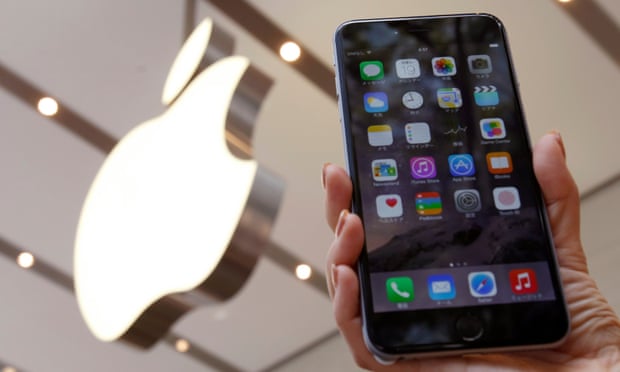
Apple is currently
resisting a court order filed by the Justice Department last Friday to assist
the FBI in unlocking the iPhone of Syed Farook, one of the two gunmen involved
in the San Bernardino shooting last December.
The FBI is asking Apple to disable an iPhone security feature that
erases an iPhone’s data once a password is entered incorrectly ten times. Once that function is disabled, the
government can crack the password without the risk of data being deleted. Data encrypted on the device
would most likely include evidence that could provide
key clues as to why the shooters targeted certain victims, if the shooters were
planning other attacks and if they received direction from overseas (Washington
Post).
Justice
Department lawyers question Apple’s steadfast refusal to cooperate, wondering
whether the tech giant is prioritizing their “marketing strategy” over a
terrorist investigation. ”Apple’s current refusal to comply with the Court’s
Order…appears to be based on its concern for its business model and public
brand marketing strategy,” Justice Department attorneys wrote in the court
filing.
According to
Apple’s CEO, Tim Cook, “The U.S. government has asked us for…something we
consider too dangerous to create. They have asked us to build a backdoor to the
iPhone” (Washington Post). Creating this “master
key” to disable security on Farook’s phone would provide the FBI with important
information related to the case; however, it could also jeopardize the security
on every iPhone and risk the safety/privacy of citizens if the bypass is found
in the wrong hands. Apple believes that the
court order is a direct “overreach by the U.S. government” and that it would
set a dangerous precedent for the future in which other software companies
could be forced to hack into its customers’ devices (CNN).
A federal court
hearing in Riverside, California has been scheduled for March 22nd
to resolve the dispute. It is expected
that many privacy advocates and civil liberties groups will file various amicus
briefs (USA Today).
What do you
think? Is Apple justified in their resistance to cooperate in creating a
“backdoor”? Is the information found in this phone worth potentially jeopardizing the
security/privacy of millions of iPhone users?