Wednesday, February 12, 2014

Progression of Marijuana?

Legalize it? -Not quite. However, members of Congress have asked Obama to move Marijuana from a Schedule I drug to a Schedule II drug. The difference is, Schedule I drugs are classified as having no medicinal value, such as Heroin or LSD. While Schedule II drugs, such as methamphetamine and cocaine, are considered to have a medicinal use.

However small the request may be,(18/535) do you think it is a request Obama will actually look at/take action on? Do you think this is too radical of a movement for society? Do you believe giving Marijuana possession a smaller consequence would encourage more people to use the drug?


Article
 Image

Tuesday, February 11, 2014

Suicide Bomber Instructor Accidentally Blows Up Class


(Photo source)

Honestly, I’m not sure what to say about this. Read the story first. This post is outside the blog’s normal realm, but I think deserves some coverage at least. There is a sense of dark irony, as the author says, but the amount of joy and vengeance in the quotes are … too real. It is a good reality check on what the situation is like in Iraq. Thoughts?

'Raise the Roof' ... with no conditions


Well, we started with Economics in class today. So let’s dive right into some discussion on everyone’s favorite topic: debt! 

Photo credit: AP

Today, the House voted on and passed a bill to increase the government’s borrowing limit (debt limit) with no conditions. This is a surprising turn of events, as Speaker of the House John Boehner has previously been defeated bringing legislation with policy attachments, and it is unexpected that he support a simple no-strings-attached bill now. Some are calling Boehner weak for this action, what do you think? Why might Boehner “compromise” on this matter?

In the past, Republicans have asked for “dollar for dollar spending cuts in exchange for a debt ceiling increase.” (Source). Many are shocked by this change on both Boehner’s behalf in addition to other Republicans. This article offers an interesting analysis, saying that most of the Republicans who supported the bill are not facing tough re-election fights; and therefore they are not pressured to support this bill because they are seeking re-election. There are a lot of facets to this story, and it makes for an interesting discussion. Below are some suggested background/beginning articles to get you started.


Monday, February 10, 2014

Beyond The Drill


If, anytime in the past year, you had asked me about my views on the lockdown drills across the country that have undoubtedly increased in number since the Sandy Hook tragedy, I probably would have immediately pledged my support.  An article that I saw on BBC today presented the subject from a viewpoint that I'd never previously considered.  It didn't ultimately change my opinion, and I don't think that it was supposed to, but it was definitely thought provoking.

The article discussed the impact that lockdown drills have on young kids.  These kids have to prepare for scenarios of a magnitude that they aren't ready to try and understand.  They have to prepare to hide from a crazed gunman, but you can't tell that to a room of five-year-olds.  Laura Trevelyan, the author of the piece, writes, "The thought of my children learning how to behave in case there is a gunman on the rampage is deeply unsettling. But for schools across America, the lockdown drill has become a grim necessity."

Proponents of anti-gun laws haven't made much progress in terms of getting any restrictions past Congress, but I wonder if it would be unrealistic to consider a near future in which schools are lawfully required to conduct lockdown drills and educate children on safety procedures.

What do adult euphemisms mean to these kids?  Is there a better way to go about this, or a "right thing" to say?  How would you feel about the government taking part in necessitating these drills and discussions?  Under what circumstances would you support it?


Photo: Getty

Don't Judge An Unemployment Statistic By Its Cover


This weekend, the first jobs report of the year came out.  While only 4% of Americans seem to be officially unemployed, there's more behind these statistics than is apparent at first glance.

With last week's successful Republican filibuster of a bill that would have lengthened long-term unemployment benefits by an additional three months, many Americans currently searching for jobs may feel new financial pressure to stop searching for jobs in favor of receiving extended unemployment benefits.  So while a large number of the 91 million Americans "not looking for jobs" are people who are retired, in school, etc. (i.e. people who actually are not looking for jobs), an increasing amount might soon be people who want jobs but have stopped officially looking for them because of the slight financial benefit of officially extended unemployment.

Politicians who oppose the bill, such as Republican Senator Rand Paul, believe that the passage of the measure would "provide some disincentive" for the unemployed to find jobs quickly.  Ironically, Congress' failure to pass the bill may ultimately lead to an outcome that Republicans hoped to avoid with the filibuster of the bill in the fist place.  The unemployment statistic may decrease, but for an overall negative reason.  What is your stance on the bill?  How do you interpret these statistics?  What steps do you think the government should be taking right now to improve the situation?

Article 1: CNN
Article 2: Washington Post
Article 3: NYT

Microsoft considering cutting consumer products, such as Bing, Surface, and Xbox

(Microsoft)


Satya Nadella, as shown in the picture above, is the new CEO of Microsoft, who had taken the seat in office just yesterday. Already, Nadella has received pressure from two influential shareholders to end the production of Xbox, Surface, and Bing to allow the company to focus on its strengths in software towards large companies. In the last year, Microsoft lost a net of over $2.2 billion in these three consumer products, while still managing to gain money through their software sold to businesses.

It's obvious that the shareholders are more concerned about business profit, but do you think that Microsoft should remain concerned about its consumer population? Do you think a cutback on consumer products would actually help Microsoft?
Article and Picture

Aid In Dying: Should It Be Legal?


A few weeks ago, a New Mexico district court ruled that a terminally ill person has the right to physician assistance in dying.  This ruling has the potential to make New Mexico one of the five states that allows "aid in dying" in the United States.  Such actions were illegal throughout the country until Oregon legalized the practice in 1997.  While opponents believe that assisting another person in ending his or her own life is immoral under all circumstances, proponents argue that the ability to "die with dignity" is a fundamental human right.

The New York Times published an article over the weekend about Robert Mitton and his fight to receive "aid in dying" that gives a more personal perspective to the controversy.  Mitton needs major heart surgery to save his life, but has chosen not to have that surgery because of the rough recovery process that he anticipates will follow.  Without the surgery, doctors estimate that he only has six months left to live.  Because aid in dying is not legal in Colorado, Mitton is considering taking matters into his own hands by means of imported lethal drugs or a chemical overdose.  (The article contains more details.)

What are your personal views on this topic?  If you do not wish to share your personal views, what are your views/predictions about government policy regarding this topic?  Should legalization of this practice extend to Mitton and others who share his circumstance?  Is there a difference between "aid in dying" and "physician-assisted suicide"?

Article 1: NYT
Article 2: CNN

Photo: New York Times

Sunday, February 9, 2014

McCain and Reid Support Boxing Study


Earlier this week, Democratic Senator Harry Reid and Republican Senator John McCain came together in support of government-funded research on brain injuries in boxing.  Both former boxers, the senators are collaborating in recognition of the degenerative impact of the many blows that professional fighters take to the head on a daily basis.  Doctors at the Cleveland Clinic have already spent $2 million dollars conducting research on the correlation between the hits that fighters are taking and long-term diseases later on in life.  The study already has attracted over 400 active and retired athletes volunteering to participate, and has also brought together rival boxing organizations -both of whom recognize the importance of looking into this issue to keep athletes healthy in the long term.

This is a rare show of bipartisan cooperation that contrasts unfriendly interactions directly between Reid and McCain as recently as last December.  It's interesting to see the typically hostile parties come together in complete support of an issue, even if it doesn't necessarily involve politics.

Does this make you feel happy inside?  Or does the overarching negativity of current party politics overshadow this small show of bipartisanship?  What are some issues, if any, that might realistically have bipartisan support in the future?  What are some issues that should have bipartisan support in the future?

Article 1: TIME
Article 2: ESPN

Picture: AFP

Saturday, February 8, 2014

Is Sochi Ready?

Source
Many have questioned whether Russia was truly ready to host the Olympics. In fact, according to a PewResearch poll, within the US 44% expressed that they thought it was a poor decision (32% thought it was a good one, and 24% did not know).

Disregarding the countless unprepared hotel rooms and facilities, the primary reason for concern has been threats to security. Worries have only increased with the United States’ warning to airlines hosting flights to Russia. These warnings stated that terrorists may try to smuggle explosive substances in toothpaste and cosmetic tubes. According to a CNN poll, 57% believe that a terrorism attack on the games is likely.

Luckily, it seems Russia has increased security substantially. Tens of thousands of police and troops have been dispatched to protect the area around the Games. Additionally, the US has sent two warships in the off chance there is an emergency.

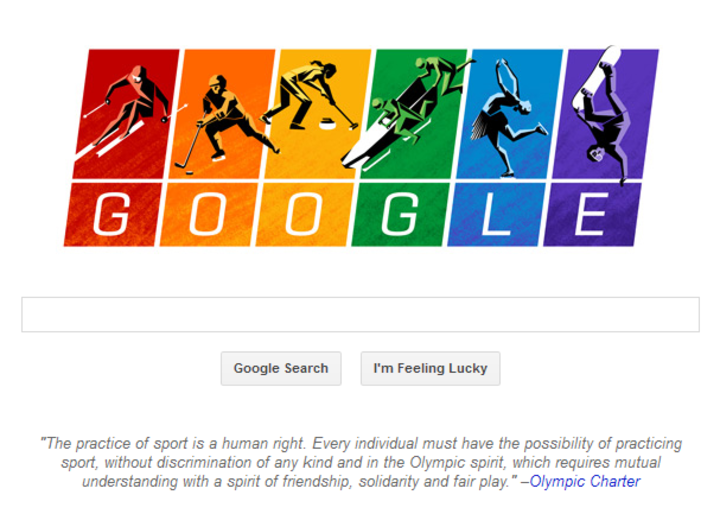
Additional concerns include the controversy surrounding gay rights activists in Russia, especially because of recent local crackdowns on such protesters of Putin’s anti-gay laws. It seems that the rest of the world is joining in with these protestors, however; many have stated their intentions to boycott the Olympics, and Google itself released a self-explanatory homepage.


What do you think? So far the Olympics have gone smoothly, but is there reason for concern? Should political debates have any effect on attendance of the Games?


Friday, February 7, 2014

2016 Presidential Elections: Republicans Diversify?


While Hillary Clinton is a clear favorite to be the top Democratic nominee in 2016, the Republican Party's frontrunner is far from clear at the moment.  New Jersey Governor Chris Christie, until recently one of the GOP's top potential candidates, has experienced a harsh fall from popularity following the political scandal that has become known as "bridgegate."  The Republicans now find themselves considering a promising group of potential candidates, yet struggling to identify an obvious choice.

Interestingly, several politicians being considered for the GOP's 2016 campaign are not old white men; multiple are of minority descent and are relatively new to the scene (in politician years).  This new type of Republican candidate hopes to attract young and diverse voters that the GOP has lost in recent years.  With Obama midway into his second term as essentially the face of the Democratic Party, the Democrats want to select a different type of candidate as well to change things up.  If Clinton were not to run, the Democrats would look to figures like Joe Biden and Martin O'Malley, neither of whom is particularly young or of color.  Figures like Clinton and Biden are appealing because of their many years of experience with Presidential politics, which are reassuring to currently dissatisfied Democratic voters.  The party role reversal concerning the 2016 elections will paint a very different picture from that to which voters have grown familiar in recent years.

What will voters make of this role reversal?  Do you think that it will have a significant impact on young voters and minority voters?  Or is the selection of a particular candidate not likely to change an image that has become engrained in voters' minds?

Article 1: CNN
Article 2: US News
Article 3: CNN

Photo: The Huffington Post

Thursday, February 6, 2014

Bye Bye Bieber?


When pop superstar Justin Bieber was arrested in Miami a few weeks ago, a petition was released in favor of revoking Bieber's green card and deporting him back to Canada. Bieber was charged with driving under the influence, resisting arrest, and driving with an expired license during an illegal drag race with friends.  Less than a week after the petition went online, it reached 100,000 signatures.  

Two days ago, VA Senator Mark Warner (D) stated his desire to see the singer deported, asking if there "[was] someplace [he could] sign" while on the "Rumble in the Morning" radio show on FM 99, before tweeting about his readiness to sign the petition and remove Bieber from the United States with a link to the story.  As of tonight, the petition has reached 251,201 signatures.

If Bieber is "threatening the safety of our people” due to his "dangerous, reckless, destructive, and drug abusing” behavior, what is there to say about the estimated 900,000 people who are arrested for a DUI every year?  Why do you think the media has stuck to Bieber’s story when more important things are taking place such as the Sochi Winter Olympics or the Al-Qaeda's resurgence in Iraq?  Do you think that Bieber will have his green card revoked and ultimately be deported? Thoughts?


Tuesday, January 28, 2014

Worldwide Market Crisis?


Markets all over the world seem to be facing a variety of economic downfalls of different proportions.  Just last week, the Argentine peso declined 13%.  Other currencies such as the lira from Turkey, the rupee from India, the real from Brazil, and the rand from South Africa have declined as well.   Emerging markets have been under pressure since.  London’s FTSE 100 fell 1.7%, dropping down to 6,550 points by the end of the day yesterday.  The Vodafone network lost 3.8%, after American competitor AT&T stated they have no imminent plan to launch a takeover of the network. Emerging markets lost as well, such as India's Sensex which fell 2%, and Hong Kong's Hang Seng Index which also lost 2%.  

Many see these market downfalls as another example of the emerging market crisis that occurred in the 1990s.  Chairman/CEO of Marketfield Asset Management Michael Shaoul sees this as “the most severe period of under-performance by emerging markets since 1998,” but there are also people who think otherwise.  Wasif Latif, who manages $57 billion for USAA Investments, believes the opposite.  He thinks “[t]he sell-off we’re seeing [worldwide] is not tremendous compared to history [such as the last crisis in 1997-1998.]”   What do you think? Does this seem like a short term problem, or something like the market crisis of the late 90's or worse? What do you think governments should do to fix these dropping markets?


Main Article
Photo 1
Additional Information // Photo 2


Joe Biden Cries on National TV

Did you see that winking action? That closing piece with Sargent Corey would make a robot cry, even a politician. John Boehner has a reputation of being a crier. Well then, I guess it is now officially OK for American men to cry when they are emotional. This is a good thing. Was it a good speech? I'm looking forward to seeing your thoughts after the student bloggers get some threads going in the coming days.

Flying high? Not anymore! Shot down by SCOTUS

William Hoeper, an airline pilot, won a defamation case against Air Wisconsin Airline Corp. for $1.2 million. However, the Supreme Court has decided in a 6-3 vote to overturn that ruling on the basis of an act called the Aviation and Transportation Security Act of 2001, which was enacted as a response to the 9/11 terrorist attacks. This act protects airlines reporting to the Transportation Security Administration unless they are providing information that they know is either untrue or recklessly unlikely to be true. This standard is known as "actual malice" and was established in a 1964 Supreme Court case, New York Times v. Sullivan.

Poor guy! Is this the right decision? Is the Court setting the standard too high for libel and defamation with actual malice? Are they giving the airlines too much power to trample on employees because of an act that was enacted out of fear after 9/11? It's not a unanimous vote, in fact it is far from it. Among the dissenting, Justice Scalia stated that he thought the statements by the supervisor were exaggerated and misleading, and that the court had gone too far trying to apply the standard to this case. However, he did agree with the legal standard they set. Is he right? Did the Court perhaps go too far by using this case to prove a point? I'm sure it wouldn't be the first time, but should the Supreme Court really be using cases to prove legal standards and set precedents even if the ruling is most likely too extreme for the case itself? Personally, I think it's a little unfair for those individuals, but do share what you think!


To read more:
Chicago Tribune article
LA Times article
Wall Street Journal article
New York Times article
ABA Journal article
P.S. some of these articles have some info on other interesting recent Supreme Court cases if you want to check those out.

Tuesday, January 21, 2014

Supreme Court accepts Fourth Amendment case


Source: The SCOTUS Blog

The Supreme Court decided to review the case Navarette v. California, a case involving Fourth Amendment rights regarding whether searches and seizures based on an anonymous phone tip are "unreasonable" or not. It would be a very good idea to read the linked source above first to get the full background on the case before proceeding.

As the blog post describes, the brief submitted by the Navarettes' lawyers argues that this case falls within the precedent set by a previous case, Florida v. J.L., in which the Court ruled that an anonymous tip without corroboration was not sufficient to warrant the stopping and searching of a person on the street on the suspicion that he/she was carrying a gun. However, as the lawyers representing California contend, there is a difference between a person walking on the street and one engaging in reckless driving because the latter poses a more immediate and direct threat to other citizens than the former. Because of this and the fact that the person giving the tip is an eyewitness, it would not be "unreasonable" for police to stop someone for reckless driving without corroborating the tip or having seen that person commit a traffic violation themselves. Thus, the Court may rule that the case doesn't fall within the previous precedent set by Florida v. J.L.

One particularly interesting tidbit I noticed in this post came at the very end. The post describes that the brothers have picked up the support of two defense associations, while California has received the support of 32 other states and D.C. as amici. With such a lopsided difference in the amici for each side, it seems to me that California is all but guaranteed to win the review, considering the number of amici alone. It also appears that the Court may want to uphold the lower court's ruling simply to set a precedent that will resolve disagreement among lower courts regarding this issue.

Some questions to consider: In which direction do you think the Court will rule? How much influence do you believe the amicus briefs will/should have on the Court's decision? Do you think the Court will/should give more consideration to the arguments presented by California's supporters because they're states as opposed to the National Association of Criminal Defense Lawyers and the National Association of Federal Defenders?

Monday, January 20, 2014

Progress for Syria?


Source: CNN

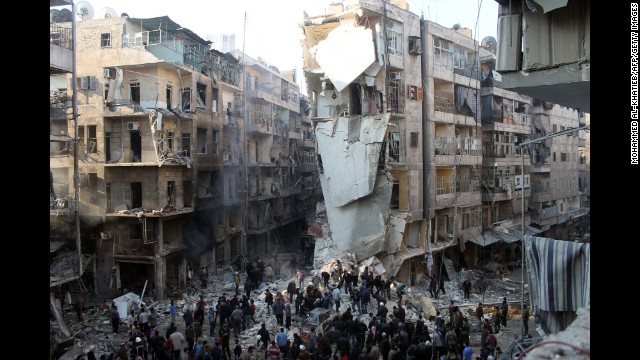
On Saturday, representatives from Syria's opposition voted to attend peace talks in Geneva aimed at drawing up plans for a transitional post al-Assad government. While on the surface, it sounds like good news and that we may be making progress toward a peaceful solution to the civil war, the CNN article explains several points that may suggest otherwise.

First of all, al-Assad seems to be pummeling the under-armed and fractured opposition at the moment, and little foreign military aid has been given to the rebels to change this. Seeing as the Syrian regime is currently winning the war but will not be visiting Geneva, this all but renders the peace talks pointless at this time. Additionally, with al Qaeda gaining strength and numbers within the opposition, al-Assad can use his fighting against the terrorists to paint himself as a sort of hero. Thus, due to the two points above, it is becoming less and less feasible to remove him from power through peaceful methods. Finally, even though peace talks have begun, the humanitarian crisis within Syria is dire and needs to be resolved as soon as possible, perhaps through more efficient means than peace talks.

When these talks were conceived, the assumption seemed to be that al-Assad would be losing the war and would be under significant international pressure to step down. However, this clearly hasn't been the case, and the article suggests that this may have been the fault of countries like the US who refused to intervene earlier in the war to aid the disadvantaged rebels in their cause. On the other hand, there are many who do believe that the US learned from prior failed interventions and made the right decision not to intervene in Syria considering the possible costs in both life and dollars involved. Do you think the US's non-interventionist stance with regards to Syria was the correct decision? If we did decide to intervene, would the correct approach be to arm the rebels or directly neutralize al-Assad's forces? What differentiated Syria from Libya, in which a NATO-led series of airstrikes successfully turned the tide of the conflict away from Gaddafi and in favor of the rebels? What, if anything, can be done to resolve the humanitarian crisis on the ground in Syria?

Thursday, January 16, 2014

Expect (moderate) NSA reforms in Obama's NSA speech Friday


Background: Washington PostUSA TodaySlate

Obama is expected to announce reforms to the NSA in a speech he will give at the Justice Department on Friday. Among these proposed changes are new restrictions on the collection of American phone records and greater privacy protections for non-US citizens, a move aimed at quelling European fears and outrage at the NSA's data collection programs. However, many expect that these changes will be modest in scope and far from a sweeping overhaul of the NSA due to the fact that Obama must strike a balance between appealing to an American public upset with the NSA's privacy violations and retaining the support of his national security circles, who believe that changes to what they see as an essential counter-terrorism tool will needlessly diminish the agency's counter-terrorism capabilities.

Perhaps more noteworthy is the fact that Obama is likely to leave much of the responsibility for coming up with NSA reforms to a divided Congress instead of pursuing changes to the agency himself. If I'm not mistaken, I believe he does have the authority to pursue an overhaul of the agency, and yet here he is, giving the responsibility to Congress. Does he really believe that Congress will better represent the will of the people regarding NSA matters, or is he simply trying to shift some of the blame over to Congress? Hmm. In addition, some are criticizing him for giving up too much of his executive powers by turning this issue over to Congress, but seeing as the president has increased his power relative to Congress over the past few decades, might this move be shifting the balance of power back toward equilibrium?

Do you think the changes Obama will announce to the NSA should be greater or lesser than the changes people expect him to propose? What do you make of his shifting of the responsibility for reforms over to Congress? How, if at all, will it affect the balance of power between the president and Congress in the future?

Tuesday, January 14, 2014

What constitutes a constitutional recess appointment?


Why, how perfect! Now that we're learning about the judiciary after having recently finished the bureaucracy chapter, along comes this story, which incorporates both!

Before you continue, you should get yourself up to speed by reading these two articles from the Washington Post:
This article talks about the initial ruling by the U.S. Court of Appeals for the D.C. Circuit.
This article talks more about the questions that the Supreme Court needs to address as well as how it is likely to rule.

As explained in the second article, in this case, NLRB v. Noel Canning, the Pepsi bottling company lost a NLRB ruling and challenged it by challenging the legitimacy of the members that Obama had appointed as recess appointments in January 2012. During this time, even though most senators had left to take time off, the Senate was still having pro forma sessions (according to the Senate website, these are brief, minutes-long meetings in which no business is conducted) every few days to prevent the president from making recess appointments, since the Senate was still technically "in session" and not "in recess." Thus, according to the Constitution, the president may have had no authority to make these recess appointments if the Senate was never in recess in the first place, and that is exactly how the D.C. Circuit ruled.

As explained beautifully yet again in the second article, the Supreme Court needs to address three issues: 1) what constitutes a "recess," 2) whether the president can fill already existing vacancies or only vacancies that occur during the recess, and 3) whether the president can make recess appointments when the Senate is having pro forma sessions in which no business is conducted. The justices will need to be deliberate in how they rule because this is a case with the potential to significantly restrict the president's power and one that has no existing precedent to guide them. Even though the purpose of the recess appointment has changed over the years, from dealing with an absent Senate to overcoming a resistant one, presidents, both Democratic and Republican, have maintained the practice of making recess appointments for around 200 years, and this is something that, in my opinion, the Supreme Court likely cannot ignore. Personally, I think the Supreme Court may be hesitant to issue a ruling that would severely limit the president's appointment powers and significantly shift the Senate-president power balance like the D.C. Circuit decision does.


Then, is the de facto precedent in this case set with the presidents' practice of making recess appointments? Since it is not a legal precedent, can the Supreme Court ignore it? How do you think the Supreme Court should/will rule on the three issues above or in general, and why? If the original intent of the recess appointment was to allow the president to make appointments when travel was slow and the Senate could not be physically present, just how relevant or necessary are they today?

Sunday, January 12, 2014

Pro-life gone way to far

Sources: 
http://www.nytimes.com/2014/01/08/us/pregnant-and-forced-to-stay-on-life-support.html?_r=0
http://www.cbsnews.com/news/experts-weigh-in-on-texas-law-keeping-brain-dead-pregnant-woman-alive/

An extremely troubling case has been developing since November in Texas, regarding a man and his brain dead wife. After suffering a blood clot in her lungs, Marlise Munoz fell brain dead. However, at this time, Marlise was 14 weeks pregnant. Marlise and husband had made a plan that if anything were to happen to them so that they became brain dead or needed life support, they agreed that they would want to be allowed to die. In the wake of Marlise’s tragedy, her husband and parents made the difficult decision to end her life, but the hospital in Texas where she was receiving life support wouldn’t let them.  Texas state law “states that a person may not withdraw or withhold ‘life-sustaining treatment’ from a pregnant patient”(Fernandez, Eckholm).

Proponents of anti-choice legislation as this one in Texas defend their actions and opinions on the basis of the sanctity of life. That is, respect for human life in all of its forms. Well what about the sanctity of life in death? Where the hell is the respect for human life when Marlise Munoz is being used as a human incubator for an unborn fetus?

I urge everyone to read an article about this case; it raises important dilemmas about a person’s rights and entitlements for when they die, the authority of the Texas legislature, and the abortion debate. Please comment on these themes as you see fit.

Saturday, January 11, 2014

TEEN DIES STOPPING SUICIDE BOMBER AT SCHOOL IN PAKISTAN

Aitzaz Hasan


CNN article
http://www.cnn.com/2014/01/09/world/asia/pakistan-boy-stops-suicide-bomber/

Aljazeera article
http://www.aljazeera.com/news/asia/2014/01/pakistan-teen-dies-stopping-suicide-bomber-201411093049572374.html


(Various articles spell Aitzaz's name differently; I am unsure of which one is correct.)

At a school in Pakistan, Aitzaz Hasan Bangash was killed when he confronted a suicide bomber trying to break into the school, saving the 2000 students inside. Aitzaz tackled the bomber, who then panicked and detonated the bomb, killing them both. Aitzaz was fifteen years old. He has now been recommended for Sitara-e Shujaat, Pakistan's highest civilian honor for bravery.

I don't have a lot of specific, political commentary for this event. In fact, the event's connection to AP Government is probably not as strong as posts on this blog are supposed to be ideally, but I wanted to talk about it nonetheless. My question for this post is this: Is the United States obligated to try and intervene in other nations where civilians are at the kind risk Aitzaz faced? Political neutrality is very safe, and America already has its reputation as the world's unwanted policeman, but when I hear stories such as this one, it is sometimes hard to grasp the idea that the best route is to not act and let it be. Also, I understand that the answer to the posed question has a lot of grey area, so don't feel obliged to, I don't know, sound really sure of yourself or anything.