Tuesday, September 11, 2012

The RNC and DNC Are Over, Now What?

With both the RNC and DNC behind us, Romney and Obama launch into the next phases of their campaigns. The RNC was important for Romney because unlike Obama, who has been in office for four years, Romney must fully convey the plans and positions he would take on as President. However this was Obama’s opportunity to rekindle the passion and excitement that he had in the 2008 elections, and re-engage his audience.

According to the Gallup daily tracking poll, Obama managed to do just that. Huffington Post says, “Gallup's last three nights of interviewing of adults, conducted Sept. 4 to 6, shows Obama with a 52 percent approval rating, the highest approval percentage reported for Obama on the Gallup tracking poll since May 2011, just after the killing of Osama bin Laden.”  Polls released on Friday September 7th, after days of speeches from a number of people including Michelle Obama, Joe Biden and Julian Castro advocating for Obama’s reelection, show Obama with a 3 point lead over Mitt Romney. At this point, every vote counts.

But the DNC was not just important to excite voters to go to the polls in November. The DNC was also Obama’s opportunity to raise more money, something he has been struggling with in his campaign thus far. Obama’s campaign announced on Monday that Obama raised $114 million this month, in comparison to last month’s $76 million. In contrast, Romney only got $112 million after the RNC. Unlike Romney, who is relying on a smaller amount of large donors, Obama’s campaign focuses on getting a large amount of small individual donations. This tactic can prove to be successful as November approaches. Since there is a limit on how much an individual can donate, Romney has tapped out many of his larger supporters, while Obama can go back to his 3.2 million donor base and ask for more. 

Gallup tracks daily the percentage of Americans who approve or disapprove of the job Barack Obama is doing as president. Daily results are based on telephone interviews with approximately 1,500 national adults; Margin of error is ±3 percentage points.

But despite the surge in support and money, will this be enough to help Obama win the elections? At this point in the campaign, how much will money help him get the votes he needs?

Friday, September 7, 2012

Oh look! A divisive issue!

The Democratic Party's platform was modified yesterday to include the phrase "god-given" and define Jerusalem as Israel's capital, to mixed reactions. President Obama called for the additions in the first place after hearing objections to the secular nature of the party platform. Many conservative news organizations criticized its complete lack of the word "god," so Obama ordered a change to the platform's wording.

For an action meant to appease, it was met with quite a few negative reactions. As the Democratic Party tried to appeal to a more religious voter base, they also ostracized those who preferred a more separate church and state. Chairman Antonio Villagairosa (pictured above) was met with "boos" as he called for a vote of the delegates (three times) to get the wording of the platform changed.

From just about the moment that the USA was founded, the question of how much religion should be involved in politics has always been prevalent. The aforementioned exchange at the DNC exemplifies this perfectly. Was the change to the platform's phrasing a minor modification meant more to appease than to declare any specific religiously driven goals? Or was it yet another example of politicians caving to pressures from religious voters and letting religion control their policies? Is religious pandering okay if there isn't any intention behind it, or is it just another step down a slippery slope to a country where religion reigns supreme?

Thursday, September 6, 2012

The Not-so-Landslide Election

Clearly, there are no guarantees in the election business. With a flurry of people still unsure who to vote for, the two party conventions have made huge steps in attracting "on the fence" voters. Four years ago, Obama focused part of his campaign on capturing the African American vote. And it worked, with about 95% of African Americans voting for him. But this time around, our President may not be so lucky. Running around preaching about hope and change moves many downtrodden people, but the same tactic will not work twice. This year, many voters are looking forward to what Obama plans to do for his second presidential term, focusing on his nomination acceptance speech today. Some voters want to hear about how he will deal with the nation's 14% unemployment rate. Others want to know if he can work with a Republican Congress to fix problems. The people have questions. And the president will have to give them answers.

Obama's reelection chances are dependent on how his speech goes. If he can energize the crowd like he did four years ago, he may actually do well. But in the event that he doesn't, then there are no guarantees that he will even do well in the election. People may want to try something else to fix America Mitt Romney's way. With some fabulous speeches already given at the Democratic National Convention, Obama's speech needs to be the "home run," so to speak. Or else it will be quite anti-climactic.

Now that we see that Obama has everything to lose in this speech, do you think he will step up to the challenge and successfully entrance voters?

A Call For Bipartisanship?

Last night, Bill Clinton's speech towed a very thinly drawn line. He made several good points about how Democrats and Republicans can and have worked together on important issues, saying that "Los Angeles is getting green and Chicago is getting an infrastructure bank because Republicans and Democrats are working together to get it." Clinton even points out how he has supported the endeavors of many Republican presidents: Eisenhower sending the National Guard to protect integration at Central High School, George W. Bush's PEPFAR (President's Emergency Plan for AIDS Relief) program, and Reagan's welfare reform, which Clinton helped Reagan work on. Clinton seems almost supportive of the Republican party at the beginning of his speech, but then turns around and says "Unfortunately, the faction that now dominates the Republican Party doesn’t see it that way. They think government is always the enemy, they’re always right, and compromise is weakness." At this point, Clinton's speech begins to make an entirely different point. He moves from optimistically talking about how the two parties can work together, to pointing out a myriad of flaws within the current Republican Party, implying that, while the GOP may have once worked in a productive way, they don't anymore. These flaws he mentions may or may not be true, but Clinton's statement about Republicans seeing "compromise [as] weakness"seems hypocritical, considering that even as he criticizes the Republicans for not compromising, he himself is refusing to compromise by making a blanket statement that all current Republicans have the aforementioned negative characteristics. 

Now, bashing the opposition is not an unusual practice at these conventions, but President Obama has been continually calling for bipartisanship throughout his time as president. He has appointed many Republicans in high places, such as John McHugh, the Republican Secretary of the Army, and Clinton praises this bipartisanship in his speech at the DNC. But Clinton himself still sticks to the tried and true practice of criticizing the "enemy," making statements that seem to run contrary to the cooperative message Obama is trying to send out. Perhaps we shouldn't try to expect any better, but in this time of politicians taking sides more than ever, don't these speeches passive-aggressively (or even just aggressively,) attacking the opposition only add to the problem? How can we have "change we can believe in" if the democrats stick to the same old tradition of making an enemy of the other party?

That said, Clinton does go on to make some more concrete statements about President Obama's worth, and about the Republican Party's shortcomings, (although some of his numbers were predictably fudged,) and he spoke about more than how horrible and incompetent the Republicans were before Obama took over and will be when they take over again. But some of Clinton's statements shone a light  on an important issue: it is one thing to say that you want to be bipartisan. It is another thing to act on it.

The quotes were taken from the full transcript of Clinton's speech, which can be found here.  

Wednesday, September 5, 2012

Silent Anti-Abortionists

As the Democratic National Convention moves into its second day, many speakers of the Democratic Party have offered their points of views and ideas about America. But one small group in the vast party is having trouble being seen or heard. The Democratic anti-abortionists are trying to "assert some influence" in Charlotte to get people to accept their views. One of the smallest factions in the Democratic Party, the anti-abortionists believe that they are key to the party retaking the majority in Congress. 35 years ago, there were 125 anti-abortionist Democrats in a Democratic Congress. Now, only 17 anti-abortionists call themselves Democrats. The question isn't "what are anti-abortionists doing in the Democratic Party," it's "what makes them Democrats?" The answer is actually quite simple: they support Democratic principles and have voted them through. Most of all, the anti-abortionists that remain in the Democratic Party believe that Republican nominee Mitt Romney would do a far worse job at protecting unborn children than President Obama. If Romney is elected and Paul Ryan's Medicare plan is implemented, the number of abortions would skyrocket. So as of now, the anti-abortionists are sticking with the Democratic Party and hoping that they can be heard at the convention.

Since there are so few anti-abortionists in the Democratic Party, do you think they can make a push in being heard or gaining support in the party?

Tuesday, September 4, 2012

The Wives Testify

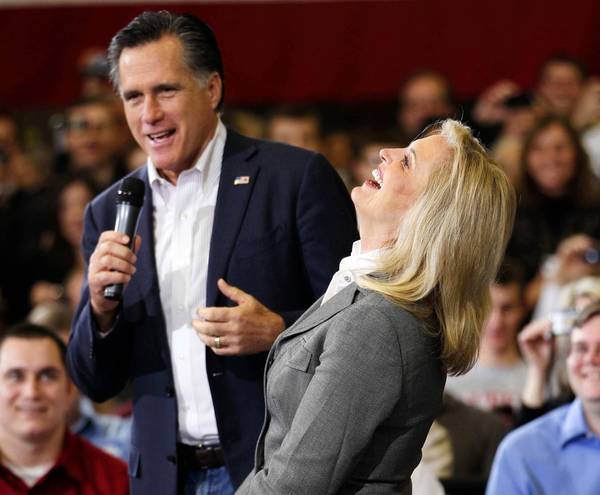
The Democratic National Convention and the Republican National Convention, while quite different in rhetoric, had one similar feature: a speech made by the wife of the candidate. Both Ann Romney and Michelle Obama delivered heartfelt speeches attesting to the characters of their husbands, their solid, down-to-earth goodness, their humble beginnings, and their love of family and The American Way.

But the question is, why? Do voters really need to know about how the presidential candidates met their wives, or spend their weekends? No matter how charming it is that Ann and Mitt met at a high school dance, or that Barack and Michelle's life pre-Washington was "filled with simple joys. Saturdays at soccer games, Sundays at grandma's house," the rundown of the candidate's home lives seem like something of a non sequiter.

The fact is, these speeches disguise, either cleverly or not-so-cleverly, an attempt to woo voters that are facing financial hardships. "Humanizing the candidates" is one thing, but these speeches have a greater purpose: convincing voters that even the rich politicians spending millions on their campaigns have had their own troubles. Ann describes the humble basement apartment that she and Mitt moved into, where their "dining room table was a fold down ironing board in the kitchen," and Michelle fondly remembers the car that Barack would pick her up in "that was so rusted out, [she] could actually see the pavement going by in a hole in the passenger side door." These anecdotes, while they do not attest to the current policy of the candidates, are meant to give the voter something to relate to in these trying economic times.

What do you think? Do the "humble beginnings" of the Obamas or the Romneys convince you that they care about the lower income brackets? Is there a place for talking about the personality of candidates in a political debate?

You can watch Ann Romney's full speech here. The full video Michelle Obama's speech is not yet available.

DNC: The Calm Before the Storm

Although the Democratic National Convention begins today, incumbent president Barack Obama seeks to win the hearts and minds of voters all over the country on September 6, this Thursday. The convention is being held in Charlotte, North Carolina this year, mainly due to the states' weight in Obama's re-election campaign. In 2008, Obama defeated Republican nominee John McCain by less than 1% of the vote.... and won the election. Not only was the margin microscopic, but Obama was the first Democrat to win the state in 32 years! Some believe that if he can take North Carolina once more in this election, the presidency may as well be his again.

While polls favor President Obama in North Carolina at the moment, I am not convinced that this will be the deciding state for our future president. First of all, North Carolina is a solid Republican state, and for a Democrat to win in one out of 32 years is quite unconvincing. As far as I see it, President Obama will have to work quite hard to get the votes he needs from North Carolina. Second, his margin of victory was the slimmest of the slim, so I think this state could go both ways. Third, since Obama's acceptance speech is going to be outdoors this year (even though the forecast predicts storms later this week), not many people will show up due to a change in venue. This could potentially hurt his chances of winning North Carolina if his speech is moved indoors. But enough of me predicting the outcome of the election by the amount of people attending. For now, all we need to care about is what Obama's plans are for his next presidential term and if it appeals to us or not. So what's on your minds? Does North Carolina or any one state hold the key to either candidate's election? And here's a little Obama propaganda to go with it....


Monday, September 3, 2012

Summary of the GOP Platform - Part 2


I split this up into two parts expecting that there would be much more to talk about as I kept reading. Suffice to say, there wasn't. Most of the platform reiterated previous points, or expanded on ideas mentioned earlier. I'll just cover two things that I missed last time.

- Public vs. Private Education: The Republican Party has supported the idea to provide vouchers to people who choose to enroll their children into private schools. Their take on the education issue seems to be that we should avoid revising the public format and privatize yet another area. I disagree with this idea.

- Foreign Policy: Ranging from Syria to China to Russia, the Republican take on the current foreign policy is that we aren't being firm enough. Most of the foreign policy was summarized in Romney's speech at the Republican National Convention, where he insisted that "talking" to Iran hasn't been working. I'm not sure about anyone else, but I'm a little apprehensive towards any alternative to talking.

The platform, as before, can be found here.

In addition, Wyoming has made a wonderful ecologically-minded decision. Good job, Wyoming.

Sunday, September 2, 2012

RNC: The Aftermath


The Republican National Convention was an event filled with impressive rhetoric, controversial speeches, shameless mudslinging and, of course, a massive red, white and blue balloon drop. But after the balloons settled, how did the RNC affect Romney's chances in the election? As I mentioned in a previous post, conventions usually boost a presidential candidates poll numbers by a significant amount.

However, this year the Republican outlook doesn't look so good. So far, polls do not show a serious or meaningful jump in approval for Romney. Based on early data from different polls as well as TV ratings, Romney's boost from the RNC will be mediocre; and the same blog predicts President Obama's chances of winning the election to have increased over the course of the week.

What caused this flop for the RNC? I think that the majority of speakers attempted to attract voters with disparaging Obama comments and comments about family values but they did not successfully appeal to a new constituency. Instead of converting voters, the GOP probably just strengthened their existing supporters.  Paul Ryan's lie-filled speech and Clint Eastwood's rambling "speech" might have negatively affected the overall message of the convention. Perhaps Romney's speech failed to adequately deliver.

What do you think prevented the RNC from being fully successful? How important will this be to the election as a whole?

Saturday, September 1, 2012

In Other News...


Taking a breath after the flurry of events that were Hurricane Isaac and the Republican National Convention, let's look at some of the other events that occurred over the course of the week.

For example, Bill Nye offered his thoughts about creationism.

Creationists then responded in turn.

Desmond Tutu helped us understand the GOP's opposition to the US joining the International Criminal Court.

"Mark Owen," author of a book detailing the bin Laden raid, may or may not be sued by the Pentagon.

Mali moved closer to becoming a haven for extreme Islamists.

And let's not forget about the Syrian civil war.


Friday, August 31, 2012

The Good, the Bad, and the...What?


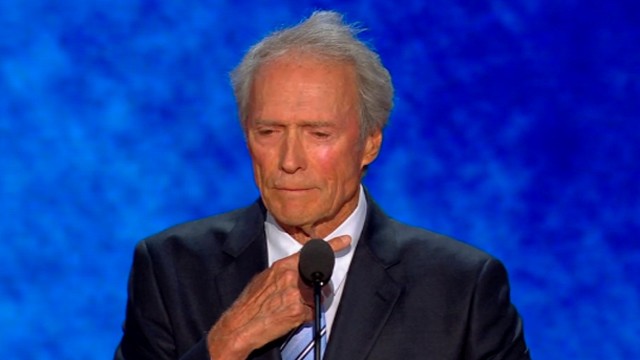
Clint Eastwood, 81-year-old actor and director, left a pretty marked impression in Tampa Bay on Thursday night. Initially overshadowed by Romney's speech, his was notable for other distinctive reasons. His performance, let's say, was rather interesting in concept but rather unsettling in practice. The idea was to pretend like Eastwood was addressing Obama, seated next to him; at points, it was difficult to tell if he was just acting well or whether other issues were going on. 

As it stands, many are ambivalent about Eastwood's performance. Some were very impressed, some were worried, while others are just plain confused. Eastwood's speech incredibly entertaining, and his rhetoric is reminiscent of Academy Award-winning performances. Needless to say, the speech did point out a few key flaws with Obama's presidency. Clearly, Obama learned nothing from the Russians' war in Afghanistan when he started this whole mess in 2008. Under a Republican president, we never would have gotten involved.

Among all of his awards, Eastwood can still add one more hallmark to his resume; he is the subject of his very own meme.

What do you think? Did Eastwood's speech help or hinder the GOP's message? 

Thursday, August 30, 2012

Romney Accepts GOP Nomination


I would be thrilled to say that tonight, Mitt Romney proved to America that his plans for the country can far surpass those of President Obama. If I did, though, I would be lying almost as much as Paul Ryan. Romney's speech was eloquent, humanizing, and patriotic, but it was not informative. On the plus side (or downside, depending on how you look at it) Romney seems like he has finally managed to win over his party, receiving several standing ovations throughout the duration of his speech. But this was just another speech in the same vein as all the others; riling and crowd-pleasing.

Romney managed to embrace the immigrant parents and small-business mindset, somehow, claiming that when he "was 37, I helped start a small company," referring to Bain Capital. There was also a significant amount of criticism towards the current Administration, but nothing that we haven't heard before. Of course, the Republican Party offers the solution: "Lots of jobs." Twelve million of them, in fact, but there's no word on how exactly he plans to attain those. Much of the rest of the speech was marked by recycling the Republican Party Platform, with the same unbalanced focus on the significance of private schools and small-business.

A lot more baseless accusations were thrown around, with Romney claiming that he "will not raise taxes on the middle class." Incidentally, Obama made the same pledge. As far as Romney's "5 Steps" go, most are vague and questionable. Following the five points, he criticized Obama's foreign policy as weak for not taking a stronger stance against Russia, China, Iran and for some reason Cuba. Ironically, he said that he will honor "the bipartisan foreign policy legacy of Truman and Reagan." It seems like the GOP has forgotten their pledge to make bipartisanship as difficult as possible.

Romney's speech was sorely disappointing. In some ways, I wish he had maintained the stance on social issues that he had while he was governor of Massachusetts, because those provided a much more moderate view (Note: I will link an article as soon as I find the one I am looking for). Instead, he seems to feel like he needed to pander to the conservative base of the GOP, where he would have won many votes anyway simple for not being Obama. What do you think? Does Romney offer a solid plan for America?

Speech Transcript

Lies (And the Lying Liars Who Tell Them)*


Paul Ryan, the Republican Vice Presidential nominee, took the stage last night to a roaring and eager audience. The main theme of his speech, the supposed faults and failures of President Obama's last term, was extremely popular with the crowd gathered in Tampa. Frequent "Boos" and cheers punctuated Ryan's speech that was considered successful in terms of introducing Ryan to the American people.

However, much of his speech was based on falsehood and, what we as Mr. Silton's AP Government students might call it, "spin." His speech was so full of deception that it is now popular with news companies to write a "Fact-check" of his speech; see here here here or here.

Some highlights of his lies include:

  • The GM plant: The plant's shut-down that Ryan blamed on Obama was really scheduled to be shut down before Obama was even president.
  • Medicare: Ryan claimed that Obama was planning to siphon millions of dollars away from the current Medicare budget. Although not technically a lie, this was a "Literally True Falsehood" as Ryan's own Medicare plan would involve these exact same cuts. 
  • The stimulus: Ryan denied any job creation from the Obama's stimulus plan while in truth, the stimulus package prompted millions of jobs.


So what do you think? Is it OK for Paul Ryan to blatantly lie in his speech to attract voters? Does popularity outweigh truthfulness in today's political scene?

*Title from Al Franken's book of the same name

Wednesday, August 29, 2012

Tropical Storm Isaac Update


On the seventh anniversary of the devastating Hurricane Katrina's rampage over New Orleans a new storm, Tropical Storm Isaac batters the Gulf Coast. The storm has been downgraded from "Hurricane" to "Tropical Storm" but is still expected to cause significant damage. 

Summary of the GOP Platform - Part 1


Note: This will be a multi-day project, considering the sheer mass of the party platform, and because many issues were packed into the first pages of it.

With all of the incredibly repetitive speeches at the RNC this week, many people have been left wondering, what does the party really want? In their 2012 Party Platform, the GOP laid out all of their aspirations if their representatives are elected (Democrats are set to approve theirs at the start of the DNC next week). Let's look at some of their ambitions for the next four years.

- Trade Agreements: The GOP has stated that it will "complete negotiations for a Trans-Pacific Partnership," which to be fair, sounds like a fair good goal that could help US exports. A little worryingly, they insist on taking a tougher stance with China, which may or may not even be possible considering China's own influence now. On another economic note, they plan to lower tax rates, and while that seems like a poor choice, it may not be as bad as it seems. (Information on the Ryan Plan and other economic ideas will require their own posts.)

- Supporting the Goals of the Constitution: While it is true that the GOP spawned from the original Federalist party, nowadays they seem to be more like the anti-Federalists since they oppose any significant governmental powers. Regardless, they claimed to "ask all to join us in rejecting the forces of hatred and bigotry and in denouncing all who practice or promote racism,  anti-Semitism, ethnic prejudice, or religious intolerance." That was...entertaining. Unsurprisingly, they think that we should follow the Bill of Rights, especially the Second Amendment.

- Social Issues: Naturally, comments on gay marriages and abortion were bound to appear. The GOP insists on supporting the "definition of marriage" and wants to pass the Defense of Marriage Act to ensure that happens. They also want to approve a human life amendment that bans abortions, even when the pregnancy is caused by rape, incest, or other means. One aspect I approve of is that they want to ban "sex-selective abortions"--something we may not often hear, but its a sentiment that can be understood. Ironically, they find that the current Administration opposes religious freedom by neither allowing prayer in public school nor enforcing the Pledge of Allegiance.

- Energy: The GOP seeks to expand coal mining, oil drilling, hydraulic fracturing ("fracking") and nuclear power. Coal, even "clean coal," as much of an oxymoron as that sounds, seems like a risky venture. Coal mining remains one of the most dangerous industries in America, and one of the most pollution-heavy. Expanding our oil industry is unfortunate, but it may be because we live in California that we haven't noticed the same ballooning of oil prices as elsewhere. However, mining in national territory should be out of the question. Fracking is a fair method; we should try to embrace natural gas to replace the two other more polluting fuels, and that leaves nuclear energy. Its difficult to agree with much of the platform, but this has my emphatic support. On a side note, they also want to decrease the interference of the EPA and other environmental regulations which is a poor decision.


So that's a lot of the basis behind the Republican Party this election season. Some seems fair, other parts foul. What do you think of their policies? Which parts can you agree with?

RNC: Division or Diversification?


Two contrasting articles on CNN.com give different opinions on the diversity in the GOP at this year's convention. The first author believes that the new range in the party is positive; cooperation and collaboration between different groups under a single party's banner will yield a greater chance of beating President Obama. In contrast, the other article questions if the attempts to unify the conflicting groups in the party will actually split the party.

The apparent racial and gender diversity that the convention is promoting is expected to portray the Republicans as an accepting group, despite their predictable "white-male" demographics. The more critical article suggests that the additional diversity will blur the identity of the party:

 "This is some strange hash. What does it mean to be a Republican these days if unifying principles are so hard to come by?"

It identified various "camps" that will be in attendance at the RNC; groups that desire a wider and more inclusive member base, more conservative groups that frown on gay marriage, some believe that economic policy is paramount as well as the many divergent views on the logistics of immigration. 

Governor Chris Christie
Speeches from Tuesday night shed some light on the true impact of diversity on the party. Although many speeches were filled with mindless Obama-bashing and asinine appeals to American patriotism, some actually managed to talk about real political issues. Governors and Senators from many states ( New Hampshire, Ohio, Wisconsin, Oklahoma, South Carolina etc.) began to talk about the GOP's dedication to job creation and reducing the scope of the government. New Jersey Governor, Chris Christie spoke about how his family and traditional values shaped his political views; a theme that was common on Tuesday night. However, theses speeches were focused on specific regions or values; instead of unifying the country it seemed to segment it. Rarely did the speeches speak to the accomplishments or dreams of the entire American people or even mention Romney's upcoming competition with Obama. 

What will be the effect of this new diversity in the GOP? Will it splinter or unify the party? Were last night's speeches effective to this end? 

Election Map Update


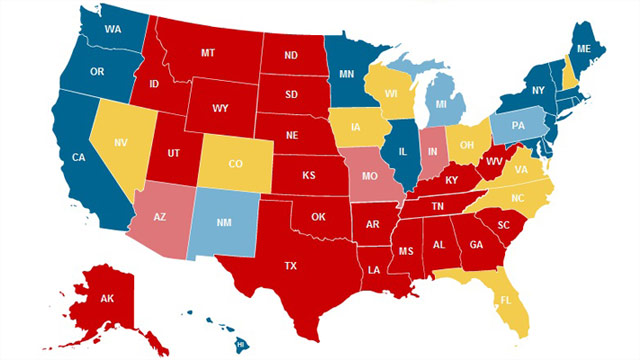
Moving away from all of the convention hype, CNN now lists North Carolina as a toss-up state. That's quite a surprise, because even though Barack Obama somehow carried North Carolina in the 2008 election, the state recently voted to ban gay marriage. So while they disagree with Obama's social stances, apparently many of them are still willing to vote for him. It should add a little excitement to the November election, because now a significant number of states could swing either way. What do you think? Is this a surprising development?

Also, for a more in-depth analysis of last night's speeches, rather than a summary, I suggest reading CNN's comments here.

Edit: It has come to my attention that North Carolina's designation as a "toss-up" was the result of a single survey with only 2,000 participants, so it may be wise to take this with a grain of salt. (Credit goes to Sally Hosokawa--thanks!)

Tuesday, August 28, 2012

Showtime for the RNC


Today marked the official opening of the Republican National Convention, and it certainly was eventful. First off, Mitt Romney has been officially nominated as the Presidential Candidate for the GOP and now the only question that remains is whether or not he can successfully rally the party to truly support his campaign. Unfortunately, Romney himself won't be speaking until Thursday, but other prestigious party members offered their own insights into Mitt, Obama, and the American dream.

One of the major speakers tonight, Wisconsin Governor Scott Walker, reminiscing about his victory in Wisconsin, criticized the methods that the current administration has adopted in order to curb unemployment. However, its difficult to listen to his success stories when the Wisconsin election controversy and pro-union protests are still in the recent past. Unfortunately, the union criticism found in Walker's speech was a recurring theme throughout the night.

Following Walker was a spate of ethnically diverse speakers, including Governors Brian Sandoval (Nevada) and Nikki Haley (South Carolina), as well as Senate Candidate Ted Cruz (Texas) and Former Rep. Artur Davis. The first to speak, Sandoval, spoke of how his parents came to America with a dream, and built their family from the ground up, in an attempt to gain favor with the swing Latino vote (see previous post). Unfortunately, the "We Built This!" speeches dragged on from here. Governor Nikki Haley condemned the Obama administration for a variety of reasons, namely for suing a Boeing factory in her home state of South Carolina.

The star of the night, Ann Romney, spoke to the delegates about how love and unity crafted her family, and whole-heartedly endorsed her husband's campaign. Her speech was a little sappy, but it seems that she's going to be very successful at winning favor for Mitt. Following her was Governor Chris Christie (New Jersey), who gave a surprisingly eloquent keynote speech. He, too, spoke of his immigrant family background and advocated for Mitt Romney and the controversial Ryan Plan.

Unfortunately, its difficult to completely accurately convey the complete texts of these speeches without making this post any more boring. I recommend watching the speeches, especially the Haley, Romney, and Christie ones to get a sense of the tone the convention is taking. What's your take on the speeches? Are they compelling or hypocritical?


RNC appeal to the Latino Vote


The Republican National Convention has many goals for this election season; the GOP will formally establish the party's running platform and introduce Mitt Romney as the presidential candidate to face President Obama in November. Of course, the RNC also aims to attract voters to Romney and the Republican Party. This year a large emphasis is being placed on gaining the approval of a large, quickly growing, and potentially essential group in the United States: the Latino population.
http://www.pewforum.org/Christian/Catholic/A-Portrait-of-American-Catholics-on-the-Eve-of-Pope-Benedicts-Visit-to-the-US.aspx

Latino populations are influential in many US states such as California, Colorado and Nevada. However, Florida will be especially important this election season as it is a historical "swing state" that has enough electoral college votes to potentially change the outcome of the 2012 election. Latinos make up a quarter of the population of this important battleground state. In 2000 and 2004 George Bush won Florida, while in 2008 Obama won the state by 51 percent to 48 percent. 

Romney and the GOP will use the party convention to appeal to this important constituency. This years convention will feature speeches by many elected and prominent Latino officials:

"Among the Latino speakers appearing at Tuesday's Republican National Convention session are Rep. Francisco Canseco, R-Texas, Sher Valenzuela, the Republican candidate for lieutenant governor of Delaware, Nevada Gov. Brian Sandoval, and Texas GOP Senate nominee Ted Cruz."

Florida Senator Marco Rubio will even introduce Romney before his speech on Thursday. 

One wonders how effective these attempts will be in gaining additional Latino voters. Judging by Obama's performance in 2008 as well as recent polls that show extremely strong support for Obama and disapproval for Romney, it seems like the Florida Latino vote is a lost cause for the GOP. But not all is lost for Romney! History and research show that party conventions often strongly influence public opinion; polls have shown increases of up to 14 percent and an average of 5-6 percent directly following conventions. 

How successful do you think Romney's appeal to Latino voters will be? Do you think that focusing on a specific racial group is an effective method of gaining votes? Should candidates focus on politics and policy or just battle for constituencies?

Monday, August 27, 2012

RNC: Featuring a More Relatable Romney


As many are probably well aware, the Republican National Convention, scheduled to start August 27th, has been postponed a day because of Tropical Storm Isaac. But never fear, there's still plenty of hype surrounding it. In the final rush leading up to the RNC, many attempts are being made to change the American people's perspective of Mitt Romney in order to portray him in a better light.


Romney is, of course, somewhat infamous for being "plastic and remote," according to this LA Times article. Many of his early attempts at connecting with the middle and lower classes were marked with embarrassing mistakes, enough to merit him his own meme. Luckily for him, his wife Ann is now trying to make up for past misconceptions and introduce the "real" Mitt Romney to the country. To be fair, it's a curious political strategy, considering that most elections tend to focus on much more macho topics of conversation. Ann Romney has provided a twist, and if she succeeds at identifying her husband, it may garner enough support to propel Romney to the White House.

In a more political tone, Time Magazine has recently published an interview where Romney defends his economic plans, and goes more in-depth about the rationale behind his methodology. This is a pleasant change from the standard technique of criticizing the Obama Administration's failure at economic recovery because it provides actual insight into why Romney believes his plans would prove better. And, to be fair, he and Ryan tend to have rather compelling economic plans, barring the Ryan Plan, which is surrounded by so much controversy that it seems no one truly understands it. To further summarize the article, it seems as though Romney may have moved past some hiccups that he experienced on a recent international trip, as he commented with a surprisingly thoughtful critique of the Obama Administration's policies regarding Afghanistan. Perhaps he can prove to the country that he does, in fact, understand foreign affairs.

Romney also speaks highly of his religious beliefs, a credit to him when many of his Republican supporters still question their own opinions on Mormonism. While his boost in religious confidence may be a useful tool to the GOP, it also issues the worrying note that religion plays heavily into the political sphere, especially during the RNC. It naturally raises the question, how influential should religion be in politics? Should a candidate's religion matter to the voting public?