Thursday, November 21, 2013

Senate Votes for Limiting Filibusters


Nevada Governor, Harry Reid (New York Times)
"The vote was a landmark moment for the Senate, a tradition-bound institution that is slow to change and prides itself on giving power to the minority party."


On Thursday, November 21st, the Senate voted to eliminate filibusters for most presidential nominations. This means the minority party can no longer use a filibuster.


Specifically, according to New York Times, "under the change, the Senate will be able to cut off debate on executive and judicial branch nominees with a simple majority rather than rounding up a supermajority of 60 votes. The new precedent established by the Senate on Thursday does not apply to Supreme Court nominations or legislation itself."


The voting process was initiated reluctantly by Democratic Governor of Nevada, Harry Reid. According to him, “the Senate is a living thing, and to survive it must change as it has over the history of this great country. To the average American, adapting the rules to make the Senate work again is just common sense.”


The elimination of the filibuster was in response to the recent gridlock situation Congress faced that resulted in a government shut down. Many Democrats felt that the Republicans abused their filibusters.

However, the Republicans are spiteful of the outcome. "This is nothing more than a power grab to advance the Obama administration's regulatory agenda," said Republican Leader Governor of Kentucky Mitch McConnell. Some Republicans even threatened the Democrats, stating that if during the next election the Republicans take seat, they will use this outcome against the Democrats.

What do you think will happen as a result of this? Do you think this will yield improvements, deterioration, or no change?  Will this benefit Congress in the long run?

Feel free to add on more information, I just provided the backbones to this news.


Articles:
http://www.washingtonpost.com/blogs/wonkblog/wp/2013/11/21/9-reasons-the-filibuster-change-is-a-huge-deal/

http://online.wsj.com/news/articles/SB10001424052702304607104579211881413579404

http://www.nytimes.com/2013/11/22/us/politics/reid-sets-in-motion-steps-to-limit-use-of-filibuster.html?_r=0

Wednesday, November 20, 2013

“Love never fails and I’m going to sign this bill right now”


Chicago Tribune

On November 20th, Pat Quinn signed a measure that allows the state of Illinois to approve same-sex marriage.  This historic measure that will come into effect next July made Illinois the 16th state to legalize same-sex marriage.

During the ceremony, the Democratic governor said, "In the very beginning of the Gettysburg Address, President Abraham Lincoln of Illinois said that our nation was conceived in liberty. And he said it's dedicated to the proposition that all men are created equal, and that's really what we're celebrating today… It's a triumph of democracy."

Chicago Tribune
The road to equality has been a long and arduous one. The monumental bill couldn't have been pass without the cooperation of both parties. "It takes both parties to make something happen, and when we work together, look what we can do," said Republican Comptroller Judy Baar Topinka. "I am available to be a flower girl, and I'll even waive the fee."

It's interesting to see how much productivity can be achieved through partisan cooperation. Seeing how the two parties shut the government down over health care bills earlier, it's nice to see the two working together and finally achieving a tangible result. I wonder, do you think Democrats and Republicans will eventually work together in order to reach a common goal? Or do you think there will always be an obstacle between the two parties?

However, I sometimes wonder if media focuses too much on gay marriage compared to other LGBT related issues.  Currently, there has been little attention on transgender issues, homophobic bullying, and the surprisingly large number of homeless gay youth.  Do you think media is oversimplifying a greater issue?  If so, how can the media cover more news but not overwhelm the common reader?


Article: http://www.chicagotribune.com/news/chi-illinois-gay-marriage-bill-signing-20131120,0,4464600.story

Tornado Devastates Midwest


A tree uprooted from the ground and collapsing onto a house
after the tornado
Severe tornadoes and windstorms swept through the Midwest late Sunday, leaving at least six people killed, dozens injured, and more than 500 homes damaged.  

At least 11 other states in the region were alerted of possible severe weather - specifically tornado attacks. According to weather officials, parts of Indiana, Illinois, western Ohio, and southern Michigan were at the greatest risk of rare, late-season tornadoes, with damaging winds going at 130-185 mph, with great potential to produce hail and thunderstorms as well.

The tornadoes did not last longer than fifteen minutes, but the scope of the calamity has been much more drastic than what residents initially anticipated. Illinois took the hardest hit, with the town of Washington, a community of 16,000, sustaining the most damage. Illinois State Police Trooper Dustin Pierce confirms that the tornado teared from one end to another in the town, knocking down power lines and rupturing gas lines. The storm also ripped through Missouri to Kentucky, flattening homes and uprooting trees throughout the region, also leaving many without electrical power. Communication and cellphone services are disconnected, keeping residents from confirming whether friends and loved ones are safe.

Rep. Aaron Schock, R-Ill, expresses, "Literally, neighborhoods are completely wiped out. I'm looking at subdivisions of twenty to thirty homes and there's not a home there."

Although tornadoes are a common natural disaster in the region, it is rare for it to occur so late in the year - the last time a warning was issued for tornadoes that came so late in the season were in 2005.

Matt Friedlein, a weather service meteorologist said, “People can fall into complacency because they don’t see severe weather and tornadoes, but we do stress that they should keep a vigilant eye on the weather and have a means to hear a tornado warning, because things can change very quickly.”

For information on how to help, click here.

Article: http://www.huffingtonpost.com/2013/11/17/chicago-tornado-2013_n_4292281.html

Monday, November 18, 2013

US Publicizes $10 Million Reward for 2012 Benghazi Attackers

A Libyan man raises a victory sign in front of a burning
Ansar el-Sharia headquarters

The US State Department has confirmed that it has been offering bounties of up to $10 million to those who may have information that will lead to the conviction of those responsible in the attacks in Benghazi, which killed the U.S. ambassador to Libya and three other Americans in September 2012. 
The information was revealed when Rep. Michael McCaul, R-Texas, and 82 other lawmakers sent a letter of concern to the State Department, questioning whether the department has been using its full capacity to seize those responsible. 

In August, charges were filed against Libyan militia leader, Ahmed Khattalah, and a few other unspecified suspects. Until now, no one has been charged. 


The rewards had been in place since January, yet only came to public knowledge recently. In response to the question as to why the State Department has not publicized the rewards on the "Rewards for Justice" website as it normally would, the department defended its previous actions, stating: 


"Due to security issues and sensitivities surrounding the investigation, the event-specific reward offer has not been publicly advertised on the RFJ website. RFJ tools can be utilized in a variety of ways, without publicizing them on the website." 


Frankly, I find the concealment of the reward a little bit questionable. While to some degree, I understand that security is a top priority, the lack of knowledge on the current issues can also lead to suspicion and a spread of misinformation - as seen with Elkana's recent post relating to this topic. Just how far should issues be covered and when should the government allow the media to publicize information? What information should be given attention to? 


Rob Ford Continues to Lose Power


Toronto Sun
On November 18th, the Toronto city council motioned to decrease Toronto mayor Rob Ford's power.  Funds and power will be transferred to the deputy mayor.

In the past month, mayor Rob Ford, 44, has been exposed of buying and using crack cocaine.  Ford has also been accused of sexual harassment, using racial slurs, and drinking excessively.  

Ford is to remain in office due to Toronto's government system.  Unless Ford is convicted of criminal crimes, he will continue to be the mayor of Toronto, much to the chagrin of many citizens and government officials.

Sean Mallen/Global News

Many are frustrated with the mayor's conduct.  Citizens have expressed their discontent by drawing graffiti on a wall near the city hall. According to Councillor Denzil Minnan-Wong, Ford is "the worst spokesperson for the city of Toronto right now."


Ford admitted to smoking crack during his time as mayor earlier this month. Despite his scandal, he still has hopes of becoming prime minister.


Media has been especially critical of Ford's scandals.  It is undeniable he is unfit to be mayor of any city, however, has media gone too far?  It has been speculated that he is an alcoholic and has drug addiction. Personally, I feel embarrassed and bad for the mayor, he obviously has many issues, and I hope he finds professional help as soon as possible.  

As we have learned in the past few weeks, media has a big impact in politics.  It can help, and hurt, incumbents and candidates. In this case, do you think media has objectively presented facts, or merely attacked Ford?  And do you think that media is justified in what they're doing?

Article: http://www.bbc.co.uk/news/world-us-canada-24990650

Friday, November 15, 2013

Build Your Own Virus (Don't try this at home)

In my opinion, this is the scariest news I've read in a while: you can create your own virus.

The applications of new technology like 3D printers and DNA synthesizers are both incredible, and incredibly daunting. Already, 3D printing technology has advanced far enough that with freely available online blueprints, anyone with a 3D printer can print their own working gun. Airports security worries about all-plastic guns that may slide under their radar, since they don't even need to be made of metal.

Fears grow over 3-D printed guns


Even scarier: We've all heard about biological weapons, and perhaps read a book or seen a movie where disease is the villain's weapon of choice. Well now you can make your own virus. A DNA synthesizer costs about $3,000 on ebay, and the DNA sequences of thousands of animals, plants, bacteria, and–yes–viruses are available freely online. Add a package of nucleotides, and BAM. You can make a virus. In an effort to highlight the problem of allowing viral DNA sequences to be publicly online, a team from The Guardian sequenced a strain of smallpox–a disease eradicated from the population just 30 years ago (the article below).

Revealed: the lax laws that could allow assembly of deadly virus DNA

In this age of information, the government has a tough job maintaining what should be regulated and what should not be. Citing freedom of speech, scientists who sequence strains of any disease have the right to publish their findings. Yet if some of this information were to fall into the hand of (bio)terrorists, the effects on the world could be catastrophic. You might ask why a scientist would publish a viral sequence in the first place? Often times unaffiliated, independent researchers use such strains to find cures for the disease, or similar diseases.


There is a clearly a huge gap between the potential for good, and the potential for evil. There is also the issue of free speech vs. potential harm to Americans (and humans as a whole) for the government to consider. The bottom line:

Should the U.S. government censor the sequences of DNA available online?

(sorry it got so long. hopefully you were able to bear with me. this is important.)

Pope Francis vs. the Mafia

Pope Francis has already proven himself to be as progressive as a prominent Catholic leader can be. While he is not (and perhaps cannot be) in total support of gay marriage, pro-choice for women, gender equality in the clergy, and other liberal aims, he has shown himself to be much more accepting and tolerant to homosexuals, feminists, and even atheists than any pope preceding him.


Now he has turned his attention to the corruption within catholic institutions, most notably the organized crime by the mafia relating to the Vatican Bank. 


According to organized crime experts, Pope Francis' "crusade against corruption in the Catholic Church" has put him at odds with the mafia that control aspects of the Vatican Bank. The Catholic Church and Italian mafia have had "a long and complicated history... gangsters often paid for local church repairs or bankrolled feast day celebrations for Catholic saints... In exchange, Catholic officials kept silent about their illicit deeds."

I am rather shocked that such corruption has been allowed to continue for so long, especially in conjunction with such as supposedly righteous institution as the Catholic Church. Obviously, Pope Francis is right to expunge the bank of corruption, but are there other things to consider? Is ending generations of corruption worth the risk to his life? Consider from the point of view of, say, a Catholic homosexual, or an aspiring female clergy(wo?)man. Pope Francis may be their only chance in their lifetime to gain recognition from the Catholic Church, since they have been traditionally shunned (or worse). Is the risk still worth it?

Thursday, November 14, 2013

80 North Koreans Executed for Watching Foreign Films and Owning Bibles

In previous blog posts, we've debated about the U.S.'s role of being a sort of international policeman/watchdog figure. In the middle east, some commend the U.S's progress, while others criticize the U.S. for getting involved.


Now we hear about North Korea, where dozens of innocent civilians are being rounded up and publicly executed in front of thousands of other civilians for "crimes" like watching South Korean dramas and owning Christian bibles. Friends and family of the executed(/murdered) "criminals" are then taken to prison camps, further instilling fear in all North Koreans.


Clearly these killings are heinous and wrong by our standards. Morally, I feel that it is wrong to allow such killings to go on–for crimes like watching TV. Realistically, I believe the U.S. would be making a huge mistake to confront and even go to war with North Korea. What is your stance on the issue of involvement/non-involvement? What is the right balance between morals and reality? Is there a right balance?

Wednesday, November 13, 2013

The Dangers of Football


Football is a great, seemingly all-American sport. It promotes teamwork and physical fitness, and unites high schools behind a spirited but harmless rivalry.

Harmless? Apparently not. For the second time this year, a high school football player has died on the field as a result of head injuries:


Football has revealed itself to be one of the most dangerous major sports in America. Besides the broken bones (etc.) lasting trauma and damage to the brain have proven deadly for players. Concussions range in effects, from the extremes–like the unfortunate Charles Youvella (from the article above) who died just hours after his concussion–to more subtle but no less deadly effects, like Chronic Traumatic Encephelopathy which has been linked to depression and suicide in 4 NFL players
Approximately 120 American football players have died playing football in the past decade alone. By contrast, the last time a cross country runner, tennis player, badminton player, or swimmer died from his/her sport was, well, never.  

Football is engrained in American culture. But everything changes eventually. Should the youth in America make a concerted effort to shift our focus away from this needlessly harmful sport? Or is the contribution to our lives and culture enough to make up for the 12 Americans who die each year on the football field? I suppose the argument could be made that people die in everything–car crashes, earthquakes, war... yet the two high schoolers just buried might or might not change your perspective.

Enough about Obamacare already!

Okay, so we've probably all heard more than we ever wanted to about healthcare... but what does The Affordable Care Act (ACA) really mean? In case you need a clear, simplified explanation (like I did), there's a short video you can watch:

Obamacare seems to be losing support since the issue seems be be proving more divisive and fraught with issues than it's worth.


One of seemingly many problems: a significant number of Americans (especially those in lower income levels) may lose their current plans, if they're unable to afford the better (but more expensive) new plans. Even Democratic senator Richard Durbin urges Obama to be "open to constructive change," and some Democrats go so far as to say they might support a Republican proposal, if the problems with Obamacare can't be fixed.

Our class leans liberal/democratic. If you were in the position of a Democratic senator, what do you think would be the most reasonable solution? Would you cut your losses, so to speak, and support a Republican proposal to scale back Obamacare? Or do you think it's worth the risk to stay true to the original goal of Obamacare: affordable and comprehensive plans to cover ALL Americans?

Sunday, November 10, 2013

Typhoon Haiyan Leaves Estimated 10,000 Dead


Typhoon Haiyan struck the Philippines over the weekend with winds nearing 150 mph, destroying numerous villages and cities. Victims have provided chilling accounts of the storm and its devastating effects, with one visitor describing his surroundings as "World War III”:
“Everything was completely gone . . . A foot left of concrete around a building -- just a foot left of it, everything wiped out. Walking on debris and dead people two to three meters high; piles and piles … of dead people under the debris and some laid out on the sides, the ones they pulled out.
. . .
There were people – babies, children, old people -- laying out on the street, with blisters over their bodies from being dead. . . . Hundreds. Hundreds."
A local compared her town to a "World War II city," recalling her scenario:
"The hardest thing is ... seeing you mother floating in the flood and you don't know what to do. You just see there and the only thing is have to save yourself . . . . I could not save her because she drowned already, and it was not just water from the sea but mixed with dirty water — color black, like came from river and smell like canal."
President Obama and his wife conveyed that they were "deeply saddened'' by the catastrophe and that the U.S. would be providing aid to the Philippines. The U.S. military's Pacific Command is set to deploy aircraft and ships to help in search-and-rescue operations, and U.S. officials are encouraging those who want to help to donate money to humanitarian organizations.

Friday, November 8, 2013

CBS Apologizes for Erroneous '60 Minutes' Report on Benghazi


Following the discovery that Dylan Davies, the security contractor who provided an account of the attack on Benghazi last year to CBS, had given contradicting statements to his security firm and the FBI, CBS is set to broadcast an on-air correction on Sunday. Davies had claimed that he went to the Benghazi mission against orders from his superiors, and had even disabled an attacker at the mission. Davies' account of the Benghazi attack as conveyed to CBS was recently published in a book, The Embassy House, by a company owned by CBS. With this revelation, the publisher halted publication and recommended that bookstores remove the book from shelves as well. Additionally, Lara Logan, the correspondent who had given the report, issued an apology on CBS This Morning (the video above).

This is not the first time CBS has had to retract a 60 Minutes report; in 2004, it had apologized for questioning George W. Bush's service in the National Guard, the mistake resulting in several layoffs. I found a paragraph in an article on TIME about this issue interestingly similar to what we have been learning in class about the media and journalism:
"Whatever went on in this specific report, CBS’s wagons-circling response to reasonable criticisms was an example of an unfortunately familiar pattern in journalistic (and other screw-ups). Once someone stakes out a tough or controversial position, there’s a buy-in: from that point on, they’re conditioned to look for reasons to support a position they’re already invested in.
The fact that partisan groups are advancing a critique becomes reason to overlook the objective reasons for the critique. The fact that you’ve put in time and reporting resources–and don’t doubt that Logan and company worked as doggedly as they say they did–becomes reason to dismiss a source’s contradictory testimony. The story becomes the reason to defend the story (as do the consequences of admitting fault)."

Senate Bill on Bias Against Gays Receives Support


This past Thursday, a bill banning workplace discrimination based on gender identity and sexual orientation has found support in Mormons!  These unlikely supporters "have stepped in to provide the political muscle... and more often than not, [are] not just Mormons, but Republicans."  5 out of the 7 Mormons voted yes on this bill, and it passed with a majority of 64 to 32, with 10 Republicans joining.  Senator Orrin Hatch stated, "Religion should be respected, and so should people."

What happens after the apology?


Article
Yesterday, after Obama's apology regarding disappointments with Obamacare, the President has promised to fully address this issue, as well as the website flaws.  12 million Americans whose individual policies do not meet the requirements for "comprehensive care" are receiving cancellations notices.  This leads back to Obama unfortunately promising the country that they could keep their plans if they were satisfied with them.  In addition, "insurers cannot discriminate for preexisting conditions and must cover mental health, maternity care, and other areas," but it is seen that some other companies are withdrawing their care from states that have a lower amount of subscribers, in order to save money.  Based on how this is going now, do you think that our country's situation will turn out for the better?

Thursday, November 7, 2013

FDA Seeks to Ban Trans Fat


Earlier today, the U.S. Food and Drug Administration determined that partially hydrogenated oils can no longer be "generally recognized as safe," opening a 60-day consultation period "to collect additional data and to gain input on the time potentially needed for food manufacturers to reformulate products that currently contain artificial trans fat should this determination be finalized." Partially hydrogenated oils are commonly found in processed foods such as desserts, frozen food, and microwave popcorn in the form of trans fat; as a study from the U.S. Centers for Disease Control and Prevention determined that "[a]voiding foods containing artificially produced trans fat could prevent 10,000 to 20,000 heart attacks and 3,000 to 7,000 coronary heart disease deaths each year," the ban would label partially hydrogenated oils as additives, thus requiring approval for them to be used in food. Areas such as California and New York City have already banned the use of trans fat in restaurants, while McDonald's and other restaurants have already stopped using it in their food items. The ban would not apply to trans fat that is naturally found in meat and dairy products.

Personally, upon reading about the proposed ban, I was a bit skeptical. I don't know much about trans fat and the research that links the consumption of trans fat with an increased risk of heart disease, but I feel that the ban on trans fat doesn't necessarily improve circumstances: in the absence of partially hydrogenated oils, fast food chains and food manufacturers will turn to (or have already turned to) other sources of oil that are likely to present undesirable health risks as well. But then again, this may be an instance of choosing the option that presents the lesser evil.

What do you think - is this a step in the right direction? Even though the proposal may be imperfect, does its merits outweigh its shortcomings?

http://www.cnn.com/video/data/2.0/video/health/2013/11/07/exp-cohen-fda-to-ban-trans-fat.cnn.html  [video]
http://www.nytimes.com/2013/11/08/health/fda-trans-fats.html?pagewanted=1&_r=1


Obama on Insurance Cancellations


Article

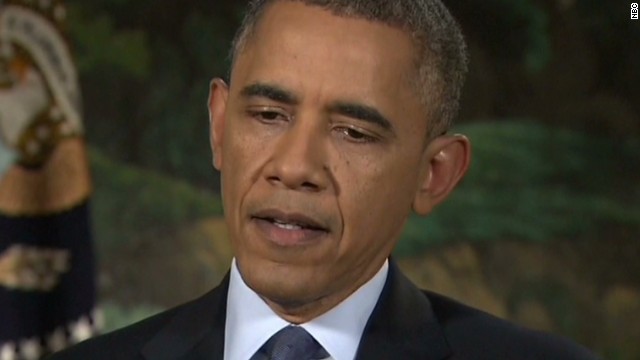
Today, President Obama has apologized for the insurance cancellations that were caused by Obamacare.  He states in an exclusive NBC interview, "I am sorry that they are finding themselves in this situation based on assurances they got from me."  Republicans have nailed Obama on this point, and the Democrats have voiced their concerns as well, as over 48 million Americans do not have any coverage whatsoever.  House Speaker John Boehner claims that if the is truly sorry for misleading the American people, and that his apology does not mean anything unless he supports this bipartisan effort to come up with a new health plan.  Do you think that his apology means something regardless of what he does and does not support?  Or do you agree with Boehner?

Wednesday, November 6, 2013

Church-State Dispute Over Public Prayers

Article

Recently, in New York, two women have claimed that the public prayers at a New York town's board meetings are "overwhelmingly Christian in nature."  It is obviously very difficult to construct a prayer that touches base with every religion, but I do feel like this prayer is a tradition, and it isn't as if the Supreme Court is blatantly disrespecting other religions.  To minimize this issue, I believe that they should make the prayer as generic as possible, so as to not anger any other religious institutions.  What do you think?

Tuesday, November 5, 2013

More on Obamacare

"What went wrong with HealthCare.gov"


I know we've heard a lot about Obamacare already, but I found this Washington Post story interesting as it focused more on what went on behind the scenes leading up to unveiling of HealthCare.gov, including the institutional and technical challenges those assigned with carrying out Obamacare's implementation faced. The article reasons that "the project was hampered by the White House’s political sensitivity to Republican hatred of the law — sensitivity so intense that the president’s aides ordered that some work be slowed down or remain secret for fear of feeding the opposition." It further alludes to the fragmentation of work and the inadequacies of the team put to the task.

On the other hand, James Taranto asserts in the Wall Street Journal, "The story Goldstein and Eilperin* tell is one not of GOP sabotage but of Obama administration self-sabotage. The geniuses who were sure they were capable of running the entire medical industry were so unnerved by the prospect of political opposition that at every stage of the way they undermined the president's own signature "achievement."" Although Taranto's right-wing leaning is made clear through this assertion and the rest of his response to the Washington Post story, I do agree somewhat that the shortcomings of Obamacare we have witnessed so far may be rightfully attributed in part to the Obama administration's underestimation of the difficulties that would arise in implementing it. What are your thoughts?

*the Washington Post article link I first provided

It's Election Day! Governor Christie wins the re-election in NJ.


Article

Republican Governor Chris Christie has won the re-election in New Jersey.  As the incumbent, he took 58.6% of the votes in the heavily democratic state.  The article mentions that the only other republican to win over 50% of the votes since George H. W. Bush in 1988.  Throughout his campaign, Governor Christie stressed that he likes compromise.  In all honesty though, Governor Christie obviously knew that if he should win in the more democratic states, he couldn't take on a conservative republican stance.  What else do you think contributed to his big win?

Monday, November 4, 2013

It may not be a presidential election or midterm election year...


David Lim (current San Mateo Mayor) and Robert Ross (current San Mateo Deputy Mayor)

...but tomorrow is Election Day nonetheless, and registered voters in the city of San Mateo will have the opportunity to cast ballots on a local measure, and for local school board members and city council members.

Personally, the ballot measure that will be on tomorrow's ballot, namely, Measure P, has caught my attention due to the sheer volume of "No on Measure P" signs I see on Aragon Blvd on the way to and from school everyday; submitted by the San Mateo-Foster City School District Board of Trustees, the measure would impose a property tax of approximately $19 per $100,000 in assessed value on homeowners. The wording of the question that I believe will show up on the ballot is:
"To improve local schools and protect high quality math, science, reading and writing instruction with funding that cannot be taken by the State, shall San Mateo-Foster City Elementary School District upgrade classrooms, science labs, and libraries, relieve school overcrowding, update classroom technology for higher 21st-century academic standards, and repair, construct, or acquire equipment, classrooms, sites and facilities by issuing $130,000,000 in bonds at legal rates, with citizen oversight, no money for administrators, and all funds staying local?"
One of the arguments I have heard against Measure P is that it demonstrates partiality towards Foster City in disproportionately distributing funds to Foster City schools over San Mateo schools. The ballot will need 55% approval to pass. 

Voters will have the opportunity to elect two individuals to the Governing Board of the San Mateo County Community College District, and three individuals to the San Mateo City Council tomorrow as well. (Upon doing a little research, I found that the five-member city council serves as our local legislative body, with each member serving a maximum of three consecutive four-year terms; a mayor is selected from within the council each December for a one-year term.)

Although I know that local politics may not be the topic most discussed in class, do you have any opinion on the races or measure, or is there any candidate or argument that has caught your attention? (I believe there are also some other items on the ballot for residents of Hillsborough or Foster City - I apologize for not mentioning them; would anyone care to provide more information on them in the comments?)

More information on local races, candidates, or measures in San Mateo County can be found on Smart Voter: http://www.smartvoter.org/2013/11/05/ca/sm/.