Monday, May 25, 2015

Campaign Launched to Prosecute UN Sex Offenders


Earlier this month, international advocacy group AIDS Free world launched a campaign to end impunity for UN personnel who commit rape on peacekeeping missions. This is not a new problem by any means, as peacekeepers have been accused of abuse in several African nations over the past couple of decades, and it was recently revealed that French troops committed systematic rape on children in the Central African Republic during a peacekeeping mission. The reason this keeps occurring is because the law protects perpetrators as long as they work for the international body, meaning that no peacekeeping forces may be prosecuted by the country in which they commit abuse. Only the nation that the peacekeeping troops belong to have the authority to prosecute them for crimes while on duty, but countries have rarely handed out repercussions for soldiers committing rape. In order to prevent such abuses from further occurring in the future, the UN must eliminate laws that grant perpetrators immunity. Putting pressure on countries to prosecute their offenders may turn out to be a good collective way to solve the problem.

What is the most suitable way to approach this issue?

FBI and Law Enforcement resold to plane threats

U.S. Law enforcement received around 10 phone calls this weekend that threatened incoming flights. NORAD resorted to sending two F-15 fighter jets to assist Air France Flight 22 to JFK airport from Paris after Maryland State Police contacted the FBI regarding the phone threats they received surrounding the flight. US police officials contacted the flight crew through radio to ask them if anybody on the flight was sick, and when the crew responded that there were not, they ordered the plane to be evacuated and searched. Once the entire plane was deboarded, a search was conducted, but nothing of importance was found. Threats have been reported by authorities in big cities all along the east coast, but so far searches have not turned anything up. Police know not all threats are legitimate, but they must handle every one in a professional manner to avoid missing anything. It's a good thing that all planes landed safely this memorial weekend, but law enforcement and the FBI will continue to investigate the threats to make sure there is no danger.

Did the NORAD make the appropriate decision in bringing out fighter jets or was it a bit of an overreaction to a nonexistent threat?

If law enforcement continues receiving phone threats on flights, what would be a best way to take care of them?

Sunday, May 24, 2015

Chinese Island Building Raising Eyebrows

China's continued island building since early 2014 by transforming submerged reefs into artificial land has been catching the eyes of its regional neighbors. Although neighboring countries like Taiwan and the Philippines also lay claim to some islands in the spratly islands where most of the artificial islands are, their work is raising eyebrows because in the past year China has managed to construct 2000 acres of islands. China has stated that the islands will primarily be used for civilian purposes, but has also admitted that they are of military value as well. However, it would be in violation of international law to use those islands for military purposes as they are artificial. This means that the Chinese have already violated international law, but not much can be done by the international community. Much of the worry stems from the fact that Chinese authorities have not formally addressed the public on what it's true intentions with the islands are, along with the fact that they are very wary of unexpected visitors coming near their islands, as an American patrol jet recently was shooed away from the area.

Congress Reports Isis Making Gains

This week members of Congress and a former member of the Defense Department reported that extremist Islamic terrorist organization ISIS have been making strategic gains as they continue to maintain control of their share of territory. According to Michele Flourney who served Defense Department under Sectetary of Policy for OBamas previous term, ISIS poses a significant threat to countries all over the world, especially with their international recruitment numbers rising. "This is a terrorist problem that affects us and we have to take a more forward leaning posture." said Flourney. Her remarks were appropriately timed as ISIS captured the city of Ramadi last week, which was pretty depressing for the US military as they had just assisted the Iraqi troops in recapturing the city a little while earlier. Senate Member McCain called out the Obama administration regarding what he views as a lack of US Governmental action over the rapidly deteriorating security situation in Iraq. He believes the president should not hesitate to deploy more troops to the war zones. "We need to have a strategy," McCain said. "There is no strategy. And anybody that says that there is I'd like to hear what it is. Because it certainly isn't apparent now." Current Defense Department Secretary Carter urges resources to be sent to the Sunni tribes in the provinces where they can more of a difference since the tribes have political interests in fighting the group. Hawaiian Democrat Gabbard agreed with Carter, saying that the persecution of Sunnis by the Shia Iraqi government military has forced entire families and communities to take refuge in ISIS

How should the international community respond to the the territorial gains?

What is the best way for the US and Iraqi governments to collectively dismantle ISIS?

Friday, May 22, 2015

43 Killed in Major Offensive Against Drugs

A few days ago, Mexican officials clashed with the Jalisco New Generation, one of the countries largest and most violent drug cartels. While the majority of the deceased were cartel members, the fighting lasted for hours and dozens of guns were recovered. The scale of the offensive calls into question the efficacy of the War on Drugs in the US. It is generally accepted that millions of tonnes of illicit substances are smuggled over the US American Border every year, but US law enforcement usually does not begin until it reaches the cities. In my opinion it would make more sense to try to attack the root of the problem instead of allowing cartels to grow to this huge scale where massive assaults are needed in order to hurt them. I am aware that jurisdiction laws complicate things, but it seems narrow minded to leave our neighbors to themselves. What do you think? Should we let the Mexican Authorities handle a problem they cant control? Or should the US step in? 

Senate Rejects NSA Bill

With the "Compromise bill" falling 3 votes short of passing in the Senate, the NSA domestic spying program is threatened with expired authority. Meaning, if a law is not passed soon that remediates the issue, the NSA as we know it will cease to exist. However many people believe that would be a good thing. With time being eaten up by filibusters from the likes of Senator Rand Paul, senators describing the program as an illegal abuse of power, there are others who claim the program is vital for national security. What do you think? Should the NSA be kept in existence or in some other form? Or should it be completely dissolved? 

Thursday, May 21, 2015

A Little More Than a Misunderstanding

Roughly 8 months after the TMZ video initiated a media firestorm, the former Baltimore Raven, Ray Rice, walks free with all charges dropped. His two game to indefinite suspension has been lifted by league officials and is now free to sign with whatever team is willing to sacrifice moral integrity for his talent on the field. Despite his wife stating that she is very much against the punishment aimed towards her spouse (which helped lead to the dropped charges) this upholds a very dangerous precedent in professional sports. The idea that the superstars are above the law and should not be subjected to moral scrutiny due solely to their physical abilities is not something we need. Society needs these spotlighted athletes to be a moral compass for today's youth; we don't need kids aspiring to be the next Ray Rice or Suh. Not only that, but it also brings into play the gravity of the domestic violence issue in the United States. His lawyer states that it was all just a big misunderstanding, but the video very unambiguously depicts Rice assaulting his wife. he got off with a slap on the wrist and a little training seminar that I'm sure amounted to "please do not hit your wife or other people." Personally I think Rice should be banned from the NFL and I'll be rather disappointed if a team picks him up in the following years. What do you think? Do you think Rice was punished adequately for what he did? Or was it all really just a misunderstanding?

It Wasn't as Bad as it Could Have Been


Earlier this week another massive oil spill occurred in the Santa Barbara area. While not on the scale of the likes of the BP spill which dumped hundreds of millions of gallons of crude into the oil, this recent spill is far from a small matter. Despite the pipe line only spilling 100,000 gallons of crude, the environmental impact is still very real and the long term ramifications are staggering. However I would like to focus less on the ecological issue and more on the business side of it. As stated in the article, this particular company, Plains All American Pipeline, has had over 175 different violations of federal safety and maintenance regulations, yet has still been allowed to operate. The pipeline has recently been inspected, meaning the companies process is either woefully inadequate or purposefully neglectful, neither one of those are good. The title focuses more on the fact that the pipe was not operating at full capacity instead of the spill itself suggesting that people should be grateful that it wasn't worse. However a spill is a spill. The damages are irrefutable, and the companies responsible pay a petty fine, doggedly clean up and then continue to exploit the world and its resources for profit. Hardly seems fair, especially not with the declining status of the environment.
What do you think? Am I just grasping at straws?

"We're not losing"-Obama 2K15

Image result for ISIS
With the Islamic militant group, ISIS, seizing control of the last border crossing between Iraq and Syria, the massive collation of World Powers assures the public that this is merely a tactically setback. While the US does admit that pushing ISIS out of the 95000 sq km (roughly 50% of Syria) would be difficult, experts insist that the majority of this territory holds no significant strategic value. I suppose this is too serious a topic to joke about. This extremist group has been responsible for over 17000 civilian deaths in the last year. They are guilty of numerous atrocities and crimes against humanity, yet despite US-Iraqi efforts, their ranks have only swelled. The failure to adequately deal with a small splinter cell and to allow it to grow to this extent calls into question the US' effectiveness in the Middle East and the validity of its involvement. The half in, half out methods of "no boots on the ground" doesn't seem to work very well. Though the military advisers placed reek eerily of the Vietnam War, I doubt a large scale escalation is anywhere on the radar.
What do you think?
Should the US send more than just advisers?
Or how else should we address the issues in the region?

Boy Scouts Debate on Gay Adult Leaders


http://www.bbc.com/news/world-us-canada-32833797

The Boy Scouts of America (BSA) is going through a debate the we are a country are muddling through right now as well: what their stance on gay marriage is. While they allow openly gay youth to be members as scouts (as decided in 2013) at the moment gay males are not allowed to be leaders in the organization. The head of the BSA Robert Gates has claimed that its ban on gay adult leaders is unsustainable, and his words ring true in New York, where a chapter has hired an openly gay male as a leader, as a message that they are flaunting the rule. Gates says that while he could revoke that chapter's charter for disobeying the rules, doing so would only hurt the scouts in that area, so he is not going to make any move against them. He also says that he would be open to having a "chapter by chapter" form of decision making where geographically each chapter could decide for themselves whether to keep the ban on gay leaders or not. I, for one, agree with Gates that the ban is unsustainable, especially in more liberal places and just in general because it seems to me if gay scouts are allowed to participate, but not allowed to lead, it sends a negative message about gays being able to hold positions of leadership.
Thoughts on this? Are they better off going chapter by chapter or keeping an overlying position on it? Think of chapters as "states" and the organization as the federal government. Is your position the same? Why or why not?

'Droughtshaming' Hopes to Cut California Water Cheats


http://www.bbc.com/news/blogs-trending-32789579

It's no secret that California is the middle of an extreme drought, and lots of people think that water conservation should be mandatory, not "encouraged." As we learned about in economics, as long as the conservation isn't mandatory, I think lots of people will continue to take advantage of the free rider effect present in this situation. A new social media trend has local people playing vigilante justice by taking photos of water wasting and posting them to twitter, facebook, or instagram with the #droughtshaming. While I do think that some people aren't making enough of an effort to do their part, I'm not so sure about trying to shame people into changing their habits and routines and there's no proof that these postings make people save any more water either. What do you guys think? Do you think this trend might actually make people save more water? Even if it does, is it socially acceptable?

Wednesday, May 20, 2015

Record Fines for Currency Market Fix


http://www.bbc.com/news/business-32817114

5 of the largest influential banking institutions are facing massive fines for a variety of criminal charges such as maipulating the foreign exchange market, rigging benchmark interest rates and have been doing so for possibly up to 5 years. Due to the widespread nature of these large corporations that include JPMorgan, Barclays, CityGroup, and RBS (Royal Bank of Scotland) their actions have affected countless investors and institutions around the globe. The majority of the fines are being extracted under anti-trust laws that are supposed to prevent businesses from working together in this way. Now I'm not sure exactly why it's solely the US that's demanding fines from these companies, because the effect of their cartel reaches far beyond the United States, but do you think it's right that the US is the main plaintiff? How should a situation like this be prevented in the future? Why was the cartel able to fly under the radar for so long without getting caught?

Sunday, May 3, 2015

NJ Bridge Closure: What Effect on Christie's Presidential Aspirations?


Wall Street Journal Article

In September 2013, the George Washington bridge connecting New Jersey and New York City had several lane closures, causing severe back-ups and incredible traffic. It came to light that these closures were engineered to punish the mayor of Fort Lee, NJ for not supporting Governor Chris Christie in his campaign for governorship. Fort Lee was severely effected by the closures.
Source: Washington Post

On Friday, three people were indicted for the closures. The governor, who is considering a run for the Republican Presidential nomination, was not. He maintains that he did not know about the political retribution, and fired those involved as soon as he found out. Critics claim that even if he did not know about the specific incident, it illustrates his managerial style. Governor Christie is also known for his aggressive tendencies and willingness to pick a fight. At the moment, the New Jersey Governor is not a leader in the polls for the nomination, and he has not official his candidacy.

How do you think the incident will affect Christie's campaign? Do you think this is illustrative of how Christie would be as as president?

Saturday, May 2, 2015

Charges for Six Police in Baltimore

Friday morning, the Baltimore chief prosecutor Marilyn Mosby announced the charges against six police officers in the death of Freddie Grey while in police custody. The charges range from second-degree murder and involuntary manslaughter to false imprisonment and misconduct in office. Freddie Grey died a week after being arrested from a spinal cord injury, thought to be received while in police custody. The investigation and the charges focused around Grey's ride in the police van, where he was shackled at his feet, but unrestrained. He was unconcsious when they reached the police station.

The recent investigation showed that the police made another stop on the way to the station and picked up another prisoner. Mosby has also said that the arrest was illegal.
The charges comes after a week of protests in Baltimore that received lots of coverage due to the outbreak of violence that occurred. The protests were calling for the charges, as well as other measures to stop this from occurring again. Baltimore is the latest city to have an outbreak of protest after a death of a Black man in the hands of the police. The police also did not release the report to the public in fear that it would lead to more violence.

How do you think that the police should handle protests in order to best serve the community? How do you think that deaths while in police custody should be handled?

Wednesday, April 29, 2015

Major Earthquake Hits Nepal

On Saturday, a massive 7.8 magnitude earthquake hit Nepal, a country already plagued by poverty and political instability. Thousands have already died from the quake, and the subsequent aftershocks and avalanches, including one that several hit Mount Everest base camp. The total death toll is still very uncertain as there are many remote villages that are difficult to reach even in normal circumstances.

This tragedy is unfortunately unlikely far from over. There are significant concerns over the availability of drinking water and the possibility of the spread of certain diseases. Additionally, the country will need to rebuild infrastructure and its economy. The Nepalese economy is very dependent on tourism, which will take a hit, at least in the short-term. Coca-Cola is one of only a few multinational corporations that has operations in Nepal. They have suspend operations temporarily, despite their factories remaining intact, and are attempting to distribute clean water. Many countries have pledged aid to Nepal including the US with $10 million. There are some economist that say that disasters can allow developing countries to rebuild stronger after a disaster, overall increasing the economy. Many others, looking at the data and examples, argue that disasters the gains from aid are all lost by the huge destruction and lack of political stability.

What do you think the correct approach of the international community should be to this type of tragedy? Who should be involved in the relief effort (NGOs, the local government, neighboring governments, the UN, multinational corporations)? Do you thin this horrific tragedy will have a silver lining of increased economic productivity or will political instability and the losses cause continued struggle?

Basic information on the earthquake
Economic impact of Nepal Earthquake

Monday, April 27, 2015

For-profit college shuts down


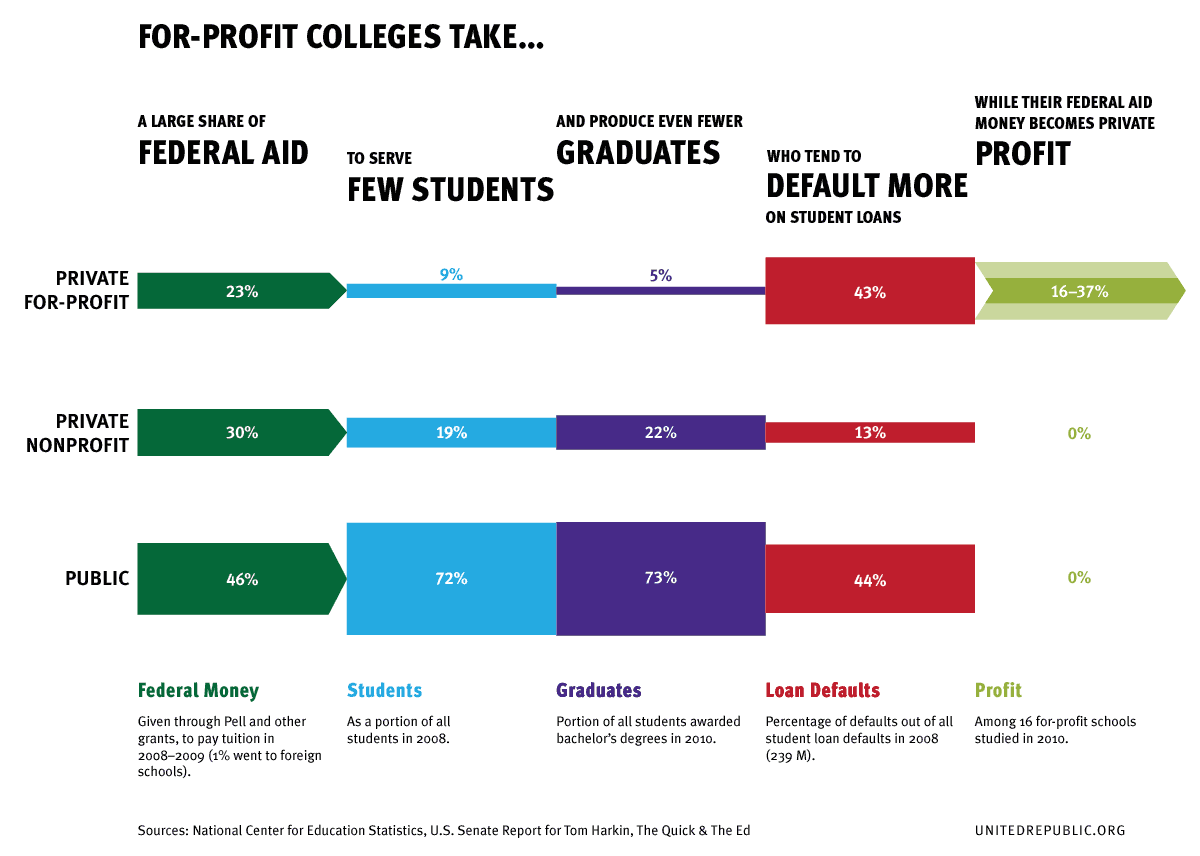
A graphic highlighting the faults of for-profit schools
Corinthian Colleges, a large collection of for-profit colleges, is in its death throws, shutting down it's remaining 28 campuses, after many years of trouble with the Department of Education. Just last week they were fined $30 million for misrepresenting the value of a degree from their schools.

While the Department of Education and the Consumer Financial Protection Bureau are planning on forgiving $500 million worth of debt held by Corinthian students, that doesn't make up for the private debts owed by students and the opportunity cost they suffered to get a worthless degree.

This is a clear example of what happens when demand far outstrips supply. Snake oil salesmen start peddling inferior goods to those desperate for a way out. In a world where post-secondary education is increasingly seen as crucial, there are too many opportunities for abuse.

Obama should work with Congress to pass some form of his plan to expand access to community colleges. This will create greater supply, taking power away from predatory for-profit institutions. Additionally, the Department of Education should follow through with the regulations published this year that will ensure that for-profit schools are enriching their students, not bleeding them dry.

What is the role of for-profit colleges in our higher education system? Should they be banned entirely? Left to their own devices?
Should students not have to pay off the loans they took out to go to Corinthian schools?

Sunday, April 26, 2015

American citizens trapped in Yemen

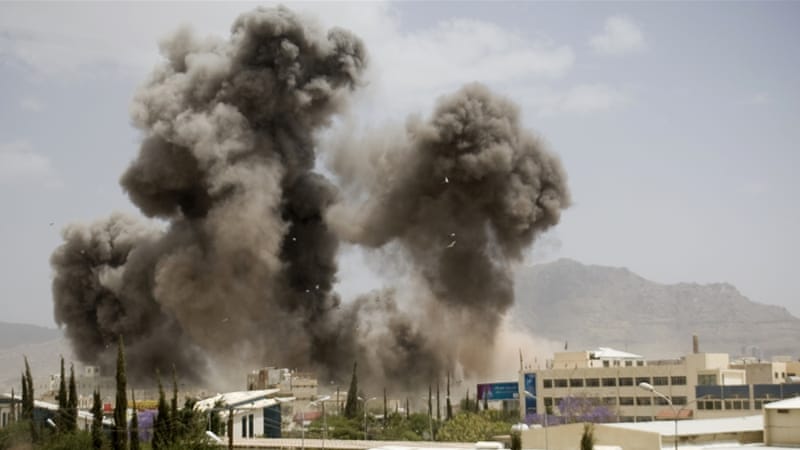
Airstrikes in Yemen
Despite the fact that multiple other countries, including China, India and Russia, have evacuated their citizens, the US has refused to rescue to American citizens trapped in Yemen. They claim that any action on their part would put citizens at further risk. Nevermind that there are daily air raids, gunmen in the streets and a dire food shortage, since Yemen imports (or at least used to import) almost all its food.

My family has a personal tie to this conflict, as we currently have a Yemeni exchange student staying with us. His family has been rationing their food for weeks, and a rebel sniper was killed on the roof of his apartment building. If this is what normal Yemeni citizens face, imagine the danger to known American citizens.

The State Department also points out that they have long warned travelers to not visit Yemen. This "I told you so" attitude provides great cover for the State Department, but does nothing to protect American citizens or end the current conflict.

The US should be doing more to protect Americans abroad and to make peace with the Houthis. If the US is unable or unwilling to take direct action to rescue their citizens, they should at least provide monetary support to other countries who are rescuing foreigners. In addition, they should work to create safe zones in neighboring countries (such as on the coasts of Somalia, Djibouti and Eritrea), so that citizens who manage to escape on their own can easily make their way back to the US instead of having to fight their way to an embassy.

What do think the US should do for American citizens in Yemen?
What role should the US play in the larger conflict?

Thursday, April 23, 2015

Google Accused of Anti-Trust Violations in the EU


This week, Margrethe Vestager, the EU Competition Commissioner, accused Google of favoring its own products in web searches, specifically in shopping, giving it an unfair advantage. Vestager claims it is harmful to competition, "Google's favorable treatment of its comparison shopping service - you probably know it as Google Shopping - is an abuse of Google's dominant position in general search." It is also likely that there will be further anti-trust suits focusing on Google's Andriod operating system. Google has a much larger market share for both search engines and operating systems in Europe than they do in the United States, where Yahoo! and Bing provide more competition.

Google has responded by saying that consumers have access to information in a variety of ways and it is not hindering consumers or competitors at all. The accusations come at a time when the EU has taken regulatory action against other American tech companies. Some, such as Eric Goldman, a law professor at Santa Clara University, see a slight European protectionist trend. Others, like Nicholas Economides an economics professor at NYU, say that it is not at all protectionist and that the US could even file similar suits if the European ones prove successful, despite already finding certain practices by Google not in violation of anti-trust laws.

Do you think Google's actions constitute anti-competitive behavior? How strongly should governments attempt to enforce anti-trust legislation?

New York Times Article
NPR News Segment

Vaccination Bill Clears Hurdle in California

A CDC map of measles outbreaks

A California state bill that requires vaccinations for all children, except for those with a medical condition, has made another critical move through the state Senate. After being amended, the bill passed through the Senate Education Committee. Th bill still needs to go through another committee before coming to a vote on the Senate floor. It must then be voted on by the Assembly.

The recent measles outbreak was the catalyst for this bill, after 102 people, many of whom were not vaccinated, fell ill after visiting Disneyland. While the percentage of children who lack all vaccines is still low, it has more than doubled since 2000.

Personally, I am in favor of this bill. I liken it to requiring health insurance; the chance of something catastrophic happening is rather low, but the more people who take precautions, the safer it is for everyone. In the case of vaccines, this protects those who are medically unable to be vaccinated via herd immunity. Additionally, there is no scientific evidence that vaccines cause any kind of autism. The chance of any serious reaction to the specific vaccine that many people are worried about, the MMR vaccine, is less than 1 in 1,000,000. While parents are free to make decisions that only affect themselves, but when their decisions can easily cause great harm to others, the state should step in.

Should parents be required to vaccinate their children?
Is this bill an infringement on parental rights?
If parents choose not to vaccinate their children, should they be held responsible for any preventable illnesses spread by their children?

Wednesday, April 22, 2015

Climate Change isn't Beetlejuice

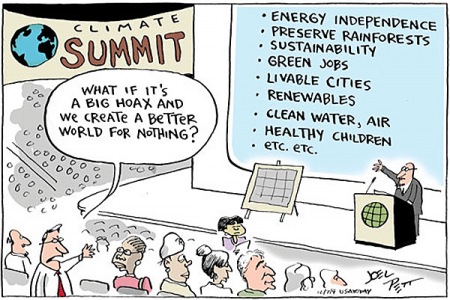
With today being Earth Day, I thought it would be appropriate to discuss the general animosity towards science in this country and specifically, towards climate change. While virtually every scientifically-minded person realizes that the increase in greenhouse gases in the atmosphere is causing some problems, many in this country claim it is a "liberal conspiracy" to get us all driving a Prius and eating kale. 

Today, President Obama has addressed this dangerous thinking while visiting the everglades, saying, "Climate change can no longer be denied." This is an obvious challenge to Florida Governor Rick Scott, who allegedly ordered state workers to avoid any mention of the phrase "climate change." 

Climate change isn't Beetlejuice; saying it three times won't make it reality. Those trying to pretend it doesn't exist are doing the entire world a disservice. While climate change deniers hide behind shoddy pseudoscience funded by oil companies, animals go extinct, the ocean swallow up entire islands and extreme weather continues to threaten lives and livelihoods.


What is the root cause of climate change denials? How should we respond to them?
How should we address climate change?