Thursday, January 10, 2013

Mayor of Boston Declares a Public Health Emergency Over the Flu

The mayor of Boston has declared a public health emergency in the city over the high levels of flu like illnesses that have been reported. The seven hundred cases that have been confirmed in the city are ten times as many as those confirmed during last year's entire flu season.
(source)

The CDC has reported that forty one states also have widespread flu activity. While flu levels are usually higher later in the year, flu season appears to have started early this year as current levels are already as high as the peak levels in previous years. Experts have said that this is only week five of the twelve week flu season and the flu levels are set to increase even more. A map showing the level of flu intensity in each state can be found here.

(source)


Although there have been reported shortages in flu vaccines around the country, there are many other easy ways to avoid getting the flu this year. By washing your hands often and avoiding touching your face, you can reduce your chance of getting the flu dramatically. If you do end up getting the flu, then please, do your classmates and teachers a favor by staying at home until you are no longer contagious.

What do you think about the mayor of Boston declaring a public health emergency? Do you think that the flu is going to be a serious problem this year or is it just being blown out of proportion again?

Another School Shooting Raises More Questions in the Gun Control Debate


Officers at Taft Union High School in California after a shooting occurred earlier today.
Another school shooting happened today at a high school in Taft, California. A student came to school with a shotgun and "shot one student before shooting at and missing another." A teacher also suffered minor injuries and the student was taken to a hospital and is said to be in a stable condition. Fortunately, the shooter was convinced to give up the gun before anyone else was hurt.

While this case may offer support to the NRA's wishes of having an armed guard at every school, a source reveals that Taft Union High School DID in fact have an armed security guard. Unfortunately the guard was unable to make it to school, yet it brings up the point that even having an armed security guard may not stop gun violence in schools. Nor do "all mass shootings take place at schools, raising the question of whether the country should have armed officials at every mall, movie theater and house of worship as well."

At the same time, today Vice President Biden met with the NRA to discuss gun control policy. However, the NRA shows little willingness to compromise, saying that "meeting at the White House was more about demonizing the Second Amendment than about keeping students safe."

Will NRA's stubbornness affect Biden's plans? How much influence do they really have? According to Rachel Maddow, they don't have much, but what do you think? Also, will we ever be able to prevent mass shootings in schools or other public places?  

Wednesday, January 9, 2013

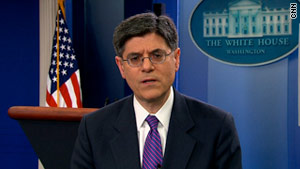
Obama to Nominate Jacob Lew as Secretary of the Treasury

On Wednesday several news organizations declared that the POTUS is going to nominate Jacob Lew as his secretary of the Treasury.
(source)
Although there were speculations that Obama would choose somebody from Wall St. for this position, Mr. Lew has spent most of his career dealing with budget issues in Washington. Lew's experience in dealing with budget issues will be valuable as the debt-ceiling debate is set to happen over the next few weeks.

Mr. Lew, the current Chief of Staff, has run the Office of Management and Budget for both Obama and Clinton. Lew has also served as a Democratic adviser to Thomas P. O'Neill where he participated in fiscal talks with the Reagan administration.

Lew is described as a progressive liberal and has had bitter meetings with congressional Republicans in the past. Both Lew and Obama have similar views on entitlement programs like Medicaid and both want to avoid the large budget cuts that are being proposed for them.

source


As secretary of the Treasury, Lew's distinctive signature will be printed on every new dollar bill.

What do you think of Jacob Lew and his skills and experience? Do you think he will be successful in helping negotiate a deal with the Republicans? What do you think of his signature?

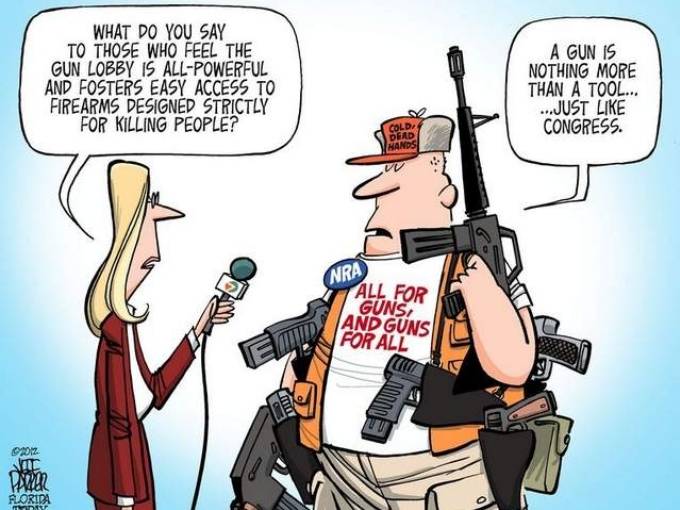
Chaos in the Gun Control Debate


At a vigil on December 16th for those lost in the Newtown, Connecticut shooting at Sandy Hook Elementary school, President Obama stressed the need for change in gun control laws. He asked Vice President Biden to investigate what could be done, and to come back with specific recommendations.

After three weeks of Biden meeting with groups representing all sides of the gun control debate (including a plan to meet with the NRA tomorrow), it seems like any specific recommendations should be expected within the next few weeks. Today, Biden said that he is "determined to take action" and “we are not going to get caught up in the notion unless we can do everything, we’re not going to do anything.”

At the same time, some members of Congress are planning to introduce bills. However, with partisan procedural roadblocks, the threat of Senate filibuster. etc. it is unlikely that there will soon be a vote in either chamber.

Also, at the state level, a variety of different actions have taken place. Governor Cuomo of New York plans on enacting major changes in gun control in his state. While New York has already banned some assault weapons, Cuomo "wants to broaden the number of guns and magazines covered by the law while also making it harder for gun makers to tweak their products to get around the ban." On the other end of the spectrum, a small town in Utah stresses the importance of a gun in every household and "approved funding to offer concealed firearms training Friday to the 20 teachers and administrators at the local elementary school." Many other gun rights advocates also support this notion, while some even going as far to compare President Obama to Adolf Hitler, saying that "Nazi Germany banned guns before embarking upon the Second World War and the Holocaust" (information found here). The article continues on to say that "in fact, Hitler loosened gun laws in 1938 so that German citizens...could buy handguns with simple hunters' permits." However, even if the assertion was true, I do not believe that President Obama deserves to be compared to Hitler. Regardless of your political preferences, and regardless of whether or not you like President Obama, it is absurd to say that just because Obama supports stricter gun control, we will have another Holocaust on our hands.

On another note, former Arizona Representative Gabrielle Giffords and her husband Mark Kelly issued a statement yesterday, on the two-year anniversary of the shooting in Arizona that seriously injured Giffords, that their PAC (Americans for Responsible Solutions) will support and raise money for better gun control legislation.

It seems to me that the big debate between gun control advocates and gun rights advocates is whether or not greater gun control would be denying a individual Constitutional right, or increasing safety for the broader population. What do you think? Is the issue of gun control a matter for Congress to deal with, or the states? Or maybe even the president? Will any significant changes result any time soon?

Understanding How Congress Works

I mentioned this post to at least one class yesterday. The main point Dr. Taylor makes is that most House Republicans voted to approve a rule coming from the Rules Committee that let them take up the fiscal cliff deal out of order, then turned around and voted against the deal more as a matter of political positioning (saving face with conservative constituents/ primary voters) more so than outright opposition to the deal. They bargained to limit tax increases, did the best they could, let things drag out a long time -- again for positioning -- and then accepted the deal without spending cuts or other entitlement reforms because, at some level, the tax policy was the main thing they cared about in the first place.

The votes for final passage of a bill are not always the most indicative of how Member of Congress thinks about an issue.

Tuesday, January 8, 2013

Obama nominates Hagel for Defense Secretary and Brennan for CIA Chief


On Monday Obama nominated Chuck Hagel to be his Defense Secretary and John Brennan to be the new head of the CIA. Both nominations need to be confirmed by the Senate.

Chuck Hagel, the current co-chairman of the President’s Intelligence Advisory Board, is a former Republican Senator from Nebraska and a Vietnam War veteran. Leon Panetta, the current Defense Secretary, has expressed his strong support for the nomination.

John Brennan is Obama’s current counter-terrorism adviser and a long time member of the CIA. Some of Brennan’s most famous work includes his role in coordinating the Bin Laden raid and his expansion of the drone strike program.

Hagel meeting with the POTUS (source)
As with most Presidential nominations for powerful positions, both Hagel and Brennan have recently encountered criticism from members of both parties. Hagel is by far the more controversial figure for his supposed policies in the Middle East. Lindsey Graham, a Conservative Senator from South Carolina has called Hagel “the most antagonistic secretary of defense towards the state of Israel in our nation’s history.” These remarks are questionable being that Hagel has voted to give military aid to Israel numerous times. Hagel has also come under fire for his view that Israel should have talks with Hamas and that UN sanctions should be used against Iran instead of unilateral sanctions. In addition to being criticized by his own party, Hagel has also been criticized by Democrats for a remark in 1998 when he called the nominee for the ambassador to Luxembourg “openly, aggressively gay.” He has since apologized for these remarks.

John Brennan (source)
In the past, John Brennan has been scrutinized for his association with the War in Iraq and his association with the torture techniques used during the Bush administration. These attacks are what ultimately caused him to give up pursuing the nomination for the same position in 2009. These attacks are also somewhat unfair since Brennan has opposed both the Iraq War and torture techniques used during the Bush administration. In regards to the harsh criticism of his drone strike program and his infamous "kill lists"from human rights organizations, Brennan has stated that he would like to see the program become more transparent with more rules. He has also advocated for the closing of the GITMO prison and been open to removing drone strikes out of the CIA to an organization where they could be better conducted. The current Director of the CIA has praised Brennan's nomination.

The Senate is expected to approve both nominations.

What do you think of each nominee? What are your opinions on the controversy surrounding each candidate? Should each nominee be approved?

The 113th Congress


Freshman of the 113th Congress pose for a photo on the Capitol Building 


The 113th Congress was sworn in last week, bringing with it more diversity than seen in recent years. There are now a record 81 women in the House of Representatives and 20 in the Senate, along with a record number of Asian, Latino, and other minority representatives. Tammy Baldwin (D-WI), the first openly gay senator, as well as Kyrsten Sinema (D-AZ), the first openly bisexual member of Congress, also joined the ranks this year. Brian Schatz was appointed to the Senate after Senator Daniel Inouye (D-HI), one of the most respected members of the Senate, died last month (see here for more information about Senator Inouye and his impact in the Senate).

However, while this diversity may offer hope about the upcoming year's legislation, the new Congress might actually be more polarized than ever. Nate Silver says that "Most members of the House now come from hyper-partisan districts where they face essentially no threat of losing their seat to the other party." Instead, candidates face grueling primaries against members of their own party who are supported by increasingly narrow-interest groups with virtually unlimited and anonymous funding. (thanks to "Citizens United" Supreme Court ruling). This results in candidates taking very narrow positions to appeal to their "base", vs. looking for broader solutions that would be open to compromise, as further discussed in the previous post. Also, look here for more of Nate Silver's analysis.

All of this affects how the new Congress will deal with the debt ceiling; Biden's recommendations on gun laws; the confirmation hearings for the head of the CIA, the Secretary of State, and the Secretary of Defense; and the large number of open judiciary positions that remain unfilled. Do you think the Congress' increased diversity will prove to be a blessing? Or will it, along with continuing polarization, actually end up being a hindrance? Will this new Congress be more or less efficient at passing laws than the previous one?


Wednesday, January 2, 2013

Dissatisfied Conservatives Await Primaries

Naughty Republican, you need to be more conservative
(picture found here)
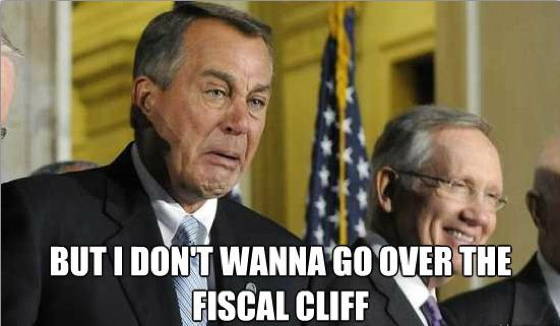
Now that the deal to avoid the fiscal cliff has been passed, the debates over it have, at last, come to an end. After weeks of reading article after article about the cliff, I for one am a happy camper. Conservatives, on the other hand, not so much.

Without the ability to change the past, conservatives are looking forward to the primaries. Through the coming primaries, they will be able to challenge the Republicans who voted for the tax increases and spending cuts that accompanied the new fiscal cliff deal.

The president of Americans for Prosperity, Tim Phillips, said, "We aim to hold elected officials accountable. Lawmakers will not be judged solely on how they voted on the fiscal cliff, but it is a big vote to get wrong." Added executive director of the Kentucky 9/12 project, a Tea Party group in Kentucky, "Anyone who sticks their neck out now will get their head cut off." Ouch.

The Tea Party hopes to make a repeat of the 2010 primaries in which they saw victory with a number of their members.

Of course, this type of reaction is to be expected from conservatives; yet it still leaves me disappointed. Polarization between the two political parties, though unfortunate, is understandable. But polarization should not sneak its way into a single party. Chastising and attempting to get even with members of your own party because they voted against your wishes seems so childish. Perhaps I am oversimplifying, and I admit that I am no expert on all of the rules to the game of politics. However, I do have a basic sense of right and wrong.  I just think that moving towards the extreme conservative end of the spectrum is dangerous for Republicans.

What do you guys think? Is the Republican Party headed towards the danger zone? Is there any possible chance of a third party emerging from all of the ruckus, or is that completely out of the question? Should conservatives wage a primary war against less conservative Republicans? Is there any hope of compromise within the Republican Party? Are conservatives powerful enough to pull the party towards their end of the spectrum in the first place?

Here is the article that inspired this post. Oh, and check out this slideshow of conservatives' reactions to the fiscal cliff deal. I don't know what amuses me more: Todd Starnes' "emotionally comprised weeper" comment, or the fact that all of these politicians have a twitter and I don't.

Tuesday, January 1, 2013

Quick Fiscal Cliff Update

Here is a quick update to yesterday's post: the Senate, at last, passed a deal last night as a means to avoid the fiscal cliff. Two hours into the new year, the deal passed with an 89-9 vote. 

Though the House considered proposing amendments to the bill (including $300 billion in spending cuts), they ultimately decided against it. House Republicans believed that the Senate would reject any such amendments and that all fingers would point towards them for blocking the plan that is supposed to stop the fiscal cliff.  

By the looks of it, the House will vote on the deal anytime now. You can stay updated with CNN's political tracker

What do you guys think of the House's decision to avoid proposing amendments? Is it just a political move meant to save House Republicans from the wrath of the antsy public at this point in the journey of fiscal cliff dealings? Does it spark any sort of hope that the country will slowly deviate from so much polarization? Do you think that the deal will pass at all? Leave your comments and hang in there--it looks like the fiscal cliff phenomenon is nearing its end. 

Monday, December 31, 2012

The Countdown Begins...for the Fiscal Cliff

As of now, negotiations regarding the fiscal cliff have moved forward in terms of tax rates. For one, households making less than $450,000 will continue to face current tax rates. On the other hand, estates worth more than $5 million will see a tax raise from 35 to 40 percent. Changes will also be made to the Alternative Minimum Tax in order to save middle-class workers from unjust taxes. Finally, unemployment insurance benefits will be extended for another year, and cuts that were supposed be made to the paychecks of Medicare doctors will be avoided.

However, another aspect of the fiscal cliff has yet to be addressed: the nearly $1 trillion in spending cuts to defense and domestic programs. Thus, despite the progress, Congress is not yet ready to squash the potential for a fiscal cliff before the new year.

Earlier today, President Obama stated, "There are still issues left to resolve but we're hopeful Congress can get it done." However, Sen. John McCain, R-Ariz., disapproved of the president's words. "Well, he kind of made fun, he made a couple of jokes, laughed about how people are going to be here for New Year's...I guess I have to wonder, and I think the American people have to wonder whether the president really wants this issue resolved or is it to his short-term political benefit for us to go over the cliff?" he said.

Sen. Joe Manchin, D-W.Va., had a slightly different view, "Something has gone terribly wrong when the biggest threat to our American economy is our American Congress," he said.

At this point, there is no telling whether Congress will sweep in with a last-minute plan or start the new year with a fiscal cliff--we will just have to wait and see as we have been all along. Hopefully, though, this issue will soon be resolved; after all of the negotiations and coverage, I'm sure that everyone is starting to tire of the fiscal cliff. In fact, according to this article (and the graph pasted below), 27.8% of voters want to ban the phrase.


Which word or phrase would you most like to see banned? (from NBC news)
Total of 7,623 votes - click on the "Display Comments" bar below to sort comments

YOLO
 
30.4%
(2,318 votes)
Fiscal cliff
 
27.8%
(2,120 votes)
Job creators/creation
 
12.1%
(919 votes)
Trending
 
8.2%
(627 votes)
Bucket list
 
4.9%
(373 votes)
Kick the can down the road
 
3.6%
(278 votes)
Superfood
 
3%
(229 votes)
Double down
 
3%
(225 votes)
Boneless wings
 
2.3%
(173 votes)
Guru
 
1.8%
(141 votes)
Passion/passionate
 
1.8%
(136 votes)
Spoiler alert
 
1.1%
(84 votes


Friday, December 28, 2012

Speaking of Russia, President Vladimir Putin deemed it illegal for Americans to adopt Russian children last Friday when he signed the Dima Yakovlev Bill. 
Russian police officers detain demonstrators protesting against the bill. A poster reads "Destroy Putin's authoritarianism. Don't pass the bill written by scoundrels." (AP Photo/Misha Japaridze) (Misha Japaridze)
The bill is believed to be a response to legislation (the Magnitsky Act) recently passed by President Obama. Named after famous Russian lawyer Sergei Magnitsky, the act implements U.S. travel and financial restrictions on human rights abusers in Russia. The Dima Yakovlev Bill also includes sanctions against U.S. officials who may have  abused human rights and makes illegal all political activities of nongovernmental organizations who enjoy funds from the U.S. (should they interfere with Russian interests). 


Though Putin's move was purely political, it has stirred outrage among many due to its implications for Russian children. According to UNICEF estimates, 740,000 children in Russia are not in parental custody, and only 18,000 Russians are waiting to adopt. With Russia being the third most popular country from which Americans adopt children, the bill will undoubtedly keep many Russian children from finding homes. 

Politics is prevalent in many spheres of life these days, but it is situations such as this that cross the line. I don't see why these children have to be punished as a result of animosity between two countries. In fact, I don't see any relevance in this aspect of the bill. I happen to know a family who adopted a child from Russia five or six years ago, and I am heartbroken by the fact that other children will not have the opportunity to be adopted into loving families of their own. 

For a full translation of the bill, click here


Russia Interested in Talks with Syrian Rebels

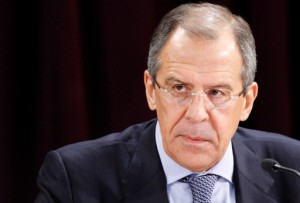
Sergei Lavrov suggested that war crimes had been committed in Libya since the fall of the Qaddafi regime.With military and commercial interests in Syria, Russia initially backed the regime of President Bashar al-Assad. But with constant progress on the side of the rebels, Russia is reconsidering its status (questionable motive, but at least supporting a dictatorship is becoming less appealing to the country).

Russia's Foreign Minister, Sergei Lavrov, revealed an interest in beginning talks with opposition leader Ahmad Mouaz al-Khatib--an offer that was promptly rejected by al-Khatib. Stating that the opposition was unwilling to travel to Russia, al-Khatib also said that he wants an apology from Russia for supporting Assad's regime. He expects a "clear condemnation of the crimes committed by the Syrian regime." Perhaps a fair request, but seemingly puerile within the given context.

However, this does not mean that the opposition's cooperation is out of the question. Russia has already expressed that they are encouraging Assad to come to a political settlement , and Putin recently said that Russia is "not preoccupied that much with the fate of the Syrian regime." Furthermore, negotiations could take place in a neutral country rather than within Moscow.

Russian Deputy Foreign Minister Mikhail Bogdanov, U.S. Undersecretary of State William Burns, and UN-Arab League Envoy Lakhdar Brahimi plan to meet in January in order to discuss and incite change.

Will efforts to reach peace prove successful with Russia involved? If these efforts are successful, will they be sustainable or will they eventually lead to the production of another corrupt regime?

Thursday, December 27, 2012

Who Wants to be a Mayor?

John W. Adkisson for The New York Times
As the government struggles to come to an agreement over the whole fiscal cliff business, a small town in South Carolina faces a crisis of its own: no one has run to be its next mayor.

The rural town of Little Mountain has a population of 292, a number that has been declining over the years. No one participated in the November election for mayor, and the two write-in candidates refused the job. Despite the $100 a month salary, Snoop Dog and Mickey Mouse, who also received a number of votes, will most likely decline the role as well.

According to this article by Robbie Brown, the job has no takers because "politics has lost its luster," a statement with which Marty Frick (one of the write-in candidates) agrees. In fact, "The biggest dispute in Little Mountain lately has been over whether to serve alcohol at the annual Little Mountain Reunion," says the article. 

Frick and Brown have a point. As state and federal governments deal with issues that determine the fate of individual states and the country, this small local government must decide between the inclusion or exclusion of alcohol at a family event. However, does this mean that the town should not have a government at all? America's government is complex and multifaceted, going beyond federal and state to include bureaucracies and local governments. Is this a positive aspect of the government, as it contributes towards the decentralization of power and allows for more individual focus in separate spheres, or does it simply lead to triviality and confusion? Should local governments take on more responsibility, or will any increase in power lead to trouble with state governments? Let me know what you think. 


Wednesday, December 26, 2012

House Market Rebound

We all remember the big market crash in 2008. It was caused by an over anticipation of house prices which crashed because houses were overvalued. For a while it seemed as if the market would be plagued by housing crash for quite a while. However by 2011, our economy was starting to pick up. (Though it was not as fast as some people hoped for). And for a while people didn't believe that that economy would get any better under Obama, so in the 2012 Presidential Race, the economy was a hot topic.

However, it seems the home prices in the U.S. are also making its way back up. The reports from October have just recently come out (with some huge delay) and it shows 4.8% increase rather than the 4.0% that was predicted by market analysts. And it doesn't seem that number is going to let up anytime soon. With the mortgage rates very low, people will continuously buy/refinance their property. With people able to hold on to their houses, the prices of houses will only go up from here.

But how long can this really keep up? People are willing to buy houses because the house prices are low by the "slowing economy." The mortgage rate is going down as well because of the "slowing economy." As soon as people realize that the economy is "slowing," the prices of houses will go up. Also, with no real tax deal coming through for the new year, we can expect some kind of raise on housing taxes. Is the housing market actually in a real rebound? Or is it some effects because of a slow economy?

Monday, December 24, 2012

Finger-pointing Left and Right...but Mostly Right

The potential fiscal cliff and the hasty attempt to address it with legislation before the end of the year has escalated into a prime example of the intense polarization that plagues our political system. Though not much has been agreed upon in the past few weeks, especially with a gridlock in the House, one point has made itself clear: the Republican Party is not in the best shape.

In fact, most of the negative press surrounding the fiscal cliff includes finger pointing towards Republicans. Speaker of the House John Boehner has faced much scrutiny since his attempt at a compromise was rejected by his fellow party members. Conservative Tea Party members have not helped the cause, claiming that falling off of the fiscal cliff is preferred to any sort of tax increase. Also, Grover Norquist, whose pledge against tax increases was signed by many Republicans, has warned that violating his pledge will lead to primary challenges against the violators.

Public opinion reflects the above, as a Pew Research Center poll revealed that 53% believe that Republicans are more to blame if an agreement is not reached by Jan. 1 (versus 27% who blame Obama). Though the argument is now in the less-polarized Senate, insiders believe that an agreement will not be reached by the first of Jan.

Are the Republicans to blame for the failure to pass legislation to fight the potential fiscal cliff, or has the media unjustly stirred public opinion against them? How large of a role does Obama play in the issue? Is the Republican Party on a downward spiral? Will they be able to rebuild soon, and will that mean a (slight) move towards the center?

Saturday, December 22, 2012

Guns Galore: the Bad Guys, the Good Guys and, heck, Everyone in Between

                                               PHOTO BY MICHAEL REYNOLDS/EPA
Today, the National Rifle Association (NRA) finally responded to the shooting in Connecticut in a press conference. The highly anticipated resolution by the most prominent gun rights interest group in the nation? More guns. Shocker. 

Executive Vice President Wayne LaPierre advocated the implementation of armed guards at all schools, stating that "Gun-free school zones tell every insane killer that schools are places to inflict maximum pain at minimum risk." This and other statements spoken by LaPierre were noted by House Democrats, who expressed their opposition. Rep. Joe Crowley (D-N.Y.) said, “The way the NRA is approaching this now is irrational,” and House Minority Leader Nancy Pelosi (D-Calif.) argued, "For the NRA and others to sort of shield themselves by saying it’s the mentally ill or something and therefore we have to have more armed cops in the schools or more guns in the school -- it just doesn’t make sense."

LaPierre criticized the media in his speech, blaming it for "demon[izing] gun owners" and exposing children to too much violence. He also censured Congress for failing to create a national database of the mentally ill. He then explained that one way to combat the bad guys is to arm the good guys. Perhaps he was attempting to tie into the media theme by whipping out a superhero analogy? Or perhaps he needs a lesson in logical fallacies. 

In the meanwhile, President Obama is working towards legislation that will ban assault weapons and high-capacity ammunition magazines. Of course, passing such controversial legislation will be no easy feat. But president's are supposedly the most powerful in terms of getting legislation passed during the beginning of their second term, putting Obama in the perfect position. 

According to a recent Pew Research Center Poll, 49% say that it is more important to control gun ownership than protect the rights of Americans to own guns (which 42% find more important). This marks only a slight increase since previous months. Still, the percentage is nowhere near 58%  which described public opinion back in 2008.

What are your opinions on the NRA's response to the tragedy? Are the House Democrats justified in their criticisms of the response? Will Obama be able to pass legislation restricting gun access? What do you think of the lack of substantial change in American opinion regarding gun control after the shooting?


Sunday, December 16, 2012

John Kerry Likely Nominee for New Secretary of State

It seems very likely that President Obama will name Massachusets senator John Kerry as Hilary Clinton's successor for Secretary of State. However, some concern has been raised about the idea of Obama selecting a security team with higher-up positions filled pretty much only with white males, a discomfort that illustrates some of what may be warped American ideals about diversity in government. (When does it become tokenization, using someone from a minority group just so that you can say you're diverse?)

 The decision will be delayed at least until later this week, partially because as a result of Friday's shooting and its aftermath.

You can read more here.


The Best Year Ever?

This week has certainly had its low points, and this year has had quite a few as well (fiscal cliff, anyone?). It can be very easy to bemoan the state of the world, nation, and humanity as a whole when most of what you see in the news is about financial crisis, violence, ideological divisions, and other negative topics. Some might even say the world is ending. However, this article presents an entirely different view: that "we are living in a golden age."

The article cites the fact that the global number of people in extreme poverty has been halved as one of its reasons for this naming of a "golden age." However, this information didn't come to light until this year, despite having become true in 2008. In addition, it talks about how the world's economies have been growing, yet fossil fuel consumption has actually decreased. It also cites advances in technology and medicine, longer lifespan, and a lower deathcount as a result of war. Even despite violence in the Middle East and in other parts of the world, this article paints the world as a more peaceful place than in past decades.

Now, all that doesn't necessarily make it any less worrying when a downturn in the economy sends people onto the streets or when you've just heard of mass violence, but it's a new and refreshingly optimistic look at the world. Despite all of the unhappiness and harm we may witness, there's still some kind of improvement going on--so maybe we don't need to panic after all.

What do you guys think? Do you agree that the world is improving/has improved? Or is it really heading downhill like the media tends to portray it?

Japanese Election Overshadowed by American Horror

Japan PM candidates Shinzo Abe Yoshihiko Noda
Let me start off by saying that the majority of American news sites I looked at today barely addressed this, instead focusing nearly exclusively on yesterday's shooting. Is it a good thing that our minds are so dominated by this event, or would it be better if we were to focus more on international affairs and other, less tragic goings-on?

On December 16, voting in the Japanese elections will take place to select the country's seventh prime minister in six years. The challenges in this election include a struggling economy, regional tensions, and debate over what role Japan ought to play in Asia (strikingly similar to some of the issues in this year's American elections). It is forecasted that Japan's center-right Liberal Democratic Party will win the vote, placing Shinzo Abe in power as prime minister. Before the Democratic Party of Japan gained power for three years beginning in 2009, the LDP enjoyed more that 50 years in power.

You can read more about this here, here, and here
.

Saturday, December 15, 2012

Rememberance (Newtown Shooting Update)

The Connecticut gunman has been identified Adam Lanza, 20, and the names of the children and teachers who fell victim to this violence have also been released:

Charlotte Bacon, 6
Daniel Barden, 7
Rachel Davino, 29
Olivia Engel, 6
Josephine Gay, 7
Ana Marquez-Greene, 6
Dylan Hockley, 6
Dawn Hocksprung, 47
Madeline Hsu, 6
Catherine Hubbard, 6
Chase Kowalski, 7
Jesse Lewis, 6
James Mattioli, 6
Grace McDonnell, 7
Anne Marie Murphy, 52
Emilie Parker, 6
Jack Pinto, 6
Noah Pozner, 6
Caroline Previdi, 6
Jessica Rekos, 6
Avielle Richman, 6
Lauren Rousseau, 30
Mary Sherlach, 56
Victoria Soto, 27
Benjamin Wheeler, 6
Allison Wyatt, 6

Lanza's mother, Nancy Lanza, was also found dead.

After seeing this list, what do you think of the way that people react to shootings by focusing on the the shooter and their motivation, as opposed to focusing on those who died? What about the obsession with gun control that I've seen in the comments on the following post? There are other factors, after all--mental health, among other things.