Wednesday, March 14, 2018

Russian spy: Highly likely Moscow behind attack, says Theresa May

http://www.bbc.com/news/uk-43377856


Nerve Agent Used in Russian Assassination Attempt

Summary:
Sergei Skripal defected from Russia, seeking asylum in England, due to being convicted of passing secrets to MI6 in 2004. Both he, and his 33 year old daughter were found on a bench in Salisbury. They are now both in hospital in critical condition. On closer examination, the suspected cause of the incident is Novichok, a Russian nerve agent developed in the 70s and 80s. Det Sgt Nick Bailey got sick while attending to them, and is as well quite ill. Interestingly enough, it is reported that "One variant[of Russia's chemical development program] was reportedly approved for use by the Russian military as a chemical weapon," seemingly breaching the Chemical Weapons Convention agreement. Teresa May is outraged, calling this an "unlawful use of force," and requesting an explanation from the Russian Government in the face of consequences. Vladimir on the other hand, when asked about the attack, said "Get to the bottom of things there, then we'll discuss this." Seems pretty shady Russia.

Questions:
Given Russia's history of nationally sponsored assassinations, do you think this is another state sponsored job?
Is May's response acceptable? Should she have taken harsher measures against Russia?
Is this a form of Chemical Warfare?


The Seychelles Meeting

http://nymag.com/daily/intelligencer/2018/03/the-push-for-a-trump-russia-back-channel-what-we-know.html
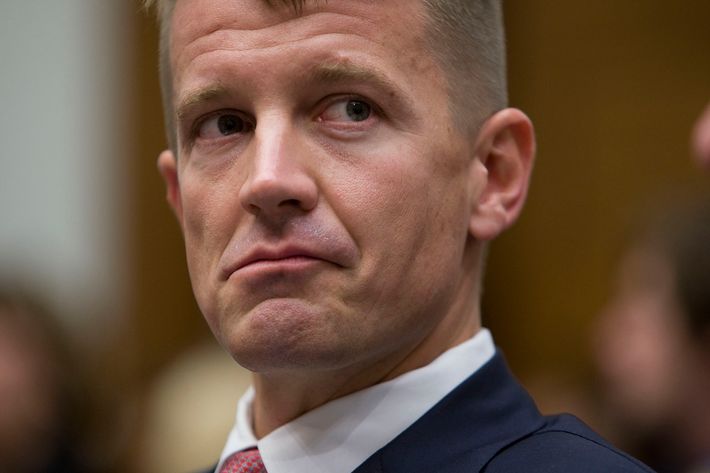
Erik Prince, Photo: Chuck Kennedy/TNS via Getty Images
More Information Surfacing about Russian Meetings

Summary:
Special Council Director for the Russian Investigation, Robert Muller, is said to have found evidence of a secret meeting in the Seychelles days before Trump's inauguration between Erik Prince and Kirill Dmitriev, a Russian businessman, allegedly to set up a backdoor connection between Russia and the Trump Administration. Prince denies any malicious intent, saying he was there to see Zayed from the Emirati delegation, and the Russian just happened to be there. He cited his hopes to join with the Russians to "defeat Islamic fascism.” However, Muller is not entirely convinced. This, after reports of calls and meetings between Sergey Kislyak, Jared Kushner and Michael Flynn is starting to seem quite sketchy. In that meeting, Kushner talking about setting up direct communications between Russians and Trump through the embassy, while Kislyak preferred using an unidentified Russian contact in a third country. Muller is also said to be looking into whether or not foreign money was used to fund Trumps campaign.

Analysis:
All of the secrecy surrounding Russian meetings, though said by the cabinet to be virtuous, could have been set up though official channels rather than secret backdoor conversations, suggesting there is something else going on in those conversations. That, along with Flynn's resignation from the Trump administration imply wrongdoing. Given Flynn plead guilt to lying, he and Kushner are for sure in deeper water than they are letting on. Yet another meeting in June of 2016 between trumps son and a Russian Lawyer were said to be “primarily discussing a program about the adoption of Russian children.” I'm not buying it. All the meetings between Trump officials and Russian Businessmen, validated by shady excuses, seem to have a nefarious undertone.

Questions:
Do you believe the Trump administration in believing these meetings are righteous?
Do you believe Muller in saying there may be something more going on here?


Stephen Hawking, science's brightest star, dies aged 76


Website

Summary:
Early this morning, Stephen Hawking’s family released a statement confirming the great scientist’s death. Hawking was diagnosed with motor neurone disease in 1963 when he was 21. He was given two years to live, but as we know live over fifty more years. He claimed that an eminent threat of death actually inspired him, and “although there was a cloud hanging over my future, I found, to my surprise, that I was enjoying life in the present more than before.” Hawking went on to make numerous breakthroughs in the field of physics and was decorated with many awards to signify the progress he made for humanity. However, Hawking was by no means a perfect man. Many of his claims were quite controversial: he starkly refuted religion as simply a comfort for those who need it, and he stood by many of his claims long after most physicists disregarded them. He was also regarded as sexist and misogynistic by some, including his first wife, who felt she became a slave as his health conditions worsened. The article details some of his discoveries, but I feel the specifics would not add much substance to our discussions.

Analysis:
Hawking’s achievements truly evolved the world of physics. Much of his discoveries may have stemmed from his illness, a concept I find intriguing. He has a checkered past, but I feel that many still see him as a great figure in physics and his personality has little weight for those who regard him as such a hero. However, with the growth of many progressive movements, there seems be decreasing tolerance for the private misdemeanor of public figures.

Questions:
  1. Does a threat of death in the near future serve as a motivator, or does it seem more as a cause of surrendering and accepting death? Would Hawking make the same discoveries if he were perfectly healthy?
  2. Does Hawking’s misogyny detract from his discoveries, or should his professional life stand isolated from his private life? Should this shadow last in his legacy for generations to come?
  3. What are your general feelings about Hawking as a scientist and the position he held in the academic world?


Bruno Mars Accused of Cultural Appropriation

Link
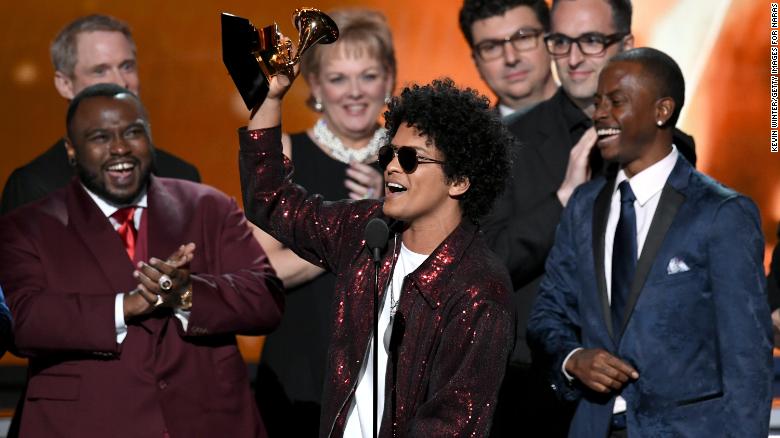
NEW YORK, NY - JANUARY 28:  Recording artist Bruno Mars (C) accepts Album of the Year for '24K Magic' with production team onstage during the 60th Annual GRAMMY Awards at Madison Square Garden on January 28, 2018 in New York City.  (Photo by Kevin Winter/Getty Images for NARAS)

Summary: Following Bruno Mars´ success at the Grammy Awards winning 6 of the awards he is facing backlash from African American activists as his music is perceived to be cultural appropriation. Mars is described to be at the cross section of multiple music genres such as funk, soul, R&B, reggae and hip-hop which are all historically dominated by African American artists. People are frustrated with his success winning album of the year while Prince a former artist that was a pioneer in the musical genres Mars has found success in, never won the award. Several African American artists have come to support Mars stating that he is allowed to sing how he chooses and according to his race.

Analysis: Hip hop has recently overtaken rock as the most popular genre of music as is a lucrative area. One of the major criticisms of Mars is that he overplays his racial ambiguity in order to have a different perception to different demographics. Critics claim that white people are not threatened by Mars and therefore have different feelings towards him than African American artists. Tastes are an important part of every industry and for music, hip hop is increasing in popularity becoming more and more relevant for all demographics. Bruno Mars being a Filipino and Puerto Rican artist does not face racial discrimination in his music as other artists may and should not be playing up his racial ambiguity to enhance these differences.

Question:
1) Is there legitimacy in the argument that Bruno Mars is appropriating in his music?
2) To what extent is it alright for artists to use singing styles that are not of African American heritage to be recording these genres of music(Ex:Post Malone)?
3) Would it be alright for a Caucasian person rather than a person of color to be singing in the same manner and playing up their racial ambiguity?

ICE Spokesman Resigns, Bashes Trump Administration On Immigration Raids

JIM WILSON, NYT
Summary: A spokesman for Immigration and Customs Enforcement in San Francisco resigned after the Trump administration's handling of the recent immigration raid in the Bay Area. James Schwab told the San Francisco chronicle that President Donald Trump and Attorney General Jeff Sessions exaggerated the amount of undocumented immigrants that avoided arrest, after Oakland Mayor Libby Schaaf publicized the raids to begin on February 25. Schwab added that if there were no prior warning to the raids they would not be able to capture 100 percent of the target list (which were stated by the ICE to be dangerous criminals). The ICE stated they've arrested 232 people, but originally claimed the number could have been higher. They later on stated Schwab's allegations were inaccurate.

Analysis: Major props to Mr. Schwab for standing up for what he believes in! He did this very maturely and brought much attention to the ICE that's much needed. His reasons for resigning were completely valid. His position had so much authority and with this recent incident, media attention will surely increase. Overall, I think Mr. Schwab did the right thing. 

Questions: 
What's your opinion on Mr. Schwabs' resignation?
Do you think his reasons for resigning were valid?

Whole Foods Addresses Efforts to Centralize Its Merchandising


Summary: On March 19, Whole Foods Market will have a meeting with their key vendors that will address tensions concerning their move to centralizing merchandise. Normally, most food grocers pay brokers to manage the process food merchandise go through. However, Whole Foods is taking their own route to control this process themselves.  By April 2018, all suppliers are required to use SAS for in-store demonstrations, as their single provider of in-store merchandising services. Most of their large suppliers will have to bear the cost of outsourcing, which means a mandatory 3% discount on food products and 5% discount for health and beauty products.

Analysis: I don't particularly mind Whole Foods' decision to centralize their merchandise. I do still think most Whole's Foods' key venders will continue their business with them because customers will become more open to purchasing their product for a much lesser price. Especially, when Amazon began putting the Whole Foods private-label on their site, they are much more exposed to customers.

Questions:
1. What do you think about Whole Foods centralizing their merchandise?
2. Do you think Whole Foods' key vendors will continue their business with them? Or do you think they will seek business somewhere else?

Tuesday, March 13, 2018

Elon Musk: Mars rocket will fly 'short flights' next year


Link
Summary:
Currently, Elon Musk has announced plans of entering the space exploration industry. He recently launched a “falcon heavy” rocket, which can be landed and reused for later missions—unlike previous rocket designs. Now, Musk has announced plans to begin providing transportation on earth with this type of reusable rocket within the next year. This ship would be able to travel from Shanghai to New York in thirty minutes, significantly quicker than what airlines can promise.
However, this just serves as a stepping stone for SpaceX, who plans to colonize Mars. Musk plans to begin missions in 2022 and soon establish a direct democracy. Along the lines of Martian governments, Musk said “‘Maybe it requires 60% [majority vote] to get a law in place, but any number over 40% can remove a law…’ It should be ‘easier to get rid of a rule than to put one in.’ The text of the laws should be short and easy to understand, he added…According to Musk, too many regulations can be harmful and keep a society from moving forward. It leads to a ‘hardening of the artery of the civilization,’ he said.” Musk also pointed out the entrepreneurial benefits of colonizing Mars, as they will need their own industries, both those that are necessary and those that provide entertainment.
Despite the lofty goals, SpaceX has been known for missing their deadlines by long periods of time. For example, the rocket they just launched last year was supposed to be done in 2013.

Analysis:
Elon Musk plans to take great leaps in moving humanity to space. The rocket launched last month was already a big deal, but he calls for huge history-making events. A colony on mars will have unprecedented effects on humanity, both economically and psychologically. But if SpaceX was five years late for one rocket test, it seems that colonization may not actually be in the near future. His policy ideas seem interesting, but I don’t think he has the experience necessary to govern an entire planet.

Questions:
  1. How do you feel about the privatization of space travel, and Musk’s progress in general?
  2. What are your thoughts on Musk’s government ideas? Should he be the one deciding how Mars should be run? If not him, then who?
  3. Do you think his plans will run on time? If not, when will we see the colonization of Mars?


Lotto Tickets Are Nice, Boss, but Can I Have My Bonus?


Article Link

After significant backlash online, United Airlines paused its lottery system replacing the past bonuses awarded to employees. The system would give a few lucky United employees rewards like large sums of cash or expensive cars based upon a lottery system instead of bonuses to employees who worked exceptionally well. This specific instance revealed the rise in popularity of more game-like systems as ways to motivate workers and lower production costs. But despite what appears to be a flawed system, a 2012 experiment showed that workers were more willing to complete a health risk survey when given a chance to up to $125 through a lottery than just receiving a $25 gift certificate. Other studies also revealed that cash rewards are poor motivators and many other companies besides United like T-Mobile and Uber have experimented with game like systems.

Questions:
1. Do you think the backlash to United's lottery system was deserved or do you think that their attempts to lower costs were justified?
2. How will the backlash to United's system in this instance impact other companies?
3. Is it worth it for companies to let their reputation take a hit in order to lower monetary costs?

Trump Chastises California for Immigration Policies

Article link
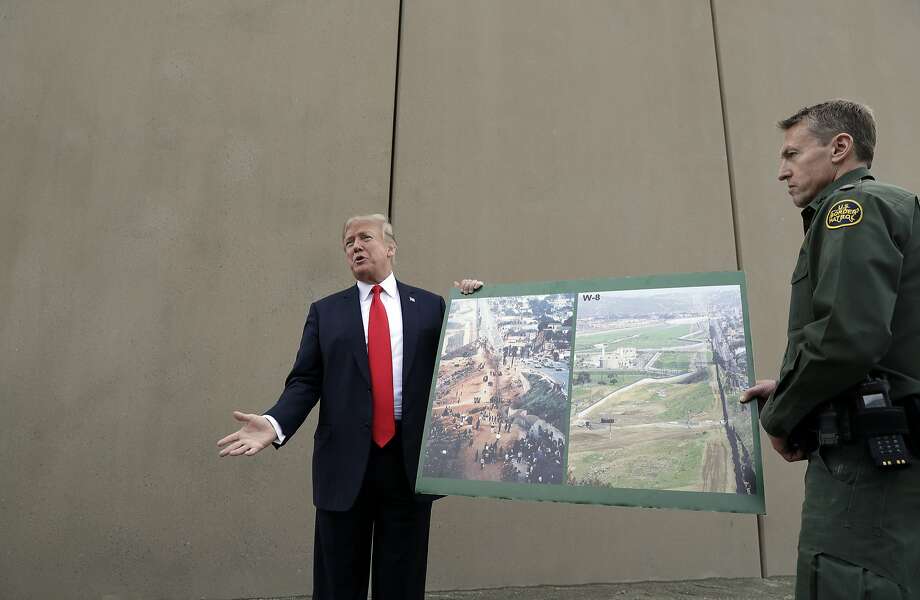
                                          Photo: Evan Vucci, Associated Press

In a rare visit to California, President Trump took the opportunity to lambaste the Governor Brown and Oakland Mayor Libby Schaaf for their handling of immigration, which he says endangers the nation. More specifically Trump believes taxes are way too high in California and was irate that Schaaf publicized Immigration and Customs Enforcement raids before they happened. The main purpose for his visit was to gather support and consider prototypes for his much publicized, but largely unpopular border wall.

Discussion Questions
1. Does California deserve criticism for challenging national immigration policies?
2. Is the border wall that Trump proposes a good long term investment as he suggests?
3. Are high taxes in California a point of concern as the President suggests?

As Bots Flourish on Instagram, Companies Form to Fight Them


Article Link

With social media being one of the most used platforms of this generation, more and more businesses are turning to popular social media personalities for sponsorships and advertisements. But with social media being filled with bot accounts, the numbers for determining how much they should pay get distorted. In order to separate what accounts are bots from which are real, Dovetale, a software company founded in 2016 has developed a method to identify in large numbers what accounts are or aren't real people. They then send the information to marketers who are able to better determine how much money should be payed to social media stars for advertisements or sponsorships. This service is becoming increasingly popular as a recent investigation showed a booming industry of people selling fake followers to distort viewership numbers.

Questions:
1. Is there enough of a demand for companies like Dovetale to survive?
2. How do you think these strategies to identify bot accounts will impact those selling fake accounts? Will people continue to purchase bot services or will the industry die out all together?
3. Should the owners of the social media sites intervene? How would they prevent the creation and use of bot accounts?

Trump defends White House gun proposals that back off new age limit


https://www.cnn.com/2018/03/12/politics/gun-proposal-donald-trump-white-house/index.html
http://www.bbc.com/news/world-us-canada-43369991


In a Fox News interview on February 24, Trump previously said that he would support raising the age limit for certain firearms. Following the attack at Marjory Stoneman Douglas High School in Parkland, Florida on February 14, the White House described its plan on Sunday to fulfill the Presidents call for action. Their plan is to set up a new committee, fund programs to train school staff to use fire arms, encourage military veterans and retired police officers to become teachers, and improve background and mental health checks. The White House said the new federal commission for schools will deal with the age limit issue. Although, after chief NRA lobbyist Chris Cox visited the White House to speak with the president and vice-president, he tweeted that neither of them wanted gun control. The NRA also sued the state of Florida after its governor signed Senate Bill 7026, which raised the legal age to buying firearms to 21. The NRA argued that it is against the constitution. Survivors of the Florida shooting have been pressing for a complete ban on assault fire arms to the public.


Questions:
1. What do you think of the idea of concealed carry for teachers in schools?
2. What would be your proposals for gun control at schools?
3. Do you support raising the age limit to buy firearms?

Monday, March 12, 2018

EU 'will stand up to trade bullies'


Article link

More on the tariffs

Summary:

Trump’s plans for a 25% tariff on steel and a 10% tariff on aluminium is designed to promote American business, but may result in adverse repercussions from our trade partners. Despite requests for an exemption by the European Union, only Canada and Mexico are exempt from the new policy that will take effect on the 23rd. In fact, Trump stated that exemptions may take place in the future, but not for our allies. He argued that “many of the countries that treat us the worst on trade and on military are our allies.” This means that the European Union may not see the exemptions that they requested, so they may plan to take matters into their own hands.

The European Union has responded to steel and aluminium tariffs in a symbolic way, planning to place tariffs on symbolically American products such as blue jeans and bourbon. Other nations have replied to this tariff similarly. China threatens an “appropriate and necessary response” to any American tariff, and others have claimed that the tariffs violate the World Trade Organization decisions and that the United States should be taken to court. A notable fact, however, is that both China and the European Union have called for Trump to trade peacefully instead of beginning a trade war.


Analysis:

I believe that Trump’s decision to mandate tariffs will not be beneficial to the American industry. In addition to the international outcry, the tariffs will shift the American steel and aluminium market more towards a monopolistic structure as international competitors will be weakened. As we learned in our reading last week, a monopolistic approach is not beneficial to the consumers, and the government’s role is generally seen as protecting consumers.


Questions:

  1. Is the international community just in their retaliation to the tariffs?
  2. Is it more beneficial to stimulate the American steel and aluminium industry or protect consumers from a monopolistic shift?
  3. Will this be an isolated issue, or is America starting a global trade war?

The DOJ Is Suing AT&T to Prevent Its Merger With Time Warner

Christian Hansen for The New York Times

Summary: In October of 2016, AT&T agreed to buy Time Warner for $85 billion. The two companies have come to agreement to position this move as a merger of two complementary companies. However, critics are assuming this action can hurt non-AT&T users by increasing prices or limit access to media content. The DOJ is using this argument to further reveal that AT&T will have the ability to charge more for the viewing of valuable programming like the N.C.A.A. men's basketball tournament, which is broadcasted as a large part on Turner's networks. Nonetheless, AT&T continued to argue that the merger is "Not about making Time Warner programs less accessible or more expensive. Just the opposite: It is about making Time Warner and AT&T more competitive during a revolutionary transformation that is occurring in the video programming marketplace." They continued to argue that the DOJ's suit was a case of "selective enforcement"- where by the government is essentially blocking the deal between the two companies due to President Donald Trump's hostility towards Time Warner, CNN's parent company. The trial between the DOJ and AT&T will take place on March 19, and is expected to last about three weeks.

Analysis: There's no doubt that this merger will somewhat increase consumer prices. However, President Trump's affiliations with CNN has raised some interest regarding this particular issue. Trump has engaged in a highly publicized battle with CNN for quite some time, often dismissing the network as "fake news" and criticizing its coverage. This may raise concerns in the judge's mind because of Trump's battle with CNN may undercut the seriousness of the case. It could color it with politics rather than applying the law. 

Questions:
Do you think this merger will lead to increase consumer prices?
Do you think the government singled out the company's deal due to presidential interference?
What's your opinion about this case?


In Oregon, pushing to give patients with degenerative diseases the right to die

Article

Summary: In 1997, the state of Oregon passed the Death with Dignity Act permitting medically assisted suicide for those with terminal illness. But this does not include degenerative illnesses like Alzheimer's and Parkinson's which aren’t considered fatal. Many Americans have begun pushing for the law to be widened to include some degenerative diseases and ensure living wills that may result in death are honored. For example, one person said in her living will to not feed her if she lost the ability to feed herself, but she was still spoon fed until her death. Oregon’s current law requires patients be diagnosed with a terminal illness with 6 or less months to live, and must ingest the drug themselves. But surprisingly, many right to die organizations have opposed expanding the laws in states where medically assisted suicide is already legal as they fear that such a push might give critics ammunition and ruin their efforts in other states.


Analysis: I generally am for medically assisted suicide and agree with Oregon’s Death with Dignity Act. It allows people to avoid a painful death when they are able to consciously make a decision and are already going to die. But it is difficult to decide if medically assisted suicide should be allowed when illnesses are degenerative like Alzheimer's and Parkinson as it may impair judgement. I think that if the victims write a living will requesting to let them die, the will should be honored. But it is definitely more complicated once the disease has been diagnosed and its symptoms start to appear.


Questions:
  1. Should medically assisted suicide only be allowed for people with terminal illness?
  2. Should people have the right to medically assisted suicide with non-terminal illnesses?
  3. Do you think living wills that may result in the person's death should be honored?

Thursday, March 8, 2018

Elon Musk, Trump and the Challenges of Selling Cars in China


Elon musk's tweets regarding the issue of selling cars in China.


http://money.cnn.com/2018/03/08/news/economy/elon-musk-trump-china/index.html

Summary:
The U.S. currently has a $379 billion trade deficit with China, exporting way less than it imports, and the Trump administration is trying to decrease that amount by $100 billion this year (Trump seems to have accidentally tweeted an incorrect number of $1 billion). After Trump tweeted yesterday about reducing the trade deficit with China, Elon Musk responded today by asking if "the US & China should have equal & fair rules for cars." Currently, our cars exported to China face a 25% import tax, while Chinese cars face only a 2.5% tax in the U.S. Trump read the tweet aloud in a speech today and stated that he might eventually raise our tax on imported Chinese cars to match what China has for us. Trump and Elon Musk both seem to want fairness, and seem to believe that tariffs may help those issues.

Analysis:
I believe Elon is a fiscal conservative, so it's not too much of a surprise for him to be on the same page as Trump. I don't really see a clear cut solution, as if we raise our tariffs, we risk a trade war, and there will definitely be a large outcry just like the steel and aluminum tariffs, but if we don't there is a major discrepancy between us and China. This issue is obviously one that relates to competition, especially the government's role in it.

Questions:

1. Is it justifiable for us to raise our import taxes on automobiles? Is this the same as the situation with steel/aluminum?

2. Is there a chance that China could lower its tariffs against us? Would it be mad if we raised ours?

3. Would balancing out the car industry improve our trade deficit?

Tuesday, March 6, 2018

Gary Cohn to Resign as Top-Economic Adviser for Trump Administration

Image result for trump camp david press conference

Summary: 
Gary Cohn, one of Trump's top economic advisers, had made the decision to resign from the administration amidst the metal tariff policy controversy being promulgated by Trump. Cohn along with other advisers have been steering Trump away from enacting tariffs from the beginning of the administration. Cohn and other economists are understandably frustrated with Trump went through with the tariffs despite bipartisan consensus that they are a poor idea. 

Cohn was also a head strategist on the tax cut plan as well as the proposed infrastructure update Trump called for in his State of the Union address. Cohn has been called a "steadying hand" and "a voice of reason and sanity" as a part of the Trump administration. Many fear that what is already an administration that lacks depth and opposition voices will fall further behind with Cohn's absence. 

Questions:
Although Cohn obviously has free will to leave his job at any time, consider his role as a civil servant. Do you believe he is justified in leaving the administration instead of sticking it out despite disagreements?

Is it at all worrying to you the sheer number of overturning positions this administration has seen?

How can the Trump administration fairly represent the economic views of the opposite party now with Cohn, a Democrat, gone?

New York Times Article

Washington Post Article

Washington Becomes First State to Approve Net Neutrality Rules

(Image from article, captioned "Washington Gov. Jay Inslee speaks after signing a net neutrality bill. (Ted S. Warren / Associated Press)")

http://www.latimes.com/business/la-fi-net-neutrality-washington-20180306-story.html\

Summary:
Last November, the FCC voted to repeal net neutrality, and there was a lot of anger over that vote. On February 22, the vote was made official in the Federal Register, and as of now, the repeal will be in affect by April 23rd.

Washington, however, has become the first state to take net neutrality issues into its own hands, enacting its own rules to protect net neutrality in their state. According to Jay Inslee, the decision only makes sense as "we know that when D.C. fails to act, Washington state has to do so." Washington's bill prevents internet provider from blocking content or interfering with traffic, which is essentially what net neutrality is. Oregon has passed similar legislation, although not with many of the requirements in Washington's bill. Several other states have also introduced legislation that has not passed, and in January, 20 states sued to try to prevent the net neutrality repeal. Governors in Hawaii, Montana, New Jersey, New York and Vermont have signed executive orders that to some degree protect net neutrality (or at least highly incentivize companies to follow it).

Big telecom companies have stressed that net neutrality rules "could undermine investment in broadband and introduce uncertainty about what are acceptable business practices," while net neutrality advocates say the FCC decision harms innovation in internet companies, may make that market less competitive, and pits consumer interest against big business.

Analysis/opinion/connection to econ:
This issue has a lot to do with what we have been covering in class -- the ideas of market structures and competition. Both arguments for and against net neutrality revolve around the health of the market, the ability for companies to compete and enter those markets, and the ability for innovation.

An argument for net neutrality is that it allows new businesses to grow unimpeded. They can compete on an equal playing field and help grow the economy. Without protection from net neutrality laws, those businesses could fall prey to a pay-to-play system -- because small businesses do not have the deep pockets of established ones, they cannot pay as much to have their websites and data prioritized over the Netflixes and YouTubes of the world. If smaller businesses cannot reach potential customers or viewers, it cannot succeed. This difficulty in entry would make internet content a very monopolized or "oligopolized" industry, where the biggest sites would win.

On the other hand, net neutrality hurts the industry of internet service providers. It outlaws competing business models, which are good for customers and the economy, and just limits what ISPs can do. If net neutrality would go away, neutral business models could still work, it just opens the door for more.

I personally do not think that the average consumer will be worse off without net neutrality. Perhaps the average user could experience lower rates that suits their particular usage, as removing net neutrality regulations can allow internet providers to experiment with different methods and business models that can better compete with each other for purchase. If everyone really wants neutral service, they can pay for neutral service, but perhaps if people want better prices, they can prioritize the large websites that they already use anyway. The main hostility towards the legislation is probably for internet content providers who would need to pay more to give their content a greater reach, and as users, we can be easily brainwashed by what we read on those sites. I personally don't see it as a bad thing for the internet, especially in the long run (I guess this also relates to high elasticizes of markets in the long run).

Questions:
1. I did not talk about this above, but I think the question about who has power to regulate online activity is important. Can states have their own internet regulation? Should they just follow federal guidelines? Will a commerce or supremacy clause argument override what Washington has done?

2. Why do you think net neutrality has become such a political issue?

3. What do you think about net neutrality and it's pending repeal?

Monday, March 5, 2018

Trump Administration Stalls Largest Tech Merger in New Sign of Protectionism

(From article, captioned "Qualcomm’s headquarters in San Diego. Broadcom, which is attempting a hostile takeover of the chip maker, said it was informed Sunday night that Qualcomm had asked regulators to review the bid.")

https://www.nytimes.com/2018/03/05/business/dealbook/broadcom-qualcomm-cfius.html?rref=collection%2Fsectioncollection%2Fbusiness

Background:
Qualcomm is America's biggest computer chip maker, and Broadcom, a company headquartered in San Jose but incorporated Singapore, is also a titan in the semiconductor industry. Since late last year, Broadcom has had its eyes set acquiring Qualcomm. Doing so would give Broadcom a huge influence on chip manufacturing, a chance to cut costs for Qualcomm, and allow the merges company to be a one-stop-shop for phone manufacturers (basically horizontal integration). Broadcom is now attempting a hostile takeover of Qualcomm, by consulting directly with shareholders, who will vote to add 6 Broadcom members to Qualcomm's Board. If that is done, Qualcomm would gain a majority in the board, who would vote to allow a buy out and merger of the two companies. A successful deal would be the biggest ever made between tech companies, with influences on a wide range of markets and industries.

Summary:
The Trump administration stalled the move, however, citing security concerns. According to Senator Tom Cotton (R, Arkansas), “Qualcomm’s work is too important to our national security to let it fall into the hands of a foreign company." The decision was made by the Committee on Foreign Investment in the United States (CFIUS), which typically reviews deals only after they are announced, but in this case reviewed the deal before the shareholder meeting occurred. Broadcom was ordered to delay the meeting to give the CFIUS more time to investigate, a decision that most likely will end the deal. This action coincides perfectly with Trump's "America first" push, and perhaps more will be expected.

Analysis/opinion/connection to econ:
This issue connects economics to government because of the discussion on the role of governments (specifically the U.S.'s) in monitoring markets. The government is reaching a little bit from what it has done in the past, and the issue is more controversial because it pits the United States government against foreign business.

This issue also relates to the subject of competition of markets, which we covered in class today, as a Qualcomm-Broadcom merger would hurt the competition in many industries. In the chip industry, Broadcom will obviously gain a lot of control in the global market, but this influence extends to other manufactured electronics that rely on it for parts, as Qualcomm does businesses with smaller phone makers, but a merger would resolve its relationship with Apple and supply chips to Apple while ignoring smaller companies. This would turn the phone market into practically a monopoly, making it very difficult to enter and compete in that industry and justifying higher phone prices. It is for this reason that I believe the CFIUS's decision was a good one, even though I don't think there is a real security risk as stated.

Questions:
1. Did the Trump administration do too much in this situation? Should they have waited for a shareholder vote?
2. What do you think the economic effects of the merger would have been?
3. Do you think Trump's aggressive approach to international business is a good idea? Can he successfully put America first without facing retaliation or punishment?

Steel Tariff Could Cost Ford and GM $1 Billion Each


http://money.cnn.com/2018/03/05/news/companies/tariffs-gm-ford/index.html
(https://www.usatoday.com/story/money/2018/03/05/tariffs-trump-impact/395314002/ for some quick background)

Summary:
Last Thursday, Trump announced his plan to impose a 25% tariff on foreign steel and a 10% tariff on aluminum. The move is scheduled for this week, and this controversial stance has been at the forefront of financial news. Even Paul Ryan has denounced this move, but the White House has remained rigid in his decision, which is clear in Trump's tweets and words form his administration.

According to Goldman Sachs, however, Ford and General Motors could each lose $1 billion a year in revenue if the tariffs are imposed, which is 12% of Ford's profit from last year and 7% of GM's. Both manufacturers say that they mostly use American-made steel, but they also do rely on foreign-made steel, as Ford believes the tariff would harm "the competitiveness of American manufacturers." Steel and aluminum prices are low because of global competition, and when that is removed, an American market would have a smaller supply and greater prices. The steel and aluminum industries in the U.S. would benefit, but all U.S. steel-using industries will either have to lay off people, produce less, and lose profits. The American International Automobile Dealers Association warns that automobile prices will rise, and also cautions that Trump my be furthering trade/tariff wars, causing other members of the global market raise their tariffs against the U.S.

Analysis/opinion/connection to econ:
I do think certain aspects of Trump's arguments are reasonable, although his personality makes his every move seem aggressive. The U.S. does have trade deficits with other countries, and many countries have higher tariffs against us than we do for them, so it is fair for us to want to help out our industries. Trump has also said that these high tariffs would give him leverage in NAFTA negotiations, which is not unreasonable, although it is a gamble. An idea from our econ class that could relate here is the "invisible hand" theory, which suggests that if every country puts itself first like Trump wants to do with the U.S., it could perhaps be to the benefit of the global market as a whole.

One issue with Trump's tariff is that he seems to be protecting one group at the cost of others. I have read that the amount of workers that use steel is 50 times the number that produces it, so we would be hurting way more people than the few in the industry Trump wants to help. Trump could be prioritizing steel because it is produced in states he needs to win in 2020, or because he wants to take a bottom up approach in fixing all of our nation's industries. If the latter is true, Trump would be better off gradually increasing the tariff to what he wants, allowing a longer time horizon for the steel market to adjust, as supply and demand are both more elastic over longer periods of time. Then, other industries that rely on steel, such as car manufacturing, could operate without any factors (such as input costs) shifting their supply and influencing their revenue, and predicted car price increases and revenue decreases would not occur.

Questions:
1. If Trump only intends to use these tariffs as leverage in NAFTA and other trade discussions, is it a smart choice? Do these tariffs give the U.S. more power as intended?
2. Could these tariffs have important political implications for 2020? Why do industrial state Democrats support the tariffs, and why is Trump's own party leadership not on his side?
3. Would a lower tariff or a gradually increasing tariff be any better?
4. In the global market, can the "invisible hand" work? Is putting the U.S. first right or wrong?

Meth Ignored in the Opiod Crisis

https://www.nytimes.com/2018/02/13/us/meth-crystal-drug.html?emc=edit_ta_20180213&nl=top-stories&nlid=67571846&ref=headline


At least in Oregon, methamphetamine-related deaths vastly outnumber deaths related to heroin, and meth is cheaper and more lethal than ever. And while in 2006 Oregon required prescription for the nasal decongestant used to make meth, and the number of domestic meth labs has decreased, the amount of meth on the streets has increased.

Questions
- What is your opinion on the government's war on drugs? Do you think it is effective? Is there a better way to decrease drug use?