Sunday, February 9, 2025

RFK Jr. to become Secretary of Health and Human Services (HHS)

 Robert F. Kennedy Jr. is progressing through the nomination process to become the Secretary of Health and Human Services (HHS), a position that has a significant impact on health policy and administration in the US. Kennedy's career focus has mostly been on environmental protection and litigation against pollutants, but he is also known for controversial anti-vaccine advocacy and leadership within organizations like Children's Health Defense.


On November 14, 2024, President Trump nominated Kennedy to become Secretary of HHS. Since then, Kennedy has attended confirmation hearings conducted by the Senate Finance Committee, where he has been questioned on various topics such as vaccines, Medicaid, abortion, and other public health issues. 


Following the hearings, the Senate committee took a vote on whether to advance his nomination. The Senate Finance Committee voted 14-13 to advance his nomination to the full Senate. Senator Bill Cassidy played a crucial role in advancing his nomination. Cassidy has been concerned about Kennedy's past anti-vaccine rhetoric but decided to vote in favor of advancing Kennedy after receiving certain commitments from him and the Trump administration. Kennedy and the Trump administration have said that they will keep the existing vaccine approval and safety monitoring systems instead of creating separate ones and ensure that the CDC's statements on vaccine safety will stay as they were. The full Senate vote is likely to happen in the next week or so.

Kennedy has a well-documented history of controversial statements, particularly regarding vaccines. He has repeatedly promoted the theory that vaccines are linked to autism, although this stance has been widely criticized and discredited by scientific research. His organization, Children's Health Defense, has been involved in several legal actions against vaccine mandates.

However, during his hearings, Kennedy has attempted to position himself as "pro-safety" rather than anti-vaccine. He has promised a collaborative working relationship with the Senate and to uphold certain public health standards if confirmed. He continues to contradict his prior claims about vaccines and many senators have raised concerns about the potential impacts of his views on public health policy.

Sources:

NPR - Trump picks RFK Jr. to oversee the Department of Health and Human Services

ABC - RFK Jr. passes key Senate panel vote to advance health secretary nomination

NPR - RFK Jr., Trump's health secretary pick, grilled about vaccines and abortion

ABC - Fact-checking RFK Jr.'s claims on vaccines, pesticides at confirmation hearing

AP - Takeaways from RFK Jr.'s first confirmation hearing as Trump's nominee for health secretary

Fierce Healthcare - Senate Finance Committee endorses RFK Jr. for HHS Secretary in 14-13 vote

Judge Blocks Department of Government Efficiency's Access to Treasury Department Payments

In a legal setback for Elon Musk’s Department of Government Efficiency (DOGE), a federal judge temporarily blocked the agency’s attempt to access the Treasury Department’s payment system. The ruling follows a lawsuit filed by 19 state attorneys general, who argued that DOGE’s involvement posed significant security risks and lacked the necessary congressional oversight. This decision halts Musk’s controversial initiative to integrate cryptocurrency and private-sector efficiency into federal financial operations, a move that critics argue could destabilize the government’s payment infrastructure.

DOGE had already secured partial access to the Treasury’s financial system, which processes trillions of dollars in payments, including Social Security and federal payroll. However, state officials raised alarms that granting Musk’s agency control over such critical functions could lead to financial instability and potential misuse. CNN reports that the lawsuit emphasized DOGE’s legally questionable authority and risk of "irreparable harm", while The New York Times highlighted concerns over Musk’s expanding influence in government operations. The decision signals growing resistance to what many see as an attempt to centralize power in the hands of unelected private individuals.

A rally held for protestors against Elon Musk outside of the Department of Treasury (via Times Union) 

Critics of DOGE argue that its lack of congressional oversight creates a dangerous precedent, allowing private interests to exert disproportionate control over public financial mechanisms. The BBC notes that this ruling represents just the beginning of a broader legal battle over Musk’s role in federal governance, with additional challenges expected in the coming months. Critics contend that DOGE undermines democratic accountability by bypassing traditional government structures, while Musk and his supporters maintain that the agency is essential to eliminating inefficiencies and modernizing federal operations.

The ruling highlights the political tensions surrounding Musk’s growing partnership with the Trump administration. The BBC reports that multiple states are challenging DOGE’s authority in court, reflecting broader concerns about the privatization of government functions. As the case progresses, the future of DOGE remains uncertain, with legal experts predicting an extended battle over the agency’s legitimacy and Musk’s vision for government modernization. For now, the injunction ensures that Treasury payment systems remain under direct federal control, reaffirming the role of institutional safeguards in maintaining financial stability. 

Sources: 

https://www.bbc.com/news/articles/cjw4g2q62xqo 

https://www.nytimes.com/2025/02/07/nyregion/attorneys-general-trump-musk-suit.html 

https://www.cnn.com/2025/02/08/politics/elon-musk-doge-treasury-payment-system/index.html 

https://abcnews.go.com/Politics/19-states-sue-block-elon-musks-doge-team/story?id=118592966 

https://apnews.com/article/elon-musk-trump-doge-states-47912249bf4b79477cbe211565c9743c 

Trump's Anti-Transgender Executive Orders

Over the past three weeks, President Donald Trump has signed several executive orders specifically aimed toward revoking and restricting the rights of transgender Americans. Trump’s orders are an extension of campaigns he set in place during his first term as president. 

On his first day back in office, President Trump signed an executive order defining sex as male and female and limiting it to the one assigned at birth. The executive order itself does not hold much power, but Trump’s administration has made moves to begin signing many of the order’s policies into bills that could then become law. The order calls for federally administered documents to reflect citizen’s sex assigned at birth and even for transgender female inmates to be transferred to male prisons. However, District Judge Royce Lambert ruled, in a lawsuit filed by three transgender inmates, that the inmates had a right to remain in the prison they were currently housed in, signifying a fight against Trump’s executive order. 


On January 28th, President Trump signed an executive order which stated, “the United States…will not fund, sponsor, promote, assist, or support the so-called “transition” of a child from one sex to another, and it will rigorously enforce all laws that prohibit or limit these destructive and life-altering procedures.” Trump’s executive order has aimed to exclude coverage for gender-affirming care through Medicare and Medicaid, as well as banning institutions which receive federal research and education grants from providing gender affirming care to children, which for the purposes of this bill, are defined as individuals under the age of 19 years old. Agency leaders will have 60 days to submit progress reports to the Trump administration about their progress in implementing the executive order. 


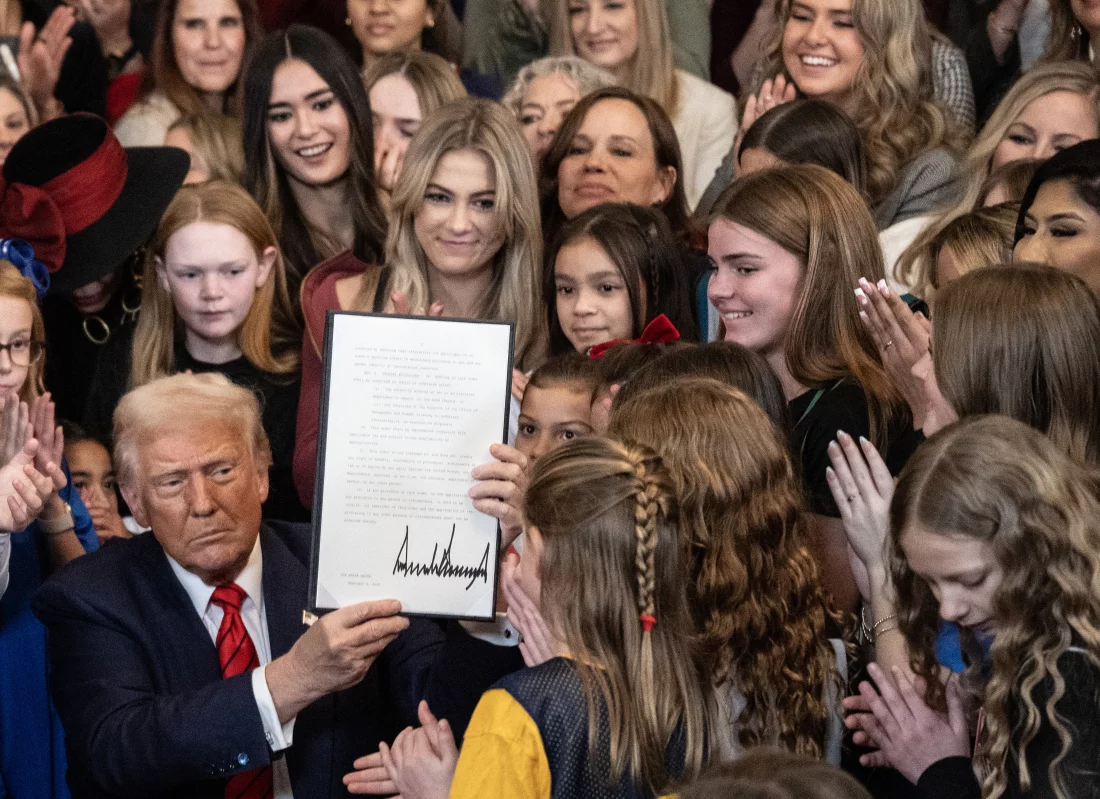
On February 4th, President Trump signed an executive order banning transgender female athletes from competing in sports competitions. To ensure compliance with the order, the order states that any schools which continue to allow transgender female athletes to participate in sports will have federal funding cut. On the same day the order was signed, the NCAA moved to ban transgender female athletes from competing at the collegiate level in sports. 


Trump holding up the signed “No Men in Women’s Sports” executive order, via NPR


As Trump’s executive orders and its policies are being put into place, several states and other individuals have already moved to file lawsuits over many of Trump’s orders. Three states, including Washington, have already made moves to file a lawsuit for Trump’s order banning affirming care for minors. More lawsuits are sure to follow as Trump continues issuing executive orders.


Before Trump returned to office, the U.S. Supreme Court began to hear oral arguments on December 4th, 2024 for the case of US v. Skrmetti. The case centers on a Tennessee bill that banned gender-affirming health care for minors, much like Trump’s executive order. The ban has been upheld in a 6th Circuit court before being appealed to the Supreme Court. The Supreme Court’s decision in this case will ultimately determine if the right of minors in America to receive gender affirming care is protected under the Equal Protection Clause of the United States. While a decision on the case has not yet been reached, it is anticipated that one will come out some time by the summer of 2025. If the ban is upheld by the Supreme Court, it is likely that other states will follow suit due to the precedent the Supreme Court would set. This case is similar to many of the pivotal cases we have been covering in class as it relates to civil liberties, in this case, the Supreme Court will determine if the protections guaranteed by the U.S.’ constitution also apply to the right of minors to receive gender-affirming care. 


Sources: 


https://www.nytimes.com/2025/02/05/us/politics/trump-order-transgender-athletes-womens-sports.html 


https://www.nytimes.com/2025/02/05/us/politics/trump-trans-athletes-executive-order.html?searchResultPosition=1 


https://www.scotusblog.com/2025/02/trump-changes-governments-position-in-pending-trans-healthcare-case-at-supreme-court/ 


https://www.cbsnews.com/news/transgender-rights-lawsuits-challenge-trump-policies/ 


https://www.whitehouse.gov/presidential-actions/2025/01/protecting-children-from-chemical-and-surgical-mutilation/ 


https://www.npr.org/2025/01/29/nx-s1-5279092/trump-executive-order-gender-affirming-care 


https://www.cnn.com/2025/02/04/politics/judge-lamberth-trump-transgender-prison-executive-order/index.html 


https://apnews.com/article/trump-transgender-passports-prisons-eggs-sperm-da1d1d280658a8c85c57cfec2f30cefb 


https://www.bbc.com/news/articles/cvgezz0k3mno 


https://www.hrc.org/press-releases/backgrounder-how-the-first-supreme-court-case-on-transgender-medical-care-could-impact-the-state-of-healthcare-and-lgbtq-rights-across-the-country#:~:text=On%20December%204th%2C%202024%2C%20the,medical%20care%20for%20transgender%20youth. 


Trump Announces Blanket Tariffs on Steel and Aluminum

On Sunday, President Donald Trump confirmed that he would impose 25% tariffs on all steel and aluminum imports starting Monday. Speaking to reporters aboard Air Force One while en route to New Orleans for the 2025 Super Bowl, he emphasized that the tariffs will apply universally, affecting all countries, including key trade partners like Canada and Mexico. Additionally, Trump announced that he will introduce “reciprocal tariffs” later this week, imposing import duties on foreign products in cases where other countries have levied tariffs on U.S. goods. 


The 25% tariffs will be applied to all steel and aluminum entering the U.S., significantly increasing costs for industries reliant on these materials, such as automotive, aerospace, and infrastructure. Trump has argued that these tariffs will protect American manufacturing and national security. However, they also risk raising costs for businesses dependent on imported metals. In addition to the new metal tariffs, Trump has signaled that reciprocal tariffs will take effect immediately after their announcement later in the week. This measure aims to ensure what he calls “fair trade,” targeting countries that impose higher tariffs on U.S. exports. 

Earlier this month, he authorized tariffs on America's three closest trading partners: Mexico, Canada, and China before agreeing to a temporary 30-day pause on certain tariffs for Canada and Mexico. Additionally, tariffs on smaller consumer imports, such as goods from fast-fashion retailers like Temu and Shein, are under review. Trump argues that these measures will encourage foreign cooperation on issues like illegal immigration and fentanyl smuggling while also boosting domestic manufacturing. His administration has also launched audits into potential fraud related to U.S. debt payments, led by billionaire Elon Musk’s government efficiency team.

Financial markets reacted negatively to Trump’s tariff announcement, with stock prices dipping and consumer sentiment surveys indicating growing inflation concerns due to increased import costs. Historically, tariffs have led to price hikes in manufacturing and construction, as domestic producers raise their prices in response to reduced foreign competition. Data from the American Iron and Steel Institute shows that the U.S. steel import market shrank by 27% between 2017 and 2019, following similar tariffs imposed during Trump’s first term. While domestic steel production initially rose, it did not fully offset the decline in imports, and overall production has since dipped below 2023.

Trade partners are likely to retaliate. Canada is the largest supplier of aluminum to the U.S., accounting for 79% of total imports in 2024, while Mexico is a major supplier of aluminum scrap and alloy. The European Union, which imposes a 10% tariff on U.S. auto imports while benefiting from a lower 2.5% tariff on European cars entering the U.S., may also respond with countermeasures. Meanwhile, China recently imposed retaliatory measures following Trump’s 10% tariff on Chinese goods, launching investigations into American companies, including Google and major fashion brands. Similar countermeasures may follow in response to the latest metal tariffs.

As details on reciprocal tariffs emerge this week, industries and global markets will be watching closely to assess the long-term implications of Trump’s aggressive trade policies. Businesses reliant on steel and aluminum imports must brace for increased costs and potential supply chain disruptions.


Sources: 

Tuesday, February 4, 2025

Ken Martin Selected as the New Democratic National Committee Chairman

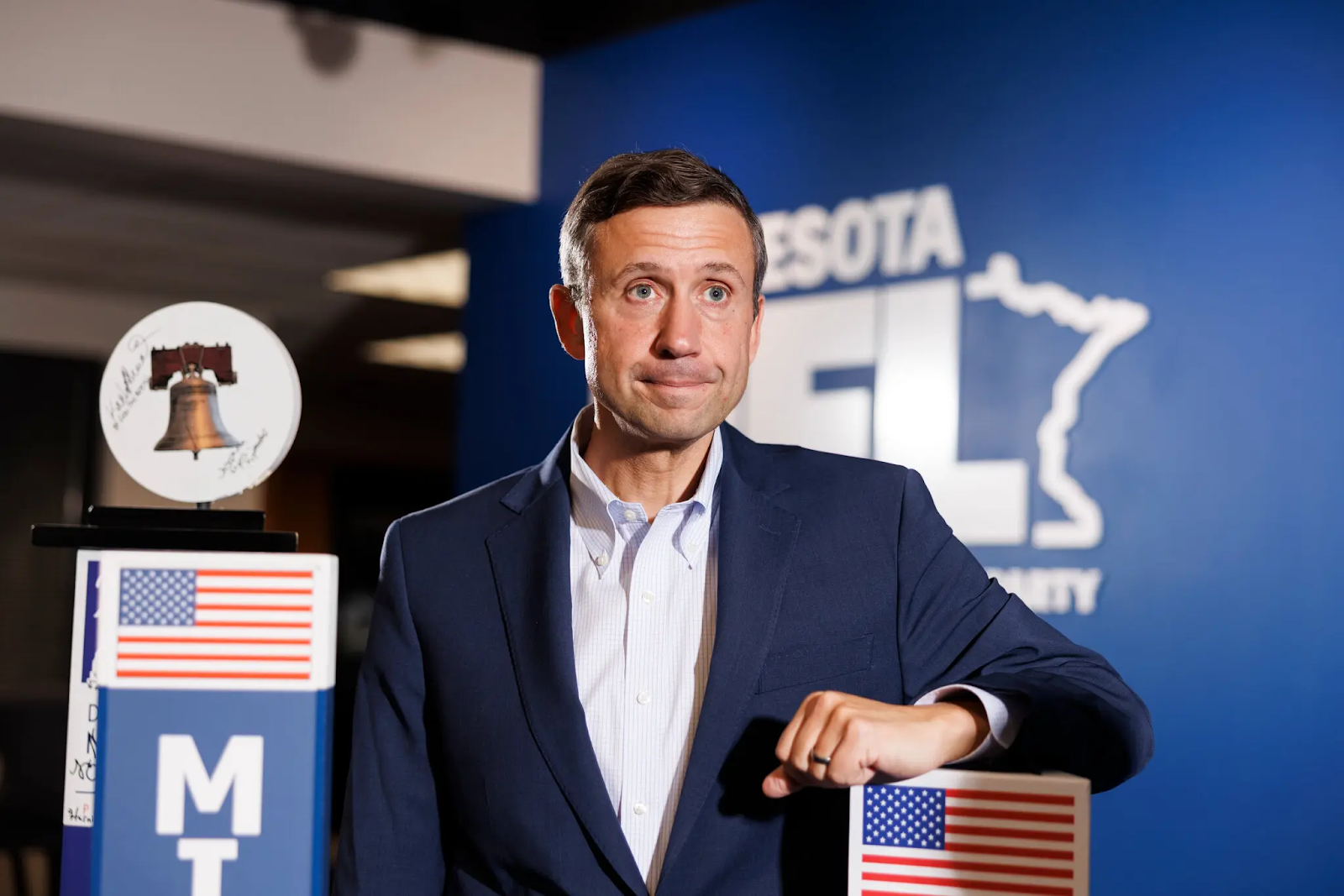
 On Saturday, February 1st, Ken Martin, a current vice chair for the committee, was elected to be the new committee chairman for the Democratic National Committee (DNC), winning over Ben Wikler and Martin O’Malley. Martin is preceded by Jamie Harrison, who previously served as DNC chairman from 2021 to 2025. Martin’s victory was helped by financial backers including Reid Hoffman and George Soros’ political action committees, which gave him $250,000 each. His battle for the position notably lacked the political ideology divide many saw in the 2017 DNC election.


Martin, via The New York Times


Martin previously served as the chairman of the Minnesota Democratic-Farmer-Labor Party. His victory was won in part thanks to his strong relationship with party chairs and vice chairs of the DNC leadership in addition to the financial donations he received. 


The democratic party is currently facing a tough position, with a recent poll from Quinnipiac University showing that just 31% of voters had favorable opinions of the party, compared to 43% of voters having a favorable opinion of the republican party. The party also has no majority representation in any branch of the federal government. Martin’s role as committee chairman will be to raise money for the party, manage its inner workings, and organize coordinated efforts among state parties, especially given the losses many faced during the 2024 election cycle.


In his victory speech, Martin pushed for the democratic party to make more efforts towards connecting with working class Americans. He has also stated, when talking with reporters, that one of his first actions as committee chair will be to look at the previous finances and spending of the party to determine where money should continue to be spent, and in what areas it can be saved instead. Martin is also planning to create new plans, as committee head, to strengthen democratic infrastructure around the country. 


As Martin transitions into power as DNC committee chair, we can anticipate that because of a lack of strong, major democratic leadership in the federal government at the moment, Martin will play a key role in the party leadership going forward. Do you think that Martin, along with others, will be able to bring approval ratings up for the democratic party in the years leading up to the 2028 election? As well, what steps do you think Martin would have to take as a committee chair to truly make an impact on the general public?


Sources: 


https://www.nytimes.com/2025/02/01/us/politics/dnc-chair-pick.html 


https://www.nbcnews.com/politics/elections/ken-martin-wins-election-chair-democratic-national-committee-rcna190018 


https://apnews.com/article/democratic-national-committee-dnc-chair-martin-wikler-fcc229d9619aa93f8f8574b0face4334 


https://www.nytimes.com/2025/02/01/us/politics/ken-martin-dnc.html 


https://www.cbsnews.com/news/ken-martin-wins-race-to-become-chair-of-the-democratic-national-committee/ 


Sunday, February 2, 2025

Canada, Mexico, and China Retaliate Against Trump's Tariffs

The trade conflict between Canada, Mexico, China, and the United States has escalated after President Trump imposed tariffs on goods from these countries. In early 2025, the U.S. imposed a 25% tariff on goods from both Canada and Mexico, with a lower 10% tariff on Canadian oil, as well as a 10% tariff on imports from China. In response, both Canada and Mexico have retaliated with their own tariffs, with Canada introducing a 25% tariff on American imports starting Feburary 4, 2025. These tariffs are scheduled to cover a wide variety of products including beverages, cosmetics, and paper goods: totaling about 30 billion Canadian dollars. Additionally, a second list of products, such as cars, trucks, steel, aluminum, and agricultural goods are expected to be targeted soon, causing the total value of the tariffs to rise to 125 billion Canadian dollars. Unlike Canada, Mexico hasn't set specific tariffs, however Mexican President Sheinbaum posted a video on X earlier today which made it clear that they will impose retaliatory tariffs by as soon as tomorrow if the United States does not retract its 25% tariffs on imports from Mexico and work side-by-side with them. China's Ministry of Commerce also urges the U.S. to meet them halfway, but in the meantime has claimed they will file a lawsuit against the U.S. with the World Trade Organization over the 10% tariffs imposed on Chinese goods. 

Canadian Prime Minister Justin Trudeau and Mexican President Claudia Sheinbaum have both condemned the tariffs and emphasized the importance of maintaining strong bilateral relationships. Trudeau has encouraged Canadians to support local products rather than those from the U.S. by posting, "Now is the time to choose products made right here in Canada" on X. This has enabled Canadians to also begin removing American liquor brands from government store shelves. As the U.S. and Canada have historically been allies, many Canadians feel betrayed by the U.S. for imposing these tariffs, as they view them as an unjust attack. Trudeau has reminded Americans that historically, Canada has stood by the U.S. in times of need. They have provied the U.S. disaster relief during major events like Hurricane Katrina and the California wildfires and fought alongside American troops in Afghanistan, making the tariffs seem especially unjust.

On the other side of the border, President Trump has defended his tariffs by pointing to the trade surplus Canada has with the U.S., indicating that Canada sells more goods to the U.S. than it buys. Feeling as if the U.S. is being taken advantage of, Trump has suggested that to resolve this trade issue, Canada should simply become the "cherished 51st state," a controversial statement that has further separated the allies. Trudeau responded, claiming that Americans should be aware that these tariffs will affect them too.

This trade war has also stirred up emotions among the public in both Canada and Mexico. In Canada, Canadians have begun to boo during the U.S. national anthum at sporting events against American teams, such as at recent National Hockey League games and during an NBA game in Toronto where the Raptors faced the Clippers. Meanwhile, in Mexico, some citizens, like Miriam Tenorio, a fruit vendor in Mexico City, are considering boycotting American goods, stating "If we Mexicans say no to the Coca-Cola, we don't drink Coca-Cola." As tensions continue to grow, the upcoming election for leader of the Liberal Party of Canada has also neared, as Trudeau's Liberal Party will announce a new leader on March 9th. Mark Caney, a prominent candidate for the position, claims that "Canada will not bow down to a bully," highlighting his determination to challenge Trudeau's handling of the trade dispute and find a resolution to avoid further economic and diplomatic consequences.


Sources:

https://apnews.com/article/trump-tariffs-canada-mexico-retaliation-trudeau-sheinbaum-70e067b092a3af72c2eb7ca37d532c91 

https://www.nytimes.com/2025/02/02/world/us-tariffs-canada-china-mexico.html

https://www.nbcnews.com/politics/donald-trump/live-blog/trump-china-canada-mexico-tariffs-live-updates-rcna190144#rcrd71899

https://x.com/Claudiashein/status/1886140972733772200?mx=2

https://thehill.com/policy/international/5121368-china-files-legal-case-us-wto-tariffs/

Friday, January 31, 2025

Google Maps to Rename Gulf of Mexico as 'Gulf of America' Following Trump's Executive Order

In a move that has sparked widespread debate, Google Maps has announced that it will rename the Gulf of Mexico as the Gulf of America for U.S. users, following an executive order signed by President Donald Trump. The decision aligns with the administration’s directive to change geographic names in official government sources, including the U.S. Geological Survey’s Geographic Names Information System (GNIS). 

Google Maps has long followed a policy of updating place names based on official government sources. According to a company statement posted on X, Google applies name changes once they are reflected in government records. The Gulf of Mexico will retain its name for users in Mexico, while users in other countries will see both names listed.

This isn’t the first time Google has adjusted geographic names in response to government decisions. In 2015, the platform updated North America’s tallest peak to Denali after the Obama administration restored its Indigenous name from Mount McKinley. Under Trump’s directive, Mount McKinley is set to return to federal maps, and Google has confirmed it will reflect the change. Both changes stem from an executive action that Trump signed shortly after taking office last week, saying the changes “honor American greatness.”

The renaming of the Gulf of Mexico has drawn mixed reactions. Mexican President Claudia Sheinbaum dismissed the move, jokingly suggesting that North America should be renamed “América Mexicana” in retaliation. "By the way, we are also going to ask for Mexican America to appear on the map," she remarked. Sheinbaum also sent a letter to Google contesting the name change, arguing that the renaming would only apply within 12 nautical miles from the coastline, citing Mexico’s sovereignty in the area. She further proposed that when searching for "América Mexicana" on Google, the map from 1607, which labeled parts of North America as “Mexican America,” should appear.


Critics argue that renaming a body of water with deep historical and cultural significance is unnecessary and politically motivated. Supporters of the change believe it reinforces American national identity and aligns with Trump’s broader “America First” agenda. The executive order states, “It is in the national interest to promote the extraordinary heritage of our Nation and ensure future generations of American citizens celebrate the legacy of our American heroes.”

This decision highlights the influence of private-sector bureaucracy in shaping public understanding of geography and history. As a dominant mapping platform, Google’s choices impact how millions perceive global landmarks. The situation also intersects with the commerce clause, as multinational tech firms must balance compliance with U.S. directives while adhering to international regulations.

Government agencies will soon begin updating official maps, and Google’s implementation will likely evolve based on domestic and international reactions. Legal challenges could arise, questioning the executive branch’s authority over geographic renaming. If the decision faces significant opposition, future administrations might reverse it. The international response, particularly from Mexico and global mapping authorities, will play a crucial role in determining whether this change holds or fades as a temporary political move.

Sources:

https://www.msnbc.com/top-stories/latest/google-maps-trump-gulf-of-mexico-america-denali-rcna189577  

https://www.cnn.com/2025/01/28/americas/mexicans-mock-trump-gulf-of-mexico-intl-latam/index.html 

https://www.theguardian.com/technology/2025/jan/28/google-maps-will-rename-gulf-of-mexico-as-gulf-of-america-in-us 

https://www.cbsnews.com/news/google-maps-us-gulf-of-mexico-america-denali-mount-mckinley/ 

https://www.nytimes.com/2025/01/27/technology/google-maps-gulf-of-america-trump.html 

https://www.cnn.com/2025/01/30/americas/mexico-letter-google-gulf-of-america-intl-latam/index.html

Wednesday, January 29, 2025

Trump's Memo Freezing Federal Grants Rescinded

President Trump has held office for just over a week now and has managed to stir up numerous controversies through implementing executive orders and presidential memoranda. Just this Monday, Janurary 27, President Trump orchestrated a memo that was sent out from the White House Office of Management and Budget (OMB) which meant to halt all federal grants and loans starting at 5:00pm EST on Tuesday, January 28. For the couple hours the memo was in effect, countless institutions that rely heavily on federal funding, such as schools and non-profit organizations, faced widespread confusion and distress, as trillions of dollars of federal funding are put into these institutions. Many also wondered if this memo would affect programs that provide direct assistance to Americans, such as Medicare, Medicaid, Social Security, and student loans, however it was later confirmed by Trump administration officials that these programs would not be affected.

Now you may be wondering the reasoning behind President Trump's order to freeze federal grants. The answer is no surprise; Trump administration officials said that pausing federal loans and grants was necessary to ensure that the institutions benefitting from funding aligned with President Trump's recent outpouring of executive orders. As stated by Press Secretary Karoline Leavitt, the memo was meant to strip funding from programs that promote "transgenderism and wokeness," basically cutting off funds to programs tied to diversity, climate action, or LGBTQ+ rights. 

Unsurprisingly, this order didn't please many Americans, including some Republicans who may have supported Trump in this last election or even continue to do so. Non-profit organizations such as Head Start, who provide childcare to those in underpriviledged communities, and Meals on Wheels, who use federal funding to deliver food to the eldery, would have been cut off if the memo had not been recinded due to the fact that a great percent of their funding comes from the federal government. The short-lived memo could've had dire effects on the livelihoods of so many citizens, for disadvantaged Americans such as those who utilize Meals on Wheels or Head Start rely on government funded institutions to simply survive.

In alignment with all the distate for the memo, several non-profits filed suit in federal court less than 24 hours after the administration's pause in funding was announced. The lawsuits stated that the memo had failed to explain the source or legal reasoning behind the OMB's right to gut every program in the federal government. And the plaintiffs (the National Council of Nonprofits and the American Public Health Association being among them) were completely correct. Legal expert and defense attorney Shan Wu argued that the memo clearly violated the Impoundment Control Act, which limits the president's ability to withhold congressionally approved funds: an example of separation of powers as it is ensured that the President cannot override the legislative branch's power of the purse without oversight. Wu also claimed that the executive branch didn't set forth valid reasons for the order, as recited in the lawsuit. 

As learned recently in class, the President's power is limited by the judicial branch, which has the authority to ensure that executive actions do not exceed constitutional or legal boundaries. In this specific case, the judicial branch played a crucial role in reviewing the legality of President Trump's memo once several lawsuits were filed. In response to the plaintiff's complaints that the memo violated the Impoundment Control Act as well as the fact that it would inflict harm upon programs that many disadvantaged Americans rely on, Judge Loren AliKhan issued a temporary injunction, halting the enforcement of the memo until the court reviewed the legal challenges. This intervention by the judicial branch ensured that President Trump's actions did not infringe on the legislative branch's right to control federal spending. The memo was eventually blocked and rescinded on Tuesday, January 28, the same day it had been put into effect. However, White House press secretary Karoline Leavitt has claimed that efforts to "end the egregious waste of federal funding" will continue.


Sources:

https://www.pbs.org/newshour/politics/trump-white-house-rescinds-freeze-on-federal-grants-after-widespread-confusion-and-legal-challenges

https://www.cnn.com/2025/01/27/politics/white-house-pauses-federal-grants-loan-disbursement/index.html

https://www.nbcnews.com/politics/donald-trump/trump-federal-funding-freeze-widespread-confusion-rcna189581

https://www.npr.org/2025/01/29/g-s1-45313/trump-federal-funding-freeze-reversed

https://www.nbcnews.com/politics/donald-trump/dc-federal-judge-temporarily-blocks-trump-plan-pause-federal-aid-spend-rcna189706

https://www.youtube.com/watch?v=W0rv3HnUXv8&list=RDNSW0rv3HnUXv8&start_radio=1

https://www.youtube.com/watch?v=E74mBp0qrrA

Friday, January 24, 2025

Trump Order Ending Federal DEI Programs

In the past week, president Donald Trump has released two executive order which explicitly aim to put an end to diversity, equity, and inclusion (DEI) programs with aggressive methods of enforcement. One passed on Monday was aimed at abolishing DEI programs within the federal beauracracy, putting all federal DEI staff on paid leave until they are eventually laid off. Another executive order signed by Trump on Tuesday has far broader implications to private sector DEI programs across the country. The language within the order is incredibly hostile, claiming to be ending “illegal discrimination” and restoring “merit to government service”.

The signed executive order ending federal DEI programs | ABC7 News

Trump's order ends several monumental legislative moves by past administration to limit bias and discrimination within the federal bureaucracy. The most significant of which was an executive order signed by Lyndon B. Johnson amidst the Civil Rights era which directed federal contractors to end possibly discrminatory policies. With this move Trump also ends popular Clinton legislation which required federal agencies to seek equality in the work environment for low-income and minority groups. 

Other concerns within the federal goverment is that the executive orders call upon civil employees to report their coworkers if they suspect them of trying to continue any DEI programs or training under alternative language. This prong of the executive order is likely to pit federal employees against each other, creating an atmosphere of mistrust that is detrimental to cooperative work environments and embodies the exact chaos that Trump brings with him into office.

Many within the private sector have also expressed concerns about the expansion, considering it will affect DEI programs with federal contractors, and within one of his orders Trump directs all federal agencies to identify and investigate publicly-traded companies which have DEI policies and programs. Not to mention, affirmative action is ending in federal contracting -- meaning that the fair and equal selection process for federal contractors is no longer looking like a level playing field. This order will lead to the federal bureaucracy purposefully discriminating against private companies that have DEI programs, which have been expanding across the country in recent years.

Mural exemplifying what DEI programs stand for | NYTimes

Looking at history, many are fearful that Trump's executive orders violate the Bill of Rights, 14th Amendment rights that demand "equal opportunity", and present harm to the entire structure of the federal bureaucracy. DEI programs were invented and strenthened on the basis of equality -- that everyone deserves equal opportunity despite historical obstacles. The mass layoffs of DEI staff and anyone seen as aiding them seems like one way for Trump to influence the bureaucracy in his favor -- keeping staff who are more likely to be compliant with his radically conservative policies. As we've learned in class, the president is intended to have limited influence in the bureaucracy, as they are not allowed to fire staff for political reasons, yet this executive order appears to be a thinly veiled attack on employees with more "liberal" beliefs and employment positions.

Sources:

What is DEI, and why is it dividing America? | CNN
The War on D.E.I. Heats Up | NYTimes
Trump calls DEI programs 'illegal.' He plans to end them in the
federal government | NPR

Trump administration directs all federal diversity, equity and inclusion staff be put on leave | AP News
Trump’s orders to end DEI programs reflect his push for a profound cultural shift | AP News
In first days, Trump deals ‘death blow’ to DEI and affirmative action | Washington Post
Explainer: Trump says corporate diversity efforts are illegal - but are they? | Reuters


Trump's Gender Policy

On his first day back in office, President Trump issued an executive order limiting the federal definition of sex to the one assigned at birth, rejecting the recognition of gender diversity. The policy frames sex as a classification based solely on the reproductive cells (eggs for females and sperm for males) present "at conception." However, biologists and medical experts have criticized this definition for its scientific inaccuracy, as egg cells develop weeks later after conception, and sperm cells are produced at puberty, not at conception. His critics argue that the order disregards scientific and medical consensus, which recognizes sex and gender as multidimensional traits involving chromosomes, hormones, anatomy, and identity. This rigid interpretation sets a bad precedent for marginalized groups, particularly transgender, nonbinary, and intersex individuals, whose identities are erased by this order.

The executive order also threatens to remove protections for LGBTQ+ Americans, as it revokes a rule from Biden allowing nonbinary and intersex individuals to select “X” as their gender marker on passports and other documents. Secretary of State Marco Rubio has implemented a change, instructing staff to suspend all applications requesting the “X” marker and saying that existing documents would remain valid only until renewal. This rollback underscores a broader agenda to reinforce binary definitions of sex in federal policy, undermining previous efforts to accommodate gender diversity. For many, this signals a loss in the fight for equality, replacing inclusivity with exclusionary programs that deny individuals’ experiences.


The "X" marker on a US passport

Trump’s campaign leading up to the 2024 election heavily emphasized anti-transgender rhetoric, pouring millions into ads opposing gender-affirming care and transgender participation in sports. His administration now aims to codify these sentiments into federal law, mandating binary definitions of sex across agencies and programs. Medical professionals, like Kellan E. Baker of the Whitman-Walker Institute, have spoken out against this, highlighting that sex is far more complex than binary categories make it seem. Intersex populations, for example, have variations in sex traits that defy simple classification as male or female, yet the order fails to account for their existence. Such oversights not only ignore scientific understanding but also strip affected individuals of basic rights and recognition.

The order also has implications for transgender people in federal prisons, who are now at risk of being housed according to their birth-assigned sex rather than their gender identity. Reports have already surfaced of transgender inmates being moved into isolation or transferred to facilities inconsistent with their identities, increasing risks of violence and discrimination. Furthermore, the order halts gender-affirming medical care for incarcerated people, despite court rulings that have previously ruled for access to such treatments.

Ultimately, Trump’s executive order symbolizes a deliberate rejection of diversity, equity, and inclusion under the guise of defending “biological reality.” By stripping away gender-affirming policies and narrowly defining sex, the administration undermines years of progress toward LGBTQ+ equality and scientific integrity. While the order’s implementation will face legal challenges and public scrutiny, its immediate effects are clear: transgender, nonbinary, and intersex Americans are being pushed further to the margins. In addition to just redefining sex, this policy redefines the federal government’s commitment to human rights and inclusivity, raising questions about the intersection of ideology and policy in shaping the future of equality in America.

Sources:


Tuesday, January 21, 2025

Israel-Hamas Ceasefire

On January 15, Hamas and Israel reached a long-awaited ceasefire agreement. The agreement details three phases during a six-week period of no violence. The first phase entails a staggered hostage deal, in which 33 Israeli hostages are released in exchange for almost 2,000 Palestinian hostages. This phase started this past Sunday, with 3 Israelis being released to their homes, along with 91 Palestinians. There are currently fears that this staggered release schedule could lead to a failure to release all Israeli hostages due to ongoing political turmoil.

The upcoming phases of the ceasefire are set to include release of more military hostages, deliberation over a potential permanent ceasefire, complete withdrawal of Israeli forces from Gaza, and the return of dead bodies.

West Bank celebrations of the announcement of ceasefire deal. The New York Times

In the days and hours leading up to the ceasefire going in to effect, Israel has launched several strikes and continued military operations in Gaza. As the deal's implementation was delayed, Israel used the hours leading up to it to continue to lanch air strikes. According to Gaza's Civil Defense, at least 19 Palestinian civilians were killed in the attack on Sunday, with 36 others wounded. On the other side, Israel's military claimed to have been aiming at "terror targets". 

There are hopes that this ceasefire will spell an end to the Israel-Hamas war which has been ongoing for over two years now, with peace talks going on for the past 15 months. However, considering there are limited terms within the agreement to address concerns from either side, it seems likely that the war is far from over. The main impetus of the war -- leadership in Palestine -- remains unresolved and there is nothing in the ceasefire concerning this issue. Palestinians themselves remain divided over who they want to lead them, as the government of Israel has repeatedly refused any of the proposed options of leadership in Palestine. Currently, judging from contentious statements made by Israel Prime Minster Netanyahu, it appears that Israel “does not want to end the war, and Hamas, too, intends to continue its military struggle and rearm,” according to Natan Sachs, director of the Center for Middle East Policy, a Washington research institute. Yet, as a low estimate of the war's death toll currently sits at around 47,000, with roughly 90% of Gaza's population being displaced, a permanent solution is direly needed.

Though the future remains nebulous, the current focus of the UN and other countries involved in the war is finally getting the opportunity to "surge much-needed humanitarian assistance to Palestinian civilians," as explained in a statement made by previous President Joe Biden. This aid will include food, medicine, and other essential supplies and aims to help those living in the war zone.

Hundreds of aid trucks waiting to cross the border into Gaza. Reuters

--
Sources: