Monday, January 18, 2016

Americans Vanish in Iraq

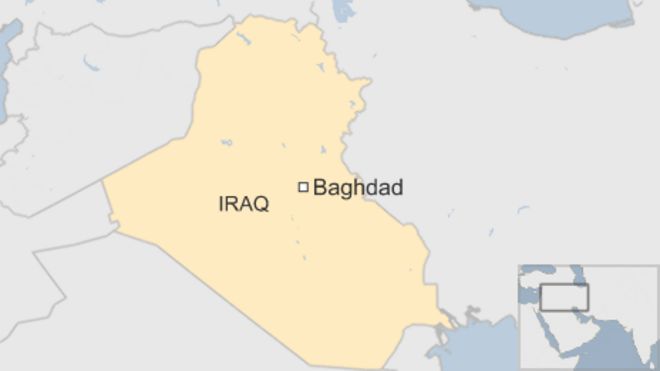
Over the last few days, there has been talk of Americans missing in Iraq. A senior official officer in Baghdad states that a company filed a report about three male American contractors missing. They disappeared in Southern Baghdad on their way to the airport and have yet to been seen since.
It has recently been discovered that the three men disappeared
 during their stay at a brothel. However, it is unknown whether they were lured there or were staying willfully. Sources claim they were taken away in a vehicle convoy in broad daylight.


Many militant groups are known to kidnap people for ransom in this region. However, nobody has yet claimed responsibility for this event.

Many are quick to point out that if this kidnapping turns into a large event, peace and stability in Iraq may be prolonged. However, the US claims to be working peacefully with Iraqi authorities in attempting to locate the lost Americans. The White house has not commented on this event.

Presidential candidate Donald Trump claims that the way our leaders are dealing with this event will showcase to Iraq the weakness of our country's national security. He then connected this to the recent release of American prisoners in Iran and to the Iran nuclear deal, both of which he sees as bad security decisions. 

Questions:
1) If this turned into a large scale kidnapping, how might this affect our relations with Iraq? What might come of this? Or is this no big deal?
2) Do you think this was a militant group's work? Did ISIS play a role?
3) What do you think about Donald Trump's opinion on this issue?

Sources:
CNN: Click Here
NY Daily: Click Here
BBC: Click Here
NBC: Click Here

Silences in the State Of Union Address

I watched the State Of Union Address again and something really stuck out to me as odd as I watched it.

President Obama covered a lot of topics, ranging from immigration, college and education in general, to the country's current economic state, but something was missing to me and it kind of stuck out.

Of the many topics that President Obama brought up, one of the topics that was not mentioned was anything on gun policy or anything on whatsoever. Because of all of the problems surrounding gun policy in the last couple of years (school shootings being a huge shaper in terms of gun policy in the last year), I would have thought he at least talk for five minutes on it.

Even though President Obama did not mention gun policy during address, he did focus on quite a few  "big "topics  that came up in 2015. Not to mention he was quite optimistic on the future,  and the things he did right and could expand on, but nothing very concrete at all. He also focused on a lot on his legacy as a president, American hope, and pride and how we can improve on medical insurance and social equality.

Could it have been too controversial to speak to the American public about so he decided to leave it out of the address? Could President Obama not have wanted to potentially hurt the Democratic Party nominees that he decided to only speak on idealistic terms?


Were there any other silences you might have noticed when watching the State of Union Address? What might have President Obama might have missed?


State of Union Address-Infographic from White House Press Office

Just the text here


Friday, January 15, 2016

GOB Debate Highlights


 It's primary season and the Republican party has yet to really narrow down candidates, a move which splits up the party significantly. However, all of this divide makes for an entertaining debate.

One of the most consistent things I observed from the entire debate was that every single candidate felt the need to a) seriously bash on Obama, b) say "when I become President of the United States...," to show off their confidence and c) practically ignore the question asked to bash on someone or endorse themselves for the first minute. I guess this is what it takes to be a Presidential candidate.

The main debate last night was between Trump and Cruz. After claiming that Cruz's "poll numbers have changed, but the constitution has not," he attacked Crux's eligibility to run due to his birth in Canada to an American mother, saying that if he gets the nomination, he may not even be able to run since the Democrats would sue. A little later on, Cruz attacked Trump on his "New York values," claiming that not many Republicans come out of liberal New York. This took a hard hit on Trump, who then went into a story about the strength of the people in New York after the 9/11 terrorists attacks.

After the debate, Trump said: he guesses the "bromance is over" between him and Senator Cruz.

Many minor battles also took the stage last night. Rubio accused Christie of being too liberal by donating to Planned Parenthood and restricting gun control laws, to which Christie claimed was all false. Later into the debate, Rubio swung at Cruz with claims concerning his immigration and trade policies. It seems Rubio is doing his best to put himself out there in the chance that one of his competitor's polls drops. 

In class, we are currently learning about primaries, party conventions, and Presidential campaigning. The debates are a good way for a candidate to publicize themselves and their viewpoints to a vast amount of people at once. Also, polls usually raise or drop after an appearance such as this, which spices things up. However, many of these events have turned almost superficial, especially since they take the questions from facebook, which just doesn't seem professional to me. The content discussed seemed much more personal than political, but I guess much of this is a popularity contest.


Questions:
1)What do you think about these debates in general? Do they accurately represent the policies and personality of the Presidential candidates?
2) Do you think debates help or hurt most participants? Why or why not?
3) Can we blame the media for this "shift" from focusing on politics to bashing on competitors in events such as debates? Or has politics always been like this?


The Goal of the State of the Union

            As we have mentioned in class, the tone and subject matter of Obama’s seventh State of the Union were quite different from the other recent addressees to Congress. Specifics were compromised in favor of a broad, optimistic look towards the future and a simultaneous defense of policy passed during both of his terms as president. Instead of trying to mobilize public support for policies or potential actions, Obama delved into the scrum of the next political election, seemingly hoping to structure the debate over the key issues he presented, which, to Paul Ryan and others, seems to dirty or degrade his post as president.
            
          However, going into his last year as president, Obama does not have the same political influence as he had coming off an election, especially with a Republican Congress, so it is doubtful that any massive legislation will get passed. As a result, trying to utilize this widely publicized speech to compel Congress to fall in line on some contested legislation would be a futile action and a wasted opportunity in a year that sees so few chances to enact change.
           
       Instead, as the parts of the speech he spent patting his back indicate, he wants to preserve what he already has accomplished and desires to see the continuation of his legacy, which depends greatly on the ideological orientation of the future president. By indirectly denouncing Trump and inserting key talking points about economic opportunity and the utilization of technology, Obama makes the most of the public attention by dampening the flame of extremism and aiding his fellow Democrats, who are far more likely to continue his programs and take the country in a direction that builds on his presidency.  The speech reflects the reality of Obama’s final term, which had lots of partisan discord and an ultimate lack of focus on passing bills via compromise.  
          
         Now for some questions. Everybody either watched or read the speech in its entirety (at least I hope so), so what did you think its aim was? Was it more idealistic than I made it out to be? Less? What should be the main aim of the Obama presidency in its final year? Is it suitable for an incumbent president to meddle with the politics that decide his successor? Any thoughts on the four future goals he listed (economic opportunity and security, technology, foreign security and restraint, and the political system) are also welcome and appreciated.
Sources:

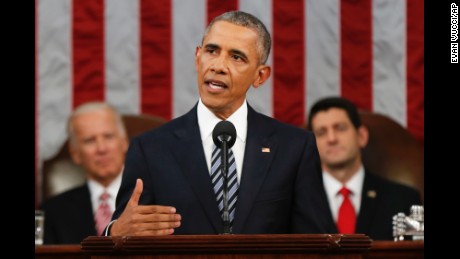
Photo: http://www.cnn.com/videos/politics/2016/01/13/state-of-the-union-address-obamas-regrets-08.cnn/video/playlists/state-of-the-union-address/

Thursday, January 14, 2016

Oregon’s Variety of Hostile Takeover

            For the past eleven days, the Malheur National Wildlife Refuge, a bird sanctuary in Oregon, has been occupied by an armed militia. This outbreak, while being the action of a few radicals, conveys a greater conflict in the region between the Bureau of Land Management and local ranchers, with specific arguments over grazing permits that have grown scarcer to protect the wide variety of birds that settle in the refuge in addition to the domain of federal laws.
Malheur-National-Wildlife-RefugeOn the surface, this seems like a case of a bunch of cowboys, dedicated to a simple life of reaping from the land, protesting the overly meddlesome federal government and desiring a return to former glory. However, the very cause of the strength of this Wildlife Refuge came from decades of overuse by individual ranchers and poor environmental conditions, which made a case for regulation and oversight. Ever since the 1930s, ranchers in the area have been subsidized by the low prices charged to graze their cattle on the Refuge, so the situation is far more convoluted than it may seem.
 This occupation is the work of a militant, extremist subset of ranchers, led by Ammon Bundy, who feel a sense of alienation from the federal government and want control of the refuge to be ceded back to the people. Their aggressive rhetoric masks one of the more valid components of the larger movement to limit the influence of these federal lands: the constitutional argument over the property clause. This clause either gives Congress the ability to set the rules for publicly owned land or the ability to only own the land and thus expose the land to state and local laws, but the precedent from the Supreme Court is that Congress can legislate over these lands.    
This situation begs an interesting question about the importance of governmental responsiveness, especially within the sweeping government bureaucracy, for if people feel the reaching hand of a distant power and cannot properly represent their sentiment, dissension and violence often breaks out. Ironically, the same government they so despise can protect them from themselves and represent the interest of the greater good, a main reason bureaucratic agencies have a degree of discretion over their jurisdictions and insulation from true democracy.  
To what extent should the government be open to compromise with these militias? Relating back to the State of the Union, how does America dampen internal extremism that threatens the safety of its citizens? How can we balance the issue of environmental protection with economic priorities of farmers and ranchers? Under what government should the jurisdiction of publicly owned lands fall? The federal government, or the state governments?
Sources:


Picture:
http://jewishcurrents.org/wp-content/uploads/2016/01/Malheur-National-Wildlife-Refuge.jpg 

Wednesday, January 13, 2016

Egypt's New Parliament

Members of Egypt's parliament attend the inaugural session in Cairo on Sunday.The Egyptian President Abdel Fattah Al Sisi is no longer officially alone at the top of the Egyptian government, although the amount of change Parliament will bring is still up in the air. Some context is probably necessary. Egypt was one of the many Middle Eastern countries caught up in the Arab Spring and accordingly saw the overthrow of the regime headed by Hosni Mubarak, which had long stifled political opposition. This in turn ushered in the ascendancy of the Muslim Brotherhood and Mohamed Morsi, Egypt’s first president to be freely elected. The strong grounding that the Muslim Brotherhood had in, you guessed it, Islamic faith and Morsi’s grab for greater power to erase the remnants of Mubarak’s government turned the people and military against him, leading to a military coup that put al-Sisi in office starting in 2013 and the designation of the Muslim Brotherhood as a terrorist organization, powerless to submit candidates for representation in the new parliament. (Do look into this further if you are interested. There is plenty more to note about this time of upheaval.)


            al-Sisi has acted as a force of stability in the face of all this institutional change, so it seems like parliament will further these aims as opposed to striking out on its own path, especially considering that all 120 seats allocated to parties went to a coalition that ran on a pledge to lessen the legislature’s power over presidential impeachment. 28 were selected by al-Sisi himself, and the remaining 448 went to individual candidates, among them politicians from the Mubarak period and public figures.
            Connecting this to what we have been learning in class, the voter turnout for these parliamentary elections was horrid, with a 26.5 percent turnout in the first stage of voting. This presents a different side of voter apathy when compared to the United States, for there are substantial problems in Egypt relating to the economy and political expression that would probably rile up US voters. Instead of stemming from a situation of contentment or laziness, Egypt’s apathy seems to reside in the government’s ability to change what is wrong. Constant upheaval lessens what people expect of their government and makes involvement in the voting process seem trivial. Of course, the banning of the Muslim Brotherhood and boycotts from 11 other parties also limited voter choice and limited overall motivation for the supporters of these parties.
            Beyond providing an interesting case study for voting practices, the actions of this new parliament are important to U.S. foreign policy. al-Sisi has proven to be effective in not tolerating extremist groups, a good quality when contrasted to the chaos surrounding ISIL, but an effective, active parliament would further the spread of democracy, another foreign priority of the U.S. The U.S. would mainly influence this by either sending military assistance to Egypt in hopes of establishing a strong relationship with the current regime to combat terrorism or withholding assistance, which in turn might apply pressure for further change.
Do you think Egypt’s new Parliament manifests a chance for stable democracy in the region? Is this even what Egypt needs at the present time? What about the United States? Should our government focus on establishing democracy or strengthening a regime that has already proven to take hard stands against extremist groups? Finally, what are some critical traits a government needs to have to spur voter turnout?


The Iranian Hostage Cri-Success

If you were watching the State of Union Address last night, and I hope you were for the sake of your SOU assignment, then you probably noticed the tension due to the ten navy sailors that were captured by Iranian forces. They considered cancelling the entire program! It seems we've all heard this story before, right? 444 days, tons of stress, and it all ultimately ends up in a movie. Well, it seems that part two differs from the original, since Iran released all American sailors within twenty four hours after two small and armed boats experienced mechanical trouble and wound up in Iranian waters. So what does this mean?
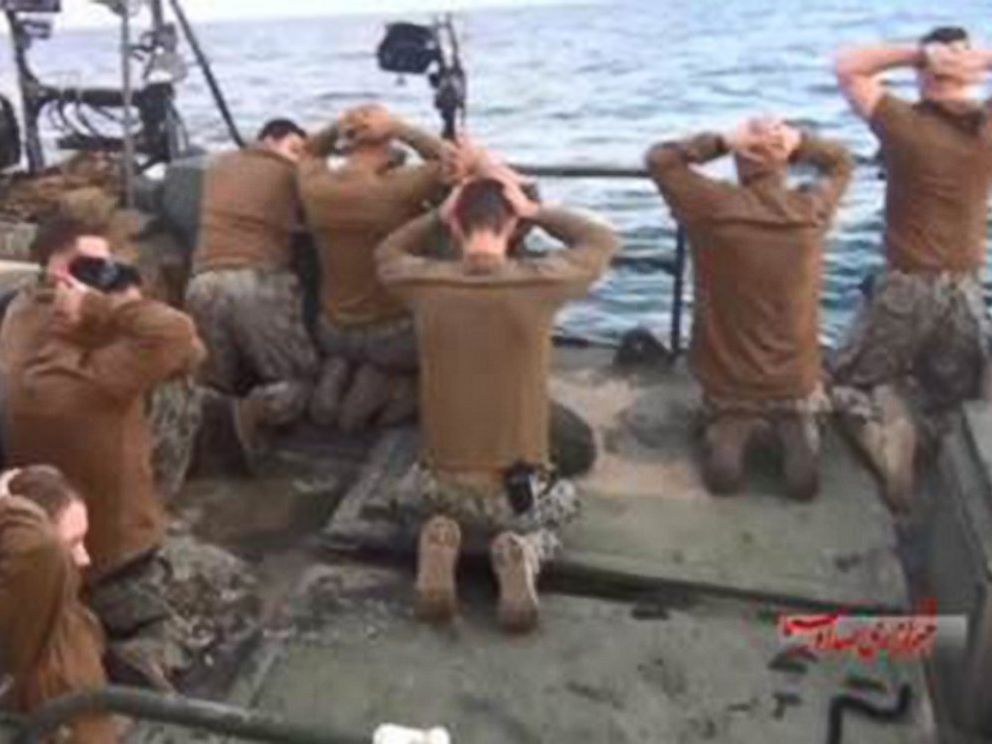
Many democrats claim that this outcome is good news. Our sailors were free within a day, and many attribute this to the Iranian nuclear deal, where oil and financial sanctions will be removed from Iran in return for close monitoring of any plutonium or uranium plants that Iran currently possesses. Obama and other Democrats are lauding this interaction with Iran as an indication of how successful the nuclear deal negotiations have been in creating a more stable relationship with Iran, since it seems they are too afraid to incite the US with violence when sanction relief money is coming soon. This quick hostage scenario is evidence to Obama that a more stable global interaction with Iran is not far away.


Not surprisingly, Republicans responded in the opposite manor. They find Obama's contentment with the quick release of Americans unsatisfactory, and claim that the imprisonment of these people for any time at all displays the failure of the President to actually fix relations with Iran. This was backed up with images of hostages with guns pointed at them, which turned the republican community to rage.  Many also criticize Obama for ignoring this issue at the SOU, as it is of dire national importance.

There is some controversy over an Iranian news video that depicted an American sailor's apology to the people of Iran, yet it is unclear whether this apology was forced or not actually meant as an apology from the US to Iran for this incident. The US declares that no apology was given.

Questions:
1) Do you see this issue as proof of progress in relations with Iran or proof of failed policy? Why?
2) How does ultra partisanship affect daily politics? Even in times of national crisis, everyone still disagrees with each other. Why can't we just agree?
                  3) What do you think about the Iranian nuclear deal? Yay or nay? (Go here for a simple guide)

Sources:
NBC: Click Here
Politico: Click Here
CNN: Click Here
ABC and Pic: Click Here
LA Times and Pic: Click here


Tuesday, January 12, 2016

Clinton v Sanders: The Battle Begins

In the last few days it seems Hillary Clinton's campaign may be reaching a bumpy spot due to Bernie's new popularity.

With primaries slowly approaching, candidates are focusing on the two first states to vote: Iowa and New Hampshire. Both democratic candidates seem to be upping their game in these states with speeches and brochures galore.                                                         

For a minute there, we all thought that Hillary had wrapped up this primary, right? Well, it's possible we were wrong. Bernie has touched the hearts of many people in both Iowa and New Hampshire, and his poll ratings (shown below) show a new fondness for him. Hillary promised us from the beginning that she was "in it to win it," and she is now attempting to protect her title as #1 by disparaging Bernie, especially on his gun control policy. She points out in the video below that he has voted for many bills protecting the NRA, which obviously seems very conservative. In a recent ad, she has highlighted this flaw as well as the fact that her opponent doesn't support Obama as much as she does, which hits close to home with Obama lovers.

Bernie isn't letting this go; in fact, he is pointing out her strong comebacks as an indication of her campaign failures (ABC). He has attacked Clinton back by pointing out her hesitance to expand social security and other issues. Both candidates are trying to up the heat at the point in the election and it isn't surprising that Hillary is trying to make herself seem like the most qualified person for the nomination. I also guess that Bernie isn't always as sweet as everyone thinks.
Video Worth Watching: Click Here

There is a a consistent pattern of supporters of both Bernie and Hillary worth pointing out here. Many younger democratic voters tend to support the more liberal Bernie while older democratic voters (over the age of 45) tend to support the more moderate democrat, Hillary (New York Times). However, many also believe that Hillary will ultimately win the nomination, since she has slightly higher polls and may seem to be the better choice for the presidency (New York Times).

I think that Hillary is right to campaign hard right before the primaries, even if trash-talking Bernie is involved. Nobody ever said politics was pretty, and she has every right to point out the weaknesses of her competition as he quickly catches up to her, as indicated by the Iowa Poll graph above. I guess we will soon see who is able to out campaign the other in the upcoming months. 


Questions:

1) Do you think that the excess attention Iowa and New Hampshire receive as the first primary vote is unfair? What are the benefits of this to candidates and why do you think that they focus so much on getting those first states?
2) Why do you think younger people tend to vote more liberal (Bernie) and older people more conservative (Hillary)? 
3) Do you think that Hillary has the right to bad mouth Bernie like this? She does still have the lead, is she overreacting or is this a necessary move?


Sources:
The New York Times: Click Here
The Washington Post (and video): Click Here
ABC News: Click Here
CNN: Click Here
Iowa Poll: Click Here


Nikki Haley could be our next Vice President

After the State of the Union address Governor Nikki Haley was given the job of responding for the Republican party to Obama’s speech. Haley the Governor of South Carolina has been making herself known in the past year by taking down a confederate flag from the statehouse in Columbia, South Carolina after the shooting of nine African Americans by a white supremacist, and verbally slamming Donald Trump a couple of times. After her response to the SOTU everyone rushed to google to read up about her.
postandcourier.com

Obviously she would not be Donald Trump’s choice if he wins the primary but for the other possible candidates she would make a strong running mate. Her parents are both Indian so she appeals to minorities and she is a strong supporter of women’s rights which would make some Clinton supporters think about changing sides. She would diminish the anti-minority stigma that Trump has put around the Republican party and give the election the fresh new face people have been waiting for. Overall she has made her mark with her response to the SOTU and is certainly now one of the top options for the Republican candidate’s Vice President.


Questions:
1. What is your opinion on Nikki Haley so far?
2. Would she affect your decision on any of the candidates?
3. If you saw her response to the SOTU do you have any comments on the things she said?

Sources:
http://www.newsweek.com/south-carolina-governor-nikki-haley-republican-response-414890
http://www.npr.org/2016/01/11/462702582/state-of-the-union-response-5-things-to-know-about-s-c-gov-nikki-haley
https://www.washingtonpost.com/news/the-fix/wp/2016/01/12/nikki-haley-managed-to-capture-americas-attention/

Is Ted Cruz Eligible to Run for President?

The Dallas Morning News

According to the Constitution the President must have three qualifications. He or she must be above 35 years of age, a resident of the United States for 14 years, and a natural born citizen. Ted Cruz has being resident since he was 4 years old, and is 45 years old, however it is being disputed whether he is a natural born citizen.


Cruz was born in Calgary, Canada. However his mother was born in Delaware and was an American citizen so the the Naturalization Act of 1790 which stated that “children born abroad to U.S. citizens were, too, natural born citizens.”(politifact.com) would make him a natural born citizen. Also he moved to the U.S. when he was 4 so should we really hold it over him that he was born in another country when he spent the majority of his life in the U.S.?

However, Democrats seem to want to argue this issue a bit more considering how concerned the Republicans were with Obama possibly being born in Kenya, and then claiming Hawaii where he was actually born is not a real part of the United States. Most Republicans pay little attention to Cruz’s situation and ignore the fact of how passionate they were about the possibility of Obama not being a natural born citizen.


Questions:
  1. Do you think that Ted Cruz is a natural born citizen?
  2. Do you think he should still be allowed to run even if he is not considered a natural born citizen?
  3. How do you feel about Cruz’s birthplace being considered less controversial to the GOP than Obama’s clearly legal birthplace?


Sources:


Monday, January 11, 2016

California's New Automatic Voting Registration


A California bill signed by Governor Jerry Brown amends the process of registration previously used in California. Formerly, any eligible voter would have to fill out a semi-tedious form online or on paper in order to register themselves. The problem with this is that it leaves the people up to the task of signing themselves up, something that few other countries attempt since most believe that voting should be the burden of the government, not the people. This issue can probably account for a portion of the blame for such low voter turnouts in addition to mobility issues or general apathy. 
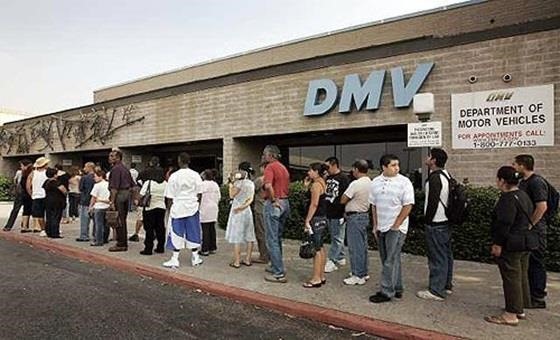
To resolve this issue, the new bill, active on January 1st, allows any person who goes to the DMV to get/renew a driver's licence or to get a state ID to register to vote right then and there. The DMV will send personal information into the Secretary of State's office for verification and then registration. There is an option for anyone who doesn't want to vote to opt-out as well as an
understanding that nobody will be registered to vote without their knowledge. Many voting rights groups and Hillary Clinton have endorsed this bill and others like it in an effort to increase voter turnout by making registration more convenient to the average person.Other states have also considered such laws, Oregon being the first to actually pass one. Oregon's system is similar to California's, without the opt-out option. Seventeen other states also have proposed automatic voting pills.


Many defenders of bills such as this one claim that automatic voting makes for a more secure way of transporting and verifying information, since the information is coming from a reputable source rather than a paper form. It also helps in making voting a little more accessible, especially to the historically low turnout group of 18-24 year olds. This change could have an impact on the young adults going into the polls, even if it isn't substantial. Many teenagers wait until 18 to get their drivers licence now anyway; couldn't it benefit them to be registered right then?

I think that this bill is in the right direction. People must renew their driver's licences every five years anyways, so they will, without doubt, be waiting in that long line at the DMV. With this new system, people can kill two birds with one stone, and I think it will be relatively effective.


Questions:
1) What do you think of this bill's overall ability to increase voter turnout? How could it be improved?
2) Do you think that the new bill could stand to increase the number of young people going to the polls in the 2016 election? Why or why not?
3) Explain some advantages/disadvantages of many states adopting laws such as this one. 


Sources:
Huffington Post: Click Here
Image of Governor: Click here
LA Times: Click Here
Poly Post: Click Here
DMV Pic: Click Here

Sunday, January 10, 2016

El Chapo to be extradited to the US

After his 2nd escape from prison in the last year, the Mexican drug lord, El Chapo, has been recaptured and is to be extradited or moved to the US to be held in a higher security prison than what Mexico was able to provide. He currently faces drug trafficking charges in many states and wanted by the United States. He was tracked using electronic communications through cell phones with Rolling Stones magazines and his representatives contacting film makers about making an El Chapo Biopic, a biographical movie.

After he was recaptured the Mexican navy raided his home in Los Mochis in his home-state Sinaloa. Many people in the area became supporters of him and protected him on top of his own gunman protection. The people in his home town also viewed him as a Robin Hood figure for helping out the impoverish citizens of the area to survive. He is currently being held in Altiplano Maximum Security Prison in Mexico but is expected to be transferred to the United States for custody soon.

Questions:
1. Do you think people will consider the fact that Chapo was viewed in a heroic light by the people of his home town and if so, how would that affect his treatment in the United States.
2. His multiple escapes and the United State's desire to extradite him indicate that Mexico's prisons are inadequate. Do you think that the anti-immigration republican candidates will use this as a point in the coming race to give a reason to increase immigration policies?


http://www.cnn.com/2016/01/09/americas/el-chapo-captured-mexico/index.html

'El Chapo' interviewed by Sean Penn

Rolling Stone magazine published an interview with Mexican drug lord Joaquin "El Chapo" Guzman . conducted by actor Sean Penn. Some of the highlights of the interview include that Penn was not blindfolded, unlike the hollywood stereotype of meeting with drug lords, there were many measures taken to keep their location and transportation secret, and Guzman looked as if he were coming for a professional interview being dressed in black jeans and a pressed silk shirt. Guzman also defended his drug cartel saying that the Mexican economy and lack of jobs left him with no other choice. His recent arrest after his second jailbreak may be linked to some communication Guzman had with this interview or his representatives contacting film makers about making a film about Guzman's life.

Questions:
1. How do you think Sean Penn's reputation will affected considering the fact that he and Rolling Stone hid this interview from the public for so many months.
2. Do you think that many people will actually look into and react to Guzman's comments that the weakness of the Mexican government causes people like him to go into businesses like drug trafficking

http://www.cnn.com/2016/01/10/americas/el-chapo-sean-penn-rolling-stone-interview/index.html


Self-parking Tesla cars

Tesla has always been considered one of the cutting edge car manufacturers with their full electric sports cars and patented motor and charger design that allows their cars to last longer than other electric cars and have record speeds for 0-60 acceleration.

Tesla has recently published that it allows it's users to download and install additional feature that will allow the driver to step out and have the car park itself. On top of Tesla's AutoSteer program that allows lane changing and common maneuvers this brings them one step closer to having autonomously driving cars for consumers. Tesla's CEO, Elon Musk, hopes to have completely self driving and self charging cars in 2 years.

Questions:
1. Do you think that Tesla will try to make more affordable cars in the near future with these autonomous driving capabilities?
2. Do you think that Tesla will start putting other cars that make gasoline cars out of business in the near future?

http://money.cnn.com/2016/01/10/autos/tesla-autopark-elon-musk/index.html

Saturday, January 9, 2016

Trump calls out Cruz over 'birther' issues.

As the Iowa primaries continues, Cruz leads the GOP polls with Trump in a close second. Trump is calling out Cruz on the fact that he was born in Canada and holds dual citizenship with Canada so he is ineligible to run for office. His claims has swayed some voters as people have reported that they did not know Cruz was born in Canada and definitely make them question whether they will vote for him in the primaries. Trump has also called him on other issues like acting hypocritical about ethanol subsides with first opposing them historically shooting down bills that would allow for corn subsides for farmers that would increase ethanol production. However, now Cruz has advertised that he is all for subsides and Trump is calling this out to make people question his reliability and eligibility to be president.

Questions:
1. Do you think that Trump's claims against Cruz will help him in Iowa and other close states.
2. Do you think that Trump's criticism of the other candidates is the main reason why he is so ahead in the polls? What other factors do you think caused his surge in the polls?


http://www.cnn.com/2016/01/09/politics/donald-trump-ted-cruz-birther-iowa/index.html

Thursday, January 7, 2016

China's Market Crash

Last Thursday, stocks in Shanghai crashed 7% leading to a market shutdown for 30 minutes. China's stock markets instituted a "circuit breaker" that was designed to stop crashes like what just occurred from happening after it happened last summer. The "circuit breaker" mechanism pause the stock market for 15 minutes if it changed more than 5% in a day and a full day if it changed more than 7%.  However, these "circuit breakers" had the opposite effect. As a result of the crash, US stocks and European stocks are also crashing. The Dow and similar European counter parts are all down at least 5%, the lowest in decades. China's international economy is also starting to fall apart with the decline in the currency valuation.

Some of the reasons why the crash happened are the devaluation of the currency and the "circuit breaker" mechanisms both of which were direct actions of the Chinese government and central bank. It's clear that China's economy affects the rest of the world as it is a major exchange point with the US and Europe.

Questions:
1. Was the Chinese government and Central bank at fault for this crash because of the circuit breaker mechanism and devaluation of the yuan?
2. Will China's markets be able to recover to their previous status?
3. Will major companies in other countries like the US and the European nations avoid dependencies in Chinese stocks going forward?

http://money.cnn.com/2016/01/07/investing/china-stocks-trading-halted/index.html?iid=hp-stack-dom

http://money.cnn.com/2016/01/07/investing/china-markets-circuit-breakers-suspension/index.html?iid=EL

Monday, January 4, 2016

An Open Letter to Gun Control (Story of My Political Socialization)


Storify                                                                                                  US News Cartoons

Oh boy, this opens the can of worms for real.

Like I mentioned in my post on Obama's threat to use executive action to create stricter gun restrictions, I don't really know where I stand on the issue of gun control.

That's not quite true; I know exactly where I stand: I'm conflicted, standing right smack in the middle.

I'll start from the beginning, which is that I used to be completely against guns; I thought that if we just got rid of them all there would be no problem. No guns, no means to kill, am I right? People brought up the points of self protection and for sport, but I couldn't see past the fact that a gun would be anything more than a tool of destruction and death.

And then I heard Dan Carlin's take on the gun control, which sent my left leaning ideals reeling towards the center. He spoke at length about the different values that a gun might bring in a case of self protection. We might be able to quantify the number of cases in which a gun was actually used in a case of self defense, but we will never be able to quantify the number of people for which the gun by their bedside or under the pillow is the only reason they can sleep at night. I couldn't fathom the idea that, for those who grow up seeing a gun everyday, who go hunting on weekends and practice their aim at the firing range, the gun was simply a part of their lifestyle.

If this post stirs some rational debate, great. My point, however, was to provide a small window into my political socialization regarding a topic: my viewpoint was cultivated on a diet of MSNBC liberal media, fertilized by the liberal soil of the west coast in California, and trimmed by this generation's social media.

Feel free to analyze; that's why I put this up in the first place.

Sources:
Carlin, Dan. "Overdue Analysis." Audio blog post. Dan Carlin. Orator LLC, 20 Aug. 2014. Web. 4 Jan. 2016.
Koppel, Ted. Lights Out: A Cyberattack, a Nation Unprepared, Surviving the Aftermath. New York City: Crown, 2015. Print.
https://storify.com/vmbarr89/gun-control-who-does-it-protect
http://www.usnews.com/cartoons/gun-control-and-gun-rights-cartoons
My Political Socialization

Obama Planning on Executive Action for Gun Control


Image thanks to the Washington Post

I think it's kind of gross how numb I've become to mass shootings. When I hear the news, all I can think of now is how the news organizations seem to have the graphics ready; it's all well put together and very clean.

They're expecting it.

And here we are again, with Obama proposing stricter gun control measures while member of Congress continue their staunch opposition. Let me just preface this: I don't really know where I stand on the issue on gun control. I'll explain my thoughts in another post so it doesn't contaminate the main focus: Obama's proposal (threat?) to use executive action to pass said measures.

First things first, Obama's executive actions would be in part focused on forcing individual gun dealers that sell 50 or more guns a year to obtain a license and require background checks on their clients. That being said, it's worth pointing out that the owners of the guns used in both the Roseburg and San Bernadino shootings were both purchased legally, the buyers both undergoing background checks.

There are also some polls that add some interesting background information, mainly a joint poll conducted by ABC and the Washington Post that states that while 42% support stricter gun control, 47% support encouraging people to carry guns legally and 1% volunteered both (at the same time I'm guessing).

Consequences aside, if President Obama does go through with using executive action, it'll provide a contemporary case study on both the power of said legislative method and the current power of the president.

Question time!

How do you believe the balance of power currently falls? If President Obama were to forcefully legislate (is that even the correct verb?) stricter gun control methods, would Congress mount a response? Maybe even the Supreme Court would be willing to grant certiorari to such a case just to exercise their check over the executive branch (although Congress would probably get there first)?

Sources:
http://www.bbc.com/news/world-us-canada-35211294
https://www.washingtonpost.com/politics/americans-doubt-us-can-stop-lone-wolf-attacks-poll-finds/2015/12/16/bfcaa102-a3ba-11e5-ad3f-991ce3374e23_story.html

Sunday, January 3, 2016

Microbead Ban


09_18_15_Microbeads
Image thanks to Newsweek

As I was rubbing in some new acne medication before bed, I notice that the cream carried a strange texture.

Beads?

Apparently they're called microbeads, a cheap cosmetic technique used in creams to add additional exfoliating (brushing/cleaning) capabilities to the cream. Perfect for cleansing creams!

Or so I would've imagined, until President Obama signed the Microbead-Free Waters Act of 2015, which bans the use of said microbeads in "wash-off" products (including toothpaste) beginning in 2017. The ban stems from the difficulty of cleaning up the beads; by definition, they're beads of 5 millimeters diameter or less. Add the fact that they're plastic, and it becomes an ecological nightmare trying to clean up all those microbeads.

Another win for preserving nature, but what does it say about the government that did it?

Now for the questions:

Is such a measure constitutional? What does that say about ecological goals and how they rate on the level of scrutiny that should trigger?

This is kind of a shot in the dark, but how does it begin to apply to the economy and what kinds of restrictions the government can place on that economy?

Sources:

Friday, January 1, 2016

Cybersecurity and the Power Grid


Inspired by Emma's post, I've decided to write a bit on something I've read recently: Ted Koppel's book, Lights Out. His novel seeks to reveal many of the nation's gaping holes regarding cybersecurity and defense, both in terms of policy, infrastructure, and mindset. This is my attempt to boil it down to what I found were its more interesting (haunting?) points. Yes Mr. Silton, this is a bit of a preview to my research paper (it honestly barely scratches the surface).

The Power Grids of America (3)

Thanks Prep and Be Ready

No, your eyes don't deceive you. The US is powered by three power grids; one for the East, one for the West, and one for, well, Texas (because why not?). Jokes about Texas seceding from the Union aside, one big what if comes to mind:

What if one of the big grids went down entirely?

Well I sure hope you weren't thinking "The government knows how to handle that!" because the truth is they don't. In Koppel's book, he goes around interviewing top level officials, including Craig
Fugate, the Federal Emergency Management Agency's administrator. In addition to an explanation as to the logistical and resource nightmare that is sustaining several millions of individuals for a prolonged period of time (weeks into months), his overall outlook on the situation is best summed up in his final quote (of the chapter):

"We [would be] trying to hang on and keep as many people [as possible] from dying until the system comes back" (118).

Not exactly a statement of reassurance, is it now?

But perhaps I should back up, because the question that comes before this has even more depressing answers.

The Power Grid's Cybersecurity (and Structural Integrity)

I'm going to preview this section with a brief summary of power distribution. Imagine electricity like a resource that has to be moved from point A (generation) to point B (distribution). Now imagine that the transmission lines (seen above) are like a giant railway system that connects these points. This railway analogy illustrates the need to schedule power distribution (like trains on a line) (37), and helps to make Koppel's point about how important the integrity of such infrastructure is.

If hackers were able to worm their way into the system, they could cause irreparable damage not only by taking out the programs that manage the system, but damage the physical infrastructure itself by overloading both the lines and the transformers. And while the security protocols seem air tight on the surface (nothing is connected to the web that directly controls the power), all it takes is one mistake, one infected USB brought into work, and that "air boundary" disintegrates.

This part gets a bit technical, so I'll leave a TL;DR at the end.


DTE Energy's new, 884,000 pound LPT 

Transformers are important for managing power; in order to transfer power from say Florida to Michigan, it needs be done at an extremely high voltage. The voltage is no joke, as power lines can be seen sagging under the weight of the electricity at peak transmissions. Cue the large power transformers (LPTs), which are used to both "step up" and "step down" said voltages. LPTs, as important as the might be, are custom built to fit each power company and are gigantic in size and weight (400,000 to 600,000 pounds); roads have to be closed, special train carts need to be used, and bridges inspected just to transport ONE of these things. Needless to say, replacing these things is difficult. And while the exact number of these in use is considered a business secret, estimates range in the tens of thousands (95).

Now let's destroy a couple hundred by sabotage, and watch the ensuing chaos.

Oh and the production time? One to two years, "and never less than six months" (95).

TL;DR: Large complicated power transformers are hard to produce and replace; a powerful attack could destroy thousands, and then the government would be floundering as it attempted to restore power by building them.

Summary

This might have been a bit ranty/ based on one source of information. I could be cited for being paranoid, easily swayed, or both. And yet there is something eerie about Koppel's citation from George Cotter's paper Security in the North American Power Grid-A Nation at Risk:

This [electric power] industry is simply unrealistic in believing in the resiliency of this Grid subject to a sophisticated attack. When such an attack occurs, make no mistake, there will be major loss of life and serious crippling of National Security capabilities. [Emphasis added.] (225)
That's enough to make me take pause; what about you?

Sources:
Koppel, Ted. Lights Out: A Cyberattack, a Nation Unprepared, Surviving the Aftermath. New York City: Crown, 2015. Print.
http://www.walbridge.com/projects/dte-energy-fermi-2-transformer-interchange
http://www.prepandbeready.com/?p=489

CISA and Cybersecurity


darthvaderbill
Image thanks to Kitguru

On December 18th, President Obama signed into law a large "omnibus" funding bill. There were many celebrated parts of the bill, such as the $19.3 billion dollar budget for NASA and nearly $700 billion in tax breaks. It also plays host to a bill that goes by the name of CISA.

The Cybersecurity Information Sharing Act (CISA) is far from popular on the internet; many sources such as Kitguru and Reddit denounce the bill, saying that it threatens the privacy of all individuals on the internet.

The gist of the bill is that it allows businesses to share data with the government that was affected/targeted by a cyberattack. Now understand that it isn't that simple; for example, participating companies would need to attempt to "scrub" the data of customer ID's before handing it over to the government when it is not required to identify the threat. Yay for vague wording.

It's not explicitly stated, but the government has promised not to prosecuted non-cyber crimes based on the information they receive.

 As Benjamin Franklin states, ”Those who sacrifice liberty for security deserve neither.”

And yet I don't think it's that simple. It seems too easy to hop on this bandwagon, beseeching big government trying to meddle in things like the internet, using the whole "PRIVACY" slogan and what not. I don't agree with Franklin's statement, mostly because it tries to have its cake and eat it too; security and freedom both share the same space, draw from the same well of human resource. In addition, our cries for deregulation and smaller government seem awfully reminiscent of the days leading up to the Great Depression. 

In Ted Koppel's book Lights Out, he outlines a terrifying image of the state of cyber warfare in today's world. Gone are the days where weapons of mass destruction were confined to the great superpowers of the world, who grew to understand the gravity of the powers at their disposal. Now, in a world in which everything and anything relies on the internet and electricity to some extent, every single computer becomes a nuclear briefcase. CISA, as poorly written as it might be, at least attempts to address the gaping holes in our national cyberdefense by sharing information about the attacks with the government. 

But let's hear it from your perspective:

How far should government be allowed to go with such a bill? Does the breach in privacy represent a compelling government interest? Is it the least intrusive method of the achieving it? Would this act be upheld as constitutional under the review of the Supreme Court?

How big of an issue is cybersecurity? Should be focusing on other issues?

What is the role of government in that delicate balance between security and privacy? Does this overstep the boundary, is it right only in concept, or should the entire idea of the bill burn in the fiery depths of Big Brother ideas?

[And please ask if something here doesn't seem backed up / an idea confuses you.]

Sources:
Koppel, Ted. Lights Out: A Cyberattack, a Nation Unprepared, Surviving the Aftermath. New York City: Crown, 2015. Print.