Sunday, October 11, 2015

Fewer than 160 families account for nearly 50% of all 2016 campaign financing.

The Most Expensive Street in America
Thanks to Citizens United, wealth can buy more power than it used to. Just a few people, mostly from financial and energy sectors, are providing most of the funds for the 2016 presidential election candidates. Most of the money is going to Republicans. These large donations are especially alarming considering the growing closeness between super PACs (political action committees) and candidates, relationships that are technically unlawful according to the FEC (Federal Elections Commission).

The donors represent just a handful a geographic areas, mostly big cities such as New York, San Francisco, and Houston, and their influence has the potential to shift political party politics, for good or for bad, and that's definitely something we should watch out for.

It's easy to get angry at these elite donors for having a larger say than you or me, but let's consider their point of view for a second. Most of them are self-made (new money). If I was able to accumulate that much wealth, I might want to spend some of it on political campaigns, and I don't think I would feel that bad about doing so.

I'm not sure we can really blame people for donating to causes they are passionate about, but what do you guys think? What measures could we take to help equalize the amount of influence everyone has in the political process? Is equalizing influence the right thing to do?


LA Times

Candidate Spotlight: Martin O'Malley

https://www.flickr.com/photos/mdgovpics/16032128236
You guys have probably heard a lot about Hillary Clinton and Bernie Sanders and are at least aware of the huge number of Republican candidates, but what about the less popular Democratic hopefuls? With the first Democratic presidential debate scheduled for Tuesday, October 13, I thought it might be useful to get to know one of the other candidates a bit more.

There are currently 3—well, more like 2—popular Democratic candidates at the moment. According to the Huffington Post's collection of polls, Clinton is sitting at 44%. Sanders trails behind with about a quarter of the vote, and Biden (who isn't officially running) has about a fifth of the vote.

Meet Martin O'Malley. He's the next most popular and polling at a measly 1.2%, but why not learn about other Democratic options? After all, a lot can happen between now and November 2016.
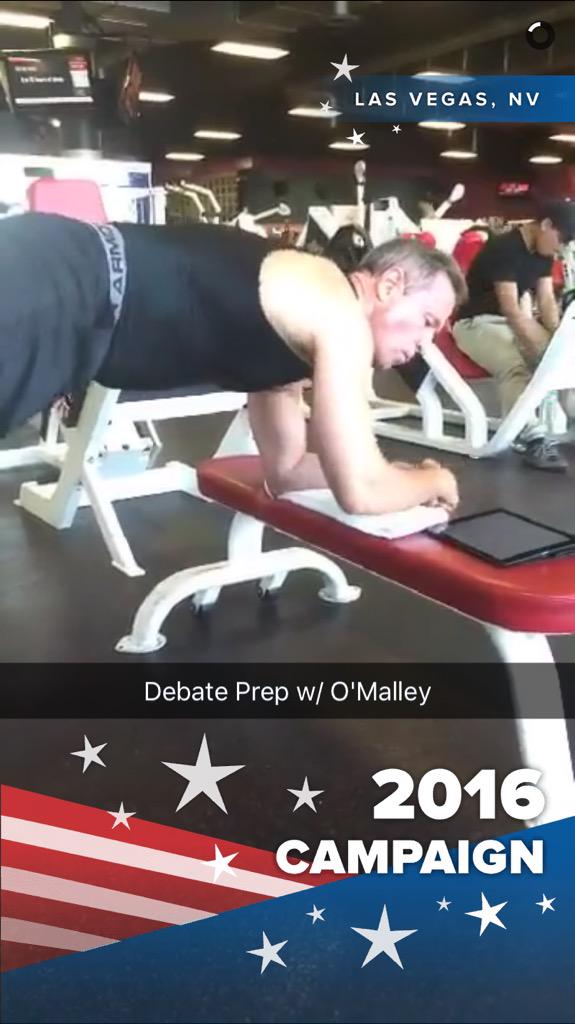
O'Malley working out and
prepping for his debate.

O'Malley is going to have some trouble differentiating himself from the Democratic front runners. He holds similar policy positions and even endorsed Hillary Clinton in 2008. Nonetheless, O'Malley is unique in a few key ways. O'Malley offers a fresh face to the race. Unlike Clinton and Sanders, he does not have experience in the national government, but he was the mayor of Baltimore from 1999 until 2007 and the governor of Maryland from 2007 to 2015. Unlike Sanders, who is 74, and Clinton, 67, O'Malley is a spry young 52-year-old (and also really buff).

O'Malley has laid out a list of 15 specific, if highly optimistic, goals that he would pursue if he becomes president. Many of them are economic, but he is also very concerned with the environment. For example, his second goal is to “[g]enerate 100% of American electricity with renewable energy by 2050.” To my knowledge, he is the only Democratic candidate with such a well-defined list.

Although his goals are progressive, O'Malley's political history tells a different story. Until very recently, he was best described as a Clinton Democrat, more centrist than many Democrats we hear about today; however, his policies appear to be shifting further to the left. I wonder how he would act as president and how he will portray himself in debates.

Who's your favorite candidate (Democrat, Republican, or third party) who hasn't been getting a lot of media attention? Do you think he or she has a chance to win the election?


Saturday, October 10, 2015

Pell Grants for State and Federal Prisoners

Obama poised to give financial aid to federal, state prisoners
An Obama administration initiative to end a 20 year ban on giving prisoners Pell grants seems to be quite popular among Congress members in both aisles. Pell grants are federal grants, issued with no need for repayment. According to article writer Ms. Grasgreen, the initiative could happen as soon as this week.

Arne Duncan, Education Secretary
Education Secretary Arne Duncan states that he and the agency hope to raise college affordability in passing the initiative. The bill's co-sponsors have noted that "prisoners who participate in correctional education programs are 43% less likely to likely to return to prison, and 13% more likely to have a job after finishing their sentence." Whether or not this statistic is accurate, it is also notable that the bill's co-sponsors stated "correctional education programs," which is different from the regular college education that the Pell grant helps with.

Already, the Obama administration has increased the amount of federal aid available by over $50 billion, and tax benefits and credits by an additional $12 billion. Is the Obama administration's increased education related spending worth it? Though this bill's intentions may be kind, are the actions redundant, or useless even? What do you think?

Two more shootings on college campuses

On Friday October 9, two shootings occurred on college campuses in Arizona and Texas. These shootings were much smaller than the one last week in Oregon as only one person was killed in each. However, shootings like these still expose gun issues even if fewer people are killed.

It is believed that these shootings occurred after disputes between the victims and the shooters. The shooters were not attempting to kill large numbers of people like the perpetrator in the Oregon shooting, but they still did kill.

At Texas Southern University, the police do not know why the perpetrator committed this attack and the suspect is not yet in custody. This was not the first recent deadly shooting for Texas Southern. Within the last six weeks, there have been four shootings, two of them fatal. At Northern Arizona University, it is believed that the shooting occurred after an altercation between two groups of  people that became violent.

These kinds of shootings that result from altercations generally do not receive much media coverage, unlike when someone set out to kill large numbers of people. These two campus shootings likely have such coverage because they happened so soon after the large episode in Oregon.

It is completely unacceptable that shootings like these still occur, especially only just over a week after a major attack. Even though these were not as deadly as mass shootings, they still expose problems for gun control within the U.S. The U.S. needs to enact stricter gun control legislation so only responsible people can obtain such a deadly weapon. If nothing changes, shootings like these and the one in Oregon will continue to occur and more innocent lives will be lost.

What do you think about these shootings? Do you think that the U.S. needs more gun control? What do you think could be done to prevent incidents like this from happening in the future?
Sources:

Thursday, October 8, 2015

Representative McCarthy no longer running for Speaker of the House

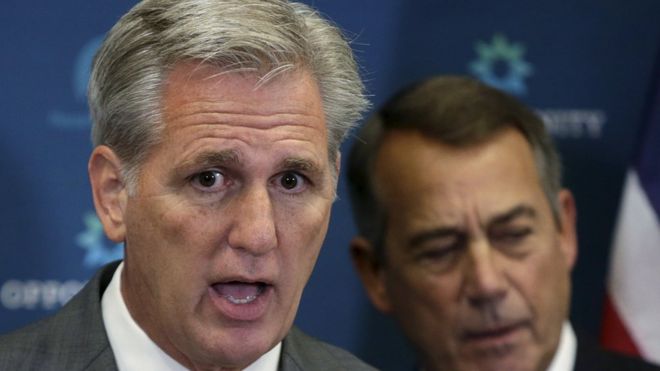
On Friday, September 25, Speaker of the House John Boehner announced that he would be retiring at the end of October. Majority Leader Kevin McCarthy announced his candidacy to replace Boehner on September 29. However, today, McCarthy stated that he is dropping out of the race for Speaker of the House.

One of McCarthy's reasons for dropping out of the race is that the Republican Party is incredibly divided on some major issues, and he does not think that he will be able to unite the party. Another reason stated was that McCarthy damaged his candidacy when he implied last week that the Benghazi investigation had a political agenda of damaging Hillary Clinton's presidential campaign.

McCarthy's decision shocked many house members and leaves the House in a state of confusion. Chaffetz, another candidate for Speaker, still plans on running. A group of Republicans stated earlier in the week that they would support Webster for the position. However, as of right now, it is unclear who will succeed Boehner.

Many important issues are quickly arising around this time. The Treasury predicts that on November 5 it will reach the debt ceiling, so congress needs to raise it. Additionally, the continuation on last year's budget will expire on December 15, which could cause a government shut down.

This relates back to class because in the last chapter we were discussing the House and national debt limits. The government reaching the debt limit would have catastrophic consequences as people will no longer trust the U.S. government as a safe investment. This will cause interest rates to rise and more expensive borrowing in the future. In addition, the GOP needs to find a suitable Speaker candidate quickly. The new Speaker needs to be able to represent the House as a whole and keep the party together.

What do you think about the current state of the House? What do you think is the importance of having a good Speaker of the House?

Sources:

Wednesday, October 7, 2015

When Civil Rights and Small Government Collide


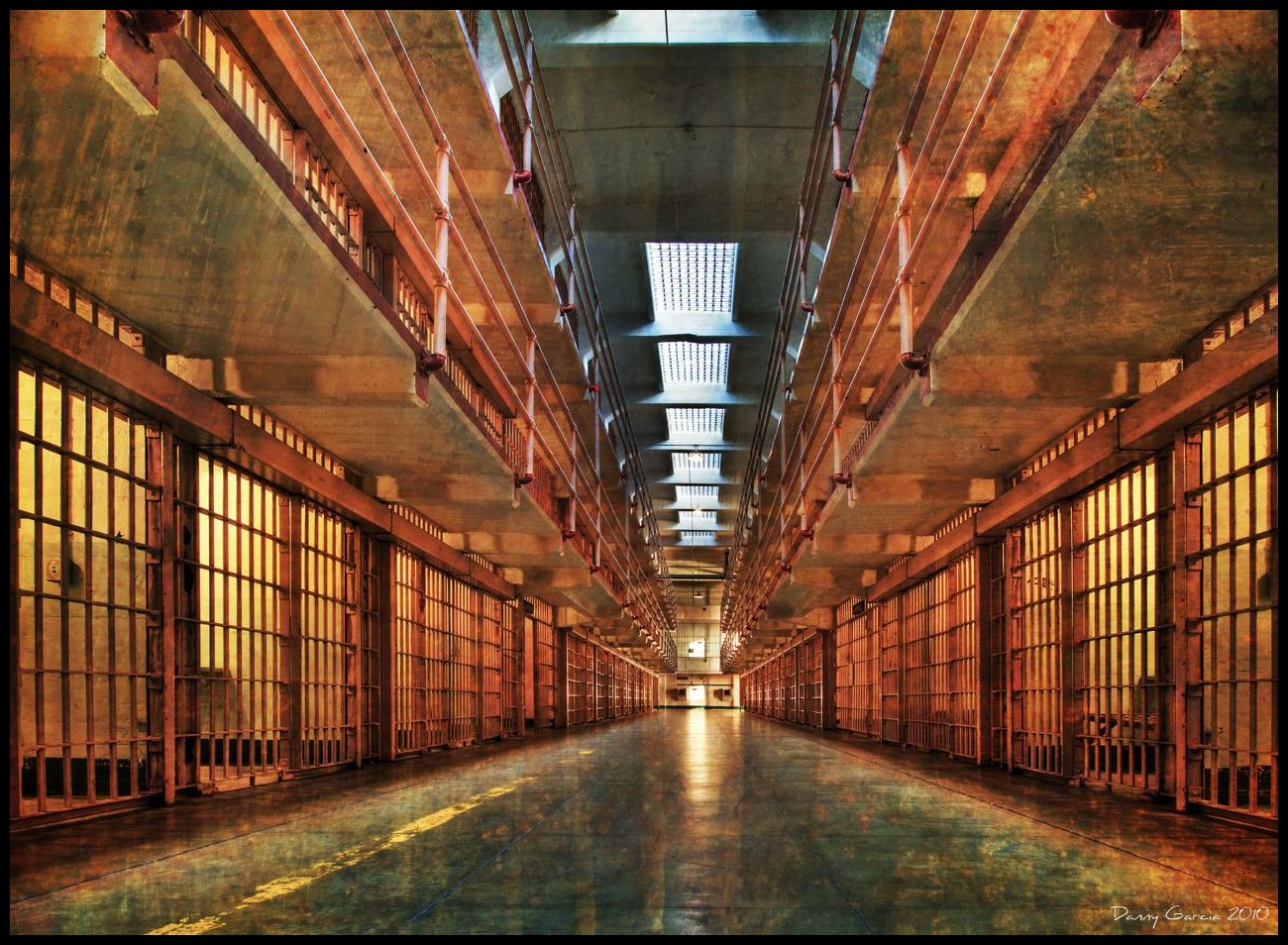
On October 1st, the Sentencing Reform and Corrections Act, a bipartisan bill, was introduced in the Senate. The primary purpose of the bill is to begin reforming our criminal justice system. Judiciary Committee chairman Chuck Grassley is one of the cosponsors, which is particularly noteworthy, since he is one of the most senior members of the Senate and also a Republican who is generally thought of as being “tough on crime.” The support from the right definitely came as a surprise to me, since I've always thought of criminal justice reform as a Democratic issue, but in fact more and more Republicans are beginning to advocate for change.
Picture by Danny Garcia

It seems that members of both the left and the right consider tough-on-crime legislation to be antithetical to their values. While progressives see this issue from a civil rights perspective, conservatives are concerned with the bloat and bureaucracy of the criminal system, a viewpoint that has stemmed from libertarian ideology and is slowly percolating through the Republican party. There are other reasons for Republicans to back criminal justice reform besides creating a smaller government, and junior Senator Mike Lee, a cosponsor on the Senate bill, has outlined some of the reasons in this article. One strategic motivation for this stance is an attempt to reclaim minority votes that Republicans have been losing steadily over the past few years.
cosponsor on the Senate bill, has outlined some of the reasons in

Despite the promise of this bill, it has limited scope. While the bill eliminates some mandatory minimum sentences, it adds new ones. Moreover, this legislation would only apply to the national prison system, and violent offenses see no mandatory minimum reductions. Regardless, this legislation seems like a step in the right direction.

While Senate passage seems likely given its support at the committee level, the outlook for the SAFE Justice Act (a bipartisan House bill with similar, but more radical goals) is more murky. Boehner endorsed the act, but it is unclear whether McCarthy (or Chaffetz or whoever becomes the new House majority leader) would support the bill. This ties back to the toxic, anti-compromise culture in Congress we've just learned about. Perhaps the bipartisan support of the SAFE Justice Act will be its downfall in the House if some Republicans choose to oppose it because it makes Democrats look good.

Some see this legislation as a “signifier of a new era” in criminal justice reform, but it's possible that this bill may increase divisions within the Republican party, separating them into those who are tough on crime (generally older politicians) and those who believe in a smaller government.

What do you think? Is this type of reform a good idea? What might the ramifications of this legislation be, both direct and indirect?

Sources

Tuesday, October 6, 2015

U.S. Responsible for Airstrike in Kunduz

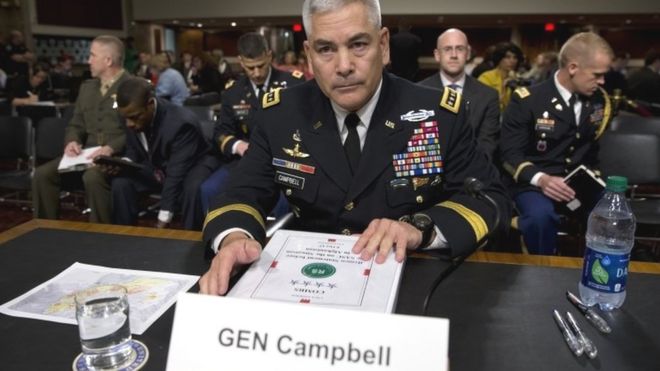
General Cambell addressing the Senate Armed Services Committee
22 people were killed in an airstrike on October 3, 2015 against a Doctors Without Borders hospital in Kunduz, Afghanistan. After days of shifting remarks, on Tuesday, General John Campbell said that the airstrike was “a U.S. decision made within the U.S. chain of command.” While the pentagon previously said that the attack was inadvertent, Campbell says that the hospital was intentionally, but mistakenly, attacked after an Afghan request for air support. The request was supposed to go through rigorous screening before actions were taken, so the attack was the Untied States's responsibility.

Previously, the U.S. had been reluctant to use air power to assist the anti-Taliban efforts as it is very easy to inadvertently hurt civilians. However, that did stop the U.S. from going through with the attack on October 3.

Even though it was the only free trauma care hospital in northern Afghanistan, Doctors Without Borders decided to withdraw from Kunduz as they no longer see it as safe. Doctors Without Borders, claims that these actions amount to a war crime. The president of Doctors Without Borders insists that the attack is not "an inevitable consequence of war" and needs a thorough, independent investigation.

Although it is unclear how the request made it though the chain of command and if the U.S. even knew they were attacking a hospital, it still completely unacceptable to attack hospitals, especially when run by peaceful, international organizations like Doctors Without Borders. I think that there definitely needs to be an independent investigation so an unbiased analysis of the situation can determine to what degree of responsibility the US has for the airstrike. Nothing the U.S. can do will make up for the loss of 22 innocent civilians, 12 of whom were volunteers. However, the U.S. needs to make an effort to change wartime procedures so nothing like this can happen again.

What do you think about the airstrike? Do you think that the United States actions should be considered war crimes? To what extent does the U.S. need to answer for its mistake?

Sources:

Ending U.S. Oil Export Gains Ground

Ending the U.S. Oil Export Ban Is an Empty Gesture
An Alaskan oil pipeline

Though it may not necessarily become policy anytime soon, sentiment towards ending the U.S. oil export ban in 1975 has certainly gained traction in both sides of Congress. To many, this would seem like a move that would widen the market for oil and thus bring more competitive prices. Furthermore, this would also bring more jobs to Americans. As usual, while many Republicans support the bill, various Democrats have various reservations about lifting the ban, including Hilary Clinton, who has voiced her concern about the environmental risks that come with lifting the ban.

The 1940's and 1950's were times of cheap oil prices. This, in conjunction to the booming popularity of automotives, became the grounds for heated oil debates. Wary of the notion that cheap oil from the Middle East would flood the American markets, politicians enacted measures to regulate the flow of exports and imports of oil. A ban on the export of crude oil to all nations except Canada without a special license in 1947, thus keeping the vast reserve of oil. In the 1950's, oil policy changed under Eisenhower, limiting the imports of oil. By 1973, however, Nixon, who was pressured by the depleting supply of American oil, loosened the policy on imports of oil, but due to the OAPEC's enactment of the oil embargo, little was achieved. Finally, in 1975, President Ford decided that in order to tackle the problem with foreign oil dependency, the demand for foreign oil should be lowered my banning the export of domestic oil, thus enforcing Americans to use domestic oil instead of foreign oil.

Ulimately, since oil production in the United States has shot up since then, and oil in general is quite cheap today, is it safe to once again lift the ban on exports of domestic oil? Doing so would widen our markets and generate profit for American companies. Or should we perhaps maintain the ban to conserve not only the precious resource of oil and conserve the environment? Would going this route cause us to deplete available oil resources once again?  Given the constant flip-flop of policy on oil, is export-import oriented policy even effective and relevant in making long term and effective changes?

Sunday, October 4, 2015

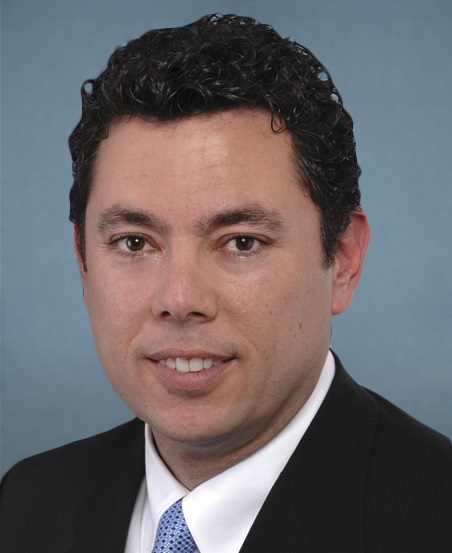
Chaffetz to Run for House Speaker

Congressman Chaffetz
(Wikipedia Commons)
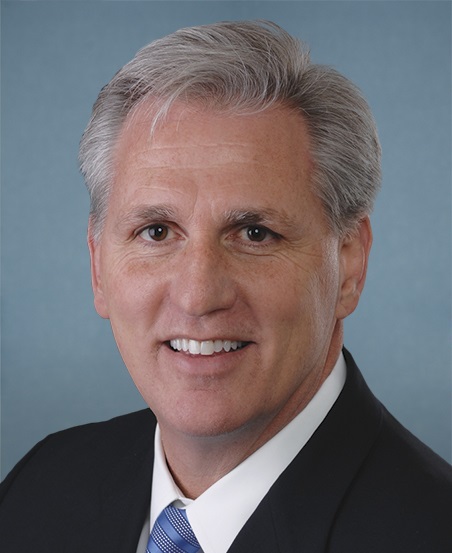
        Who would win a face race? ;)
Congressman McCarthy
(Wikipedia Commons)
Jason Chaffetz, a Republican Congressman from Utah, announced on Fox News Sunday that he would enter the race for House Speaker against Kevin McCarthy, and news sources are painting him as one of the first challengers to actually be potentially threatening. Chaffetz is two years younger than McCarthy, who is already younger than most speakers, but Chaffetz is head of a prominent committee (House Oversight and Government Reform) and a recognizable face after he lead the charge against Planned Parenthood earlier last week.

One of Chaffetz's self-proclaimed qualifications is his talent for public speech. He accuses Kevin McCarthy for soiling the image of the Republican party when he bluntly implied that the Benghazi Special Committee had been designed to make Hillary Clinton appear untrustworthy.

Political commentators from CNN agree--they say that McCarthy's announcement was the best thing to have happened to Clinton for a long time. But check out Chaffetz's speaking skills for yourself: he gets heated up about Planned Parenthood in this video interview.

With regards to the debt ceiling decision coming up in November (hey, government has a nerve-wracking November deadline, just like we do), Chaffetz says,

“the only way you can raise the debt ceiling is to change the trajectory of spending — that’s my personal preference. But I want the Ways and Means Committee to offer up a solution.”

A quick On the Issues check reveals that Chaffetz is generally consistent on opposing excess government spending, and he supported the campaign for a balanced-budget amendment. Chaffetz is not an extremely radical member of his party and belongs to neither the Freedom or Tea Party caucuses, but he also expressed a willingness (according to Daily Intelligencer) to pass Republican bills in the House regardless of how they fare in the Senate/White House, indicating that he will seek to be less of a moderator than Boehner or McCarthy. On the topic of committees, Chaffetz says he will give them more power and allow for more amendments and floor debate in order to

“win the support of our hardcore conservatives and yet be palatable to our more moderate members”

I don't know---it seems like Boehner tried (unsuccessfully) to do the same thing in "It's Even Worse Than It Looks." As for the public speaking ability, is Chaffetz gearing up to be another Newt Gingrich? Chaffetz has admitted that he is "comfortable with losing," and only stepped up because Ryan and Gowdy refused. So what are his motives for breaking a good relationship with McCarthy by claiming that McCarthy's ineptitude compelled him (Chaffetz) to run? Do Chaffetz's supposed qualifications have any real traction? How will he shape the upcoming debt ceiling debate, and will his respect for radical members bring him down as hard as it did Boehner?

Your thoughts, please.

Daily Intelligencer
Politico
The Gavel (Politico's blog)
CNN(Planned Parenthood)
CNN (political commentary)
On the Issues (Chaffetz) & On the Issues (McCarthy)

Saturday, October 3, 2015

Airstrikes Hit Hospital in Afghanistan

Saturday morning saw the death of 19 people at the sole hospital in Kunduz, Afghanistan. The hospital, run by humanitarian relief group Doctors Without Borders, was bombed repeatedly by what US news sources are increasingly attributing to a US airstrike responding to Taliban activity in the city. According to CNN, 12 volunteer staff and 7 patients were killed. At least 37 others were injured. No Americans were hurt in the hospital; all staff and patients were Afghans.

Left: red dots mark reported Taliban presence, and white stars indicate
location of US airstrikes. Right: aerial view of hospital. (Photo courtesy of
the New York Times)
The US military issued a statement confirming an airstrike at 2:15 AM that might have cause "collateral damage" to a hospital nearby. They claim to have been targeting nearby Taliban rebels firing at US military personnel, but according to Doctors Without Borders, no staff reported having seen fighters in or near the hospital, despite the fact that the international organization treats fighters from both sides. Doctors Without Borders also say that they had given the hospital's exact GPS coordinates to US and Afghan forces days before the attack, as is routine practice. However, the bombing continued for half an hour after the U.S. military and Afghan forces had been notified via telephone.

To date, Obama has issued a statement of condolences and confirmed that the Department of Defense has launched a full investigation. Doctors Without Borders is working on their own "impartial investigation." UN Secretary General Ban Ki-Moon also condemned the incident and called for an impartial investigation.

Nevertheless, Obama also restated that he would continue working closely with the Afghan government and military to "secure their country." Although the Taliban is responsible for 70% of civilian casualties in Afghanistan, they nevertheless do not yet possess the power to attack from above, unlike the US, which has come under attack for using its air power to inflict unnecessary civilian causalities. This last strike marks an increase in military activity since the US began withdrawing some of its forces and limiting its targets in 2012.

Doctors Without Borders is protected under international humanitarian law.

Well, when you come down to it, it's all good and fun to bastardize the military, or George Bush, or President Obama. But what could we have done differently? In light of the (mostly ineffectual) War Powers Act, should our legislative body be given the right to check executive action beyond the initial declaration of war? Would this keep incidents such as these to a minimum? Or would our dysfunctional and partisan system simply weigh itself down and play hostage-taking with human lives halfway across the world?

http://www.cnn.com/2015/10/03/asia/afghanistan-doctors-without-borders-hospital/
http://www.ibtimes.com/doctors-without-borders-condemns-airstrikes-afghanistan-hospital-us-defense-secretary-2125782
http://www.nytimes.com/interactive/2015/09/29/world/asia/afghanistan-taliban-maps.html
http://www.reuters.com/article/2015/10/03/us-afghanistan-attack-un-idUSKCN0RX0UR20151003

Executions in Oklahoma Delayed

After receiving a wrong shipment of lethal drugs, Oklahoma's highest court decided to delay their
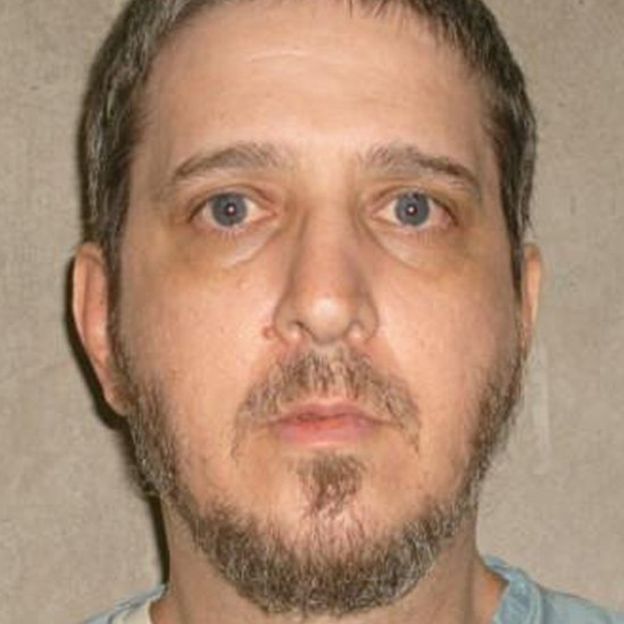
Richard Glossip (BBC)
scheduled executions until November 6. The state is planning to use this extra time to investigate why they received potassium acetate (rather than potassium chloride) just hours before the execution of Richard Glossip. Glossip was involved in a controversial murder case back in 1997, when he was convicted largely based on the testimony of Justin Sneed, the man he supposedly hired to kill Barry Van Treese (the victim). It is said that Sneed had an incentive to testify against Glossip because he would receive a lighter sentence if he did so. Sneed is currently serving a life sentence in prison.

Based on what I read about the case, the court decision seems to not be strongly backed. It does not seem like his sentence was proven beyond a reasonable doubt, yet he is still being executed for a crime he may or may not have committed. The new attention towards his case raises important questions about the current state of the criminal justice system of the US. This article from NY times gives a comprehensive overview about what is believed to be the problem with the system, which is summarized by Barry Scheck, co-director of the Innocence Project, as "a poor defense in the initial trial, which then limits the legal options in later appeals."

Personally, I think it's unjustified for Glossip to be sentenced to capital punishment without hard evidence against him, yet the man who actually killed, Sneed, is sentenced to life in prison. Although it can definitely be argued that death can be more merciful than life in prison, it is still problematic that Sneed serves (what is largely considered to be) a lighter sentence when the evidence against him is stronger. In the wake of Glossip's postponed execution, what do you believe the court should do to ensure that the execution they will be carrying out is justified? Without hard evidence, should they be executing Glossip in the first place?

Links:
LA Times 1 2
BBC
NY Times

Umpqua Shooter Revealed

*UPDATE* Click for an interesting, albeit slightly disturbing account by Associated Press reporters.

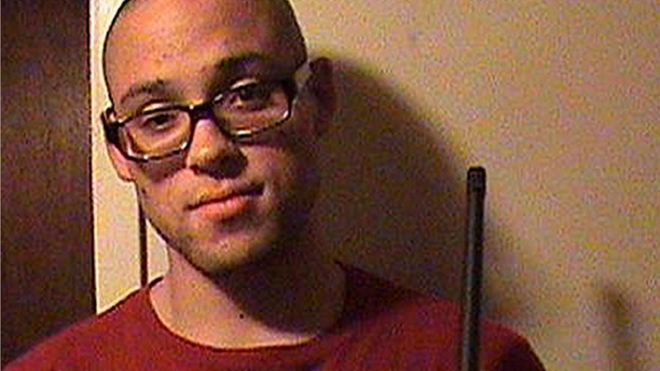
Police have identified 26-year-old Chris Harper Mercer as the shooter who massacred at least 10 students in a community college in Oregon at around 10:38 on Thursday morning.
Chris Harper Mercer posted this picture on MySpace.
He is holding a gun.

According to students present at the scene, Mercer entered the classroom with a gun and told the students to stand up and state their religion. Then, he started firing. 

A comprehensive article by the New York Times fleshes out a fuller picture of Mercer. His parents were divorced. He graduated from a private school for students with learning disabilities and emotional issues. He left the army before finishing basic training, and he didn't have a girlfriend. His mother was overprotective. He and his stepfamily had moved to Oregon recently. His online posts suggest that he sympathized with mass shooters. 

"On a blog post linked to Mr. Harper-Mercer’s email address, an Aug. 31 entry expresses sympathy for Vester Lee Flanagan II, a dismissed television reporter who killed two former colleagues during a live broadcast in Roanoke, Va.: 'I have noticed that people like him are all alone and unknown, yet when they spill a little blood, the whole world knows who they are.' The entry continues, 'Seems the more people you kill, the more you’re in the limelight.'" 

Mercer is also said to have expressed extreme dissatisfaction with organized religion. He didn't talk much, unless the topic was on guns.

Although the amount of guns Mercer brought with him on campus suggested that he expected to be under siege for a long time, he died on the scene. I am nothing but supportive towards those in class who professed that gun control legislation should include a provision for stricter background checks. 

But consider that such a background check had been performed on Mercer. Where then would we draw the line between prejudice and "safety"? Discriminatory background checks could pose a whole other set of issues about our attitudes towards the mentally ill, soldiers and veterans, and lonely people in general, most of whom do not kill. Not to mention the pervasive internet privacy debate. One might have pointed to Mercer's blog posts as the linchpin for the denial of a gun, but not so if his posts had been "private." 

What if you were in the place to deny or allow Mercer a gun based on his background? Would you have pegged him for a potential killer? What is the correct formula upon which we might base your decision?


http://www.nrtoday.com/news/18445375-113/ucc-shooting-rampage-at-least-13-reported-dead
http://www.ibtimes.com/who-chris-harper-mercer-oregons-alleged-umqua-community-college-shooter-identified-2123675?rel=most_read1
http://www.nytimes.com/2015/10/03/us/chris-harper-mercer-umpqua-community-college-shooting.html

Nancy Pelosi Proposes Gun Violence Committee

AP Photo - Minority Leader Nancy Pelosi
On Friday 10/2, Nancy Pelosi wrote a letter to Speaker John Boehner proposing a Gun Violence committee. As she wrote, "mass shootings and gun violence are inflicting daily tragedy on communities across America. As of today, nearly 10,000 Americans have been killed by guns in 2015 - more than 30 gun violence deaths a day." She requests, in light of the recent shootings at Umpqua Community College, that a bipartisan committee be established to create a stricter method of regulating gun sales and hopefully make the background check system more secure. Do you think this proposal has merit?

However, this proposal won't be accepted easily. Congress has had a long history of opposing legislation limiting gun rights, citing the second amendment. Especially now, as the congress is majority Republican and with the NRA's intense lobbying presence in Congress, it'll be hard for the committee to be even approved, let alone draft and pass bills. Following the shootings and seeing the statistics above, do you think Congress's adamant refusal of limiting gun rights is still legitimate or should more action be taken to prevent violence?

Furthermore, committees have had a little bit of a bad reputation recently, as Democrats have accused Republicans of abusing the creation of committees for their own purposes. For example, there is currently a select committee whose purpose is investigating Hilary Clinton's handling of the Benghazi attacks while she was Secretary of State, which Democrats claim has the sole purpose of defaming Clinton during the presidential election. Furthermore, another committee has been formed recently investigating Planned Parenthood, a largely democratic-backed idea, and the allegations that Planned Parenthood is selling body parts of aborted fetuses. As a result, the establishment of committees has been generally frowned upon by the Democrats.

As a whole, what do you think? I know gun control is a very heavily debated topic, so I'd like to narrow the debate down to this: Should a bipartisan committee be established to address the gun violence? Would it be effective or worthwhile?

New York Times
Politico
MSNBC

Thursday, October 1, 2015

Yet Another Shooting

Students evacuating the school (NR Today)
Seems a bit ridiculous, right? Sadly, at around 10 this morning, a shooting occurred on the campus of Umpqua Community College in Oregon. The shooter's identity has not been revealed, but he has reportedly killed and injured up to 20 people before being killed (whether by the police or himself).

This shooting incident is likely to bring up the topic of gun regulations again. President Obama has taken this chance to push for more action on that topic, claiming that "somehow this has become routine... We've become numb to this." "This" refers to his response, the media's response, the response of opponents of gun regulations, and more importantly, the response of the people (or lack thereof). It is likely that this shooting will just become one of the many shootings of this year that will have no significant response. Furthermore, if this problem is not addressed this time around, when the next shooting comes around (which it will), the aftermath will be another case of rinse and repeat. You would think that by repeatedly seeing mass shootings, people would be more inclined to enact stricter gun regulations to protect the public, or even just themselves.

I believe that the fundamental problem in our nation's ability to protect its citizens is allowing guns to be so readily available in the first place. However, in order for change to occur, people who oppose stronger gun regulation need to realize that letting everyone have guns to protect themselves doesn't necessarily mean everyone will take the chance to do so. In fact, solving this issue of frequent violence by advocating for a solution that creates even more violence is certainly not the answer.

With that said, do you believe that in the wake of this shooting, people will be ready to start answering to calls for stronger gun regulation? Or if this incident is not "motivating" enough, when do you believe people will deem this issue as pressing enough to start acting?

Links:
ABC News
NR Today
NBC News

What Happened to the Santa Ana Winds?


Weather forecast for the week of 9/28.
Courtesy of Google Weather.
It's going to get hairy soon in SoCal, El Nino style.

The warming of water in both the Northern and Southern Pacific Ocean has coincided this year, for various reasons I won't get into because this is a politics blog and not a science blog (but here's the article, if your're interested).  Suffice to say, because both regions are warmer than usual, no one can predict whether Southern California is going to get "clobbered" by intense storm and flash flooding this year or remain perfectly fine.

What, if any, actions should the state/federal government be prepared to take?

P.S. Thinking twice about those college visits? Things aren't much better in Northern California. Monica Mai wrote a fine post about the recent wildfires and their implications: definitely a suggestion that the drought is taking its toll. Usually, California wildfires are the products of weather patterns like the Santa Ana Winds :) so wildfires generally start in Southern California, as do floods. If the warm water mass forming in the South does decide to move up, LA could experience another flash flood.


http://www.coloradoan.com/story/news/2015/09/28/guess-good-forecasters-regarding-el-nino/73004010/
http://www.weatherwest.com/
http://nymag.com/daily/intelligencer/2015/09/never-ending-rain-is-almost-here.html

Wednesday, September 30, 2015

Obama's Fracking Regulations Blocked

David McNew | Getty Images
Back in March, Obama unveiled a set of regulations on hydraulic fracturing, or fracking, a technique that involves blasting water, sand, and chemicals into the earth to soften the rock and drill for fossil fuels, specifically oil and gas. Although the technique is extremely effective and continuing to grow in efficiency with technological advancements, environmentalists have protested it in fears of water contamination as well as the looming danger of reliance on fossil fuels. Obama's plan called for a government inspection of each drilling site and a mandatory public release of all of the chemicals 30 days after being used among many other requirements. 

For obvious reasons, fracking companies were upset, and a lawsuit was filed almost immediately afterwards. Just today, U.S. District Judge Scott Skavdahl barred the implementation of the rules, ruling that the Inner Department's Bureau of Land Management (BLM) did not have the power to create these regulations. As Skavdahl explained, "Congress has not authorized or delegated to the BLM authority to regulate hydraulic fracturing and, under our constitutional structure, it is only through congressional action that the BLM can acquire this authority." Furthermore, Skavdahl also notes that the rules are an unnecessary overlapping of each state's individual regulations on fracking. Although the Interior Department will get the chance to appeal the ruling, for now the BLM has agreed to operate as it had before the rules were put in place. 

On the other hand, this is a serious blow to environmentalists, who had thought that these regulations still gave too many concessions to the companies. Furthermore, the plan had only applied to federal and Indian territories - which account for about 10% of total fracking within the United States. The rejection of these regulations, being the first major federal regulations on fracking, raises concern for whether or not the federal government can even stop regulate the fracking before the pollution becomes too severe or we run out of oil.

First of all, what do you think about the rule that the list of chemicals need to be released 30 days after being used? I personally think it's a ridiculous and ineffective rule, but I guess rules are better than no rules. But are they? Are rules really better than no rules?
Do you think fracking is a problem? On one hand, it does pose a threat to our ecosystems and water supply as chemicals are being released into groundwater systems. Furthermore, it increases our dependence on fossil fuels, which are already running out on the planet as well as causing serious global warming (if you believe in global warming, that is). However, it also allows us to drill for more oil, and promises to lead the U.S. out of dependence on other countries, specifically within the Middle East, for energy. 
Finally, what do you think of the ruling? Should the BLM be granted power over this? Should the congress be granted power over this? Should this even be a Federal power?

New York Times - Ruling
New York Times - Original Proposal
Wall Street Journal
CNBC

Government Shutdown Narrowly Prevented

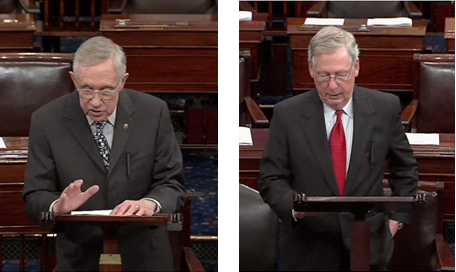
Senators Harry Reid and Mitch McConnell comment on the
budget extension (NY Times).
With a vote of 277-151, the House finally passed a continuing resolution that will last until December 11, 2015. Earlier this week, the Senate passed the resolution as well. The plan includes minor changes, such as an allocation of $700 million to help the West (us) fight wildfires. 

The extension gives Congress more time to work out the details for next year's federal budget plan, with special attention given towards preventing the nation from hitting its debt ceiling. Budget talks are expected to proceed immediately so that an appropriations bill an be settled before December 11. The main conflict is between Democrats, who want federal spending to focus more on domestic programs, and Republicans, who want an increase in military spending. If Congress and the President cannot come to an agreement, it is very likely that another continuing resolution will be passed then, which does not bode well for the nation's debt.

Boehner has stated that he hopes to be able to "clean the barn up a little bit" for his successor. However, his plans seems unlikely because of his limited time in October (the House is only in session for 13 days). Since the next Speaker is likely to be even less agreeable, his resignation only adds more problems. His resignation has sparked in-party fighting with the Republicans, which is taking their focus away from dealing with national issues.

It seems to me that recently there has been an increase in hostage taking, especially with Republicans. That being said, what do you believe will be the consequences of their inability to compromise and efficiently pass legislation? Accordingly, what do you think are the chances of Congress being able to pass a bipartisan budget by December 11?

Links:
CNN
NY Times
Washington Post
USA Today

Tuesday, September 29, 2015

Richards Defends Planned Parenthood to Congress

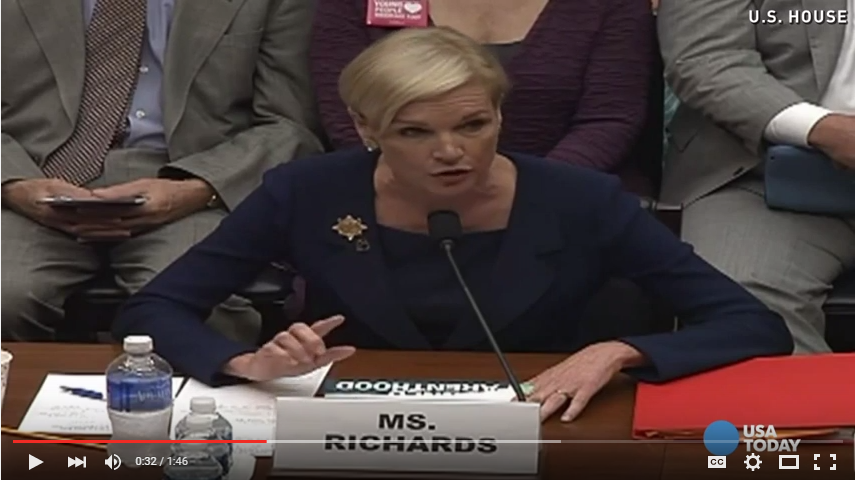
Cecile Richards, the president of Planned Parenthood, appeared before Congress today to
defend the non-profit organization against the allegations made against it -- namely, the accusation that the organization is selling fetal tissue. Within the past few months, Republicans have taken this issue and extended it as an attempt to cut federal funding to the organization. Numerous states (e.g. Missouri) have already conducted investigations into Planned Parenthood's involvement in illegal tissue exchange, all of which have returned with negative results. 

As seen in the hearing today, the focus was on federal funding of Planned Parenthood. However, the debate quickly devolved into a discussion on misogyny. Although some of Richards' answers to questions were certainly roundabout, during the hearing, Richards was continuously cut off, talked over, and disrespected by multiple representatives. 

In addition, Representative Brenda Lawrence brought up a flaw in the need to even call for the hearing. She says, "[the government] cannot use federal dollars for abortion...[the money] is reimbursement [from Medicaid]." To expand on her statement, a majority of federal funding for Planned Parenthood is not direct, but rather received as reimbursement by Medicaid patients who see Planned Parenthood as the specialist for abortions. In short, Planned Parenthood is primarily supported by American citizens who use their services; the organization would not exist if there was no need for it.

Since federal dollars cannot be used for abortion, and do not directly flow to Planned Parenthood, what was the point of calling for this hearing? The answer lies in the political importance of Planned Parenthood. The GOP called for this meeting as an attempt to condemn the undercover videos put out by Planned Parenthood, yes, but also as an attempt to shut down an organization that seems to be clearly affiliated with the Democrats. 

Two things to think about:

Was Richards an injured party in this debate or was she attempting to be just as manipulative? What do you believe were the motives behind this meeting? 

Sources:
NBC News
NY Times
NPR
CNN

Xi Jinping Has A Facebook Page

Photo courtesy of Want China Times
Sort of. Chinese officials in charge of "public image" created one to document his visit to the US over the past week. Strange, because Facebook is banned in China, so "technically," no one can see it.

The posts are written in English too; if this is propaganda, it's aimed at a Western audience.

So why are we writing about Putin and the Pope instead of the President of China? Why did Xi begin at Seattle instead of Washington D.C.? The 21-gun salute at the White House? Compared to the Pope, Xi has invested considerably more calculated care into his visit, but is still receiving a fraction of the media attention, including on this blog.

Sounds like a reflection of our general attitude towards China, or our innate preference for devout clergymen rather than a showy politicians. There is a general consensus in the media coverage that indicates Xi was counting on a positive reception and successful visit in order to strengthen his hold on the Communist Party back home. Ironically, Xi has presided over one of the worst periods in US-China relations, encompassing conflicts over "cybercrime/cyberespionage" (take your pick, one is Xi's term; the other is Obama's) and the US's role (too aggressive?) in the South Asiatic Sea. Was it fair for Xi to expect a warm welcome, and was his trip justified if he needed the positive publicity more than a productive visit?

Or is positive publicity generally the reason why foreign leaders visit other nations?

Another perspective on Xi's publicity campaign is that he orchestrated his visit to play the China's-economic-prowess card: Seattle, where Xi made his first stop (most people go to the White House first), is home to the Boeing manufacturing plant as well as several other name-brand headquarters (say, Starbucks?) that are gearing up to do big business with China. The tech industry's most notorious figures, including Bill Gates, Mark Zuckerberg, and Tim Cook, flocked to meet the president. Yet the textbook ended on a dissatisfied note: "'We get tainted fish and lead-laced toys and poison pet food'". Anyone want to explain this? How has our attitude towards China changed since 2008? For all that, what has remained the same?

NYTimes
CBC
Reuters


Majority Leader McCarthy as Speaker?

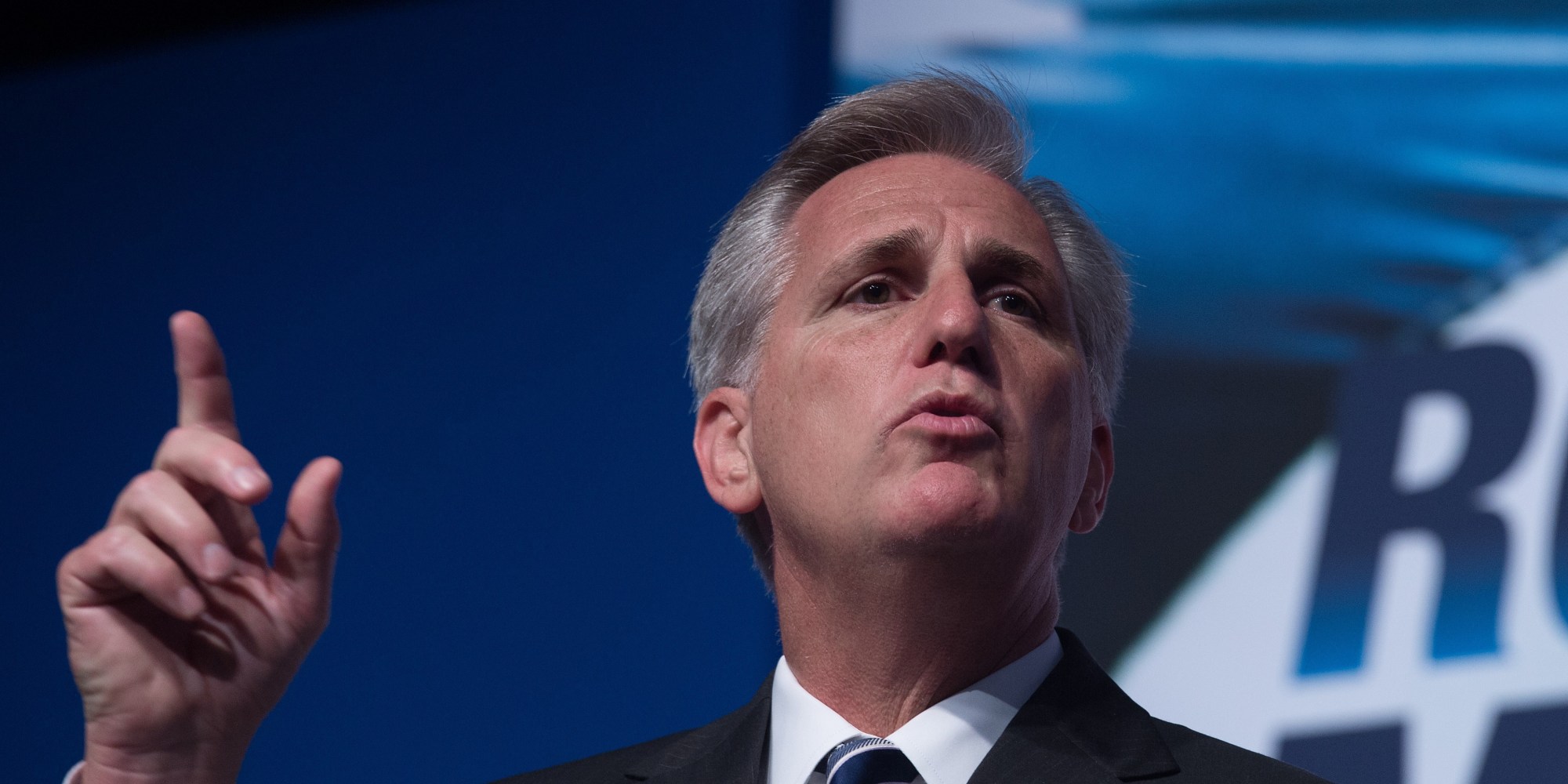
House Majority Leader Kevin McCarthy (Huffington Post)
In response to Boehner's recent resignation from Speaker of the House, today, Kevin McCarthy announced his intention to take up Boehner's vacated post. Currently, he is the Majority Leader in the House of Representatives. Prior to his position as Majority Leader, McCarthy also served as Majority Whip. Besides McCarthy, Daniel Webster will also be trying for the same position. McCarthy is the most well-received candidate for the position thus far. 

As a part of his announcement, his main promise involves reforming the political culture in Washington DC. Despite the rather ambitious claim, McCarthy hasn't announced any of his methods for doing so yet. In addition, McCarthy claims that he will try his best to prevent more government shut downs. He is appealing to his fellow party members carefully by making sure that his decisions will be "the most conservative solution [he] can get into law," but still intends to compromise where he can. 

The rest of the GOP, especially the Freedom Caucus, does not seem to trust McCarthy to uphold the level of conservatism his party wants. They are reluctant to support someone who is willing to compromise with Democrats and President Obama. Without the endorsement of a majority of his party, McCarthy will not even be considered as a nominee for Speaker. 

With what we know about the responsibility of party whips and leaders, do you believe that McCarthy is well suited to succeed Boehner as Speaker of the House? If so, should the Freedom Caucus put their support behind McCarthy even if he might not represent the right amount of conservatism they're looking for? If they don't end up supporting McCarthy, do you believe that they would be further limiting the already slow process of legislature? 

Links:
CNN
LA Times
Washington Post