Tuesday, September 9, 2014
Waiting for the Buyout
(Photo source: Flickr Creative Commons/Gage Skidmore)
An announcement like this is not out of the ordinary considering the corporate climate of late.
When Amazon agreed to buy video game streaming service Twitch no more than two weeks ago, many Twitch celebrities expressed apprehension over what would become of the site--and their rights as content producers.
Similarly, the merge of Comcast and Time Warner Cable, the two largest telecom companies in the country, was initiated this year and tagged with an exchange of $45 billion.
The last notable time that the government stepped in to halt an enormous corporate merger was the 2011 deal between AT&T and T-mobile. The Department of Justice argued that an enormous merge like this would stifle competition and hurt economic growth.
Do you believe that these mergers have gotten out of hand? To what extent does the video game industry mirror large corporate mergers? At what point should the government step in to protect consumers' economic interests, if at all?
Changes in Ferguson!
However, there is finally some potential legislation on the rise that will hopefully improve the conditions in Ferguson and ensure this kind of police corruption does not occur again. The Ferguson city council is planning to establish a board of citizens as an asset to the police force in order to "provide guidance." Additionally, the Ferguson court system will be changed dramatically, including capping the amount of fines the city can take as revenue in order to prevent police from issuing tickets to receive more fines. When it comes to arrest warrants, Ferguson has one of the highest warrant to people ratio, according to this chart from the Missouri courts:
The council is hoping that these new changes will prevent police harassment of the local black population, as has been the trend, not only in Ferguson but in surrounding areas too. Personally, even though I'm glad to see the city of Ferguson finally taking action (and when I say action, I do not count the last month's police action), I realize that the fight is not over. What I'm scared of is that people will look at this and say "look, Michael Brown and his supporters have won. The battle is over, and we can all go home." This is not true, nor will we be able to say this for a long, long time. As far as we've progressed in the civil rights movement, we've still so far to go – there is still so much prejudice and racism evident in the USA, and the African American population is still feeling the effects of slavery, segregation, and their whole extremely terrible history in the USA, putting them behind when it comes to socioeconomics.
What do you think of these pieces of legislation? Are they a huge victory for Michael Brown, or do we still need to keep fighting? What SHOULD the city be doing?
Monday, September 8, 2014
Net Neutrality Online Protest this Wednesday
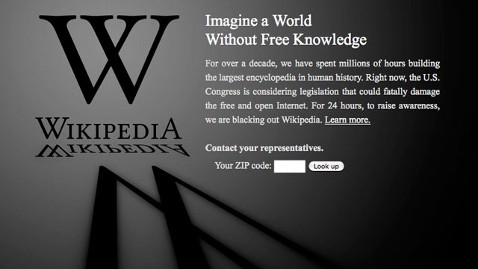
Remember the anti-SOPA internet protests? Wikipedia, Mozilla, Google and countless other sites blocked out content (ranging from Google's logo to Wikipedia's entire site).
Similar tactics will be employed this Wednesday as Netflix (as well as the regular crew consisting of Reddit, Mozilla, etc) will be displaying a loading icon on their sites to symbolize the slower service some predict will accompany less internet regulation (the sites will not actually load slower).
Think about the buzz-term "net neutrality." In the spirit of UnSpun, what would be a more objective term for the regulatory climate Netflix is lobbying for? Is it wrong of these companies to demand tight restrictions on internet service (neutrality), yet few to none when it comes to internet content (SOPA)?
http://www.nationaljournal.com/tech/netflix-to-join-internet-slowdown-protest-over-net-neutrality-20140908
A Resurgence in American Industrial Labor

Local energy production is booming. According to the article, American oil field production this year is up to about 11 million barrels per day compared to less than 7 million barrels per day in 2006. In addition, Ohio appears to be ripe for this kind of production with its decreasing unemployment rates.
Nevertheless, environmental opposition exists. This year, for example, California denounced the process of fracking and its potentially harmful effects on drinking water.
In my opinion, I do not think that a thriving local energy economy is worth the harmful environmental effects. What do you think? Should companies create energy initiatives on American soil? To tie this issue into our current unit, do you believe that regulating fracking falls under the "necessary and proper" powers of Congress in accordance with the commerce clause? Or should energy legislation be left up to the states? Perhaps a mix of the two (dual federalism)?
Legal Marijuana – Businesses say No
However, recently there arose a controversy in many legalized states, including Colorado: while the state itself allowed the usage of marijuana, businesses kept their "zero tolerance" policies that advocated for drug free employees. In a recent case, Brandon Coats of Colorado was fired for having positive drug test results; however, not only is he in a state where recreational marijuana is legal, but he also holds a pass for medicinal marijuana usage, due to his paralysis. He is attempting to sue his company, and if he wins, it could potentially mean the end of drug free policies for businesses across the state.
Personally, I think it's quite unfair for businesses to fire this man, especially due to the fact that he holds a medical marijuana pass. This isn't the only case either; earlier in August, Donna Smith of New Mexico was terminated from working at Presbyterian healthcare services for the same reason, and she also held a medical marijuana pass. What do you think is the reasoning of these businesses, and are they justified in firing this people for having positive drug test results? Additionally, should business policies "trump" state law, making it hard for those who legally smoke marijuana to find jobs anywhere? Who do you think will win in this court case... and why?
Sunday, September 7, 2014
CVS Discontinues Tobacco Products
As of this week, CVS is tobacco free. All other factors remaining equal, the company will make $2 billion less because of the change. CVS claims the change is due to tobacco products being incompatible with their values as a health-oriented chain. It was always ironic that CVS profited off both smoking and quitting (nicotine patches, etc), so the fact that smokers will no longer be tempted while trying to quit can only be seen as positive.
The key term above was all things remaining equal-- CVS clearly believes being on the right side of history in this regard will help their bottom line. And the company's stock price doesn't seem to argue (the official announcement came earlier this year). Is the market alone capable of ousting tobacco?
This relates to the topic of "sin stocks:" is it wrong to make a profit off people doing something that is wrong? If your answer is yes, where does the line get drawn? (Tobacco, alcohol, weapons contractors, private prisons, abortion, etc...)
http://www.forbes.com/sites/jonathansalembaskin/2014/09/05/cvs-tobacco-position-is-a-great-first-step-for-the-brand/
http://www.investopedia.com/terms/s/sinfulstock.asp
Obama Announces Offensive Against ISIS
Currently, Obama has no plan to put ground troops into the fight against ISIS. On the subject of ground troops, he said "this is not the equivalent of the Iraq War." Besides not using ground troops, this military offensive will differ from the Iraq War in that the US has indisputable evidence of wrongdoing by ISIS (notably executions of US journalists).
Questions:
1. US attempts to defeat opposing governments in the Middle East have historically led to much anger against the US for playing "world police." However, many Islamic states support this effort against ISIS. Does the US stand to gain diplomatically from its efforts?
2. Using airstrikes saves the lives of many US soldiers would otherwise risk being killed in combat. However, airstrikes are imprecise and inevitably end up killing civilians, as was seen in Gaza. Is it ethical for the US to use them in this situation?
Sources:
BBC
New York Times
Saturday, September 6, 2014
Governor Chris Christie Getting Ready for the Big Leagues?
However, it seems more and more that this excursion is a set up for Christie to demonstrate his diplomacy skills, especially since he is potentially planning to run for the Republican party candidate for President. He jampacked his trip with many meetings in idealistic settings, supposedly trying to wade into the field of international politics in order to face off with his potential rival, Hillary Clinton.
Although I understand that publicity is always central to a politician's life, I still think Christie's trip might have been a little too... staged. According to New York Times, Christie met with a room of "2,00 cheering children, many of them waving the New Jersey flag – a crowd that would rival anything he might draw in Iowa." Perhaps that's a little over exaggerated, Christie, especially since the lunchroom where Christie ate that afternoon had more than a dozen patrons inside, and none of them recognized him.
Would you consider this trip to be a good strategy for a potential upcoming Presidential candidate? Do you have qualms about the way Christie set himself up, or is politics really an anything is fair game kind of world? Especially considering the fact that Christie did not focus on some of the more pressing issues of the American-Mexican relationship, was his trip really a valuable asset to deepening our relations?
Friday, September 5, 2014
Judge Finds BP "Grossly Negligent" in Gulf Oil Spill Ruling
This prosecution is taking place under the Clean Water Act, which was passed in 1972 to fight the pollution of America's water sources. This act typically fines companies $1,100 per barrel of spilled oil, but in cases of gross negligence the fine goes up to $4,300. Assuming that appeals do not reduce the penalties, BP is estimated to pay 18 billion dollars. After this ruling was published, BP's stock value dropped by six percent.
Questions:
1. Does a set-in-stone number like $1,100 per barrel remain fair when the scale and difficulty of managing a disaster go so high? On one hand the colossal environmental and health hazard that BP caused merits it. On the other hand BP's recklessness may not have been so extreme as to merit 18 billion dollars.
2. BP shareholders likely had little to no knowledge of this misconduct, and virtually no control over the situation. Should shareholders be able to sue BP over this 6% loss due to BP's negligence?
Note - In a legal sense, shareholders are not entitled to anything under current laws. (Source)
Full articles:
Washington Post
BBC
A Farewell to Ms. Joan Rivers
Or... was she?
Joan Rivers had said many, many controversial things during her time, the most recent one being this video regarding her views towards the current Gaza conflict. Joan, when told about the number of Palestinian deaths in Gaza, reacted by completely blowing it off and then telling the camera that they "deserve to be dead." This, of course, angered many people, fans and others alike.
However, why is it that once a person passes away, we find the media always remembers them in good spirits? The foul deeds are often forgotten in light of a tragic death until many, many years later, if at all. For example, many celebrities tweeted their support of Joan Rivers while she was in a coma, all of them praying that she would make it through.
More and more people have been calling the media out on their biased coverage by tweeting with #karma and claiming that Rivers "wrote her own epitaph by wishing death upon Palestinians."
What do you think of this controversial situation? Is it right for the media to remember Rivers in good graces, for the sake of her family/friends/fans? Or is it important for the media to acknowledge that Rivers is NOT the blessing that some make her out to be?
Thursday, September 4, 2014
Protests for $15/ hour Minimum Wage
Today a large (pre-planned) fast food strike and protest occurred. The protestors demanded the minimum wage be raised to $15 per hour, as well as more union influence (or the formation of unions). McDonalds claimed there were no service disruptions due to the strike which, if true, exemplifies why every movement to unionize the company has failed.
Non-strike protestors joined the movement, as a higher minimum wage would affect many workers and businesses outside of fast food. Many of the protestors sat in traffic, and were detained or arrested for their actions. Among those fined was Rep. Gwen Moore who tweeted
Proud to support #MilwaukeeWorkers risking arrest in pursuit of a better future for their families! #Fastfoodstrike pic.twitter.com/tZjTsrrNzx
— Gwen Moore (@RepGwenMoore) September 4, 2014
No, they risked arrest for blocking traffic.
Today's events bring up two big questions.
- Is raising the minimum wage to $15/ hour a good idea?
- Is blocking traffic an effective protest method?
Wednesday, September 3, 2014
Fun New Prank: Swatting!
Watch out TPing, a fun new prank may soon take your place: Swatting.
How does it work? A playful prankster calls 911 and reports information of questionable validity-- white lies if you will. For instance, the brazen comic may pretend to be a man threatening to kill his wife and children. The police then kick in the (actual) man's door, and hold him at gunpoint despite the fact that he (probably) doesn't actually want to kill his wife.
It should seem old-school practical jokes such as coating houses with toilet paper, keying cars, and throwing bricks through windows are simply not hip enough.
Note: Feeding police false information has existed as long as police have existed, and according to the Wikipedia article the term "swatting" is at least 6 years old. However the ability to watch live-streamers get arrested from your sofa has accelerated the trend in recent weeks.
He could not have been playing a more perfect game for the circumstances. Although this is by far the most cinematic example (and most viewed), much worse examples exist including this local news story posted just hours before the time of this post. Some have had their homes invaded by misguided SWAT teams while their families are home-- an incredibly emotionally traumatizing experience... but SWAT raids can be more than emotionally damaging.
What should the evidence threshold be for holding citizens at gunpoint in their own houses? Is unverified "evidence" presented by a single informant enough to issue a search warrant? How much responsibility should police be forced to take for these events?
The right of the people to be secure in their persons, houses, papers, and effects, against unreasonable searches and seizures, shall not be violated, and no warrants shall issue, but upon probable cause, supported by oath or affirmation, and particularly describing the place to be searched, and the persons or things to be seized.
Friday, August 29, 2014
Another Ukraine Post
Most of Eastern Ukraine has a Russian majority and of course there is discourse and some fighting, but to the scale of anti-air to down jets, or stem pro-Kiev forces from making inroads on sparsely populated areas. Finland and other neighboring countries are on edge after Russian military exercise, and most of the former Warsaw Pact countries are looking to NATO or the UN to step in.
The rebels in Ukraine have been heavily armed and even trained to the handling of the weapons that have come out of seemingly the air. A good quantity of the international community is pointing at Russians to stop supplying and cease any operations close to the border.Ukraine is worried, they see their land and their people under threat from an oppressor that kept Europe under an Iron Curtain for close to 50 years. To just answer the question on how desperate Ukraine is getting they recently Applied for NATO membership, and leaving their neutrality in the dust, as more confusion grows at the borders of Ukraine. And more confusion grows from the U.S. to Kiev to straight to the minds of Russian citizens themselves. With no formal declaration of war or even a press conference to state where soldiers are being sent many families are wondering what happened to their sons, and are they at war with Ukraine? A question everyone has been asking for the last few months.
Obama recently said we would keep military intervention on the back-burner for Ukraine but would declare formal war if Poland or any other NATO country is threatened, should we protect Kiev and deeply scar Russian ties?
What are your views on Putin? What is your reaction toward this new "Premier" or new "Savior" depending on your views.
Beijing Continues to Threaten Hong Kong
In more recent times pressures has been mounting on Hong Kong from all sides of life from the PRC. People in surrounding areas frequently try to sneak into Hong Kong's borders to take advantage of the stricter regulations placed on baby formula and also to try and get medicare from the HK hospitals. The PRC's state owned media outlets have continuously published stories slamming the democratic Hong Kong labeling them as unruly children and Dogs of Britain. Currently HK's political system is 12,000 business owners who vote on how the city should be managed, a pro-business wet dream, but in more recent years these owners have set up shop or have delicate ties to mainland China leaving them skewed to give up liberties to keep operation in the newest emerging consumer base. HK has staged several protests this summer with some in attendance of 800,000, the PRC has become more blatent that they would not allow universal elections in HK and has staged counter protests, sent in pro-Beijing quell the huge supporters. There is going to be another pro-democracy rally in september and the PRC has prepared by Sending in PLA forces to remind Hong Kongers who has the power. Most of us remember how domocile and forgiving the PRC can be when it comes to peacefully putting down protests.
It seems that the days of democratic Hong Kong may be numbered, should we as a nation or as a people say anything to protest China's human rights abuse?
What might go down if things turn for the worst during their next march or occupy?
Ebola Breakout
What can we, as an international community, do in order to combat this deadly disease?
Also, feel free to discuss any other means of helping the people in West Africa that you think will be most effective.
CNN article
Thursday, August 28, 2014
Black Rage
This is only a small glimpse into the hell that is Racism, still very potent in America. It lies under the skin of our country, hidden by a cloak of oblivion and denial. It has created an African American culture that responds to the suppression with sometimes anger and resentment. Through music, fashion, art, behavior and attitude, this culture has thrived on retaliation. A veteran musician, Lauryn Hill, released a song responding to the events happening in Ferguson titled "Black Rage". The song samples the sound of music song "Favorite Things". It presents a powerful and deep insight into the deep scars and wounds left in the black community.
Listen to it.
China's Anti-Corruption Efforts Slowed by International Politics
China belongs to an intergovernmental organization (IGO) called INTERPOL, which works to facilitate cooperation among the world's police forces. This IGO is useful for purposes such as extradition of criminals. It currently has 190 member countries, including the US. However, two countries being members of INTERPOL does not guarantee extradition from one to another. Extradition treaties are necessary to ensure that, and China does not have any with the above four western countries. These countries are also unlikely to cooperate with China's extradition efforts due to their distrust in China's justice system. Concerns over torture and capital punishment are the main reasons for this reluctance.
Discussion Questions:
1. Are these western countries justified in intervening this way? Is letting criminals go unpunished worse than subjecting them to a system of justice that western countries see as inhumane?
2. Could this protection of corrupt officials encourage further government corruption in China?
Sources:
Telegraph
Reuters
Wednesday, August 27, 2014
U.S. and Iran, Hit and Run missions in Iraq against ISIS
Their recent incursions into Kurd dominated Iraq have left the U.S. and it's allies a bit ticked off and Iran worried over it's borders. Separately both the U.S. and Iran have sent strikes to cripple Iraqi's ISIS and both have sent military advisors and equipment in order to support the current recognized leadership in Iraq. During this coordinated attacks, that have had close contact with each other, Iran and the U.S. have never had official open channels.
We hate them. Not as much as ISIS! Unfortunately we still have soured feelings toward Tehran and the feeling is mutual. Embargos, condemnations and overall bad mouthing have been exchanged between the two nations and the fact that we are fighting a common enemy and not taking this opportunity is despicable.
Do you think that we should extend an olive branch and be the ones to open channels toward ending this cold war we have with Iran?
How would some of our most important Middle Eastern allies deal with a joint mission against ISIS with Iran as an official ally?
U.S. Iran Daily Beast
USA Today
Hamas Agrees to Long-Term Truce with Israel
In this agreement, Israel made certain concessions. Israel agreed to reduce restrictions on border crossings from Egypt into Gaza. Additionally, Israel agreed to lift certain restrictions on fishing off the coast of Gaza, allowing fishers to fish up to six miles off of the coast.
Hamas considers these concessions to constitute a victory for itself and for Palestine. Many Palestinians also agreed with this sentiment, with thousands celebrating on the streets. However, Israeli officials noted that Hamas had previously rejected this settlement, and that this ceasefire could thus be seen as a victory for Israel.
Discussion Questions:
1. Both sides have reasons to believe they have "won" with this accord. Did the terms of the ceasefire favor either side? Which side?
2. Israel's enemies have broken ceasefires many times in the past. Is this ceasefire doomed to a similar fate, or does the Palestinian celebration of this ceasefire indicate a lasting peace?
Articles:
AlJazeera - A Middle-Eastern Source
CNN - A Western Source
Russia and Ukraine Part 2
Despite being hypocritical, Putin continues to advocate for a cease-fire between the rebels and Ukrainian forces as perhaps a way to alleviate the stringent sanctions placed by the US and Europe on Russia's ability to tap into it's oil reserves after the annexation of Crimea
What do you guys think? Is this another move by Putin to gain leverage like he did with the Crimea? Should the United States and other Western powers take a more forceful stance this time?