Sunday, April 20, 2014

Russia 'outraged' as east Ukraine shootout shatters Easter truce


Article website: http://news.yahoo.com/gunbattle-eastern-ukraine-kills-four-062959391.html
Picture Website: http://www.dw.de/deadly-shootout-reported-in-eastern-ukraine/a-17579795 

On April 20, 2014, a gunfight broke out in Slavyansk, Ukraine, shattering a truce that had been declared due to Easter.  This shootout claimed the lives of three pro-Russian militants and their attacker; Russia has declared that it is "outraged" by this violence that has destroyed the fragile truce.  The identities of those who attacked the militants remain unknown, but there were about twenty of them, and they were said to have attacked the militants while they were conducting a check on a roadblock at around 1 a.m.  The last time a shootout such as this one occurred was on Thursday, when Ukrainian soldiers killed three pro-Russian militants as they tried to attack a military base in the southeast port city of Mariupol.  On that same Thursday, Ukraine, Russia, the United States, and the European Union signed an accord in Geneva that called for "illegal armed groups" to end their occupation of public sites and to lay down their arms.  Now Russia is blaming the Right Sector, an extreme-right group, for the violence that took place on Sunday; however, a Right Sector spokesperson in Kiev has claimed that the charges against them are false, going so far as to accuse Moscow of orchestrating the violence in an attempt to make it seem that Kiev has lost control of the east.  The U.S. has threatened to place more sanctions on Moscow if there is no de-escalation, and President Obama is preparing to send ground troops to Poland.  This, coupled with the tens of thousands of Russian troops massed on the eastern border of Ukraine, makes it seem that war is coming, and quite soon at that.  The Organization for Security and Cooperation in Europe (OSCE) is working to monitor the Geneva accord, and it is preparing to send a high-ranking team to east Ukraine.  At this point, Pope Francis has called for an end to the violence, and Washington has warned Moscow that Ukraine is currently in a "pivotal period," but tensions remain high.  Do you think the U.S. should place more sanctions on Moscow? Also, do you think that we should continue to intervene in this conflict, or should we take a step back and let them sort it out themselves?                  

Saturday, April 19, 2014

These States Are Most Likely To Legalize Weed Next. Will You Have A Happier 4/20 In 2015?


Article website: http://www.huffingtonpost.com/2014/04/18/states-legalize-weed_n_5162737.html
Picture website: http://www.cnn.com/2013/12/28/us/10-things-colorado-recreational-marijuana/

This Sunday, 4/20, people will gather in Colorado to show their support for fully legal marijuana for the first time.  The state of Colorado legalized the sale of recreational marijuana on January 1, 2014.  On that day, thousands of people flocked to the Denver store 3D Cannabis Center (which used to be called "Denver's Discreet Dispensary") and waited in line for hours on end to purchase pot; despite the sheer number of people, there were no police reports of violence or problems of any kind with the crowd, and government officials were shocked by how calm the crowd was.  Since then, it has brought $14 million in taxed sales to Colorado, and that was just in January; and now that other states can see that legal marijuana can provide a good source of income, it seems that they are starting to become more sympathetic to those who have supported the legalization of marijuana since day one.  For example, there will be a ballot measure to tax, regulate, and legalize weed for adult recreational use in Alaska on August 19; and a recent survey taken by Public Policy Polling (which is known to lean towards the Democratic Party) has shown that 55% of voters in Alaska support the legalization of marijuana.  There is also the fact that in recent years, the state of Vermont has passed a measure to decriminalize and a separate bill to establish a system of dispensaries for medical patients who use medicinal marijuana.  Though the debate on the effects marijuana can have on an individual's health is still going on, there is a definite move towards legalization; activists are making a concerted effort to get voters to sympathize with their cause, and pro-pot legislators are now trying to bring the issue before their colleagues.  Do you think it would be beneficial for other states to legalize recreational marijuana? Do you think the flow of income legalization could provide will outweigh any possible health issues that it could create?      

Wednesday, April 16, 2014

Justice Stevens Proposes Some Copy Edits to the Constitution


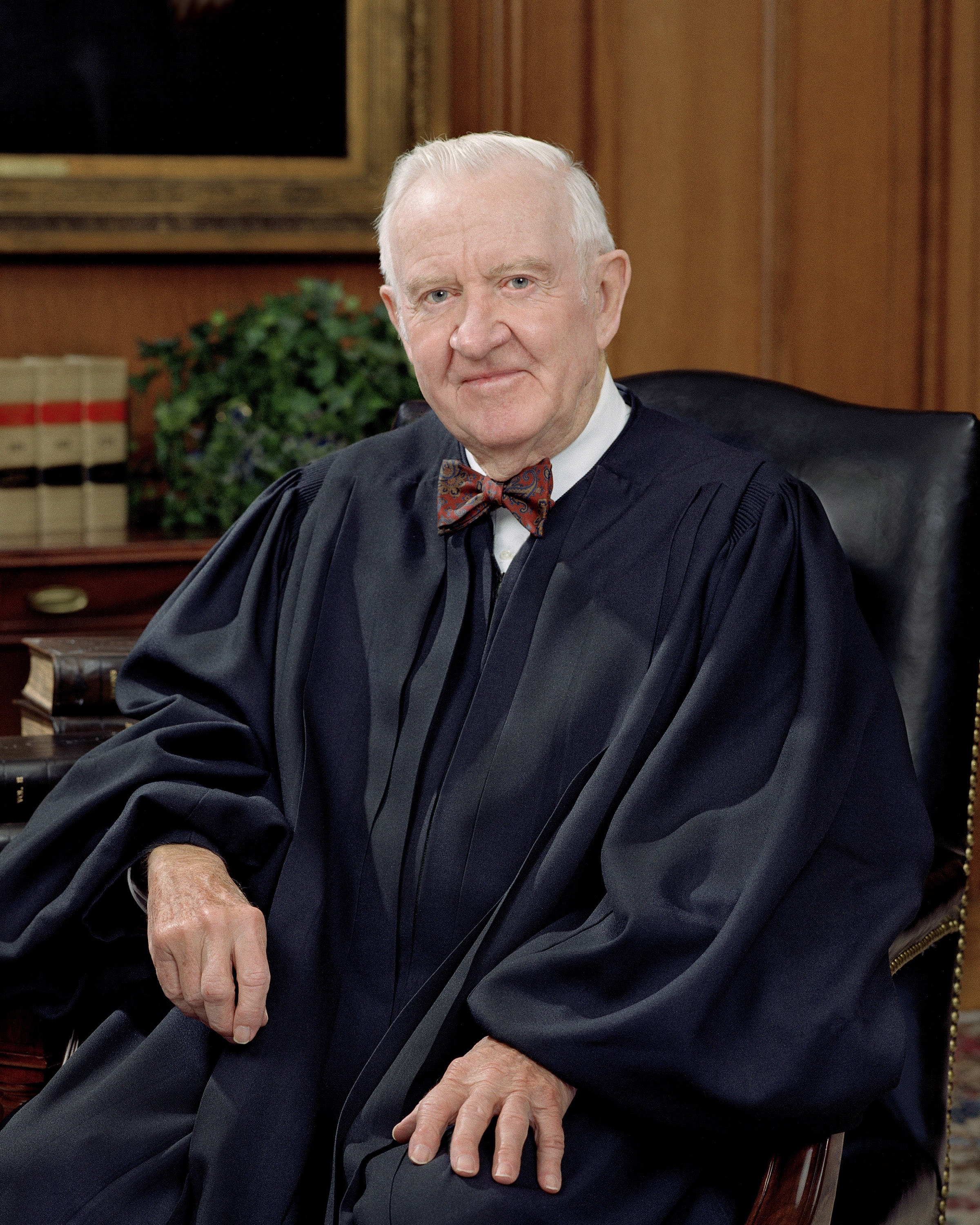
Former Supreme Court Justice John Paul Stevens recently wrote a column for The Washington Post. Its title: "Five extra words that can fix the Second Amendment." 

Justice Stevens retired in 2010, and was regarded as one of the "liberal" members of the Court. Stevens was one of the longest serving Justices in history—he was nominated by Gerald Ford. Because he served under Chief Justices Burger, Rehnquist, and Roberts, he had unique insight on the evolution of the Court in the past few decades. 

Justice Stevens (Photo: Steve Petteway)
A fascinating piece of that insight was shared in this article. In it, Stevens shares his perception of how judicial interpretation of the Second Amendment has changed over time.

I'll try my best to summarize his story with a few quotes: 

"When I joined the court in 1975, that holding was generally understood as limiting the scope of the Second Amendment to uses of arms that were related to military activities. During the years when Warren Burger was chief justice, from 1969 to 1986, no judge or justice expressed any doubt about the limited coverage of the amendment, and I cannot recall any judge suggesting that the amendment might place any limit on state authority to do anything."

"Organizations such as the NRA disagreed with that position and mounted a vigorous campaign claiming that federal regulation of the use of firearms severely curtailed Americans’ Second Amendment rights. Five years after his retirement, during a 1991 appearance on 'The MacNeil/Lehrer NewsHour,' Burger himself remarked that the Second Amendment 'has been the subject of one of the greatest pieces of fraud, I repeat the word ‘fraud,’ on the American public by special interest groups that I have ever seen in my lifetime.'"

It's worth reading the rest of Steven's column. He makes so really insightful arguments about the precedent that currently exists, and what can be done. He even goes so far as to propose a re-write to the Second Amendment: A well regulated Militia, being necessary to the security of a free State, the right of the people to keep and bear Arms when serving in the Militia shall not be infringed. (The italicized words are those that have been added). 

While I welcome input about the Second Amendment, and Judicial Interpretation thereof, there's a different conversation I want to have. It's implied by the quotes I included: Do Interest Groups have the ability to influence judicial opinion? In other words, do you think the campaign the NRA carried out influenced the decisions of Heller and McDonald (the two cases that greatly expanded gun-owner rights)? 

Answering this question raises another one: Where does the Supreme Court fall under pluralist, elitist, and bureaucratic theory? Ostensibly, nine men and women represent and elitist group who can make policy decisions. But the Court cannot enforce its decisions-- so is it an elite organization? Or could it be pluralist? 

Ponder this question: how much can the Court be swayed by public opinion? (And how much should it be swayed?) 


Remember that the Court's entire power rests of its legitimacy: does succumbing to public opinion enhance or damage that legitimacy? 

Tuesday, April 15, 2014

North Carolina Voting Rights Groups Turn To Education In Fight Against Voter ID Law


Article source: http://america.aljazeera.com/articles/2014/4/15/north-carolina-votinglaweducationcampaign.html
Picture source: http://abcnews.go.com/US/doj-sue-north-carolina-voter-id-law/story?id=20415868

Last summer, North Carolina Governor Pat McCory signed a new voter ID bill, which has earned the nickname the "Monster Law."  This new law requires voters to have a North Carolina ID issued by the government in order to vote, cuts back the early voting period by seven days, invalidates ballots that are cast in the wrong precinct, eliminates same-day voter registration, and requires people to register to vote  at least 28 days before going to the polls in a primary or general election.  The reason that this law has been able to become a harsh reality for voters in North Carolina is the decision of the Supreme Court case Shelby County v. Holder; in this case, the Supreme Court struck down Section 4 of the Voting Rights Act of 1965, which contains the coverage formula of the Act that determines which jurisdictions are subject to the Act's special provisions based on their history of voter discrimination.  Unfortunately, the Supreme Court's decision has also rendered Section 5 of the Act moot since the implementation of preclearance, which requires that covered jurisdictions receive federal approval before implementing changes in election laws, on the jurisdictions it covers depends on the formula provided by Section 4.  If there is no formula to determine which jurisdictions are exhibiting voter discrimination, then they cannot be subjected to preclearance, which means that they can pass laws such as this one without having to receive federal approval.  Chief Justice John Roberts claims that these sections of the VRA are no longer needed because times have changed, and discrimination in the jurisdictions once covered by the Act is not as bad as it used to be.  The law has been met with several legal challenges, and voting rights activists in North Carolina are now working hard to educate people on the impact this law will have; they are preparing to accept this new law since they are unsure of whether or not it will be repealed, and they are attempting to educate the groups that the law will affect the most on what it does and what they will have to do in order to vote.  These groups mostly consist of the elderly, minority communities, low-income voters, and young people.  North Carolina legislators are now arguing that this new law is needed to combat fraudulent votes, but do you think that this is what they are trying to fight against? Do you think that this new law is discriminatory, and, if so, do you think that the efforts being undertaken by voting rights activists to educate minority groups on the new law will be of much use?

Monday, April 14, 2014

NSA Coverage Commended with Pulitzer for "Public Service"


The British newspaper The Guardian and the American paper The Washington Post shared the Pulitzer for public service for their coverage of the NSA's domestic spying programs (as revealed through the documents leaked by Edward Snowden).


The Prize was awarded on Monday, with the Pulitzer Board remarking that the Prize was merited through “authoritative and insightful reports that helped the public understand how the disclosures fit into the larger framework of national security” (as reported by The New York Times). 


The Pulitzers Board's remarks were no doubt carefully calculated-- the NSA and Edward Snowden are still highly contentious issues in the country today. While the Board could have remarked that the coverage revealed a secret that should not have been kept from the American public, they instead stated that "aggressive reporting ... spark[ed] a debate about the relationship between the government and the public over issues of security and privacy" (as reported in The Guardian).

The obvious connection to make with this particular tidbit of news would be to Chapter 15 in O'Connor: What is the role of the media? Should it be a watch-dog over the government? Or is the media obliged to "start conversations," as it were? Furthermore, do you think that the actions of The Post and The Guardian should be considered "public service" (is a for-profit publication really a vehicle for public service)? 


These connections are worth making, and I'd love your responses. But let's throw in some nuance: how does this story relate to Chapter 17? Specifically Elitist, Bureaucratic, and Pluralist Theory? Here are my thoughts: it's essentially impossible for the public to be involved with any policy making decisions if those decisions are kept secret. Could the "public service" the two papers performed be--in essence--including the public in policy-making decisions?

Wednesday, April 2, 2014

Down with the political donation cap (some review for the AP Gov. exam)


Image: Doug Mills/The New York Times

Today, with a 5-4 decision, the Supreme Court struck down a a decades-old cap on the total amount any individual can contribute to federal candidates in a two-year election cycle (see the New York Times coverage here and watch a video from The Monitor here). This ruling is coming four years after the Citizens United case, in which the Court ruled that corporations can independently spend unlimited amounts of money to influence elections.

Prior to this ruling, campaign finance law prevented individuals from giving more than $2,600 to any one candidate and more than $32,400 to national political committees. Individuals were also barred from spending a total of more than $123,200 on political campaigns per election cycle. The majority of justices agreed that the second provision was unconstitutional.

In an excerpt from the majority opinion (representing himself and Justices Scalia, Kennedy, Alito, and Thomas), Chief Justice Roberts wrote, "We conclude … that the aggregate limits do little, if anything, to address that concern [of circumvention], while seriously restricting participation in the democratic process."

Reactions to this ruling are clearly split. Some think removing the cap will have devastating effects on democracy and allow for the corruption of politicians. Others believe it protects Americans from censorship and allows them to exercise their First Amendment rights fully.

Thinking back on our campaign finance unit, what are your thoughts? Should citizens have the power to spend their money freely, even in matters relating to politics? Do you think any regulations should be put into place, such as a notification whenever an individual donates over a certain amount? Do you think this will prevent under-the-table donations?

Tuesday, April 1, 2014

Deadline for Obamacare passes: Where are we now?


Image: Reuters (accompanies the Economist link below)

Yesterday, March 31, marked the deadline for Americans to enroll in Obamacare. The Obama Administration announced today that it had surpassed its goal to enroll 7 million Americans and has apparently enrolled at least 7.041 million. White House press secretary Jay Carney reports this number could increase dramatically once those who started enrolling but did not finish before the deadline are counted. While the enrollment target may have been surpassed, reports claim that a significant portion of users signed up last-minute. It's interesting to note the impact of celebrities on social media (Ellen DeGeneres and Pharrell Williams, among many) in encouraging Americans to sign up. 

Obviously, Obamacare enrollment has been an ongoing topic since its launch in October. While the obamacare.gov site was a roadblock in many people enrolling for coverage, I was initially surprised that so many people enrolled in the last week. I thought that the provisions of the Obamacare mandate would be encouraging. However, after reading this commentary from Time regarding the ineffectiveness of mandates is logical.

Looking at Obamacare as a whole, has your opinion changed in light of the 7.041 million people who have enrolled? Does this signal a better future for Obamacare? What provisions of the individual mandate should be changed or kept to make it more effective?

Thursday, March 27, 2014

IRS: Bitcoin is property, not currency


Image credit/info link here. (Note: this links to a Bloomberg summary/background on Bitcoin for people like me who are fascinated by Bitcoin but find the concept very hard to grasp. I strongly suggest you read this prior to commenting.)

This week, it was announced that Bitcoins would not be treated as property for taxing purposes. The Internal Revenue Sercice (IRS) will apply the rules that currently regulate stocks and barter transactions to Bitcoins. This marks the first substantive ruling from the IRS concerning Bitcoins. According to a Bloomberg report, this could reduce the volume of transactions conducted using Bitcoins. Charles Allen, the chief executive officer of BitcoinShop Inc., released a statement following the IRS's announcement. He commented, "“The implications this decision will have on the Bitcoin ecosystem are far reaching, and will be burdensome for both individual users of Bitcoins, Bitcoin-focused business and for the general adoption of virtual currencies."

According to the same Bloomberg article mentioned in the previous paragraph, Bitcoin investors will now be treated like stock investors. For example, if a Bitcoin is held for more than a year and is then sold, it will be taxed at the lower rate applicable to capital gains. The United States also allows investors with losses to subtract capital losses from any capital gains.

Zooming out from the Bitcoin tax issue, it's also interesting to consider the opinions of some well-known, trusted experts. A couple of months ago, U.S. Federal Reserve chairman Ben Bernanke gave his "cautious blessing" to Bitcoin in a letter to the Congress. On the other hand, American investor Warren Buffett, also known as one of the wealthiest men on Earth, opposes Bitcoin, calling it a "mirage" that is best avoided. (You can also check out venture capitalist Marc Andreessen's criticism of Buffett and an address of those criticisms here.)

A couple of ideas to consider:

  1. Given what we have learned about taxes, do you think the IRS is wise to categorize Bitcoins as property, not currency? What are potential pros and cons of this?
  2. Bitcoin doesn't have a central bank. In what ways does this liberate the Bitcoin system?
  3. What is your take on Ben Bernanke's "cautious blessing"? What is your take on Buffett's "mirage" statement?
A fun cartoon from the New York Times explaining Bitcoin here.
Additional Christian Science Monitor link
Want to test your Bitcoin knowledge? Take this quiz by the Christian Science Monitor.

Calif. State Senator Leland Yee asked to resign following charges of conspiracy to deal firearms and wire fraud


Image from the Associated Press/San Francisco Examiner [file photo] (link here).

There are a lot of details emerging about this occurrence. The articles linked provide the full story and I did my best to summarize it below and present the most crucial points in this developing story.

According to court documents unsealed Wednesday, California State Senator Leland Yee (District 8: San Francisco and San Mateo County) solicited campaign donations in exchange for introducing an undercover FBI agent to an arms trafficker. Senator Yee was arrested yesterday. Prior to his arrest, Senator Yee was known for his California gun control efforts, crusade against violent video games, and transparency bills. For more information on Yee's various transgressions, check out this LA Times article.

It's interesting to observe not just the aftermath of Yee's arrest (he was released yesterday after posting $500,000 bail this Mercury News article reports) but the reactions of the public as well as his peers. The Mercury News compiled an interesting assortment of tweets from people responding to Lee's indictment (see it here). More importantly, Lee withdrew from California's secretary of state race and has apparently shaken up the dynamics for that campaign. Additionally, California's other state senators stood together in asking for his resignation (watch the video here).

In addition to hearing your reactions, I'm eager to get your opinions on the legislation ensuring government transparency that Yee was (ironically) dedicated to. You should also feel free to comment on his various legislative actions pertaining to violence in video games. You may find some helpful information on his official site.


Tuesday, March 25, 2014

Speaking of women's rights ... the Hobby Lobby contraception debate


Image source here. (Justices Sotomayor, Ginsburg, and Kagan, respectively)

The Supreme Court held oral arguments for Sebelius v. Hobby Lobby Stores, Inc., AKA the Hobby Lobby case, today (SCOTUS blog link). In a nutshell, the Hobby Lobby case examines whether or not the rights of employees to choose and obtain birth control trumps employers' rights to religious freedom. Under the Affordable Care Act, employers are required by law to provide their employers with health insurance that also covers the cost of contraception (a potentially burdensome cost without insurance). However, the powers-that-be at Hobby Lobby disagree with this principle. The owners of the 602-craft store chain (over 13,000 employees) are Southern Baptists and have expressed their views that certain types of birth control go against their own moral principles. Therefore, they believe Hobby Lobby should not be required these forms of birth control under its insurance plans.

According to this article from the New Yorker, the Court's three female Justices made their opinions clear during today's oral arguments. Of the first 32 questions directed at Paul Clement (Hobby Lobby's lawyer), 28 of them came from the female Justices (the article shows the full breakdown of the questions). Taking the perspective of female employees, the three female Justices each pointed out fallacies in Hobby Lobby's position. One I found particularly interesting was Sotomayor's question about employers who have religious objections to health plans that cover other basic medical procedures — blood transfusions, immunizations, medical products that include pork. The other Justices all asked powerful and thought-provoking questions, which can be read in the New Yorker article.

Some ideas to consider: Whose side are you on, Hobby Lobby's or Sotomayor's/Kagan's/Ginsburg's? Do you think the female Justices are acting in a biased manner, or do their arguments sound logical regardless of gender bias? What other cases pertaining to First Amendment rights can this be connected to? What could be some ramifications if the Court ruled in favor of Hobby Lobby or the other way around?

More helpful background on the case and a very amusing photo of Scalia courtesy of U.S. News and World Report here.
Listen to NPR's story on this case here.
Click here for a column by a Fox News correspondent regarding why corporations need religious freedom.


Happy birthday, Gloria Steinem!


Image credit/copyright information available here.

Gloria Steinem, a prominent feminist and political figure, turned 80 years old today. Steinem gained notoriety in the 1960s and 1970s as a leader of the women's liberation movement and is still an active lecturer, writer, and organizer for various women's issues.

In honor of Steinem's birthday, several major news sources compiled photos and articles she has written throughout her time as an activist. This column from CNN caught my attention in particular. It uses her birthday to bring up an increasingly current topic: feminism in 2014. With celebrities like Beyoncé and Sheryl Sandberg proclaiming themselves to be feminists, a lot of Americans are reconsidering what it means in today's society and how that definition varies from person to person.

To tie this back to government and our knowledge on civil rights, it's also interesting to examine the changes that have occurred since Steinem began her efforts in the 1960s. Obviously, a critical development in women's rights would be the Equal Rights Amendment, which was introduced in the 1970s and is still seeking to be ratified by the states. We've also observed new interpretations of the Equal Protection Clause and the implementation of Title IX.

How do you define feminism? Is there a negative stigma attached to being a "feminist"? Do you support increased legislation guaranteeing equality for men and women? What are some pros and cons to enacting legislation that would guarantee equality? Is it necessary?


Putin isolated after U.S. allies agree to boycott Group of 8 meeting in Russia


This cartoon is by Stuart Carlson and was published on the Christian Science Monitor's website on March 24. It can be accessed here.

On Monday, March 24, Russia was effectively suspended from the Group of 8. In addition, the seven other member countries warned that they would impose more severe sanctions (more info on that here) if President Vladimir Putin were to expand his military presence in Ukraine. Russia, however, dismissed this move as unimportant, stating that the G8 is simply an "informal club."

To backtrack, the Group of 8 comprises eight of the most power, industrialized nations globally. In addition to the United States and Russia, France, Germany, Italy, the United Kingdom, Japan, and Canada are also members. Each year, the Group of 8 meets to discuss global issues such as energy, terrorism, and the global economy. According to this briefing on the Group of 8 by the Council on Foreign Relations, Russia has always been the odd-ball of the group. In addition to being the most recent addition to the Group of 8 (it was added in 1998 following some nudges from U.S. President Bill Clinton), it has always stood apart from the others based on its economic and political structures (neither of which really align with their Western counterparts). Since Russia has been slipping back in the direction of a more autocratic government and Russian leaders have raised concerns over their continued support of Syrian President Bashar al-Assad, Russia's membership in the G8 has been more contested than ever.

As the Washington Post article points out, there would be considerable repercussions if Russia's energy and banking sectors were to be targeted through sanctions ("Several European nations import more than 90 percent of their energy from Russia, which has used natural gas exports to apply political pressure in the past"). Given this information and the rest of the sanction information discussed in the other Washington Post article, what concerns or opinions do you have? On a slightly different platform, what are your opinions on the Group of 8? Is it effective based on its past actions and does it have the potential to affect change this time? Should it replace Russia with a new member? Should it expand at all?

Additional NY Times article
Old but interesting Telegraph argument for expanding G8

Monday, March 24, 2014

Redskins Owner: We're Going To Support Native Americans ... But We Still Like Our Name

The Redskins owner has commented that he is going to do all he can to keep the teams name the Redskins. The organization is often criticized for the name, since it can be considered to be offensive. Sydner, the owner, says "provide meaningful and measurable resources that provide genuine opportunities" for Native Americans. The announcement gave no financial details. Supposedly, most Native Americans don't mind the name, along with the bundle of 3,000 coats donated to them by the Redskins, as Sydner visited 26 tribes the last 4 months. So does his actions justify the commitment of keeping a name found offensive to some? 

Over 3,000 high schools have changed their name to not be associated with derogatory term. Yet 1,000 still remain, including our neighbor, the Jefferson High School Indians. Stanford University also, used to be known as the Indians.

I find it hypocritical that the Redskins say that they are supporting Native Americans yet are still committed on keep their discriminating name. They say that they are just trying to keep a tradition but how can that be justified when your teams name is immoral. But is it really discriminatory? What is the background of this specific name and many others? Who is actually hurt by this? Do you think that organizations should be allowed to pick the mascot they want because they have freedom of speech? Or is it do bad that they should be restricted in their mascot pool? 

Link 1: http://www.huffingtonpost.com/2014/03/24/redskins_n_5025175.html
Link 2: http://profootballtalk.nbcsports.com/2014/03/24/daniel-snyder-forms-native-american-aid-organization-remains-committed-to-redskins-name/

Tragic Ending to Missing Plane

The missing Malaysian plane was just found. Unfortunately, it was discovered that the plane had crashed somewhere in the Indian Ocean. It is very unlikely anyone survived.

This is just so sad to me. To wait for so long and then find out that your loved ones died, would be crushing.  The Guardian states that some relatives of the Chinese passengers accused Malaysia and the airlines for deceiving them and the world about the search. Do you think that this is a legitimate accusation?


It is not known why the plane crashed. Some suspect pilot suicide. According to CBS Local, "The plane’s disappearance has baffled investigators, who have yet to rule out mechanical or electrical failure, hijacking, sabotage, terrorism or issues related to the mental health of the pilots or someone else on board." 


So what do you think about this situation? Do you think that the world could have done anything differently to find the plane sooner? Is this a case of bureaucratic failure, or human incompetence or just plain back luck?

Source

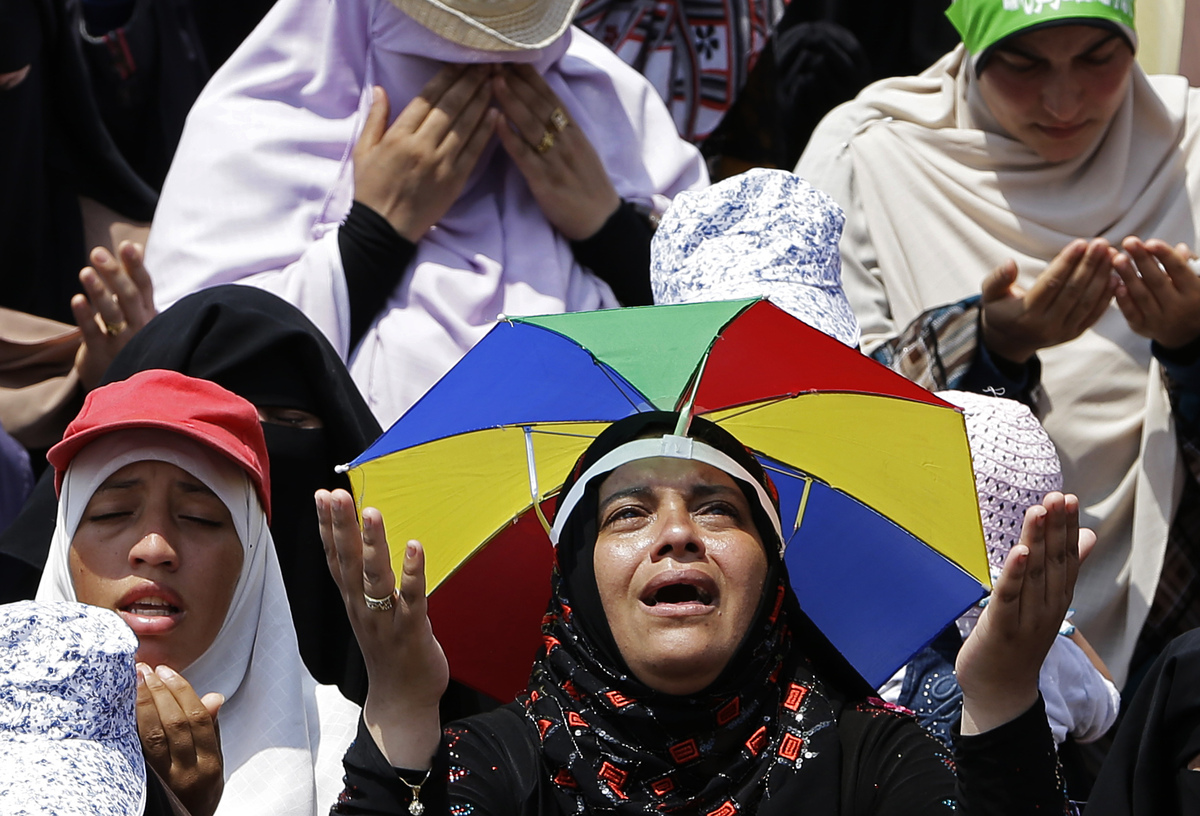
Muslim Brotherhood Trial: Egypt Court Sentences 529 Morsi Supporters To Death

An Egyptian Court recently sentenced 529 members of a Muslim BrotherHood to death on charges of murder. Yet not all the members were involved in the alleged killing of two police officers and attack of a police station. So how come all the supporters of the movement are being sentenced to death? The government may be desiring to make a statement to those who oppose their religion and beliefs. Killing 529 people without just cause can be considered genocide.   The government has labeled the Brotherhood a "terrorist group." However,  The Brotherhood calls themselves a peaceful group. While it has been proven than some members of the group have been involved in unjust crimes, the other certainly to not deserve this punishment. The Brotherhood has been accused on other occasions of burning down Christian churches, tearing down Sufis Shrines, and sidelining the military. So the government has countered this. There's is a religious war going on in Egypt and many neighboring countries. So do you think that the Egyptian government has the right of sentencing a so called terrorist group to death? Do you think that supporters of a "detrimental" group should be punished?

Link: http://www.huffingtonpost.com/2014/03/24/muslim-brotherhood-trial-egypt_n_5019909.html?utm_hp_ref=mostpopular#slide=2715774

Sunday, March 23, 2014

Ethics and the Internet

The Internet complicates everything, and biomedical research is no exception.

Here is the summary (and please excuse my rather matter-of-fact summary of what is a very sad and difficult case). A young kid (Josh) had suffered from multiple bouts of cancer. He had incurred an infection, and was dying. There was an experimental drug that could help him. His parents started a huge campaign to get the drug company to give Josh the drug. The campaign was successful, and Josh is doing better.

However, other people were not able to get this drug, people who did not resort to the Internet for help. Is it wrong that Josh got the drug and they did not? Were Josh's parents smart, or were they "cheating" in a way? It is hard not to be happy that a kid is going to live. Yet how do we decide who gets such experimental drugs and who does not? If it was based upon money, that would hardly be fair. Is it right, though, to use the Internet in such a fashion?

This reminds me of the Heinz dilemma we learned about in AP Psychology. Heinz's wife was sick and dying. He could not afford the medicine that would make him better. The drugstore would not lower the price. Should Heinz steal the medicine?

Just as in the Heinz scenario, what is important is not so much what answer you give, but the reasons behind your answer. So I am curious to hear your thoughts on this issue.

Source

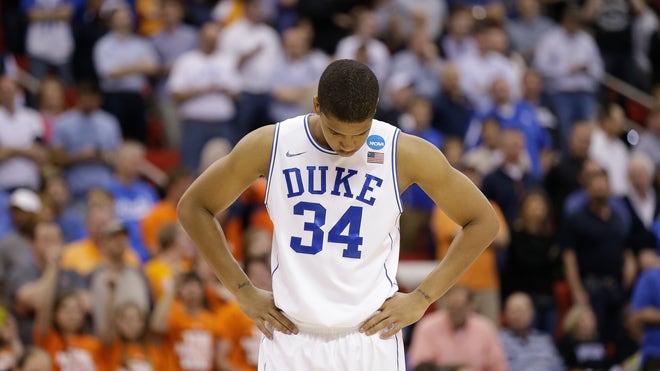
Fan with perfect NCAA bracket missed shot at $1B prize


One man had a chance of winning the 1 billion dollar perfect prize, he predicted Syracuse to be beaten by Dayton, and Mercer beating Duke. It was honestly insane that he made it this far with the ridiculous amount of upsets that have happened so far this year. Yet this weekend his dreams were crushed when Stanford upset Kansas. Now no one is in the running for the jackpot this year. Even if you are not in college basketball you know about the "bracket" and have likely created one in APUSH. Obtaining a perfect March Madness bracket is less likely then getting the winning power ball ticket.  For those out there with brackets, or even without I wanted to ask a couple of questions relating to behavioral economics. Do you think that if you won the 1 billion dollar prize that you would have long-term or short-term happiness?


http://www.foxnews.com/sports/2014/03/23/fan-with-perfect-ncaa-bracket-missed-shot-at-1b-prize/

Saturday, March 22, 2014

The Price of College Sports

A return to the world of the economics of sports. This time, college sports. A recent Washington Post-ABC News poll found that only 33% of Americans support paying college athletes. Some argue that universities can spend millions of dollars on coaches, so they can pay for athletes. Others argue that athletics are part of the college experience, and players do it because they enjoy paying, not to get paid.


From an economics standpoint, there is now basically a price ceiling on the amount colleges can "pay" athletes, since they can only provide scholarships. If colleges could pay students, do you think there would be more competition over student-athletes? At what price do you think equilibrium would be reached?

So what do you think, should student-athletes be paid? If so, how much and should it be based upon performance?

Source from Washington Post