Friday, March 22, 2024

Is Apple a Monopoly?

Many know and love Apple, and can applaud the company for its major success and innovation throughout the years. Yet the almost $2.75 trillion company may be in trouble as upsets arise about a potential monopoly on its most popular item, the iPhone. The Federal Government has had rising concerns with the major tech companies and wants to include an antitrust lawsuit against Apple, claiming they are responsible for keeping customers reliant on their iPhones, not believing they could easily switch. 
Apple sued in a landmark iPhone monopoly lawsuit | Consumer Watch |  wsiltv.com

The reason Apple has been accused of being a monopoly is how closely it controls the user experience, making it hard to duplicate on another phone. An example of this is ApplePay and the ability to have your iPhone and Macbook/Apple Watch be cohesive. The government in their lawsuit claims this only leads to higher prices and less innovation. Attorney General Merrick B. Garland passionately speaks on how Apple is doing more than just staying ahead of competition, instead they are violating the federal antitrust law and the consumers and developers are the ones suffering. He says that the company itself is relying on exclusionary, anticompetitive conduct. 

The Justice Department has been investigating Apple for a while now, building a large case on their entire existence as a company. They additionally have the right under the law to ask for a structural change in the company as the court decides its thoughts on the subject. However, some argue that all companies are allowed to promote and favor what they create, so the government will have to be extra specific for Apple. 

Apple is trying to fight back by saying that they have these practices to ensure security, yet many are skeptical. The lawsuit will ask the company to stop engaging in the current practices of blocking cloud-streaming apps, undermining messages across smartphone operating systems (creating the green bubbles when texting someone with an Android), and preventing digital wallet alternatives. Many fear that this may hinder Apple's reputation, and stop them from making what people expect them to. Apple is attempting to file a motion to dismiss the case in the next 60 days and continues to argue that people chose not to switch phones out of their loyalty. Additionally, Apple is trying to defend itself by highlighting how many new businesses were able to open from their App Store. 

In Econ, we have recently learned a lot about monopolies and the barriers of entry that come with them. I agree that many people do believe there is no comparable phone companies, which isn't true, especially with how advanced technology is. Also, with Apple creating the price points and making them so high, many consumers believe they have to pay for great quality. 

This isn't the first time this has happened, and in the past the government has felt the need to put government regulations on other big tech companies such as Microsoft, making sure they don’t have too much market power. So, what do you guys think is Apple creating a Monopoly?


Sources: 

https://www.nytimes.com/2024/03/21/technology/apple-doj-lawsuit-antitrust.html?ugrp=u&unlocked_article_code=1.eU0.QC5G.v0IcFUfnMIDz&smid=url-share

https://www.cnn.com/2024/03/21/tech/america-apple-monopoly/index.html

https://www.justice.gov/opa/pr/justice-department-sues-apple-monopolizing-smartphone-markets


Thursday, March 21, 2024

Supreme Court to Hear Case About Abortion Drug Mifepristone on March 26


(image from Yahoo News)

Despite the overturn of Roe v. Wade and subsequent abortion bans in 14 states, more abortions were performed in 2023 than there have been since 2011. Abortions have risen in almost all states where it’s legal, and especially in states such as New Mexico that border those with bans. Medication abortions, which rely on the pills mifepristone and misoprostol that can be administered at home, are also rising. 

However,  the availability of mifepristone is threatened by the Supreme Court case FDA v. Alliance for Hippocratic Medicine, which is set to be heard on March 26. 

The case started in Trump-appointed judge Matthew Kacsmaryk’s Northern Texas district court, where a conservative legal group challenged FDA approval of mifepristone. Kacsmaryk issued a ruling to suspend FDA approval of the drug, relying on remarkably faulty reasoning, including retracted studies and anonymous blog posts from an anti-abortion website. The United States Court of Appeals for the Fifth Circuit (a mostly Republican court) allowed mifepristone to keep FDA approval, but supported Kacsmaryk’s challenges to changes the FDA made to the protocol for prescribing mifepristone. The actual changes seem minor: reducing the dose and allowing the drug to be used before 70 days of pregnancy instead of 49, but they would lead to several months where the drug could not be prescribed as its manufacturer scrambled to recertify and revise.

The Alliance for Hippocratic Medicine argues that the FDA’s changes to the mifepristone protocol should be overturned because the FDA conducted multiple studies of different changes to the drug’s use, instead of one study in which they examined the combined effects of all the changes they would eventually implement. It’s an utterly precedentless argument that many other FDA-approved drugs wouldn’t pass. 

The plaintiffs don’t even strictly have standing for their case. There has been no concrete injury to the Alliance for Hippocratic Medicine, other than the nebulous possibility that some of their members might “feel complicit” in an abortion if they had to provide care to someone who took mifepristone, according to Vox. It shows just how far our judicial system, a supposedly legal institution, has been abused for political ends. 

The Supreme Court passed an emergency stay on all restrictions of mifepristone and will probably strike down all of Kacsmaryk’s decision. Should they rule in favor of the Alliance of Hippocratic Medicine, they’ll be unleashing chaos where many medications currently in use can be challenged and restricted because they didn’t fulfill the Fifth Circuit’s criteria that the FDA conduct one all-encompassing study. Justices often argue that they shouldn’t be concerned about the consequences of their rulings, but undermining the FDA’s authority is probably going too far even for our current conservative court. Moreover, given how much the Democrats will use abortion to rally their supporters, it’s probably politically smart to keep the drug. 


Sources:

https://www.nbcnews.com/health/womens-health/map-pills-medication-abortions-are-legal-rcna70490

https://www.nytimes.com/interactive/2022/us/abortion-laws-roe-v-wade.html

https://abcnews.go.com/538/ivf-abortion-access-shape-2024-election/story?id=108301112
https://vox.com/scotus/2024/3/21/24105984/supreme-court-mifepristone-abortion-pills-fda-alliance-hippocratic-medicine 


Biden Announces $8.5 Billion Grant to Intel, Advocating Expansion of Domestic Computer Chip Industry


(image credit: AP News)

This Wednesday, President Biden announced a grant of up to $8.5 billion to Intel in order to invest in domestic semiconductor production. 

The U.S. used to be a leader in semiconductor chip production, but has fallen behind Asian countries — Taiwan and South Korea, for instance — in recent years, with the flaws of a reliance on chip imports seen in the shortage over the pandemic. With COVID-19 interfering with industries and logistics and introducing uncertainty into the market and supply chain for chips, products dependent on semiconductors suffered from a shortage in chips. In late March of 2021, near the start of the shortage, Bloomberg reported on an “unprecedented global shortage” — noting increased demand and supply chain uncertainties due to the pandemic as well as the effect of increased wait times for chip orders and losses in industries like automobile manufacturing, later estimated to be a lost $210 billion in automobile revenue as reported by Reuters. 


Biden, announcing the new Intel grant, cited this issue as a cause for the expensive investment in the domestic industry. “When the pandemic shut down chip factories overseas, prices went up, and for the first time Americans began to realize how important they were,” Biden explained. “Unlike my predecessor, I was determined to turn things around to invest in America, in all Americans — and that’s what we’ve been doing.” 


As explained by CNN, this measure, in addition to its economic effect, serves as a way for President Biden to appeal to voters, particularly those in battleground states like Arizona, host to one of the planned Intel projects. In Chandler, Arizona, a suburb of Phoenix, the funding is expected to create 7,000 construction jobs and over 3,000 manufacturing jobs, “among the largest private sector investments in the state’s history,” according to the White House. While Arizona voted Democrat in the 2020 election, the state has voted Republican in most other recent presidential elections, and thus investment in the state, creating new job openings, may win more undecided voters to Biden’s favor. The prospect of securing a better chance for a Democrat in Arizona would explain why Biden chose to announce the grant there — while the White House predicts roughly equal numbers of jobs provided in Ohio, Ohio strongly backed Trump in 2020, and so appealing to Arizona voters seems more likely to have an effect. 


David E. Sanger, however, writing for the New York Times, suggests another reason for Biden’s proud rhetoric about this grant: that it might be to draw less attention to the fact that federal grants to chip manufacturers may not go much further. Sanger describes that there is a “significant risk it could be the high point of the effort,” citing Congress’s unwillingness to spend billions of dollars that were authorized to be used for the industry but never properly allocated. Seeing as how the proud rhetoric around this investment is tailored for its political gain despite Intel’s own acknowledgement to CNN that the company won’t meet its “aggressive 2025 production goal,” the economic effect of this grant does not seem prioritized as much as the political one. Money is certainly needed to establish the plants and infrastructure for chip production, but there’s also a cost to training the skilled workforce necessary that may not be adequately addressed with this investment. Morris Chang, head of Taiwanese chip manufacturer TSMC, has critiqued the skills of American workers — albeit from a biased perspective — at matching the productivity of Taiwanese factories even when spurred on by money. Given Business Insider’s report on employee experiences at TSMC — “unmanageable workload,” “12-hour working is normal,” and “workers were discouraged from applying for overtime pay” — it seems reasonable to assume domestic labor costs may be higher than those in countries like Taiwan. Whether it be due to the expensive training required for the new workers or to a difference in work ethic (or labor standards), a truly significant increase in domestic chip production may take a larger investment than Congress may be willing to provide, making the long term efficacy of this plan unclear. 


In class, we’ve learned about the factors that can shift supply and demand, and we’ve seen that when the government steps into the market, the typical purpose is to add regulations that often raise input prices and lower supply. Here, however, we have an instance in which the government is investing in an industry to reduce input prices, shift domestic supply to be greater — and if successful investment in the domestic chip market lowers prices in the long run, this may even reduce the demand for a substitute good (imported chips) in favor of a greater quantity of domestic chips. That said, a properly trained skilled workforce is an inelastic quantity in the short term (it takes time to train new workers, even if there is money for it), and while it can be simple to predict the direction of shifts in supply, the actual numerical values of these changes are more complex and variable, so the extent of this investment's effect — as well as the future of the U.S. chip industry — remains to be seen.


Sources: 

https://www.cnn.com/2024/03/20/politics/chips-act-intel-funding-biden/index.html

https://www.nytimes.com/2024/03/20/us/politics/chips-act-grant-intel.html

https://www.bloomberg.com/graphics/2021-semiconductors-chips-shortage/

https://www.whitehouse.gov/briefing-room/statements-releases/2024/03/20/fact-sheet-president-biden-announces-up-to-8-5-billion-preliminary-agreement-with-intel-under-the-chips-science-act/

https://www.reuters.com/business/autos-transportation/automakers-chip-firms-differ-when-semiconductor-shortage-will-abate-2022-02-04/

https://www.nytimes.com/2024/03/20/us/politics/biden-chip-manufacturing.html

https://www.businessinsider.com/tsmc-jobs-taiwan-semiconductor-chip-worker-skills-work-ethic-2023-8


TikToks Potential Ban

Earlier this month, members of Congress introduced a bill attempting to “protect the national security of the United States from the threat posed by foreign adversary controlled applications, such as TikTok…”. Despite the 170 million Americans on this app, its existence is threatened. 

Look back on your 'Year on TikTok' | TikTok Newsroom

There has been a rising concern from lawmakers on the continued use of TikTok due to its owner being a Chinese company, ByteDance. According to the New York Times, concerns have been raised about all user data (including location) as well as if misinformation can spread on the platform. I thought it was interesting to bring up concern specifically on TikTok for misinformation, as we learned in Gov how many other platforms have the same problem, even connecting to bias on specific news sources and narrowcasting. I guess you could argue that fewer news sources, will create a streamline, but I still believe any other social media is just as bad as TikTok. TikTok has been denying that it collects data on its users and states that 60% of ByteDance is owned by international investors anyway. However, it already has faced potential bans in many states and has been banned for 4 years already on US devices being used in the military. Our First Amendment right of free speech may be the reason to keep this app safe from the ban, especially considering how many users share news/information daily. The court agrees, saying this could be overstepping the power that states have and unless there is solid evidence of a national threat, there is not much that can be done by the government either. This is similar to what we previously have learned with the court cases and how far each Amendment right can go. For example, with Tinker v. Des Moines, the decision was that kids did have the right to express their First Amendment rights at school, and I believe it will probably be a very similar decision in this scenario. So, will a ban happen? I am not sure how likely that is, but currently, one goal (and what the Biden Administration hopes to do) is to sell TikTok to a new owner. Overall, I think the idea of TikTok being deleted altogether is pretty interesting considering how large of a platform it has become. What do you guys think, would a ban be overstepping our First Amendment right?


https://www.nytimes.com/article/tiktok-ban.html


https://www.npr.org/2024/03/13/1237501725/house-vote-tiktok-ban


Wednesday, March 20, 2024

EPA Issues New Tailpipe Emissions Regulations to Cut Carbon and Boost EVs


(image from Newsweek)

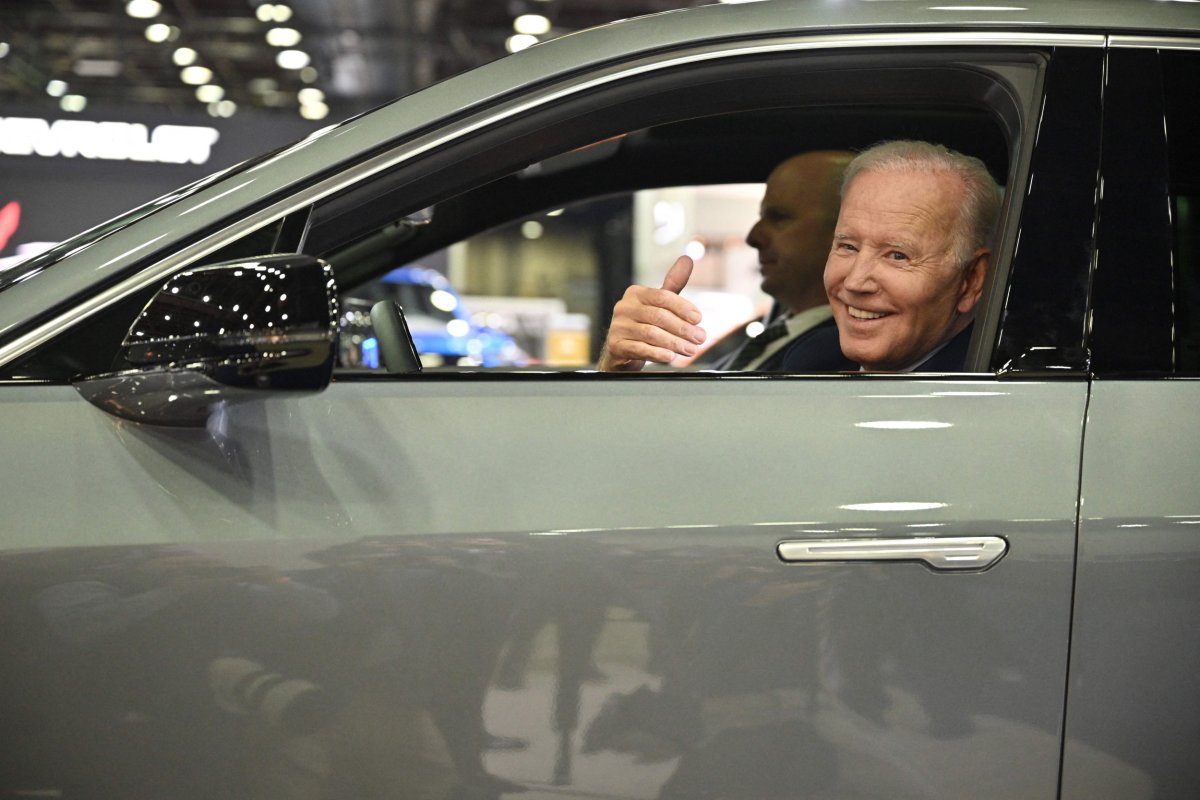
Biden’s administration recently announced a new EPA regulation designed to boost the number of all-electric and hybrid vehicles, as a part of the administration’s efforts to reduce US carbon emissions by half by 2030. 

Starting with model year 2027 (which typically begins production in early 2026) the rule gradually limits manufacturer’s cumulative tailpipe emissions until over half of new cars in the US would be zero-emissions by 2032. Manufacturers can sell any mix of gas, hybrid, electric, or other vehicles to meet their cap. 

The EPA made some concessions to the auto industry when finalizing the rule — which now has relaxed emissions caps in the first few years, before severely restricting emissions after 2030. This change is meant to appease auto union workers who are worried about jobs lost from the switch to electric (EVs have fewer parts and therefore require fewer workers, and many new EV factories are in states that don’t support unions). 

Mitigating climate change requires drastic, immediate action, so it’s reasonable to see these concessions as fundamentally weakening the fight to cut carbon, especially when EPA regulations are the only way to get change through — without a trifecta, major climate change legislation likely won’t get through Congress. The Los Angeles Times editorial calls it “too weak and slow to respond appropriately to the gravity of the unfolding environmental crisis.” However, I see the concessions to the auto industry as a smart political move by Biden to ensure that he can win reelection. Auto workers were a major part of Trump’s voter base in 2016, so taking care not to alienate them will hopefully help him win reelection, and then enact more dramatic change. 

Although most of the auto industry acknowledges that electric cars are the future (just look at Tesla) and are satisfied with the final regulation, fossil fuel companies are obviously opposed. Republican General Attorneys are gearing up to attack the regulation, as we’ve seen in class that they’ve done with greenhouse gas regulations. Trump, naturally, promises to undo the regulation if he is elected. Biden’s administration must get their climate regulation passed over 60 days before the end of his term to prevent it from being overturned by a simple majority vote if Trump takes office. 

Some class connections: 

The EPA regulation determines what cars will be produced, but not what cars consumers will buy. As battery prices decrease (input costs going down), and the production process for EVs becomes more streamlined (technology improving), the price of an EV will become comparable to that of a gas car, and the supply curve will shift right, hopefully resulting in more EVs being bought at a lower price. The government can intervene on the demand side by expanding EV tax credit to lower the price of EVs for consumers. EV charging stations could also be seen as a complementary good to EVs, which means that with more EVs on the road, we’ll probably see more of them popping up. 

Sources:

https://www.nytimes.com/2024/03/20/business/new-rules-will-still-push-carmakers-to-sell-more-electric-cars.html

https://www.nytimes.com/2024/03/20/climate/biden-phase-out-gas-cars.html

https://www.latimes.com/opinion/story/2024-03-20/biden-electric-car-rules

https://www.npr.org/2024/03/20/1239092833/biden-epa-auto-emissions-evs

https://thehill.com/opinion/energy-environment/4534983-bidens-new-energy-rules-must-stop-an-existential-climate-threat-donald-trump/ 


Saturday, March 9, 2024

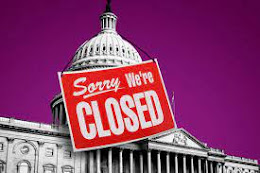
How our Government Almost Shut Down This Week

On Friday March 8th 2024, the Senate passed a bill that would prevent part of the US Government from shutting down the next day; a 75-22 vote on a 670 billion dollar spending plan going to Congressional agencies, such as agriculture, transportation, housing, energy, veterans affairs, justice, and more.  But what are government shutdowns?

Government shutdowns happen when Congress fails to pass 12 annual Bills of Appropriation by specified dates.  Bills of Appropriations are what allows bureaucracies to spend and incur obligations.  Under the Antideficiency Act, these agencies are not allowed to continue operations until the bills are passed. This group of bills’ due date was set at March 8th, the day the Bill of Appropriation from last year was set to expire.  The next batch expires on March 22nd. 

Government shutdowns are when departments of government cease their operations, with only the most essential employees still hard at work.  Bureaucracies, who are unable to spend and operate without permission from Congress, are unable to provide the people with their needs.  Shutdowns are disruptive to the US economy if left that way for an extended period of time.  From inconveniences, such as passport applications being paused, to more serious cases, such as the inability for small businesses to apply for loans and the reduced number of food safety inspections for the government, active Americans will feel the shakeup of the shutdowns.  Recent shutdowns in the past occurred at 2018 and 2013, and costed the government billions of dollars

With this batch being passed like a last-minute-high-school-final-project by 435 of America’s top representative officials, what happened here?

With the recent polarization of America’s politics, especially on issues such as immigration and war, the two parties fighting for control of both houses have an incredibly difficult time negotiating on how to spend the budget for the next fiscal year.  From the conflict in Ukraine and Palestine, to the border down south, agreement just seems harder each month.  This holds especially true for Republicans’ iron stubbornness on border control holding up the vote, similar to House Republicans blocking the Senate Foreign Aid bill that was passed through Senate back in February.  Though the eventual success of the bill gives encouragement to some, it also harbors worries to others.

"To folks who worry that divided government means nothing ever gets done, this bipartisan package says otherwise," said Senate Democratic Leader Chuck Schumer after the long fought passage of the bill

“I would urge my colleagues to stop playing with fire here,” Republican Senator Susan Collins, the vice chair of the Appropriations Committee, expressed “ It would be irresponsible for us not to clear these bills and do the fundamental jobs that we have of funding government. What is more important?”

But we are not out of the woods yet with this problem.  The next bills, which feature important departments such as military, homeland security, healthcare, and more, must be passed to uphold our government.  As issues show little evidence of being resolved, more and more demands from Republicans start popping up on border control, abortion, and LGBT rights as an opportunity to take advantage of the desperation of the Democrats.  Policies such as ankle monitors on immigrants awaiting court, more restrictions on birth control, and a bill that prevents Planned Parenthood from being federally funded may all be on the table.

“I made it very clear from Day One and throughout the negotiations,” Democrat Negotiator Sen. Patty Murray said Thursday. “We will not accept any, not one, not tiny, not little, not big abortion rider on these bills.”

It seems clear that the gridlock on Congress is tightening as we approach our next Appropriation Bill. Whether the stubbornness and polarization will get the best of our government as compromises break down with increasingly pressing demands, time will tell.  To be specific, the time of approximately 3 units of Econ notes.  Go get 'em!


Sources:

Reuters

Washington Post

Brookings Institute

More information on Government Shutdowns


Biden’s 2024 State of the Union Address

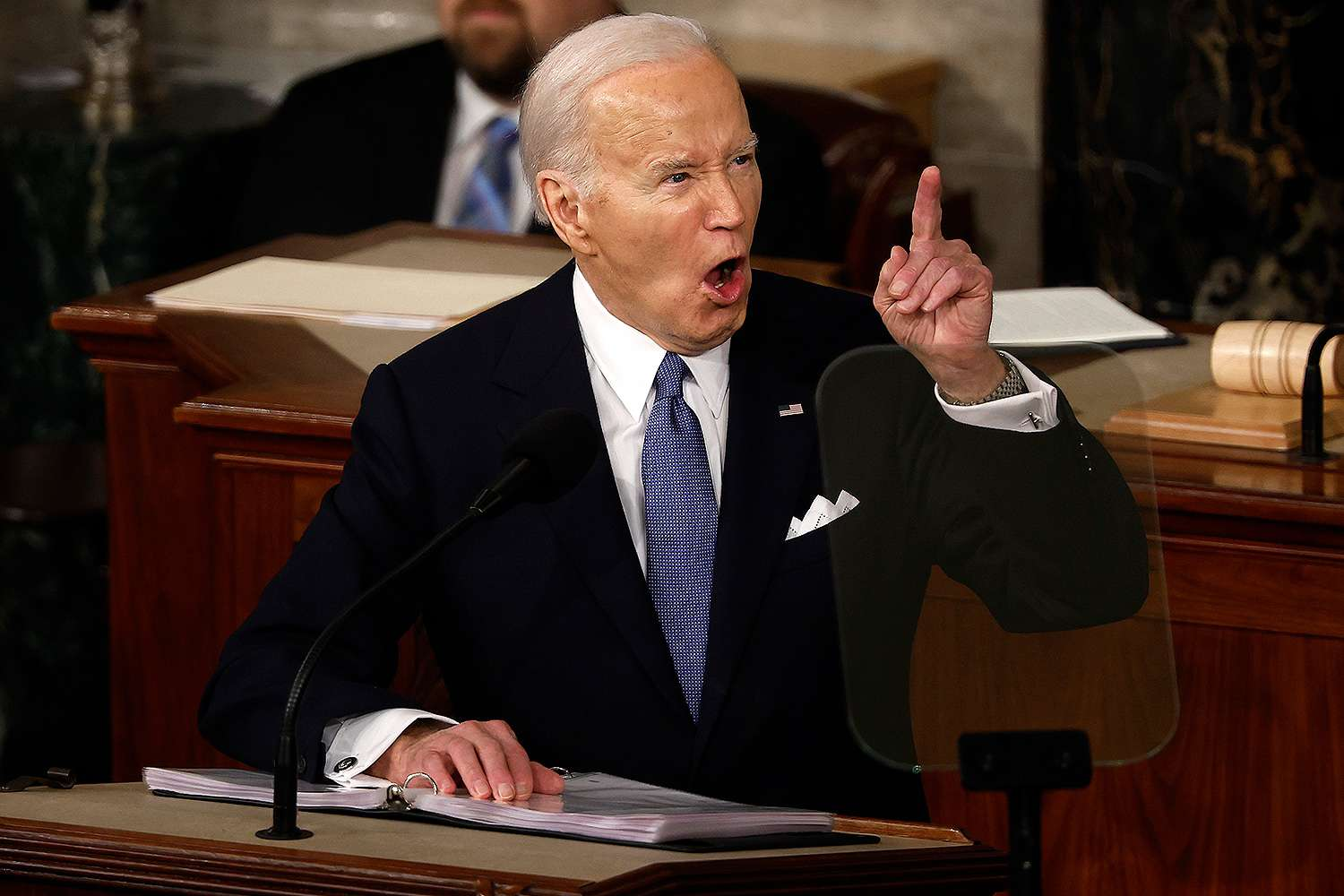
Instead of the “yearly policy recap” that most of history's State of the Union Addresses tend to fulfill, Biden’s address last Thursday was an unpredictable political battle, with multiple conflicts between Biden and Republicans in the room. 


According to CNN, Biden referenced Trump 13 times, not directly by name, but instead by calling him his “predecessor” or “a former American President.” Contrasting many of his policies with Trump’s, Biden used the massive platform of the State of the Union address as something of a campaign speech. This relates to the “bully pulpit,” a term from our Government unit on the presidency which refers to the idea of the President using their prominent position as a method of influencing public opinion for their political gain.


Biden made many comparisons between his and Trump’s policies on the economy, covid, reproductive rights, infrastructure, and other key issues. However, when reading CNN’s annotated and fact-checked version of his speech (which I highly recommend), it is clear that some of his figures and bold statements are out of context, or extremely optimistic. For example, Biden noted how his administration added 15 million jobs in 3 years, stating that it was a record. Although his increase in jobs was a record, CNN emphasizes that the context of the pandemic does minimize the significance of the record, as Biden took office right around the time when the economy began to recover.


Not only did Biden reference Trump’s policies, but he also discussed how Trump “bowed down” to Russia during his Presidency. Early in his speech, he also highlighted January 6th, calling Trump’s plots to steal the election “the gravest threat to our democracy since the Civil War.” With the conservative anti-democracy “project 2025” becoming more mainstream in the Republican party, Biden’s bold statement might be more true than most would expect.


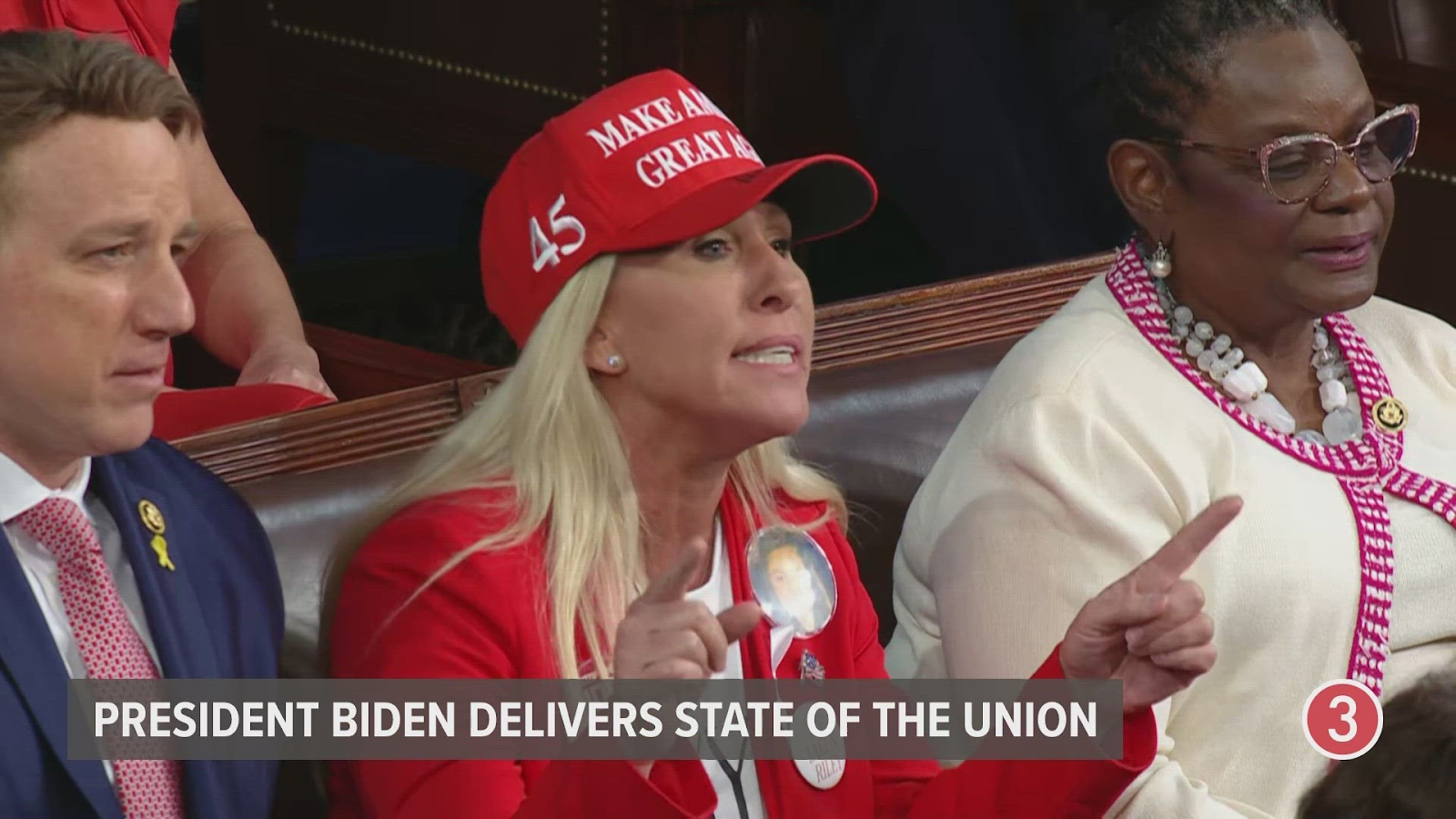
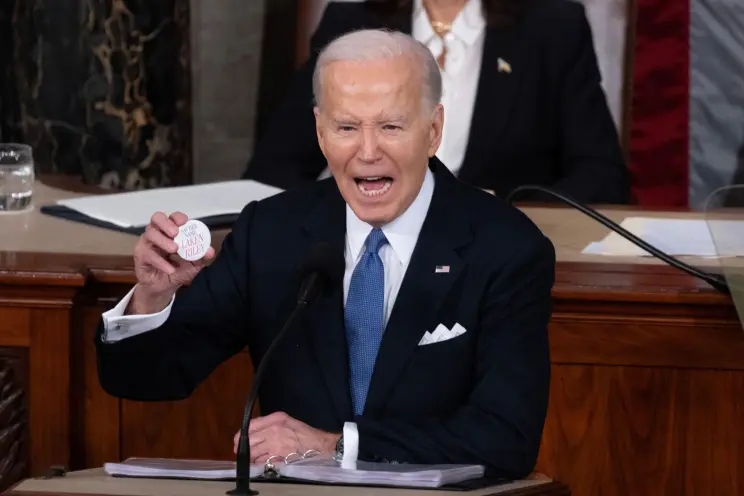
Biden’s address contained multiple instances of verbal combat with Republicans on the floor. Margerie Taylor Greene interrupted his speech, yelling “say her name!”, in reference to the death of Laken Riley, a nursing student from Georgia who was killed by an undocumented immigrant. Few Republicans expected Biden to respond to the comment, but Biden did exactly as Margerie Taylor Greene requested - he said Riley’s name, and proceeded to discuss the border protection bill which he seeks to pass in the future.


In my opinion, Biden gave a surprisingly energetic and forceful speech which may have increased his popularity among voters. His speechwriters did a fantastic job of writing an optimistic and fact-based speech which put his last 3 years in a positive light. His speech also felt powerful and action-oriented, while also appearing politically moderate. He denounced Trump without saying his name, and his improvised comebacks to Republicans’ boos and screams were quite impressive. It’s difficult to know whether this will have a substantial impact on the 2024 election, but I believe it was a solid speech as a whole.


Questions for the comments:

Did you see the speech? How did you feel after first viewing it?

Do you think this increased Biden’s popularity?

How do you feel about Biden’s increased use of the bully pulpit? Is it fair to use the State of the Union Address as a political speech?


Sources:

https://www.npr.org/2024/03/08/1236782758/state-of-the-union-address-biden-trump

https://www.cnn.com/2024/03/07/politics/takeaways-joe-biden-state-of-the-union-address/index.html

https://www.cnn.com/interactive/2024/03/annotated-fact-checked-president-biden-sotu/

https://www.project2025.org/

https://apnews.com/article/laken-riley-biden-speech-immigration-d756dbe1c499c6fd0fc53be04290b371


Tuesday, March 5, 2024

From Courtroom Drama to Political Theater: Trump's Journey to 2024


In a turn of events filled with drama the Supreme Court recently made a decision regarding former President Donald Trumps potential comeback, to the presidential race. This ruling, which swiftly resolved a case with implications for the 2024 election has sparked discussions and stirred emotions nationwide.

Imagine this; a courtroom setting where the future of a political figure is at stake. In a twist the Supreme Court in a decision without any disagreements overturned a previous ruling by the Colorado Supreme Court. The earlier ruling had stated that Trump could not run for president again under Section 3 of the Amendment.

However the Supreme Court had thoughts on the matter. It stated that it is Congresss responsibility to enforce Section 3 against those seeking office, not states. This decision caused shockwaves in the realm affirming the governments authority in matters related to presidential eligibility.

What adds another layer of intrigue to this ruling is its timing— days before the Colorado elections. It almost feels like all eyes were, on this decision that could potentially shape American politics moving forward. When the verdict was revealed Trump quickly seized the spotlight praising the decision, as a " victory for America!!!" on his social media platform.

Essentially this judgment signifies more than a standard; it showcases the delicate balance, between federal power and state independence.

In the great arena of American politics, where the stakes are high and the narrative twists endlessly, Trump’s journey to 2024 is an interesting story—one that continues to captivate and divide the nation, and give us all on the edge of our seats, eagerly awaiting the next scene in this political epic.

Source:

-[NBC]https://www.nbcnews.com/politics/2024-election/haley-wins-republican-primary-washington-dc-rcna140421

-[New York Times]https://www.nytimes.com/2024/03/04/us/politics/trump-supreme-court-colorado-ballot.html

-[AP News]https://apnews.com/article/supreme-court-trump-colorado-ballot-2390f3204e3ecaad3c617f9db0ff9d2e

Monday, March 4, 2024

Exploring the Aftermath of Election 2024: A Closer Look at Political Dynamics


In the aftermath of Election 2024, the political landscape is buzzing with activity as the nation grapples with the implications of its recent decisions and the path forward. As we take stock of the fallout, it's clear that divisions within the Republican Party are deepening, reshaping alliances and sparking heated debates across the political spectrum.

As the race was called for Haley, Trump campaign spokeswoman Karoline Leavitt didn't hold back, launching a fiery critique of Haley and the Republican establishment in Washington. With a nod to Trump's signature style, Leavitt dubbed Haley the "Queen of the Swamp," painting her as a symbol of the entrenched interests that Trump supporters have long sought to upend. Despite Haley's credentials and support from congressional Republicans, her ties to Washington insiders seem to have alienated her from segments of the GOP base.

Haley took an unconventional approach by campaigning in Washington ahead of the primary, signaling a strategic shift in her bid for support. Although the Washington primary was relatively small compared to others, it served as a battleground for competing visions within the Republican Party. Managed by the D.C. GOP, the election underscored the tension between party rules and national directives, highlighting the complexities of intra-party dynamics.

Trump's dominance leading up to the Washington primary, with significant wins in Missouri, Michigan, and Idaho, solidified his position as a formidable force within the Republican ranks. With a substantial delegate count in his favor, Trump holds a significant advantage over Haley as they gear up for Super Tuesday. Despite lagging in polls, Haley remains steadfast in her commitment to stay in the race, setting the stage for further political intrigue.

As Haley continues to campaign vigorously, securing key endorsements such as that of Maine Sen. Susan Collins, the future of the Republican Party hangs in the balance. The clash between traditional Republicans and the Trump faction encapsulates the broader struggle for the party's identity, with far-reaching implications for American politics.

Amidst the drama and uncertainty, one thing is clear: the landscape of American politics is evolving rapidly. As we navigate the road ahead, it's essential to approach these challenges with empathy and foresight, recognizing the enduring impact of today's decisions on tomorrow's course.


Sources:


-[Washington Post](https://www.washingtonpost.com/politics/2024/03/03/gop-primary-dc/)

-[CBS News](https://www.nbcnews.com/politics/2024-election/haley-wins-republican-primary-washington-dc-rcna140421)

Sunday, March 3, 2024

Michigan Primaries and Uncommitted Voters


Michigan has always been an important state, or state to watch during primaries for a variety of reasons. It's a swing state, an early primary date in the election calendar, and recently, because of its high Middle Eastern North African (MENA) population. While other equally important things happened in the recent Michigan primaries (Nikki Haley’s Campaign) I want to focus on Michigan’s MENA population. 


In the context of the ongoing conflict in Palestine/Israel, the MENA population in Michigan has grown more important. 


Mr. Biden won Michigan in 2020 by 150,000 votes. There were 100,000 uncommitted voters in Michigan, mainly because of Biden’s policy in Gaza. 


We have no right to tell MENA (Middle Eastern North African) people how to feel about an ongoing genocide. Witnessing members of one’s community being killed every day is enough to make someone not want to support a president, and we have to understand that Biden cannot win without the support of MENA in Michigan. 


While in office, it is crucial to consider critiques raised by some minorities, who constitute a significant portion of his voter base, regarding various aspects of President Biden's policies and actions. Biden could not codify Roe v. Wade, he was largely responsible for cop city in Atlanta, and the removal of affirmative action happened under his presidency. Yes, some good things did indeed come during his presidency, such as student debt forgiveness, but that is largely due to the democratic party having a leader, it wouldn't matter which Democrat would be in office for that bill to pass. The president is not a monarch.


This should be a wake-up call to all voters to be more civically active at the local level, as much as they are on the national/presidential level. The organization of 13% of Michigan’s voters to vote uncommitted is enough for Biden to change his policy towards Gaza, however little. The organization of the uncommitted voters in Michigan is proof that change can only effectively start from the grassroots. 


Sources:

Photo: Pete Marovich for The New York Times

https://www.cnn.com/2024/02/27/politics/takeaways-michigan-democratic-republican-primaries/index.html

https://www.nytimes.com/2024/02/28/us/politics/michigan-primary-biden-trump.html?searchResultPosition=3

https://www.washingtonpost.com/elections/2024/02/28/uncommitted-votes-meaning-michigan/

Apple’s Vision Pro: Revolutionary Technology or Luxury Cash Grab?

     On February 2nd, Apple released a new product: the Apple Vision Pro. A futuristic virtual reality device with eye and hand-tracking capabilities, Apple’s headset has taken the internet by storm. Although many critics claimed sales would be slow due to the price tag of $3,500, the first batch of 200,000 has completely sold out. The Vision Pro has infiltrated even the most important moments in life, as on February 10th, a Groom wore the Vision Pro to his own wedding day.


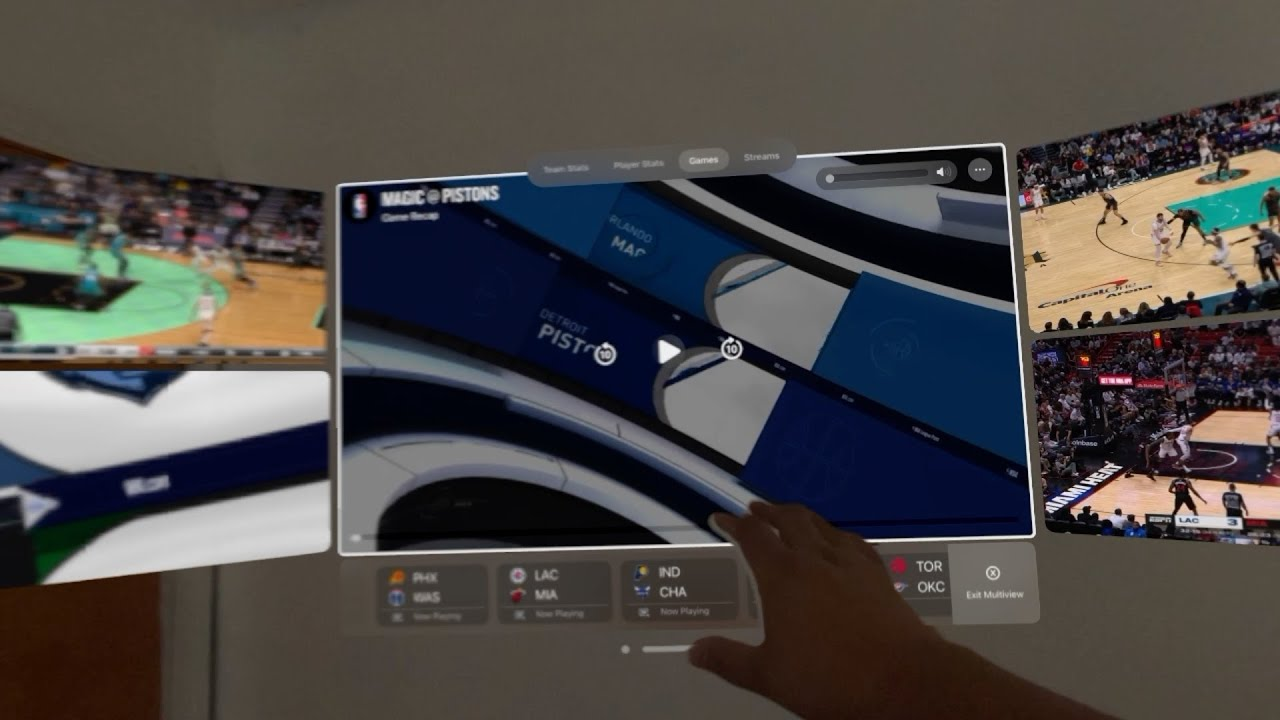
    As Apple’s first new release since the 2015 Apple Watch, the Vision Pro has a plethora of features that appear to be extremely innovative. One reviewer posted a video of him watching 5 NBA games, texting his friends, and scrolling through web pages at the same time. Apple has also stated that users can form 3-dimensional recreations of their recordings, allowing anyone to relive their own memories. With 6 microphones, 12 cameras, 5 sensors, 2 OLED displays, the M2 Chip, and Siri packed into the device, some reviewers say the Vision Pro is worth every penny.


    However, many attribute Apple’s sales success to the hype of the product. Apple has an abundance of fans who will buy any product they release, no matter its true utility or value. This has led many to question whether the Apple Vision Pro provides actually helpful features. The headset takes away a substantial amount of one’s peripheral vision, and many reviews have said that it is an inherently isolating experience. Through augmented reality, a user sees the real world while maintaining access to digital features. Yet, there are reported issues such as motion blur that make it difficult to interact with the real world, unless a user is inside their home. Other than streaming from multiple sources and interacting with existing videos in new ways, the Vision Pro functionality for the consumer is questionable. 


    As of March 2024, Apple has a market cap of $2.774 Trillion. In the last few years, the company has spent over $20 billion in research and development and filed over 5,000 patents for the new Vision Pro. Due to its massive size as a company and its investments, Apple cannot afford to create a product just for the “tech bro” who has the excitement and funds to buy a $3,500 augmented reality device. Apple must create a product for the regular consumer. Experts say that Apple will bring down the Vision Pro’s price to make it more affordable, and forecasts for Apple’s shipment of Vision Pros (found below) are extremely ambitious. However, will it ever have the functionality to garner the interest of the average consumer?


https://wire19.com/prediction-on-apple-vision-pro-shipment-in-first-year-of-launch/
 (data originally from Statista)


    In my opinion, the Vision Pro does not have enough utility to be a product for 90% of American consumers. Even if the price is lower, I do not believe that Vision Pro will obtain the level of success that other Apple products have achieved, such as the iPhone, iMac, or Airpod. Past devices have allowed people to engage with the digital world without diminishing the real-world experience. Anyone can open their smartphone and in seconds, gain access to whatever content or information they desire. With most current popular Apple products, there is a low opportunity cost of losing social interaction in the real world, with massive benefits for interaction in the digital world. The Apple Vision Pro has the huge opportunity cost of losing one’s peripheral vision and casual social connection with others. Yet, some of these flaws can be ameliorated through long-term innovation. If Apple drastically simplifies the design, makes the user experience less intrusive to daily life, and lowers the price, I can see a future where augmented reality becomes the new norm.


Some questions for discussion in the comments:

What do you think about the Apple Vision Pro? Is it a step towards a utopian or dystopian society?

If you had $3,500 lying around, would you buy one?

Do you think the Apple Vision Pro could be a viable product for the consumer?


Sources:

https://time.com/6590633/apple-vision-pro-developers/#:~:text=So%20far%2C%20signals%20about%20the,plunge%20on%20a%20new%20product.

https://www.tomsguide.com/computing/smart-glasses/apple-vision-pro-review

https://seekingalpha.com/news/4073143-apples-vision-pro-us-sales-slow-global-release-date-remains-mystery

https://www.zdnet.com/article/what-is-apples-vision-pro-price-features-hands-on-insights-and-everything-you-need-to-know/

https://companiesmarketcap.com/apple/marketcap/#google_vignette

https://humanprogress.org/apple-vision-pro-is-half-the-price-of-the-apple-ii/

https://www.digitaltrends.com/computing/apple-vision-pro-2-displays-lower-price/

https://www.yahoo.com/lifestyle/groom-wears-apple-vision-pro-085002536.html?guccounter=1&guce_referrer=aHR0cHM6Ly9uZXdzLmdvb2dsZS5jb20v&guce_referrer_sig=AQAAAF7s5QLyrO4RsdjU0TPIn6EaH3w8J2sTtJ9fGZmlxahDzYInzX-_bvu6F0Bes8aew_j9WnV9MZfXd2aiP0Kq-LFB96jTLVEds_Ni09im7ECj-i60O8kNETx0gaE4F862piRimrsM87mbX-w_pvxIKksuWDNecbKgjDyaLG4ufGHy


Saturday, March 2, 2024

CDC Releases New Updated Guidelines for COVID-19

    This past week the Center for Disease Control (CDC) said goodbye to its mantra of a 5 day quarantine period. This change comes as a result of improvements in the trends of hospitalization and deaths in the past year. CDC Directory Mandy Cohen explained, “We wanted to see if the trends would hold through another respiratory season. We wanted to see continued decreases in hospitalizations, decreases in deaths, even with [mutations]” (CBS).

COVID hospitalizations have decreased significantly since their pandemic peak (https://www.latimes.com/california/story/2021-12-24/covid-icu)

    The coronavirus dropped to being the 10th leading cause of death in the United States last year, down from the 3rd at its peak (AP). The agency made it clear that while it is no longer an emergency, COVID still remains a public health threat, and that it should not be ignored (CBS). In the report released on Friday, the agency explained they would switch to a “unified, practical approach to addressing risk,” an attempt to make guidelines easier to follow by creating a single set of guidelines for numerous respiratory illnesses, including COVID, the flu, and respiratory syncytial virus (RSV) (CBS).

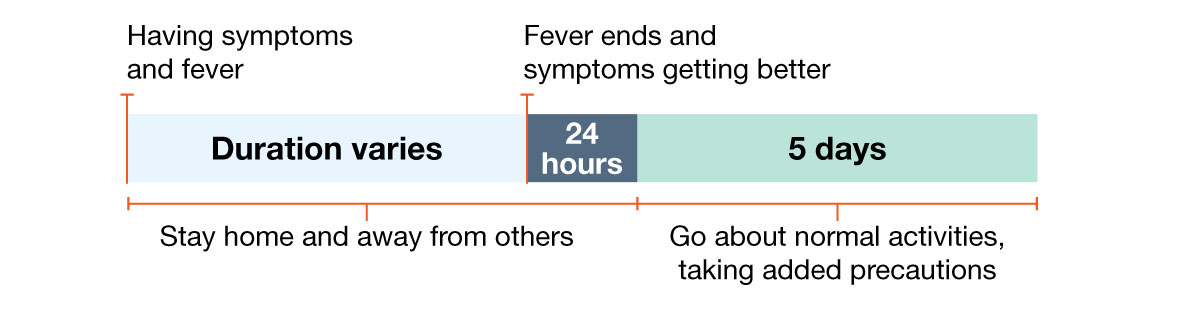
    So what exactly are the new guidelines? The CDC is now recommending to only return once symptoms are mild and improving and it has been over a day since having a fever. However, they do recommend using a mask during 5 additional days of precaution once you are no longer staying at home. It is important to note that there were no changes in the guidelines for individuals working in healthcare or in nursing homes (CDC). 


An example from CDC guidelines demonstrating how the updated COVID recommendations would be implemented (https://www.cdc.gov/respiratory-viruses/prevention/precautions-when-sick.html)


    Despite the CDC moving forward, not everybody is ready to yet. Director of the Pandemic Center at Brown University’s School of Public Health Jennifer Nuzzo said that her “biggest worry in all of this is that employers will take this change in guidance to require employees to come back to work ... before they are ready to, before they feel well enough, and before they are not likely to pose harm to their co-workers” (AP). Each week, there are still over 20,000 hospitalizations and 2000 deaths due to the virus, particularly in individuals of age 65 years or older.

    It seems like COVID has reached a point now where it is starting to be treated similarly to other viruses like the flu and RSV. In 10 to 20 years from now, it may be treated like a common cold, an incredibly large change from its connotation just a couple of years ago, at the height of the pandemic. The coronavirus has undoubtedly had a massive impact on the way that we view our health, with many individuals still continuing to wear masks for a multitude of reasons. While its widespread reign of terror may be over, its impact on the globe economically, socially, and scientifically, will be felt for centuries.


Sources:

https://www.cdc.gov/respiratory-viruses/prevention/precautions-when-sick.html

https://apnews.com/article/covid19-isolation-guidelines-cdc-5354fe4ef002458c4c0174292e982af9\

https://www.cbsnews.com/news/cdc-covid-recommendations-isolation-masks-tests/