Sunday, February 12, 2023

True or False: George Santos

 The saga of Geroge Santos continues 


We have all heard about the “resume embellishment” and the contradicting stories around his mother’s death as well as about his volleyball prowess, but despite catching Congressman George Santos in so many lies, he is still in office. 


What does this say about the state of our government?  And more importantly, what does it say about how people are voting? It is interesting to see that the North Shore Leader, the local newspaper in New York’s third district, wrote articles calling into doubt some of what Mr. Santos said on the campaign trail. The Leader even went as far as endorsing the “Democratic candidate, saying it wanted to support a Republican but that Mr. Santos ‘is so bizarre, unprincipled and sketchy that we cannot.’”  


So why did Santos win with a 54% of the vote? It's due to more party-line voting, especially for those still believing the debunked lies regarding election fraud in the recent presidential election. This is a key point of why George Santos isn’t funny. Not only was Santos able to run while telling lies, but he was also able to win elections by targeting a select audience. Unfortunately, even the speaker of the house hesitating on the decision for him to be removed highlights the fact that someone who lies their way into political roles can secure and maintain their position. 


The amazing part is that Santos continues to lie and seems to ignore the fact that he keeps getting caught.  Following his run-in with Senator Mitt Romney at the State of the Union address, he claimed that “Kyrsten Sinema told him to 'hang in there.'” but CNN reports that her office says that’s a 'lie.' At this point, Santos is starting to lie about things with zero relevance to anything and people are starting to take notice. Now his own party is pointing out lies. According to a survey from Newsday and Siena College “A total of 78% of voters in the Nassau County and Queens district want the 34-year-old GOP lawmaker to resign, including 89% of Democrats, 72% of independents and 71% of Republicans.”  In fact, his office in Washington DC is regularly protested by people from his district. Despite the recognition of these lies and since there is no call for his resignation from Republican congressional leadership, it looks like at least the people within his district have had enough.  


How can he represent the people of his district if they don’t trust him or want him in office by a vast majority? This is a big question for him, especially since he must now declare if he is running in the next election.  This decision is important as it impacts if he can raise money and how he spends it.  The financing of his last election has already been called into question and there is an ethics committee investigation.


Sources:

Picture: https://www.nbcnews.com/meet-the-press/meetthepressblog/poll-78-santos-voters-want-resign-rcna68349

Articles: https://www.economist.com/united-states/2023/01/17/george-santos-is-the-congressman-america-deserves

-https://nypost.com/2023/01/31/poll-78-of-george-santos-constituents-say-he-should-resign/

-https://www.bbc.com/news/world-us-canada-64587233

-https://thehill.com/homenews/senate/3852008-gop-senators-sympathetic-to-romneys-call-for-santos-to-resign/

-https://www.cnn.com/2023/02/10/politics/fec-george-santos-campaign-fundraising/index.html


Thursday, February 9, 2023

U.S. Sends Aid After Earthquake in Turkey and Syria


On February 6, a magnitude 7.8 earthquake hit Turkey and Syria, destroying homes and buildings, leaving more than 21,000 dead so far, with more than 17,000 deaths in Turkey and more than 3,000 in Syria. In addition to this there are more than 78,000 injured people across both of the countries. It is one of the deadliest earthquakes in the past 20 years, and the strongest earthquake in Turkey since the 1930s. 

President Joe Biden said that his "administration has been working closely with our NATO Ally Turkey". Since then, the U.S. has transported first responders and multiple urban search and rescue teams to provide aid to it's ally. However, according to spokesperson for the United States Department of State, Ned Price, the U.S. will aid Syria through non governmental organizations without engaging with the Syrian government. 

Syrian officials condemned the United State's refusal to engage with their country's government even following a deadly earthquake, but Price says that "It would be quite ironic — if not even counterproductive — for us to reach out to a government that has brutalised its people over the course of a dozen years now" He asserts that while aid will be provided, no U.S. funded humanitarian aid will be provided through the Syrian regime.

I think that while it may seem cruel to be refusing to send direct aid, it's a perfectly reasonable action. The Syrian government has no diplomatic relations with the U.S. and aid is still being sent, albeit through groups not affiliated with the government. Politics are an important consideration in every situation, and emergencies are no exception.

https://www.defense.gov/News/News-Stories/Article/Article/3293241/us-aids-turkey-after-devastating-quakes/
https://www.newsweek.com/syria-says-us-politicizes-earthquake-after-refusal-send-aid-assad-1779637 
https://www.aljazeera.com/news/2023/2/6/us-pledges-post-earthquake-aid-but-no-contact-with-syrias-assad 
https://www.politico.com/news/2023/02/06/u-s-response-blinken-turkey-syria-earthquake-00081307 
https://www.cnn.com/middleeast/live-news/turkey-syria-earthquake-updates-2-9-23-intl/index.html 

Monday, February 6, 2023

ChatGPT's Potential Future in Education and Government


We've all heard of ChatGPT. Some of us might have used it once or twice, perhaps just to dip your toes in the water and see it for yourself, or maybe write up a little text based narrative, maybe for homework help, or even important life decisions. Or even, used it to do a little cheaty-cheat here and there. However, it is capable of so much more. It can do a wide array of things among those listed above, but some of the more useful features are explaining complex topics simply, guessing and/or diagnosing medical issues, writing accurate code, writing emails, ads, blog posts(not this one though), up to entire essays. With a myriad of potential, the sky's the limit. But before the current potential issue with it, a little bit on how it works. 


Created by OpenAI, ChatGPT is, at its heart, an AI based chatbot. From my own, limited understanding of AI, ChatGPT mimics human behavior by studying and analyzing an unimaginable amount of data, and then generates a response to a question asked of it using that data and its own kind of learning. But here is a more professional explanation: "The program uses a deep learning technique called "transformer architecture" to sift through several terabytes of data that contain billions of words to create answers to prompts or questions. ChatGPT's predecessors include GPT-3, which also generates text, but has been trained on a much larger set of data. While this makes GPT-3 more powerful, ChatGPT is faster, more capable of generating human-like answers, and is available to the public. The bot works in the same way that AI generator tools like DALL-E 2, Midjourney, and Stable Diffusion do - but much like how those programs can create unrealistic images, ChatGPT is not always accurate." As it states, the AI is not an omnipotent being, and is wrong on occasion, as I have seen before. However, there is no denying its infinite usefulness, especially when it comes to the schoolzone battleground.


Many students around the world have differing opinions on the uses and applications of ChatGPT. However, common consensus is that it's a fun toy to experiment with, it can provide decent help and writing, and, of course, is a tool that can be used for cheating. However, the differing opinions were present, too, boiling down to these 2 main contenders: AI is the future, and is only beginning, and AI is some kind of crutch that will destroy our motivation and ability to do things. Both of these have merit, and really the only way to know is the passage of time. Here are some of those student sentiments: "In almost all classes in school, ChatGPT should not be used. As it continues to get better and better, ChatGPT will be doing work that the student should do for them." and "I’ve had experience using ChatGPT before and it’s been really helpful for me: When using it for personal questions, joke questions, or help on school assignments, it helps me gather research or understand the topic a lot better and faster …"


Onto how it relates here, though. AI will inevitably find its way into the workforce, and actually do what many fear most: replacing jobs. And from there, will undoubtedly come regulations and such. On the topic of regulations, in the regulatory process, there is a time period for comments and whatnot before said regulations take effect. Supposedly, humans are making these comments. However, interested parties might be able to wield ChatGPT and flood the system. As Washington Post states: "There is no law against using software to aid in the production of public comments, or legal documents for that matter, and if need be a human could always add some modest changes." Hardly the only area AI can use as a playground, another example of the potential plethora is something we're familiar with: grassroots lobbying. No longer will actual people have to compose letters and emails to their local lawperson, a computer can do it for them - and possibly even better, at that. Obviously, that would eventually pose problems due to the astroturfing nature of something like that.  


Though ChatGPT has no opinions and emotions of its own, from its current understanding of itself, this is what it had to say about its educational use and cheating:

O
Here is another example of its "opinion", or more accurately, analysis on government related uses: 

So enough from me, what are your opinions on AI? Is it the future, or our doom?

Ohio train derailment and evacuation


Earlier this month (Feb 3), by the border of Ohio and Pennsylvania, the town of East Palestine reported seeing a large plume of smoke. The cloud of smoke was caused by a train that derailed after a mechanical issue with a few of the wheel axles. The train was carrying vinyl chloride, an extremely toxic and flammable gas that was fatal if inhaled. Governor DeWine said the Ohio Department of Health would have to allow the chemical to safely run into a collecting trench, where it would be safely handled and removed. His statement said that this collection method is the safest removal option as of right now, and the best explosion preventative measure. Seeing as the gas was volatile at the time of the explosion, he ordered an evacuation of anyone living within a two mile radius. Around 5,000 people were displaced but were given refuge at two evacuation centers nearby. 911 emergency centers for that town have had to relocate, with assurances that emergency services wouldn't be affected, and schools within this area have been closed for the coming week. A shelter in place has been enacted, and the town will remain closed until all the chemical run off has been safely handled. As of February 6th, no other news about citizens going home have been released.

The growing debate over the AP African American studies course and its indication of Americans’ divided stance on Educational Freedom


Back in mid January, the College Board unveiled their new pilot AP course on African American history. Yet, after facing much backlash and criticism from conservative leaders and some scholars and professors, the College Board published revisions to the course, many which ameliorated the criticism that was widespread from the right. 

The government in Florida banned the course, on the basis that such topics of race. The state legislature recently passes laws that restricted from teacher in the state from speaking about such issues so that “ students are not made to feel guilty for racist acts carried out by others.” As per the terminology of the law, “A person should not be instructed that he or she must feel guilt, anguish, or other forms of psychological distress for actions, in which he or she played no part.” Florida’s republican governor Ron DeSantis has been at the forefront of the criticism of the course, and claimed that it had no place in the state of Florida. 

Yet, the most recent changes to the course remove lessons on Black Lives Matter, and readings from left-leaning authors such as KimberlĂ© Crenshaw, which talk about critical race theory. Joshua Myers from Howard University targeted liberals and their actions, stating “it shows how  far liberals will go to confront the creeping fascism in this country. And that’s not very far at all”. Myers argued that the liberals are actually not doing enough to fight for the educational freedom, and are not willing to go to far lengths in order to stand up for what they believe in. 

I believe that the criticism from both sides only serves to highlight the divided country that the United States is in the role of race, history, and educational freedom. We have those on the far right arguing that black history is not a crucial part of American History, while we have those on the left fighting to make sure that all students are exposed to the truth of black history. I think that what the College board is doing is great in introducing and making the topic of black history more widespread and important throughout the curriculum. I found much value and learning from the topics that we learned about with regards to black history, leaders, and movements last year in the 11th grade and feel that the same knowledge and education should not be restricted to students throughout the country.


https://www.nbcnews.com/politics/politics-news/ap-african-american-studies-course-watered-gop-pressure-rcna68454 (includes video) 


https://www.washingtonpost.com/education/2023/02/02/college-board-ap-african-american-studies-criticism/ 

https://www.nbcnews.com/news/latino/afro-latinos-desantis-black-ap-studies-rcna69036 


Saturday, February 4, 2023

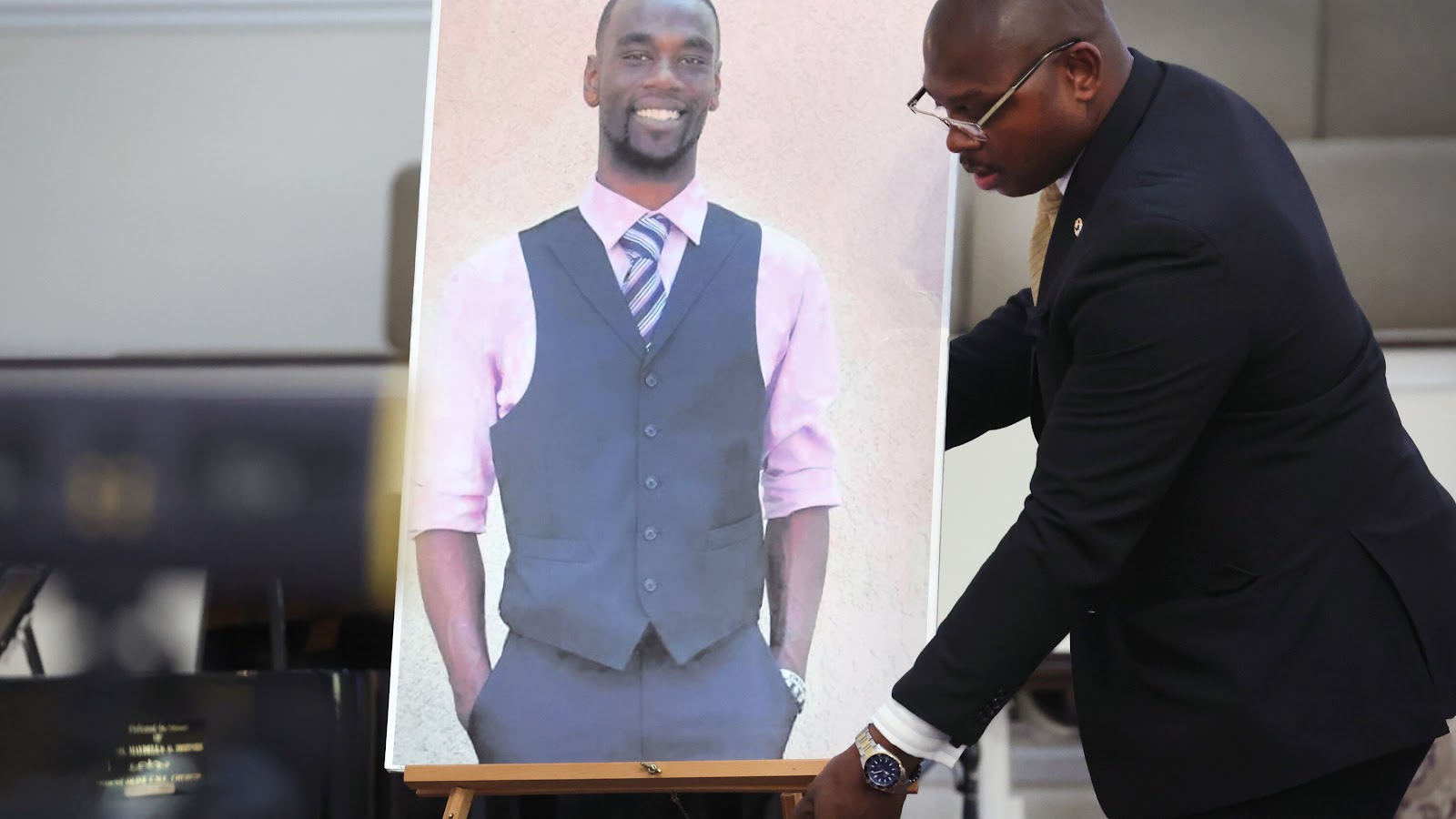
Sacramento, California born Tyre Nicholas, death in extreme police altercation

 Who Was Tyre Nichols? From Sacramento to Memphis, He Cut His Own Path - The  New York Times   

    Police brutality continues to rise in America even after the 2020 promise of systemic reform. On January 9th, 29-year-old Tyre Nichols was pulled over in Memphis, Tennessee for claims of reckless driving by patrolling officers. Nichols pleaded to officers that he was only trying to get to his home which was two minutes away from where he had been stopped. This led to an extreme altercation where several officers forced Nichols to the ground yelling, “I’m going to beat your a** and I’m going to tase your a**!” shown in body camera footage found during the investigation of Nichols's death. Nichols was continuously beaten on the ground by officers while calling for his nearby mother. He attempted to stop officials due to “feeling shortness of breath”. Four of the seven officers continued to kick, punch, and strike him in the face and torso with their batons despite Nichols's pleas. Only after three minutes of a beating did officers stop and “render him aid”. Three days after being detained by police, Tyre Nicholas was pronounced dead at the Memphis St. Francis Hospital.

    On January 18th, the federal investigation of the beating took place, resulting in five of the officers who were involved being fired and charged with murder by January 20th. “Four of the officers had previously been disciplined, including two who had failed to report the use of force during arrests”. Yesterday, February 3rd, the Memphis PD fired the white officer responsible for pulling Nichols over on account of “violating multiple police guidelines in his encounter with Nichols.” Guidelines violated included “personal conduct, truthfulness, and a violation for not using the taser in compliance with regulations”. Two of the EMTs who first arrived to treat Nichols were suspended for not providing care until “19 minutes after arriving at the scene”. Body camera footage of the beating was released to the Shelby County deputies on January 27th a day before two more police were relieved of their duties during the investigation.

    This is among the thousands of police brutality deaths that have occurred in the U.S. since 2020. After the death of George Floyd in 2020, Cerelyn Davis testified before Congress demanding “police reform”. However, three years later there has still been little reform. Some progress has been made such that states have passed hundreds of bills to improve policing. But even so, “shootings by police have risen each year since 2020, and last year, police shot and killed nearly 1,100 people, according to a Washington Post database tracking such cases”. 

    The constant amount of police brutality that keeps occuring, specifically towards black people demonstrates the lack of progress being made to stop racial injustices. Although the use of weapons such as guns weren’t used in this case nor George Floyd’s, there is still a large amount where police have opened fire onto already wounded and unarmed black individuals. Unless there is a dramatic change made to police training, these injustices will continue.

https://www.newyorker.com/culture/cultural-comment/the-memphis-police-are-not-bystanders-to-the-death-of-tyre-nichols

https://www.nytimes.com/2023/01/26/us/tyre-nichols-memphis-police.html

https://www.nytimes.com/2023/01/30/us/memphis-officer-suspended-tyre-nichols.html

https://www.nbcnews.com/news/us-news/sixth-officer-relieved-duty-tyre-nichols-death-memphis-police-say-rcna68192

https://abcnews.go.com/US/tyre-nichols-timeline-investigation-death/story?id=96695791

https://apple.news/ADderXx3QSqC8ukUQXyfdfw


Democrats make South Carolina the first state in the presidential primary voting order.


On Saturday, February 4th, the Democratic National Committee (DNC) officially moved South Carolina ahead of Iowa and New Hampshire as the first states in the presidential primary. This was in response to President Biden's recommendation. 


The DNC chairman Jaime Harrison argued that this move promotes more diverse states, and “puts Black voters at the front of the process in South Carolina. It keeps Nevada, where Latinos have been building power... And it adds Michigan, the heartland, where unions built the middle class of this nation. And Georgia, the forefront of the new South."


The new calendar places South Carolina first, on February 3rd, 2024 and New Hampshire and Nevada on February 6th. The calendar is not yet fully finalized as the states need to agree to the rules and change their primary dates. 


This change is impactful because it alters a tradition that has been long standing. The topic connects to the unit we learned about the presidential election process and the role that primaries and caucuses hold in the presidential campaigns. We learned about how winning New Hampshire and Iowa has a large impact on how candidates run their campaigns, as was evident in the movie that we watched where Bill Clinton was campaigning. 


I think this move is beneficial and a positive change put into motion by the democratic party. By giving more importance and power to states that are more representative of minorities, the president election and campaign process is becoming more democratic. 


https://www.nbcnews.com/politics/2024-election/democrats-make-south-carolina-first-presidential-primary-voting-state-rcna68918 

https://www.politico.com/news/2023/02/04/dnc-presidential-primary-calendar-00081206

https://www.wsj.com/articles/south-carolina-is-expected-to-get-first-slot-on-democrats-2024-primary-calendar-11675479039

Friday, February 3, 2023

Chinese Spy Balloon over Nuke Silos


Earlier this week, a large white balloon was spotted flying over Central US, flying from Alaska down to Billings, Montana. Officials suspect it to be a surveillance ship sent by the Chinese, hovering around 60,000 feet above the ground, flying over the nuclear missile silos and other restricted areas around Montana. It was observed changing courses but wasn't deemed to be a threat. In a statement from the Pentagon, Brigadier General Patrick Ryder said they spoke to Chinese officials, who claimed it was a civilian airship that got turned around. Brig. Gen Ryder disagrees, and while he maintains that its not a threat, shooting it down would cause falling debris that has the potential to harm civilians. He reiterates that anything observed would be useless due to the altitude and there wasn't anything there that existing low orbit satellites wouldn't have already observed.

Thursday, February 2, 2023

An update to the California Senate Bill 2

 California invites court fight with gun law that mimics Texas on abortion -  POLITICO

On February 1st, after the increased mass shootings occurring in California, Governor Gavin Newsom along with Attorney General Rob Bonta, and Secretary Anthony Portantino issued Senate Bill 2 to “strengthen California’s public carry laws”. In these shootings, a total of 18 people were killed. The first occurred in Monterey Park on January 21st, where 11 were killed and 9 wounded. The second was on January 23rd in Half Moon Bay, where 7 were killed and 1 was critically injured. 

The Bill was first signed on September 30th, 2021 and outlined the necessary requirements for police officer certification. The newest version of the Bill enhances the existing system by “ensuring those permitted to carry firearms in public are responsible and law-abiding individuals”. It also sets the minimum age requirement to “21 years of age to obtain a CCW license” and “advances the training requirements where proper handling, loading, unloading, and storing are taught” to individuals wanting a gun. This Bill also establishes safe community places where guns are prohibited “in areas people should expect freedom from gun violence”.

Newsom documented a statement on the Office of Gavin Newsom that this was not only a response to the recent shootings but also due to “the U.S. Supreme Court striking down a New York law, where aspects of which mirrored California’s public carry laws”. The high-profile gun-control bill being struck down has left states like California in New York scrambling to rewrite their gun safety laws amidst the decision. 

General Rob Bonta states that “The Second Amendment is not a regulatory straightjacket — we must protect our communities,” as a response to the many people arguing that stricter gun laws are a violation of people's Second Amendment rights. According to the Office of Governor Gavin Newsom, since 2021 California has been the number one state for gun safety with the state seeing a 37% lower gun death rate than the national average. 

However, despite even more restrictions being placed on how people can obtain guns such as the age and training requirements the question remains if this will be enough to stop more mass shootings. While this Bill has was only updated less than 32 hours ago, if it can positively impact the percentage of mass shootings occurring quickly Californias gun death rate will continue to depreciate significantly more. Many people want guns to protect themselves or their families, but at what cost does wanting a gun for safety outweigh the deaths occurring because of those with the guns? These new laws highlight the division of the country in which the line between self-protection with a gun, and the danger of owning guns is indifferent. 

https://www.gov.ca.gov/2023/02/01/governor-newsom-takes-action-to-strengthen-californias-gun-safety-laws

https://www.latimes.com/california/story/2023-02-01/california-concealed-carry-gun-law-supreme-court-ruling

https://www.cnn.com/2023/01/30/us/half-moon-bay-repair-bill-monday/index.html

https://abc7.com/911-calls-released-monterey-park-mass-shooting/12762690/

https://post.ca.gov/sb-2


Wednesday, February 1, 2023

Madison Square Garden uses Facial Recognition Technology to Blacklist Lawyers from Their Venues

 Madison Square Garden Has Used Face-Scanning Technology on Customers - The  New York Times


With the war in Ukraine, the Pandemic and myriad other world events, seemingly little things like advancements in facial recognition technology (FRT) go unnoticed. The ability to to create an adaptive database of people, that with automated surveillance can in very little time point out a specific individual, is unsurprisingly controversial. And, while most companies steer clear of this little man-made-horror-beyond-our-comprehension, a few pioneering corporations have opted to institute it in their facilities.

One of said corporations is Madison Square Garden Entertainment (MSG). For this New York City based company (that runs several theaters and other venues), FRT is employed for security purposes. It works to streamline the identification process of entrants and blacklist problematic individuals. These individuals include: thieves, felons, sex offenders and people who speak out against Madison Square Garden Entertainment.

Strikingly, 90 different law firms are currently upholding lawsuits against MSG. Several lawyers from those firms, not working on lawsuits related to MSG, have legally purchased tickets to an MSG Venue and been denied entry. Every single employee of the 90 law firms posing suits against MSG have been blacklisted from attending. 

The New York Attorney General Lelita James requested that MSG hand in information within regards to its use of facial recognition technology over concerns that the company was violating personal freedoms and human rights. Attorney General James warns that this system of retaliation against law firms: “...may dissuade lawyers from taking on legitimate cases against the company, including sexual harassment or employment discrimination claims, in order to avoid the alleged ban…” 

Not being able to watch Mariah Carrey perform live may seem far from an infringement on human rights, but when you consider what it would be like if business practices like this were more commonplace, these applications of technology are much more concerning. 

Another place FRT is being implemented is in airports, a critical piece of infrastructure for long distance travel. If MSG can stop you from attending a concert, could airlines keep you from traveling if you had spoken out against their ethics, or their effects on the climate? At the moment probably not but in a future where corporations punishing their criticizers is normalized that might not be too far off. 

The Surveillance Technology Oversight Project (STOP) seeks to ensure“technological advancements don’t come at the expense of age-old rights.” STOP is tracking many of the current court cases related to facial recognition technology, and while there has been some progress in New York and Illinois to protect facial privacy, those areas seem to be the bulk of the movement.

STOP is concerned about FRT's potential for discrimination, both intentionally and unintentionally. STOP representative Albert Fox Cahn warns about systematic racism in the misidentification of BIPOC by FRT. STOP is also highly concerned with the prospect of FRT being used in tandem with recordings of protestors to punish anyone critical of police brutality.
A normalization of this technology would mean a loss of privacy. Not just in outdoor places but at home, too. Cameras are everywhere.  If that statement seems overly paranoid, check your pocket, your surroundings or whatever device you're viewing this on. The good thing is, the idea of being tracked and recognized by technology isn’t deemed normal. It’s scary. So, before that fear is replaced by a longing for the days when you could walk out into a crowd and not be under the judgment of every corporate, government or personal camera, let’s secure this privacy for ourselves.


https://ag.ny.gov/press-release/2023/attorney-general-james-seeks-information-madison-square-garden-regarding-use 


https://www.stopspying.org/ai-protest-surveillance-lawsuit


https://www.nytimes.com/2022/12/22/nyregion/madison-square-garden-facial-recognition.html?searchResultPosition=2


https://www.nytimes.com/2023/01/18/podcasts/the-daily/facial-recognition-madison-square-garden.html?searchResultPosition=1


https://www.nytimes.com/2022/12/22/nyregion/madison-square-garden-facial-recognition.html?searchResultPosition=2 


Tuesday, January 31, 2023

McCarthy Taking Action as New Speaker of the House: Removing Schiff and Swalwell from the House Intelligence Committee


     After winning Speaker of the House, Kevin McCarthy made good on a promise he made before the start of his speakership: booting Democrats, especially California Democrats. This move comes in response to the removal of two House Republicans from their respective committees in 2021. With the majority, McCarthy has now reversed the tide by blocking two key Democrats, Swalwell and Schiff, from their position on the House Intelligence Committee. The justification for their removal? In a written explanation, McCarthy cited that the intelligence committee had been “misuse[d]” which had “severely undermined its primary national security and oversight missions — ultimately leaving our nation less safe.” As such, he explained, removing Schiff and Swalwell is necessary “to maintain a standard worthy of this committee’s responsibilities.”

This action was met with swift criticism from the Democrats, with Schiff himself saying, "This is, I think, not an unexpected but nonetheless, destructive move by Kevin McCarthy.” Much frustration over the decision has stemmed from Schiff and Swalwell’s past work on the intelligence panel, namely on the investigation and impeachment of former president Donald Trump. In the past, the precedent has been for House speakers to adhere to the recommendations of the minority party leader for appointments to this panel. However, as Speaker, McCarthy reserves the power to make the appointment himself without a vote on the house floor.

However, McCarthy’s decision is not without context. Despite criticism of the apparent targeting suggested by the selection. McCarthy explained that the decision was also based on Schiff and Swalwell’s past conduct: social media remarks on Trump and Russia, and reported interactions with a Chinese spy respectively. McCarthy likely provided this evidence to match similarly cited reasoning used to remove committee seats from Republicans Marjorie Taylor Greene and Paul Gosar due to their inflammatory and violent social media activity against the opposing party.

With tensions rising, McCarthy’s actions mark a starkly divided Congress. Whether acts of “political vengeance” or removals in the honest interest of Congress. McCarthy’s action with Schiff and Swalwell, as well as his promises to push more Democrats off of committees using the majority Republicans now hold in Congress, have raised even more adamant disapproval and frustration from the Democrats. Although McCarthy’s power to directly punish or block Democrats or certain legislators from committee positions is generally limited by full floor House votes, his control over the intelligence panel and political goals set a shaky tone for bipartisan cooperation in this new Congress.


Sources:

https://abcnews.go.com/Politics/jeffries-taps-schiff-swalwell-house-intelligence-committee-setting/story?id=96610001

https://www.cnn.com/2023/01/24/politics/mccarthy-democrats-schiff-swalwell-intelligence-committee/index.html 

https://www.washingtonpost.com/politics/2023/01/25/house-republicans-mccarthy-committees-debt-limit/

https://www.nytimes.com/2023/01/24/us/politics/mccarthy-schiff-swalwell-committee.html 

https://www.npr.org/2023/01/25/1151335616/mccarthy-democrats-schiff-swalwell-intelligence-committee-assignments

https://www.latimes.com/politics/story/2023-01-24/mccarthy-rejects-schiff-swalwell-from-serving-on-intelligence-committee


White House plans to end COVID-19 public health emergency in May


On Monday, President Biden announced to Congress that he will end the national emergencies related to the coronavirus on May 11. This announcement was prompted by efforts by Republicans in the House to end the emergency declarations immediately. The White House is arguing that such a move would disrupt the process of taking down emergency declarations, and that waiting would help avoid widespread uncertainty in the healthcare system. The administration also has previously stated that they would give 60 days notice before ending the emergencies.

While most Americans have already been vaccinated and life for many has returned to normal, an average of over 500 Americans die of the virus each day. This still is around twice the number of deaths per day in a typical flu season. Ending the emergencies could also have consequences for the cost of Covid tests and various other Covid-related treatments.

Sources:
https://www.nytimes.com/2023/01/30/us/politics/biden-covid-public-health-emergency.html
https://www.washingtonpost.com/politics/2023/01/30/biden-end-covid-health-emergencies-may-11/
https://www.politico.com/news/2023/01/30/biden-end-covid-health-emergency-may-00080305
https://www.cnn.com/2023/01/30/politics/may-11-end-of-covid-and-public-health-emergencies/index.html

Saturday, January 28, 2023

Mifepristone Lawsuits Raised in North Carolina and West Virginia set the Tone for the Post-Dobbs Legal Battles for Abortion Rights


In the wake of the Dobbs Supreme Court decisions, states across the nation have experienced an influx of lawsuits trying to push against new restrictions and bans. Central to these efforts have been lawsuits targeting the distribution and accessibility of the abortion pill, mifepristone. The pill, which has been approved by the FDA “...can only be prescribed by certified providers who understand how the drug works and agree to look out for potential complications or medical conditions such as an ectopic pregnancy, which requires immediate medical attention. But the FDA also says mifepristone is safe enough to be provided via telehealth appointments and mailed to a patient without evaluating them in person.”


        However, despite this federal regulation, many states, including North Carolina and West Virginia, have placed restrictions and bans on the drug. The manufacturer of the drug, GenBioPro, has challenged West Virginia’s restrictions, and in North Carolina, Dr. Amy Bryant challenged the state’s law as well. Both suits pursue similar discrepancies, arguing that the state laws limiting or banning mifepristone are preempted by federal law. Bryant’s lawsuit articulates how state law has infringed on federal regulation by stating that the FDA used its jurisdiction “to impose a precise set of controls on an FDA-approved drug, a State may not impose additional controls—including restrictions that FDA has specifically rejected—that upset the carefully balanced regulatory scheme established by federal law.”


If these lawsuits were successful, they may open up avenues for abortion access to be maintained through medical abortions such as mifepristone, which make up a majority of abortions. Although these two suits seek only to suspend the laws in their respective states, they may encourage similar suits to be leveled against states across the nation. Despite these efforts, however, lawsuits are also being raised on the opposing side, instead targeting the FDA’s approval of the drug from 2000. Groups filing against the drug also claim that the initial approval of mifepristone was unconstitutional, and extended beyond the FDA’s powers.


While only the start of the various legal battles that are certain to arise in a post-Roe world, these lawsuits have begun to set the precedent for how abortion policy will be negotiated and cemented across the nations. With the Dobbs decision shifting considerable power to the states to decide on abortion regulations, much is still up in the air regarding the interpretations and constitutionality of the new laws set in place. Lawsuits such as GenBioPro and Dr. Bryant’s have started to help define how people will find access to safe legal abortions across the nation.


Sources:

https://abcnews.go.com/Health/north-carolina-doctor-sues-abortion-pill-access-test/story?id=96634916 

https://www.cnn.com/2023/01/25/politics/abortion-mifepristone-west-virginia-north-carolina/index.html 

https://www.politico.com/news/2023/01/25/abortion-pills-lawsuits-00079396

https://www.nytimes.com/2023/01/25/health/abortion-pills-ban-genbiopro.html

https://www.nbcnews.com/politics/politics-news/abortion-pill-maker-challenges-state-bans-new-suit-rcna67455

https://news.bloomberglaw.com/litigation/north-carolina-abortion-pill-regulations-invalid-complaint-says

https://www.washingtonpost.com/business/abortion-pill-lawsuit-wont-get-a-fair-shake-in-post-roe-america/2023/01/26/d3893864-9d88-11ed-93e0-38551e88239c_story.html


Thursday, January 26, 2023

Trump to regain access to Facebook, Instagram


   On Jan. 25, Meta announced that former president Donald Trump’s accounts on Instagram and Facebook would be reinstated in the coming weeks. In November, Trump’s Twitter account was reinstated, but the former president has yet to use it. Instead, he has only been active on his own social media network, Truth Social, which he founded after he was suspended from major social media platforms in the aftermath of Jan. 6, 2021. 

    This may seem inconsequential–if Trump didn’t opt to return to Twitter, why would he return to other social media–but an article from the Associated Press pointed out how advantageous this is given Trump’s upcoming 2024 election bid. The advertising potential that sites like Facebook offer is vital to a political campaign. Through Facebook, Trump and other candidates can gain access to emails and addresses. Both of those things make aggressive campaign advertising that much easier, and were integral to the strategies of the 2016 campaign that got Trump elected.

    While Trump signed an exclusivity clause with Truth Social’s network, it’s evident that appealing to a wider audience beyond the right wingers who populate that site will be necessary in order to have a shot at the Republican nomination. 

    While we’re a year out from any voting taking place at the Republican National Convention, 169 Republicans met in South Carolina on Wednesday in order to select a leader. According to polling done by the New York Times, a significant number of them are less enthusiastic about the idea of nominating Trump. 

    Some quotes include: 

    “This isn’t 2016,” said Mac Brown, the chairman of the Republican Party of Kentucky. “People have moved on.”

    Jonathan Barnett, an R.N.C. member from Arkansas who claims to have been the first member of the committee to endorse Mr. Trump’s 2016 campaign, said the party would benefit from its nominee being forced to navigate a crowded primary field.

    “I’ve been a supporter of Donald Trump in the past,” Mr. Barnett said. “I just think that we need choices this time. We’ve got to look at all of our options.”

    “Did I vote for Trump in 2016? You bet. Did I vote for him in 2020? You bet,” said Hank McCann, who joined the R.N.C. from Delaware in 2020. “Now, I don’t know. I think we’ve got probably 10 candidates that can win.”

    These are all very preliminary interviews, and the tide could change easily. But for now, it appears that alternate candidates–like Governor Ron DeSantis of Florida, who is currently campaigning against AP African-American studies in between bids against LGBTQ+ rights–may be early frontrunners. It’ll be interesting to see how this all plays out. Would a younger, similarly right-wing but less…Trump-like candidate be what the Republican party needs to succeed? I fear that if the Republican party abandons a candidate like Trump, who is so entrenched in scandal and wrongdoing that it’s almost easy to dunk on him from a liberal perspective, 2024 will be a much more painful battle. 

Sources: 

https://apnews.com/article/technology-politics-donald-trump-social-media-e4d02e3b3adba891549d09a43868ccdf 

https://www.nytimes.com/2023/01/26/us/politics/rnc-trump-2024-election.html 

https://www.politico.com/news/2023/01/18/michigan-republicans-draft-desantis-2024-00078244 

https://www.washingtonpost.com/politics/2023/01/22/trump-south-carolina-campaign/ 


U.S. approaches debt ceiling

Last Thursday, Treasury Secretary Janet L. Yellen sent a letter to House Speaker Kevin McCarthy that the U.S. has hit its debt ceiling and the Department of the Treasury will begin taking extraordinary measures to avoid defaulting on the debt. 

The debt ceiling, or debt limit, is the maximum amount the federal government can borrow to finance pre existing obligations. Since the U.S. spends far more on its programs than it brings in from taxes and various other revenue, it borrows large amounts of money to pay bills regarding things like salaries for the military, federal employee salaries, tax refunds, and many other government operations. The U.S. nearing the debt limit poses a threat to financial markets due to the Republican and Democrat clashes, and defaulting on said debt jeopardizes programs such as Medicare and social security.

Extraordinary measures are actions taken by treasury secretaries to prevent a U.S. default on its debt, and are authorized by Congress to do so. These measures typically involve changes in behind-the-scenes accounting by the Treasury Department, cutting down on costs that aren’t strictly necessary for government obligations to buy time for Congress to suspend or raise the debt limit. The limit had previously been raised to $31.4 trillion in December 2021.

Treasury Secretary Yellen has said that extraordinary measures are estimated to delay reaching the debt ceiling until June 2023, and now it is in Congress’ hands to make a decision before that deadline on how to avoid a government default. They have several options including suspending the limit temporarily until they can agree on a more permanent solution or raising the debt limit to a higher amount to avoid reaching it. These are both decisions Congress has made in the past, as recently as 2021. They could also choose to eliminate the debt limit entirely, a recommendation favored by some Democrats, arguing that the cap only stops the government from spending money that was already authorized to be spent by Congress.

Unfortunately, the current division in Congress makes it unlikely that they will be able to come to a consensus until far closer to June, if before the deadline at all, as it has been a known tactic for Republicans to try and pass sweeping spending cuts along with any plan to avoid hitting the debt ceiling. With Republicans in narrow control of the House, they are in a position to stall any possible decision for extended periods of time. House Speaker McCarthy has already said that Republicans will seek to use the debt limit debate to acquire spending cuts. President Joe Biden has also made comments, saying that Congress must raise the debt ceiling the White House will refuse to negotiate.


Sources:

https://www.nytimes.com/2023/01/11/us/politics/debt-ceiling-economy-congress.html

https://time.com/6248656/what-debt-ceiling-means-for-you/

https://www.cnn.com/2023/01/19/politics/debt-ceiling-deadline-treasury/index.html

https://www.cnn.com/2023/01/17/politics/debt-ceiling-extraordinary-measures/index.html

https://www.washingtonpost.com/business/interactive/2021/us-debt-default-payments/