Tuesday, January 28, 2020

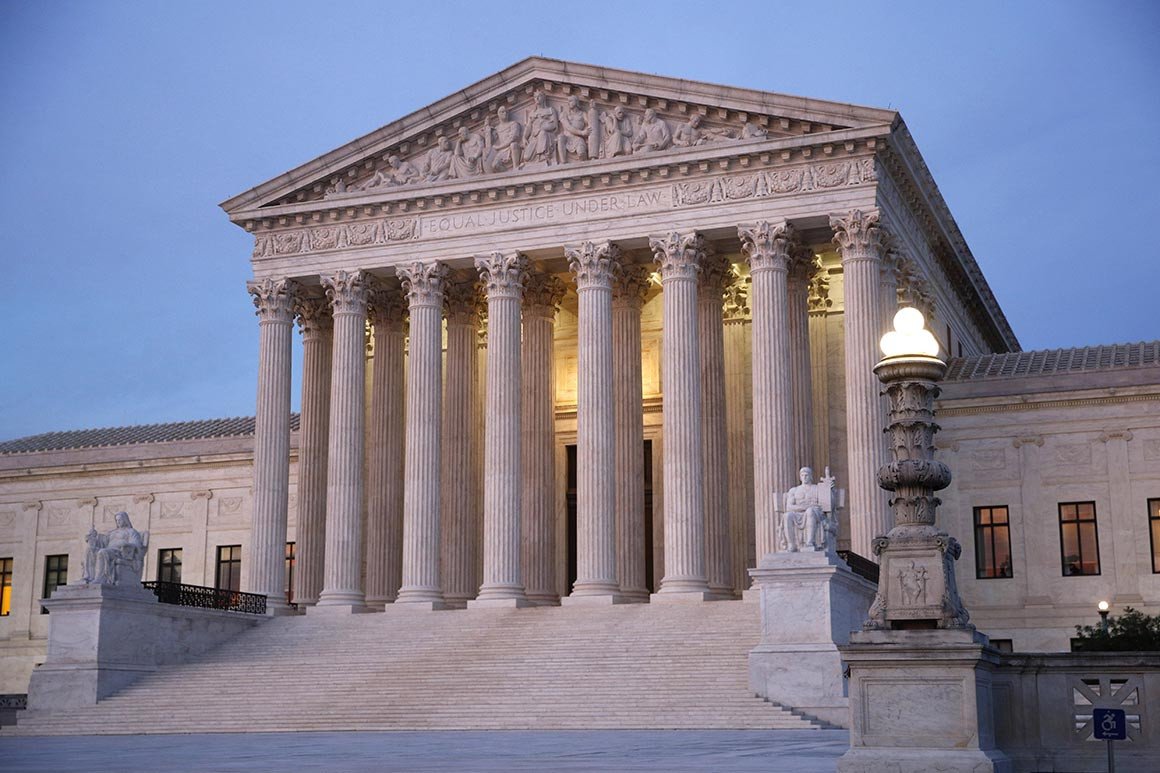
Supreme Court rules in favor of Trump's wealth test for green cards


The Supreme Court allowed the Trump administration to proceed with their implementation of a “wealth test” that denies green cards to legal immigrants predicted to be a “public charge” (in other words, immigrants who are likely to take advantage of public aid like Medicaid, food stamps, and housing vouchers, even if used only occasionally).

This new policy will hit many immigrants hard, with an estimated 42% of legal immigrants having their green card applications “weighed negatively” and 94% facing increased scrutiny after using at least one of the identified public benefits programs (Kaiser Family Foundation).

Personally, this policy seems misguided and inherently discriminatory. In the vein of civil rights, this violates many of the values that Americans hold close. Equality of opportunity, equality in treatment, and the right to government services are being withheld from low-income immigrants; many are now stuck between a rock and a hard place, forced to choose between health-care and food despite there being government services that legal immigrants should have access to. Before the Trump administration, an immigrant was considered a public charge only if most of their income came from state assistance or was a long term resident in a government-funded institution. This new definition of a public charge is over-inflated and would disproportionately target minority immigrants. Especially because many immigrants come to the US without many resources in pursuit of the romantic “American dream” or are seeking refuge from conflict in their home country, the “wealth test” would hold so many to an unreasonable standard. 

Politically, this also seems unwise; the Trump administration is focused on enforcing legal immigration, however this policy does nothing to encourage it. In raising additional roadblocks for legal immigrants, they are making the process more daunting for those attempting to immigrate under the law.

What’s your take on this policy? Do you think it should be implemented and how do you think it will affect the nature of US immigration as a whole?

Taal Volcano alert level lowers following eruptive activity and evacuations


Two weeks after Taal Volcano erupted in the Philippines, spewing toxic ash and smoke which overwhelmed the province in a blanket of grey, more than 376,000 residents have been cleared to return to their homes. Following the eruption, an evacuation zone had been enforced around Taal Volcano, with police and a security cordon blocking roads.

The evacuation came quickly, forcing residents to flee with no warning and cram into 257 evacuation sites, many of which lacked protective masks, medicine, and water. For most, fleeing meant losing everything, including the livestock and crops they depend on for their livelihood.

Earlier this week, the alert level at Taal Volcano lowered, enabling much of the evacuation area and thousands of residents to return home. The notice came with a caution that this "should not be interpreted that (the volcano's) unrest has ceased or that the threat of a hazardous eruption has disappeared."

With some of the mandatory evacuations lifted, tensions have eased, however this situation raises the question of the line between freedom and danger, loosely related to the ideas raised in Schenk v US where freedom of speech and national security clashed. What do you think? Should people have the freedom to decide to stay put even if it means putting themselves in peril?
Taking on a broader scope, the Taal Volcano situation is only one of many crises faced by those abroad over the past few months. With the rise of so many natural disasters, should foreign aid go higher on the US’s list of priorities?

Monday, January 27, 2020

Impeachment Trial Looming, Chief Justice Reflects on Judicial Independence

In this article, Chief Justice John G. Roberts Jr. prepares to presides the impeachment trial of President Trump. He issued remarks on the state of the federal judiciary that seemed to address to the president himself. Chief Justice John G. Roberts Jr. states, “We should reflect on our duty to judge without fear or favor, deciding each matter with humility, integrity and dispatch.As the new year begins, and we turn to the tasks before us, we should each resolve to do our best to maintain the public’s trust that we are faithfully discharging our solemn obligation to equal justice under law.” This reminds me of the judiciary justice lesson we discussed in class. As the judicial branch is under the Supreme Court, it is in charge of interpreting the laws of the Constitution. Since the US Constitution is so difficult, there are justices that are selected to the Supreme Court who help analyze and interpret the Constitution. These judges are appointed for life so their opinions would not sacrifice their position as justices. In addition to justices, the class also brushed over an independent judiciary. There have been slight debates whether an independent judiciary is fit for American democracy. Although some say that certain parts of the judiciary branch lacks accountability for representative democracy, the judicial branch is a way to balance the other more powerful branches. With that being said, what you do guys think about the impeachment trial so far? Or any opinions about the independent judiciary or the judicial branch itself? 

America just had its best month for new home construction in 13 years

Since December, construction rose nearly 17% as Americans are in the market to buy houses again. After the financial crisis, the US housing market continues to recover and improve by a healthy American economy. From the graph above, there has been a healthy increase in demand for homes last year. With mortgages rates that fell to multi-year lows over the summer rates are still favorable for the buyers and had inspired an increase in home-buying activity by the end of 2019. According to some analysts, they remain skeptical that America’s housing market will boom once again. According to Rupkey, he said, “Housing starts have been below housing permits lately so today’s figures look suspicious, meaning the good news cannot last.” I disagree with this statement. Looking at the graph above, you can see that there has been a steady increase in the data. Although I agree that at some point, the data will decrease I’m doubtful that’ll it’ll end soon. What do you guys predict? What do you think will happen to theAmerica’s housing market in one year? Two years? A decade?


Sunday, January 26, 2020

The Supreme Court Agrees to Hear Case Regarding Birth Control


The Supreme Court has decided to take up two cases regarding whether employers can opt out of providing birth control coverage for their workers due to religious or moral reasons. One of the cases was brought on by the Trump administration attempting to weaken the "contraceptive mandate," which is the part of the Affordable Care Act that requires employer-provided health insurance plans to cover birth control. The Trump administration has been attempting to broaden the exceptions to this Obamacare mandate on the basis of moral or religious grounds, allowing more businesses to seek exceptions. The states of Pennsylvania and New Jersey successfully challenged the Trump administration's attempts to create more exceptions and they were able to temporarily block the new rules created by the Trump administration, but the case has been brought to the Supreme Court on appeal. 

A second case regarding this "contraceptive mandate" has been brought to the Supreme Court by the Little Sisters of the Poor, a group of Catholic nuns who have spent years opposing Obamacare regulations in court. Both the Little Sisters of the Poor and the Trump administration believe that the requiring employers to provide health insurance that covers contraceptives violates laws allowing for freedom of religion. It will be interesting to see how the Supreme Court rules on these cases, as a similar case in 2014 allowed Hobby Lobby to be exempt from providing health insurance that covered birth control on the basis of their religious beliefs and Trump-appointed Supreme Court Justices Neil Gorsuch and Brett Kavanaugh will likely have a big impact on the decision of these cases. 

What do you think about these cases? To what extent should religion play a role in healthcare?


The Stock Market Growth in Wuhan, China

Link 
If you don’t know what the coronavirus is, it is a large group of viruses that are common among animals. The virus can make people sick, usually with a mild upper respiratory tract illness, similar to a common cold. It includes a runny nose, cough, sore throat, and headaches. As of now, it is unclear how deadly the coronavirus is but major outbreaks began in Wuhan, China. Because of the uncertainty of the virus, Chinese state media in the city of Wuhan are planning to suspend bus, subway, ferry, and long-distance passenger transport. In addition, Wuhan authorities state that residents should not leave the city unless it is under special circumstances to prevent the virus from spreading. I think that this is a good idea but I also believe that they should make the restrictions stricter mainly because we don’t know how deadly it is yet. The outbreak is not only affecting individual’s lifestyle and safety but the Chinese stock market as well. For the past two days, the stock of drugmakers and mask manufacturers have been surging. Because of this massive lineup at pharmacies and convenience stores to stock up on masks and antibacterial soaps, the prices of these items have been raised significantly. One citizen said, “I can’t afford masks anymore.” Personally, I do not think that these prices should go up because it’s putting more people in danger of getting sick. What do you guys think of this situation? Should authorities be more strict about transportation? Should the prices of these items go up?

Kobe Bryant Dies at 41

As most of us had heard by now, Kobe Bryant was one of the nine people who died in a helicopter crash in Calabasas, California. Inside the helicopter included his 13-year-old daughter Gianna. For me, the moment I woke up my social media was filled with this heart aching news. Kobe Bryant’s impact was felt as far as Japan, where he was the face of the American Red Cross campaign. The helicopter became well known as the LA Lakers great used to beat the LA traffic. The helicopter, a Sikorsky S-76, has a relatively safe record since 1977. Of course, this crash was a huge and devastating surprise for many. Minutes after the crash, hundreds stood outside the Staples Center mourning and grieving. The LA Mayor, Eric Garcetti, said in a news statement Sunday afternoon, “Kobe Bryant was a giant who inspired, amazed, and thrilled people everywhere with his incomparable skill on the court — and awed us with his intellect and humility as a father, husband, creative genius, and ambassador for the game he loved. He will live forever in the heart of Los Angeles, and will be remembered through the ages as one of our greatest heroes.” May those lives who passed away during the crash rest in peace now. This devasting news brought me thinking. Most of us have never even sparked a conversation with Kobe Byrant, yet this accident has impacted many people tremendously. Now, what if the same thing happens to your best compatriot or your mother? Therefore, I hope those who heard about this news can take a moment to appreciate those around them and seriously thank them for the things they have done. 

The WHO Delays Declaring the Coronavirus Outbreak a Global Health Emergency


With the Coronavirus rapidly spreading throughout the world, and already over 2,000 people known to be infected with the virus, it has become vital for countries to take more action to control the spread of this disease. However, the World Health Organization (WHO) continues to delay declaring the outbreak a global health emergency as most of the cases of infection are located in China. A few days ago, President Trump claimed that the US had the coronavirus "completely under control," and with 5 confirmed cases of infection in the US, the Center for Disease Control (CDC) maintains that there is no immediate health concern for Americans. 

But, with cases in a dozen countries and 56 confirmed deaths globally, I think that it is important that more action is taken to prevent the spread of the coronavirus. In the past, the World Health Organization has been criticized for being slow to react to outbreaks (such as the Ebola outbreak in 2014), so it is important that they declare this a global health emergency soon. While I understand wanting to limit the panic that would follow declaring the spread of coronavirus a global health emergency, doing so would enable numerous countries to coordinate their efforts to prevent what could possibly become the next pandemic. 

Do you think this outbreak should be declared a global health emergency?

Some people have suggested imposing a travel ban on China. How effective do you think this would be? What other measures could the US take to limit the spread of coronavirus? 

Thursday, January 23, 2020

Iranian Travelers were Stopped by US Border Officials at the Canadian Border


As tensions have risen between the U.S. and Iran over the past few weeks due to the killing of Iranian general Qasem Soleimani, many Iranian American travelers have been seemingly targeted by Customs and Border Protection officers throughout the country. At the Canadian border, a US border officer claims that they were told to stop travelers who were born in Iran, causing many American citizens of Iranian descent to be detained for up to 12 hours and extensively questioned. However, the U.S. Customs and Border Protection agency (CBP) claims that they did not issue a directive for officers to detain and question people of Iranian descent. 

While it is understandable that there would be additional security measures in place during times of heated tensions with other countries, I think that travelers, especially those who are US citizens, shouldn't be subjected to so much discrimination by border officials. In response to the detaining of many American citizens based solely on their country of birth, the National Iranian American Council filed a complaint with the Department of Homeland Security's Office for Civil Rights and Civil Liberties, which I think is completely justified given the difficult experiences that hundreds of Iranian Americans faced while entering the country. 

Who do you think is responsible for the detainment of these American citizens born in Iran? Are the border officers to blame or is the Customs and Border Protection agency responsible?

In times of high tensions, what measures should be taken to maintain security while also protecting the rights of citizens who are entering the country? What can be done to prevent incidents like this from occurring in the future?

Saturday, January 18, 2020

Paul Telegdy discusses the SNL Shane Gillis controversy

Image result for snl background
"NBC Boss on the Hiring and Firing By 'Saturday Night Live' of Comedian Shane Gillis Over Racial Slur Controversy" (Deadline)
"Can 'SNL' prevent another Shane Gillis-style firing? Vetting can be 'triggering,' NBC says" (USA Today)
SNL's Youtube Channel

If you don't already know, Saturday Night Live is a late-night television comedy show from New York that parodies contemporary culture and politics, as we've seen with the Schoolhouse Rock parody in class last semester. Celebrities come to host the shows and participate in comedy sketches, and many notable comedians have spent their time as part of the cast of SNL in the past, including figures like Tina Fey, Jimmy Fallon, and Will Ferrell. Last fall, SNL hired three new comedians to their cast, one of which was the first Asian-American SNL cast member, Bowen Yang. The same day Yang was cast, a 2018 Youtube video depicting Shane Gillis (one of the new members) using a racial slur against Asians surfaced, triggering several days of outcry from the public. Gillis was promptly fired.

NBC Chairman Paul Telegdy was recently asked about the scandal and now acknowledges the need to do better background checks on the performers' pasts. He also discussed the fine line/gray area between the right to free speech and what we should hold comedians accountable for. As a frequent viewer, there have also been times where I've wondered if some of the skits on SNL were going too far. SNL's political sketches are very entertaining (in my opinion), but I do think that at some point, there is a line comedians should not cross, especially in very controversial or touchy areas like race. It's nice if the company does background checks on the comedians, but it should ultimately be the comedians' responsibility to reflect and keep themselves in check.

On a more unrelated note, do you watch SNL? If so, what is/are your favorite sketch or sketches?

Thursday, January 16, 2020

Levi's/Google Smart Jacket: Is wearable technology the next generation of fashion?


So I was looking at clothes, and I stumbled upon this "smart jacket" made by Levi's and Google. It features a tab attached to the cuff of the sleeve that connects via bluetooth to your smartphone. Using simple gestures like double tapping your sleeve, you can hear notifications, answer calls, play music, take pictures on your phone's camera, etc. The first thing that went through my mind when I saw this jacket was, "Wow, this would make such a cool blog post on The Hitchhiker's Guide to National Affairs! It's totally not something you'd overhear in a conversation between two 30 year old men riding the Caltrain from San Francisco to Palo Alto, sporting cycling shoes and one pant leg practically (yet stylishly) rolled up so it remains dirt-free as they depart the train and cycle to the headquarters of their employments, as software engineers." 

In my humble opinion, there are real benefits of this jacket, such as being able to change music without taking out my phone. The police can't pull me over for hitting my jacket. Moreover, no one will notice as I whisper into my left jacket cuff, "hey google, what are the three branches of government" during the AP test. 

I'm not actually making fun of the smart jacket; it's an impressive technological development. I think it's the part of an impending and inevitable wave of wearable technology. Smart watches, smart glasses, it only make sense articles of clothing are next. 

Do you think "smart clothing" helps us disconnect from the online world, or only further traps us within its enthralling webs? In the near future, do you see yourself wearing smart clothing?

Individuals arrested for carrying firearm right before gun-rights rally

The Virginia governor, Ralph Northam, declared a temporary emergency on Wednesday, banning all weapons, from Capitol Square ahead of a massive rally planned next week over gun rights.
"FBI arrests three suspected neo-Nazis before Virginia gun-rights rally" (The Guardian)
"TSA finds record number of guns at airports in 2019" (NYT)

Three suspected members of a neo-Nazi group (known as The Base), who built a machine gun and hoped to start a U.S. race war, were arrested by the FBI and brought to court, ironically right before a planned gun-rights rally in Virginia. The three men, Brian Lemley, Patrik Matthews, and William Bilbrough, were accused of interstate commerce of weapons, harboring illegal aliens, an alien in possession of a firearm and ammunition, and aiding and abetting. The federal government has trouble bringing criminal terrorism charges on those affiliated with domestic extremist groups, however, due to the First Amendment's free speech clause.

In the past, the FBI and the Department of Homeland Security have been criticized for not turning enough attention towards dealing with far-right extremism, including attacks on synagogues and a 2017 white supremacist rally in Charlottesville, VA. Several thousand gun-rights supporters planned a rally in Richmond, VA, in response to the state legislature's movements towards strengthening gun laws. Past attacks, gun laws and the gun-rights rally, and the arrest of the three mentioned men have all become main areas of controversy in the long-standing debate around the right to bear arms. While the Constitution gives this right, the issue of safety is becoming more and more pressing as news stories of gun violence pile up.

After hearing news of shootings, gun violence, reading this article, and most recently an article about how the TSA found a record number of guns at checkpoints in airports (almost 90% of which were loaded), it seems that the debate should shift towards favoring the safety of Americans. Yet this would require a constitutional amendment, which, as we know, would be nearly impossible to accomplish in these times of strong political polarization. Is not the issue of safety more important than what political party your opponent identifies with?

Controversy over state funding of religious schools

Image result for espinoza v montana

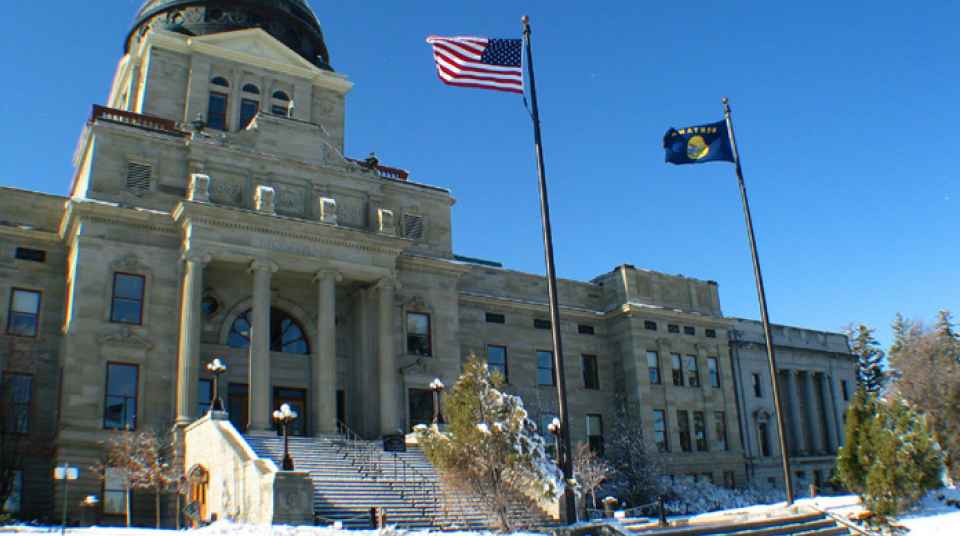
Espinoza v. Montana Department of Revenue, a case the Supreme Court is scheduled to hear in the next week, raises questions about how the Supreme Court should write its opinion on the matter. The case concerns the issue of whether or not states may subsidize secular private education without also giving financial support to religious education. The Court will most likely follow the decision made in one of its past cases, Trinity Lutheran Church v. Comer, a similar case that deemed denying public funds to churches unconstitutional. However, lawyers for the plaintiffs in Espinoza (parents who wish to keep their children in religious private school) argue that allowing the government to subsidize secular private schools and not religious ones could mean students would be forced to choose between attending a school that aligns with their beliefs or receiving thousands of dollars in financial aid. 

The issue with this case in terms of constitutionality is the how the Supreme Court should interpret the First Amendment. The First Amendment states that "Congress shall make no law respecting an establishment of religion, or prohibiting the free exercise thereof" but also includes the free exercise clause that limits the government from targeting religious people. This struggle with the interpretation of the Constitution is one of the many examples of cases that make it hard for the Supreme Court to practice judicial restraint. I would think a scenario where both clauses are fulfilled might just have the SCOTUS leave everything as is, but that would sacrifice potential financial aid to private school students, which could also be seen as a problem to some. 


Wednesday, January 15, 2020

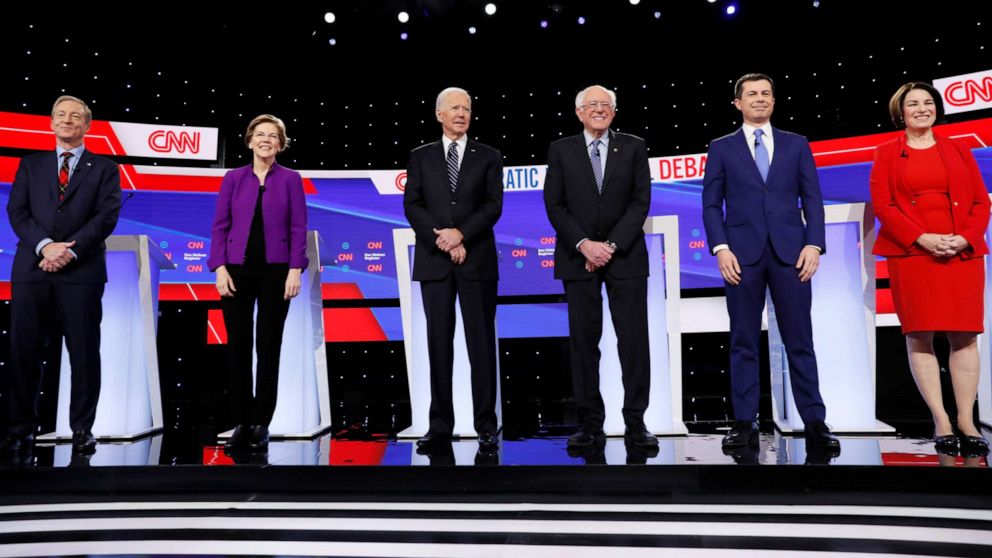
Warren brings up topic of gender at 2020 Democratic Debate

Image result for democratic debate
"Warren makes the case a woman has the best chance to beat Trump" (CNN)
"Warren and Klobuchar Teach the Boys a Lesson" (NYT)

Out of all the topics that surfaced during the 2020 Democratic Debate in Iowa yesterday, one of the highlights was Elizabeth Warren's statements about a female nominee's chances at defeating Trump in the upcoming election. "Can a woman beat Donald Trump?" Ever since Hillary Clinton's loss in the previous election, many Democratic supporters have been worried about the possibility of a repeat. However, Warren strongly showed her stance at the debate, making the case that a female nominee in the Democratic party actually has better chances of winning than a male nominee, citing her fellow (male) candidates' electoral losses as evidence. Amy Klobuchar, the only other female candidate on the stage, agreed with her as well.

From other's eyes, Warren's assertion was also seen as a response to Bernie Sanders' private comment that women couldn't win the presidency, an issue that was in the news days before. Though Sanders denied making the comment, Warren brushed it off, stating that she did want to fight over it. Instead, she focused on addressing the larger misconception she perceives among Democratic voters.

While it's heartwarming to see Warren and Klobuchar bringing this topic to the table and argue against the notion that a woman's presidential ambitions are unrealistic, I don't necessarily believe that a female nominee would definitely have a greater chance at winning than a male one. Rather, a candidate's campaigning strategy, popularity with the public (polls), policy goals, and other factors seem more trustworthy as tools to gauge a candidate's chances of success in the election.

Tuesday, January 14, 2020

Is transportation a basic need or a luxury? Massachusetts city pilots free public transportation.

 
"Should Public Transit Be Free? More Cities Say, Why Not?" by Ellen Barry, NYT
"Why Kansas City's Free Transit Experiment Matters", by Laura Bliss, CityLab

For some people who drive G Wagons to school, transportation is quite literally a luxury. But most people who work or go to school require some form of automobile transportation, which makes me think that transportation is a basic need, and public transit is a type of public goods. Some public goods are free to use, like highways and air, but some we pay for, like bridges and water. So should we have to pay for public transportation?

According to the article, supporters of free public transport claim it will help combat social and racial inequality. Furthermore, waiving public transit fees will likely lead to more people using public transit over private automobiles, which reduces carbon emissions.

Now comes the million dollar question: if consumers don't pay for public transit, who will? The city featured in the NYT article, Lawrence, MA, makes roughly $225,000 from bus fares-- a relatively small amount the mayor said he could make up for with the city's surplus cash reserves. Another option could include funding public transportation with philanthropy.

I think free public transportation is a good idea, but what are its limitations? If this idea gained momentum, would it leave the poorer cities behind? The program in Lawrence is a 2 year pilot, and Kansas City's free transit is described as an "experiment"-- do you think these trial runs are going to succeed and permanently waive public transit fees? Share your thoughts!

Sunday, January 12, 2020

Textbooks in Different States Reflect Ideology Divide


For anybody else out there wondering why the partisan divide in America is so strong and how it has continued to persist, look no further than your textbooks. In a study conducted by the New York Times, 8 sets of textbooks from California and Texas with the same authors and publishers display slightly different information than their counterpart on the other side of the divide.

In the picture shown above, the California textbook (left) tells a story about one of the challenges faced by immigrants adjusting to life in the U.S., whereas the Texas textbook (right) contains a narrative from a U.S. Border Patrol agent that explicitly discourages an open U.S.-Mexico border. California history textbooks tend to be longer because they spend more time talking about the experiences and contributions of different immigrant groups, such as Asians, Europeans, and Latin Americans. Differences like these can help ingrain partisan prejudices in people from an early age without them realizing why. The ideals and opinions of parents and peers likely matter more than minor differences in a textbook, but they would nevertheless make an impact on our ideas.

Why are the textbooks made differently? Different states have different “educational standards,” such as California placing importance on learning about minority groups. If the U.S. government really wanted to, they could probably impose stricter regulations on which textbooks are allowed and ensure that the “same” textbooks sold in different states are actually the same. Unfortunately, the subtle ideological differences presented in textbooks appear in Congress as well, and it is highly unlikely that liberals and conservatives will compromise on a book that somehow preserves both their interests.

I highly recommend checking out this article; it’s both important and relevant to students nationwide. Our class is probably an outlier from being influenced by our textbook differences, considering we do so much work that involves sources outside our textbooks, but we come from such a liberal area already that being “free” to develop our own opinions probably doesn’t change much.

Do you think increasing or decreasing the regulations on which textbooks are allowed to be taught would better eliminate differing ideological opinions that they can instill? Why?

How do you think students in different states (or maybe they’d all react the same, I don’t know) would react to learning that their textbooks influence their prejudices?

Is the Democratic Party too Diverse?


When discussing the diversity of the Democratic party I am not talking about racial diversity, but rather ideological diversity. In an interview with the Intelligencer, Alexandria Ocasio-Cortez (AOC), explains how “In any other country, Joe Biden and I would not be in the same party.” In her statement Cortez highlights the differences in viewpoints among moderate Democrats such as Joe Biden and far-left Democrats such as herself and Bernie Sanders. AOC believes she is unable to criticize the democratic party even though her beliefs differ from the Democratic establishment. She also believes that the title of Democrat has now served as an umbrella term for progressive, when in her opinion, not every Democrat fits the qualifications to label themselves a progressive. 

In an opinion piece on CNN, Froma Harrop makes the claim that AOC should run as Democratic Socialist in her run in 2020 if she is so displeased with the Democratic caucus. Harrop believes that with all her celebrity status and social media attention, she would be able to make this transition. Harrop makes the point that the leftist views of AOC do not account for the majority of the Democratic Caucus. When the Democrats claimed power in the House during the 2018 election, it was due to the surge of moderate Democrats who won swing districts, not on safe liberal districts such as that of Cortez. 

However, earlier in the year, in a press conference after meeting with AOC regarding impeachment proceedings, House Speaker, Nancy Pelosi, claimed that the Democratic Party is like a family, and like a family, people have their differences but are still a united family. Nevertheless, when AOC was asked about a Biden presidency she responded with a groaning “Oh God.” 

In Federalist 10, Madison advocated for a two party system to protect against factions. Do you believe that by staying in the Democratic caucus AOC is harming or benefiting her faction? Do you believe that AOC would be successful if she left the Democratic Party?

Democrats and Republicans clash on when the Supreme Court should rule on Obamacare

Demonstrators hold signs with messages like “Don’t Take My Care” and “Patients Over Politics.”
"Trump Administration wants the Supreme Court not to rule on Obamacare until after the 2020 election" by Katelyn Burns, Vox

Texas v. United States is the name of the case that's challenging the constitutionality of the Affordable Care Act (on a confoundingly trivial and pointless basis, in my opinion), and it's currently being appealed to the Supreme Court. What confused me was that Democrats wanted the Supreme Court to hear the case earlier, while the Republicans wanted this to be done after the 2020 elections. Why would the Democrats push for a case that could potentially nullify the Affordable Care Act, and conversely, why would Republicans want to delay this case? The answer, of course, lies in the context of the 2020 elections.

There are certain provisions in the ACA that are overwhelmingly popular, such as one that "lowers the costs of prescription drugs for those on Medicare" and one that prevents "insurance companies from denying coverage based on preexisting conditions" (Burns). The Democratic Party's strategy goes as so: if the Supreme Court rules in favor of the ACA, then Democrats can claim to be the party that saved healthcare; if the Supreme Court strikes down the ACA, then Democrats can blame Republicans for ruining healthcare. Republican congresspeople don't want this lose-lose case to affect their elections, which is why they want to postpone it.

This example illustrates how the judiciary is a legal and political institution. The "legal" portion involves the judicial review of the Affordable Care Act. We learned in class that which cases the Supreme Court takes is highly political. It turns out, the timing of a case, because it can affect elections, is another political factor.

This post leads me to one more conclusion about the judiciary: it's not truly independent. It's true that life terms and the power of judicial review sequester the branch, but the plethora of political influences make it so that the judiciary is not so isolated from partisan politics as we might want it to be.

Iran hostilities through a lens of Jacksonian foreign policy

President Trump’s eagerness to pardon war criminals and threaten war crimes is Jacksonianism at its worst.
"Andrew Jackson in the Persian Gulf" by Ross Douthat, NYT

This article stood out to me because it introduced a simple yet provocative way of analyzing various foreign policy philosophies (since my knowledge of foreign affairs is limited). In short, there exist certain Hamiltonian, Wilsonian, Jeffersonian, and Jacksonian tendencies when it comes to foreign policy. As you can infer from the names, Hamiltonianism refers to business-oriented motivations, and Wilsonian policy is characterized by idealism. These are the philosophies that prevail among political elites. However, most voters hold either a distinct Jeffersonian view that condemns international warfare as corrupt and unjust, or a Jacksonian impulse marked by nationalism and a preparedness for war.

As Douthat phrased it, the assassination Suleimani embodied the spirit of Jacksonianism: "the preference for a single act of vengeance over more ambitious forms of intervention, the belief in the hardest possible counterpunch, the dismissal of norms and rules and cautious habits that constrain the violence that America deals out." This spirit was what Trump campaigned on in 2016 and reflects the values of a portion of his voter-base.

The commander in chief's Jacksonian tendencies don't exist in a vacuum, however, and American policy in the Middle East is strongly influenced by lust for natural resources and will to spread democracy-- ambitions one might call Hamiltonian and Wilsonian, respectively. In practice, foreign policy is much too complicated to be accurately defined by only four viewpoints. What was meant to be a swift counterattack might have actually heightened and prolonged hostilities in Iran.

Friday, January 10, 2020

Facebook Refuses to Restrict Misleading Political Ads

Russian political ads

Despite backlash from Congress and other tech companies, Facebook has decided to continue allowing political ads that spread false information, citing that in the absence of proper blanket regulation over social media companies such as itself from Congress, it will stick with its existing policy of preferring free speech over stopping misinformation.

Restricting political ads on social media platforms is a controversial issue in Congress, with most Democrats supporting increased regulation of political slander and Republicans supporting allowing free speech, so not much has been done to change the legal status quo.

Tim Murtagh, a Trump spokesperson, claimed that unrestricted ads “encourages more Americans to be involved in the process” and limiting them in any way would “lead to voter suppression.” Instead, Facebook plans to improve transparency about who pays for the ads, and allow users to limit their exposure to political ads in general.

Twitter has already completely banned political ads of any kind, and Google has tightened its regulations on personalized ad profiles for users.

Facebook does have the valid concern that they aren’t able to properly police the vast number of ads with false information. However, I believe that even if they aren’t able to catch all the factually incorrect political ads out there, Facebook should at least do everything it can to stop advertisements that are objectively false, political or otherwise, which should dissuade other incorrect ads.

Viewing this controversy reminded me of the “freedom vs. equality” debate. Here, however, we have to decide whether the freedom of speech that we as Americans value so highly should extend to paid, false advertisements. I personally believe that advertising misinformation is bad enough to warrant limiting it, but the rest of the country may not share that opinion.

Which branch of government makes a decision about political ads (Congress could pass legislation, the president could influence Congress, or a court could allow or condemn Facebook’s conduct), which do you think it might be, and why?

Thursday, January 9, 2020

Trump Orders Assassination of Iranian General Soleimani

Image result for trump soleimani

On January 3, 2019, President Trump ordered the assassination of Qasem Soleimani, an Iranian general, by drone strike. The exact reasoning of this decision is unclear, but the Iranian attack on the U.S. embassy in Iraq and the *potential* — according to the White House administration, at least— threat of a future attack under the command of Soleimani. As commander in chief and under the Authorization for Use of Military Force Against Terrorists (AUMF), Trump can technically order this military action without Congress’ approval since his actions are not considered an actual war with Iran. By using drones, Trump can circumvent the War Powers Resolution regarding holding physical armed forces in Iran and continue the conflict without being restricted by the 60 day limit.

Trump may be using Soleimani’s assassination as a political move that diverts the press from news about impeachment and get them to move on to the next news cycle, but it seems to have backfired on him, as Republicans are condemnning the vague military briefing and the administration’s discouragement of debate on the topic, hostilities from Iran have increased, and the House has approved a resolution that should prevent the president from continuing to engage in military activity in Iran without Congressional approval.

When Trump ignores the House’s new War Powers Resolution, what can Congress do to ensure he is held responsible for both his military actions and attempts to ignore the checks and balances placed on the presidency?


Congress' Response to attack on Suleimani


I know another Trump Iran post, yipie! but the congressional response to President Trump’s actions is a particularly interesting, and important, facet of the issue that I believe should be debated on. 
Republican Senator Mike Lee from Utah called the briefing regarding the drone strike in Iran given on Wednesday by top Trump administration officials “probably the worst briefing [he’d] seen, at least on a military issue in the nine years [he’s] served in the United States’ Senate.” In a passionate address to the media, Lee illustrated that the briefers seemed to dodge questions regarding the legal and moral justification for the attack, claiming they were too classified to be discussed. 

On Thursday, the house voted in favor of a War Powers Resolution which calls to remove the president's power of using armed forces against Iran unless a declaration of war or a specific authorization has been passed by Congress, or if military actions in needed in an imminent attack. However, the resolution passed in the House is not binding, meaning the president is not forced to comply. While Speaker Pelosi and other House Democrats believe the resolution accomplishes the purpose of sending the President the message that he must first get the approval of Congress before any hostile foreign action, House Minority Leader Kevin McCarthy compared the power of resolution passed in the House to that of a New Years Resolution. 

As we have studied in the Executive Unit, the War Power Resolution used by President Trump has conditions: the president must notify Congress within 48 hours of the attack, armed forces can only remain for 60 days without approval, and 30 days are given for such removal. While President Trump did notify Congress within the permitted 48 hours, thus abiding by the law, the document given was found to be brief, lacking specifics, and classified in its entirety, preventing the public from viewing it’s contents. The briefing, as discussed earlier was seen as inadequate as well. 

Although President Trump did technically abide by the law, do you view his actions as justifiable? Do you believe there needs to be more done in Congress to address the War Powers Act? Or do you believe the Act is sufficient in protecting Presidential power while preventing tyranny?

President Trump Responds to Iranian Attack in Iraq


For those that don’t know already, last friday President Trump launched a drone strike killing Iranian general Qassim Suleimani. Suleimani was a prominent figure in the Iranian government, responsible for the death of many American troops but also extremely influential in the fight against ISIS in the middle east. On Tuesday, January 7, Iran retaliated with a ballistic missile attack on two US military bases in Iraq which according to US officials did not kill any American or Iraqi forces. 

The Iranian response led to President Trump’s televised speech on Wednesday the 8th in which he revealed he would back away from any further military actions, calling on NATO allies to become more involved in the turmoil in the middle east. Early in his term, Trump backed out of the Iranian Nuclear Deal signed by President Obama, claiming that it was too weak on Iran. Because the deal was an executive order, Trump was easily able to revoke the deal once in office. 
To me, the timing of the whole fiasco in Iran is particularly interesting. There seems to be little evidence revealing the necessity for Suleimani...but that is a whole other blog post in itself. My questions right now fall along the lines of why Trump decided that at this moment, a time where he has just been impeached in the House, when he is on the verge of a re-election campaign later in the year, to take the politically risky move of removing a prominent military official of a US adversary. 

Is it possible that this whole ordeal was simply to distract from his impeachment proceeding in congress? Or was it a political move for the upcoming election? What is your opinion? What do you believe the motives behind the Sulimani attack were?