Saturday, November 7, 2015

Chicago School District 211 Deprives Transgender Student

On Monday, Chicago School District 211 was blamed by the U.S Department of Education for violating the rights of a transgender student. The girl, who chooses to remain anonymous, wishes to have unlimited access to the girls locker room, but the school isn't allowing this to happen. The school believes that by allowing her unlimited access in the girls locker room, other students may start to feel uncomfortable. They made a proposal and told her that she could shower and change in the locker room, but it would have to be in a private area. The girl’s family didn't feel like that was good enough, and consequently through the help of the American Civil Liberties Union, filed a federal complaint against Illinois Palatine Township School District 211.

To the girls success, Catherine Lhamon, who's the Education Department's Assistant Secretary for Civil Rights, declared that, "All students deserve the opportunity to participate equally in school programs and activities — this is a basic civil right" (Source). She continues by saying that the Township High School District 211 is not following the law because in July the U.S Justice Department ruled that “transgender students must be allowed to use the restroom that corresponds with their gender and that failure of doing this violates the Title IX of the U.S. Education Amendments of 1972” (Source). As a result, the District is being forced to allow the girl to have unlimited access as she pleased.

District 211 doesn't want to change its ways and they believe that “what they offer is reasonable and honors every student's dignity" (Source). However, the Education Department doesn’t care what the District believes in and is forcing them to grant the girl her rights within the next 30 days, or it will risk losing millions in federal funding. If they actually take away the school’s funding, it’s going to hurt the rest of the students. Do you think that is justified? Also, do you think that giving the girl full access in the locker rooms is a basic civil right, or a civil liberty that should only be granted only under certain circumstances? 

(Photo)

Friday, November 6, 2015

Hobby Lobby 2.0?

Protest as a result of last year's Court decision.

Earlier today, the Supreme Court decided to hear another case related to religious organizations and birth control. Clearly, this is relevant to the case we discussed in class Burwell v. Hobby Lobby from 2014. The Court agreed to hear seven different appeals cases from lower courts, in which there were conflicting decisions. They will be consolidated, and probably referred to as Zubik v. Burwell.

As you probably recall, as a result of the Hobby Lobby decision, religious organizations must provide proof of their religious beliefs in a letter or by filling out a form. However, some religious groups are arguing that even the requirement to fill out that form is a violation of their religious rights, because they are still implicitly allowing employees to receive birth control through a third party.

The Court has requested a combined brief from the lawyers of all seven cases. This case is likely to be heard around March of next year and decided by June. Do you think that these new cases present a valid argument? Do you think that the Court will decide this case similarly to Hobby Lobby from just last year?

Sources:
Photo
Washington PostNY TimesHuffington Post

Thursday, November 5, 2015

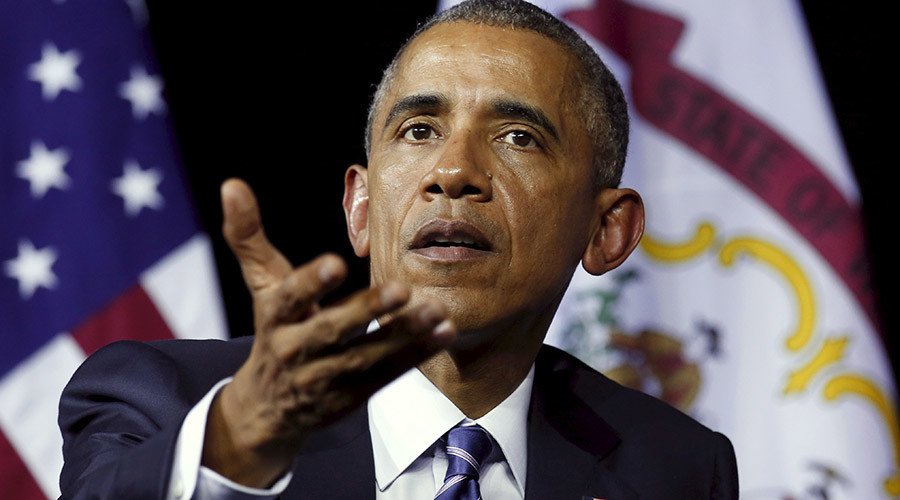
Obama’s New Trade Deal on The Fast Track

With Obama’s second term coming to an end, Obama tries to pass the 12-nation Pacific Rim Free Trade pact that has been in negotiations behind closed doors for over five years. The nations included are U.S (obviously), Australia, Brunei Darussalam, Canada, Chile, Japan, Malaysia, Mexico, New Zealand, Peru, Singapore, and Vietnam and together they make up over 40% of the world’s global GDP. This pact (if it gets passed) is the highest-standard trade agreement in history. This trade deal has now been fully released to the public in hopes that the official agreement will persuade those who oppose it. People who oppose it range from Ford Motors to environmental groups and labor unions, and still do even after the release. Automobile manufactures oppose the TPP because it does not address currency manipulation, this can hurt American car companies because it enables countries like Japan to keep their cars at artificially low prices. Pharmaceutical companies complain because the deal only protects biomedical property for 8 years while in the U.S it is usually 12 years. Tobacco companies under this pact will have a harder time challenging anti-smoking campaigns abroad which can then hurt their sales. Environmental groups are opposing because it (under ISDS) allows multinational corporations and investors to bring cases against foreign governments over environmental, public health and other regulations (if they find that those rules cut into their profits) before international arbitration panels instead of U.S. courts. Leo Gerard (who is president of the United Steelworkers) stated that “the devil is in the details [of the TPP]” and that “[the TPP is] a knife in the heart of manufacturing”. However Obama states that “if you take a look at what’s actually in the TPP, you will see that this is, in fact, a new type of trade deal that puts American workers first”. The centerpiece is 18,000 tariff reductions on the U.S. These tariff reductions are on beef, pork, dairy, automobiles, and apparel which would open new markets for American exporters. However some of these tariffs would not be reduced immediately, they would be phased over several years. This pact also strives to extend copyright protections for high tech companies (such as Hollywood and Silicon Valley Internet firms). This part of the pact has the Motion Picture Association of America raving.
Obama has already formally notified Congress that he intends on signing the agreement, however he has to wait 90 days under the terms of the “fast track” trade powers. The “fast track” trade power gives Obama the authority to have the deal considered without the threat of amendments or filibusters.

Sources:
Questions:
Do you think the benefits of this pact are worth its potential downfalls? Why or why not?
Do you think this pact will get passed in time? Or do you think it will fall into the hands of whoever becomes the new president?
Do you think Obama is trying to pass this pact to leave behind a legacy for his presidency or do you think he is doing this because he believes this is truly best for the American people?


Wednesday, November 4, 2015

Fox Lake Police Officer Fakes Homicide


Joe Gliniewicz, a police officer who initially appeared to be a martyr under the Fox Lake police department, is now viewed as a betrayer. On September 1st, Joe Gliniewicz was reported dead when his body was found severely wounded at a corn field. During the alleged crime, Joe Gliniewicz was shot twice, once on his bulletproof vest (which protected him) and another time around his torso. The dilemma, however, was that it wasn't very clear who pulled the trigger, due to the fact that the only piece of evidence found at the crime scene was his gun. Not only that, but a source in the investigation said that it wasn't clear who actually fired the gun. Additionally, after 150 investigators spent 25 hours looking into the case, they couldn't find any trace of a plausible killer. As a result, there was a possibility that what appeared to be a homicide, might actually have been a self-inflicted death.

After further investigation, investigators recently found out that Joe had been participating in money laundering and had been stealing money from a police department program that helped kids become law enforcement officers. Joe had stolen up to 50,000 dollars and was using the money on "personal expenses, including mortgage payments, gym memberships, vacations and adult websites" (Source). Joe, however, finally decided to kill himself when he hit problems with new management that scrutinized his Explorers fund. He expresses in a text to an anonymous individual, "If she gets ahold of the old checking account, I'm pretty well f***ed" (Source). As a result, George Filenko, Lake County Major Crimes Task Force commander, could confidently say on Wednesday that, “George did alter the placement of his equipment at the scene in attempt to mislead first responders and investigators to believe this was a homicide" (Source).

Lake County Coroner Dr. Thomas Rudd said that, "I think he knew there was the possibility of incarceration and his view in the community would be greatly diminished" (Source). Joe was not only trying to protect his reputation, but his family's reputation as well. Do you think that Joe's decision to fake his death was justified in order to protect his reputation and along with his family’s reputation? People who invested money in the program that Joe stole from want their money back. Do you believe they are entitled to the stolen money they had invested? Should there be some form of compensation? What do you think?!

Picture - (Photo)

Tuesday, November 3, 2015

Man Bombs Walmart for not Selling Mississippi State Flags

Early this Sunday, Marshall E. Leonard of Tupelo in Mississippi was arrested. Leonard was accused of bombing a Walmart, because it stopped selling the Mississippi State flag, in which the Confederate flag is clearly seen in the upper left corner. This man was noted to fly a four-foot version of the flag from his car and is know to be a strong supporter of it. Thankfully, the bomb only succeeded in creating a loud noise and did not cause any injuries or significant damage to the store.
Mississippi State flag.

This event raises the ever so prevalent questions surrounding the Confederate flag, and whether or not it should (or is it legal to) be banned in the United States, since to many people, it carries an underlying meaning of racism.

Since we are discussing Supreme Court cases in class, I thought it would be helpful to discuss relevant cases.

In the Supreme Court case Walker v. Texas Division, Sons of Confederate Veterans from June of this year, the Supreme Court decided in a 5-4 decision that the State of Texas is allowed to refuse to offer a Confederate flag license plate theme.
This case considered two questions:
1. Do specialty license plates constitute government speech that is immune from any requirement of viewpoint neutrality?
2. Does preventing the confederate flag from appearing on license plates constitute viewpoint discrimination?

The majority opinion argued that license plates represent government speech, not personal speech because of its strong association with government. Therefore, if Texas chooses to not offer these license plates, it is not violating First Amendment rights to free speech since it is not suppressing the free speech of the individual but rather portraying the viewpoint of the government. This conclusion was reached using the Pleasant Grove City v. Summum case as a precedent. This case, decided in 2009, was relevant because it answered the question, "Does a city's refusal to place a religious organization's monument in a public park violate that organization's First Amendment free speech rights when the park already contains a monument from a different religious group?" The Court unanimously decided that placing a monument in a public park is a reflection of government and its speech.

Going back to the Confederate flag issue, Justice Alito disagreed with the majority. He argued that "Suppose you sat by the side of a Texas highway and studied the license plates on the vehicles passing by... If a car with a plate that says "Rather Be Golfing" passed by at 8:30 am on a Monday morning, would you think: "This is the official policy of the State-- Better to golf than to work?"

Obviously, there is no clear cut answer to this question of free speech and what exactly "free speech" even constitutes. Does the First Amendment apply to the Confederate flag? Does the government have the right to limit or prohibit the exhibition of this flag? What do you think?

Sources:
Bombing: Washington PostCBS News
Walker v. Texas Division, Sons of Confederate Veterans: OyezEconomist
Pleasant Grove City v. Summum: Oyez
Photo

Russian Plane Crashed in Egypt

Over the weekend, a Russian aircraft crashed in the Sinai Peninsula in Egypt. This crash killed all 224 passengers who were Russian tourists. Due to the tensions between Russia and Islamic State (There is tension because Russia is one of the major supporters (the other being Iran) of President Assad and the Islamic State wants him to step down), it is unsure of how exactly the plane crashed. While a U.S Defense Official with access to the latest intelligence on the investigation into the crash says that an explosion definitely did take place and that it is unlikely that it was a terrorist attack, but they cannot rule anything out yet. (http://www.foxnews.com/world/2015/11/03/pentagon-official-says-there-is-no-way-russian-airliner-was-shot-down/). However there is speculation as to the cause of that explosion, whether it was a plane malfunction, pilot error, or a missile/bomb attack.  Another source leans towards the fact that the crash was due to terrorism. Spokesman Mohamed Rahmi confirmed that no distress call was ever received from the plane before the crash. This source then leads the reader to believe that since there was no distress call, and that the plane went because of a terrorist attack. Also in this source they talk about how a Sinai-based Egyptian militant group allied to the Islamic State claimed on Saturday to have shot down the plane in response to Russia's military intervention in Syria in support of President Bashar al-Assad against rebels including Islamic State. However, the militants are not believed to have missiles capable of hitting a plane at 30,000 feet, and that there is no evidence to suggests that the plane had been struck from the outside. (http://news.yahoo.com/no-proof-plane-broke-mid-air-egyptian-authorities-135259166--finance.html).  Since this is still an open investigation, we do not yet know exactly what has happened.
Questions to consider:
·         What do you think is the reason why the plane crashed?
·         How do you think Russia will react? Do you think they will?
·         Do you think it is any of Russia’s business to support President Assad? Why or why not?

·         Do you think that President Assad would have stepped down by now if he did not have the support from Russia and Iran? Why or why not?


Monday, November 2, 2015

First Openly Transgender Cheerleader


This past week, news stories have erupted of Anry Feuntes, a 19 year old student at Denair High School in California and the first transgender cheerleader. Anry, formerly known as Henry, was kicked out of her house when she came out to her parents but has been receiving enormous amounts of support from her school and community. She stated: "I've gone to school here since the second grade, and most of the girls on the squad have been here their whole lives, too....So it's kind of hard, like 'Oh Henry'' (Source). Feuntes also stated that "It's so much harder to hide than to come out and be yourself" (source).
However, other schools have not been as progressive as Denair. For example, Gavin Grimm; a transgender student in Virginia, sued his school because of policies requiring him to either use a uni-sex bathroom or the girl's bathroom. (source). We live in a considerably liberal and accepting area in California, conveyed in Denair's district superintendent's response; "all kids are entitled to equal access to public education" (source). Do you think that Feuntes will be able to inspire change in the attitudes towards transponders? Many minorities have gotten their legal rights (women, gay/lesbians, african americans) through determination and gained support, are people like Feuntes (Cailtyn Jenner?) a large part of progression for transgender rights?

Photos-nydailynews


Obama Continues His Crusade In Criminal Justice Reform

Obama, as well has supporting Black Lives Matter and confronting drug issues, has been resuming his reforms on criminal justice. He stated in multiple weekly addresses ( 1video and 2video) that much of citizen's taxes go to unfairly jailing non-violent criminals (8 billion). He wants to create more programs to help shorten the sentences of non-violent criminals and give them a chance to re-pay their communities. In the past 25 years it has been reported that the population in jails has increased significantly ("all time high") (source). Many of these offenders also go back to their old habits after serving their time in jail. Obama wants a "smarter, fairer criminal justice system" in which offenders are given better opportunities (source). He has been reported stating that "too often the punishment doesn't fit the crime" of the offender and it wastes valuable tax payer money (video).
Obama has been specifically focusing on drug dealers and users in this crusade. He spoke at NAACP of his major concern in his "race agenda;" jailing/sentencing (relating to his public support of Black Lives Matter and his concern on drug use) (video). Obama stated that offenders of low-level crimes owe debt to the communities but should not have to give up 20 years of their lives (video).
Will this be effective in both punishing and helping lower level offenders?
Is integrating offenders (non-violent) into society (sooner than before) safe? Or does it depend on the case?

Photo- source

Sunday, November 1, 2015

Student Scores Drop in National Test

For the first time since the federal government began administering national tests in 1990, mathematics scores declined for both fourth and eighth graders. This test, called the National Assessment of Educational Progress (NAEP), measures student achievement from some students around the nation- it is the only test of its kind that is given nationwide. The cause of this drop cannot be pinpointed, but these results raise questions about both the changes in our educational system and the validity of the NAEP itself.

There are many current changes in America's public education system. Demographic shifts are occurring, in which there are more students from low-income families and students learning how to speak English. The NAEP test results also continue to reveal the varying performance of children of different ethnicities, communities, and family income.

Some have also attributed this drop in scores to the implementation of Common Core, an initiative that attempts to establish consistent educational standards across the US and prepare students for college or the workforce (plus you probably encountered some of this standardized testing in the past year). 42 states adopted Common Core Standards with the incentive of qualifying for a Race to the Top grant in 2009, announced by President Obama and Secretary of Education Arne Duncan. Opponents to Common Core and NAEP argue that the Common Core curriculum and the exam do not line up, and that the inconvenient shift in curriculum is causing the drop in scores as well.

Others simply criticize the NAEP itself, claiming that its standard of "proficiency" is too high, and the test cannot adequately measure the ability of a student to be successful.

Do you think that the drop in the scores is cause for concern? Does more need to be done to fix our education system? Does testing like this provide much benefit, or is it just an ineffective use of time for students?
What role does Common Core play in this? What role should the federal government play in this, or is it up to the states?

Sources:
The Washington PostAljazeeraUS News (photo from here)


Obama Announces Plan to Address Drug Abuse

This past weekend, President Obama traveled to Charleston, West Virginia to hear the stories of individuals and families affected by the drug abuse epidemic. Obama also heard from health care professionals, community leaders, and law enforcement officers on stage at a community center about how to prevent addiction and respond to it afterwards. According to a report by the Robert Wood Johnson Foundation, the rate of overdose deaths in West Virginia is the highest in the nation- over twice the national average (Source).

The President issued a Memorandum to Federal Departments and Agencies, which outlined the two important steps of training health care professionals who prescribe controlled substances and making treatment more accessible. Obama hopes to see Congress appropriate $133 million toward this treatment program, and he has emphasized how he does not want this to be a partisan issue, but that hope is not guaranteed. He also "told the Centers for Disease Control and Prevention to invest $8.5 billion in opiate addition prevention" (Source). Medical provider groups and companies like Google, CBS, Major League Baseball have agreed to all donate millions of dollars toward PSAs about prescription drug abuse.

Obama's plan represents a broader shift in how Americans see addicts; that addicts should be helped rather than punished. However, not everyone shares this mindset and may not want $133 million appropriated to fight this issue. Clearly, the President has a crucial role in setting national priorities of issues to address, and has the informal power to get major companies to back this issue of drug abuse, but it is all up to Congress to decide what money should be directed toward this issue.

What do you think about Obama's plan? Is it a step in the right direction, or are there other methods or issues that should be touched on? What do you think should be done to combat the issue of drug abuse? Do you think that Congress will be able to successfully appropriate funds to this issue?

Sources:
AljazeeraThe White HouseThe Washington Post

Saturday, October 31, 2015

The Politics of Daylight Saving

In the midst of our busy lives, gaining an extra hour on the weekend with the end of daylight saving time (DST) is always a huge relief. This year, some see it as an extra hour of Halloween (yes!). On the other hand, losing an hour when saving time starts can be fairly frustrating. However, the costs and benefits of daylight saving extends beyond just gaining and losing an hour. 

On a local level, many businesses must continue to operate the extra hour, but employees are not paid for this extra time. Others say that, for some jobs like being a waiter or waitress, it is a helpful extra hour to gain tips on a busy night (Source). In addition, when it's more light out, then people are more likely to stay out and spend money. This is why many businesses support DST- more time to gain business and money. 

On the state level, fourteen state legislatures have debated bills to stop daylight saving time last year. Currently, both Arizona and Hawaii do not practice daylight saving time. Proponents of such bills argue that the time switch simply confuses the public. In addition, it can cause disconnect between different states and time zones. Most of the time, these bills are shut down by state chambers of commerce, as businesses are often helped by DST. 

People who argue for the continuation of daylight saving time, besides businesses, argue that DST reduces crime rates, since when it's light out, people are less likely to commit crimes.  Other claimed social benefits are that, when adults spend more time awake when it is light out, people are generally happier, and there are fewer car accidents. All of these contribute to economic benefits as well, since less state money is spent with lower crime rates. 

Daylight saving time was signed into federal law by Woodrow Wilson during WWI, in order to save fuel by reducing energy usage as it is light out for later under DST. However, the idea was unpopular and Congress abolished it and even managed to override Wilson's veto. DST was reintroduced during WWII and generally remained afterward as a state option. 

Is daylight saving too much of a hassle? Do you think the benefits of daylight saving time outweigh the costs? Or vice versa? Is the continuation of DST mostly due to support from businesses? 
Should implementing daylight saving time continue to be a state level decision, or should it be required under federal law to maintain consistency between states?

Don't forget to turn back your clocks tomorrow, and Happy Halloween! 

Opinion: ProCon

Thursday, October 29, 2015

Alena Mulhern For President 2040

Alena Mulhern, a 10 year old from Kingston, wants to run for president as an adult. Her mother, Barbara Mulhern, reports saying "unfortunately that's the only thing you can't be" when Alena informed her of this goal (video/source). This is because the constitution states that the President must be a natural-born citizen of the United States. She was adopted from China when she was 10 months old.
Alena, feeling that this is an unfair rule, took her proposal for an amendment to the constitution (regarding the presidency's qualifications to include foreign-born and adopted citizens (specifically children) -source) to a Massachusetts state house committee where she testified for her cause. She states "I would be a great leader and bring people together......I love my country. I want to serve my country, and this is my country" (quote source) and to "just think of all the great candidates that would not be able to serve our country because of a law that came into existence more than 200 years ago" (sourced from video in above paragraph).
>Is her goal to amend this qualification realistic?
>A lot of the Constitution can be argued as out-dated, is this out-dated? What was the Framer's intent in making this qualification for the Presidency? What could happen if this was amended? Would it be better if they had to be adopted as children under a certain age in order to be considered?
>Is patriotism an important quality for a President (Is it important enough to continue Mulhern's crusade- as this her love for her country is one of her main arguments for presidency)
>Does Mulhern's young age play a part in this? (toleration in committee) Would this be taken seriously if it reached higher government institutions?


Photo- still from news video (source)

Paul Ryan Elected as House Speaker

On October 29, Republican Paul Ryan was elected as Speaker of the House. Republicans mostly all united behind Ryan as he gained 236 votes on the floor, 184 to minority leader Nancy Pelosi, and only 9 to Daniel Webster, the choice of the most conservative House Republicans. Lately, the House, and especially Republicans, has been through lots of events and turmoil, with Boehner's resignation, McCarthy, the previous expected Speaker, dropping out of the race, and a recent passing of a bill for the huge Bipartisan Budget Act of 2015 through the House just a day before the vote. Articles claim that many members were seeking an end to infighting within House GOP, so were more willing to unite behind Ryan (Source).

Ryan was the chairman of the Ways and Means Committee, the powerful committee that writes bills for taxes. He was elected to the House as a representative from Wisconsin in 1999, and was Mitt Romney's running mate in the 2012 presidential election. Allegedly, he repeatedly refused to be nominated for Speaker until McCarthy dropped out from the race and after gaining support from the House Freedom Caucus, a strong conservative group (Source).

Do you think Ryan will be able to better unite House GOP members after extensive conflict? Or will he face issues similar to those Boehner faced, being unable to satisfy both the more conservative Tea Party members and the more moderate members? Was Ryan a good choice, or did House members simply settle for this decision, tired of all the conflict and looking for a fresh start? Ideally, what do you think Ryan should do to be a good Speaker?

Sources:
CNNChicago TribuneNBC v. Fox (comparisons!)

Wednesday, October 28, 2015

House Republicans Move to Impeach IRS Commissioner

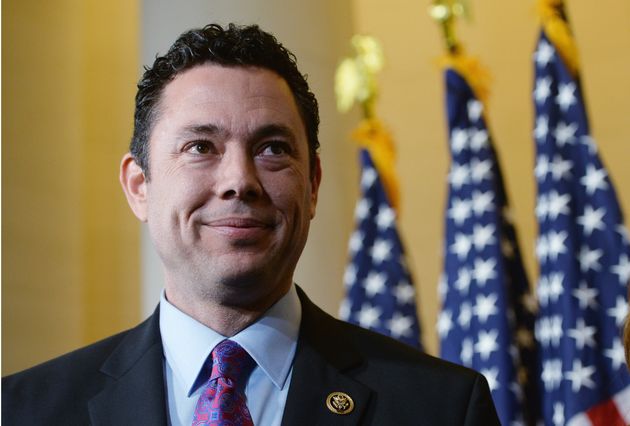
Rep. Jason Chaffetz 
House Republican Jason Chaffetz, the chairman of the House Oversight and Government Reform Committee, introduced a resolution to begin impeachment proceedings against Internal Revenue Service (IRS) Commissioner John Koskinen, on Tuesday, October 27. Chaffetz was joined by 18 other Republicans in the committee, and they accused Koskinen of failure to comply with a congressional subpoena (writ to attend court) and allowing evidence in the form of emails to be destroyed and not notifying Congress, as well as misleading the public. The resolution now goes to the House Judiciary Committee.

This bid came only a few days after the Justice Department ruled that no IRS official would be charged for accusations of bias against conservative groups. Allegedly, this bias made it harder for conservative groups to be tax-exempt, and these accusations angered Republican Congressmen. This decision ended the Oversight Committee's two-year investigation, as the Justice Department said they found no evidence suggesting that any IRS official acted in a discriminatory or political way that would justify criminal prosecution.

Do you think that introducing this impeachment resolution is justified? Chaffetz claims that this will help restore public confidence in the IRS—is this worth all the time and taxpayer money? How much of the motivation behind this was a partisan attack, as opposed to restoring the confidence of the American people? And, after the Justice Department ruling, is there enough evidence to back this impeachment?

Sources: Huffington Post, Washington Post
Blog Read: AJC

Tuesday, October 27, 2015

Social Media And Its Role In Exposure of Police

In recent years, social media has become a popular medium for news to spread. There has been a large number of posted stories and videos of various violent situations between White police officers and African American citizens. Shootings have occurred during some of these altercations, outraging the victims' families as well as Americans across the country. For example, "The deaths of Michael Brown, Eric Garner, Walter Scott, and Freddie Gray are -some claim- evidence of long-standing problems with the police racism and excessive violence" (source). Viral videos have become a major part of the exposure of these stories to the public. Recently, while looking on Facebook I came across a link to this video: https://www.youtube.com/watch?v=KjSY0EoWSVc which shows a young African American boy being arrested for supposedly jay walking and disregarding the police's orders. Throughout the video a woman shouts 'he's just a kid' repeatedly. Eventually, nine police officers enter the scope of the video as they arrest him and put him in the back of a police car. This was just one example, as more of these videos have begun to surface (link to a list of videos). 

The most recent incident occurred this week in a South Carolina high school, Spring Valley High, when Ben Fields, a  sheriff's deputy named cop of the year and an assistant coach at the high school who has had previous violations regarding citizen's free speech and excessive force, flipped an African American girl out of her desk and arrested her. It was reported that she was using her phone, was asked to put it away several times, called into the office, and refused to move or leave the room; leading the administration to involve Officer Fields. In the video, the girl hits the officer with her fist but was reported to not have any weapon nor threatened his life. He continues to flip her and arrests her on the ground in the front of the class. The FBI and Department of Justice are getting involved and Fields has been suspended without pay. Field's Sheriff, Leon Lott, disregarded the matter of race and stated that Fields has an African American girlfriend (source). However, many are still suspicious of Fields' motives. The girl who was flipped has been arrested as well as her classmate, Niya Kenny, who tried to "stand up" to the officer, cursing at him as he arrested the girl (source).  New York Magazine called it "the latest in a depressing series of filmed violent encounters between cops and black teens" (source). There is even a hash tag trending titled "#AssaultAtSpringValleyHigh" (hashtag).  Three different videos of this incident have surfaced on social media, expanding its audience across social media platforms. This large audience creates a strong debate setting in the comment sections of the videos. Some have argued that police should take any measures necessary in order to arrest (source) while others believe he did not have a strong enough incentive to use such force (source). What do you think?

>Do you think that social media is a positive reinforcement to spreading news stories across America?
>Some have argued that the media ignores cases where there are altercations between African American cops and white citizens. Has social media created a focus on cases with white cops and African American cops?
>Does the media ignore the special circumstances of each case and generalize? Or do they generalize because each case has created a similar outcome?
>How effective is social media vs specialized news outlets in providing the full story?

Left: Portraitt of Brian Fields 

Right: Still from one of the viral videos posted online

Sunday, October 25, 2015

Veterans and Suicide

Since the world wars when medicine and protective gear had started improving more soldiers have been sent home alive, but with heavy consequences of war. PTSD is especially high in soldiers and in some cases like that of the Seventh Marine Regiment so are suicide rates. Due to losing 20 men in combat since 2008 it has lost over 13 more to suicide and has an average suicide rate 14 times that of the average American.

Although the argument remains that "the risk was known", and they "have a chance to come home" it is not that simple. I am not calling for an immediate end of all wars (which would be nice but unrealistic). Yet I would hope that with numbers these high there be some type of safeguard or reforms to help combat this soldiers epidemic. Furthermore many times the military is romanticized to young men and women who wish to be "army strong" and do not realize how deeply it could change their outlook on the world to loose an arm, leg, friends, or who do not know the risks of mental illness among soldiers.

With Veterans Day approaching I would like to call attention to the hardships our US soldiers go through and I would like to ask what type of reforms do you think could help this problem? Also I ask for a moment of silence for those who have fallen protecting us or those who have fallen to mental illness due to their involvement in the military.

Saturday, October 24, 2015

Supreme Court to hear teachers union case

In early 2016, the US Supreme Court will hear the Friedrichs v. the California Teachers Association et al. case, a lawsuit that challenges the authority of the CTA and public-employee unions to collect mandatory "agency" fees. The Supreme Court will be ruling on whether Abood v. Detroit Board Education should be overruled and public-sector "agency" fees be invalidated under the First Amendment, and on whether it violates the First Amendment to require public employees to affirmatively object, rather than affirmatively consent, to subsidizing public-sector union speech (source).

In 1977, the Supreme Court ruled that it was legal in the public sector for unions to charge fees for "collective bargaining, contract administration, and grievance adjustment purposes" in the case Abood v. Detroit Board of Education (source).  The plaintiffs of Friedrichs v. CTA are hoping that the court overturns the Abood decision.

Friedrichs and the other plaintiffs argue that the agency fees violate their First Amendment rights because the CTA bargaining is "inherently political," and the CTA could be bargaining issues that certain teachers in the union don't agree with. According to the Center for Individual Rights, which represents the plaintiffs, "the union's negotiating positions embody political choices that are often controversial."

The defendants, the CTA and the state of California, argue that the state as an employer is well served to convey the views of workers and that loss of money from those who benefit from negotiations would threaten the union's ability to effectively represent employees (source).


This ties into our current unit on the judiciary system. Is it constitutional for the Supreme Court to reverse a prior decision? Disregarding constitutionality, is it morally right or wrong for the Supreme Court to reverse prior decisions? To what extent would the Supreme Court's ruling on this case be political vs legal?

Hillary Clinton in 11 hour Benghazi hearing

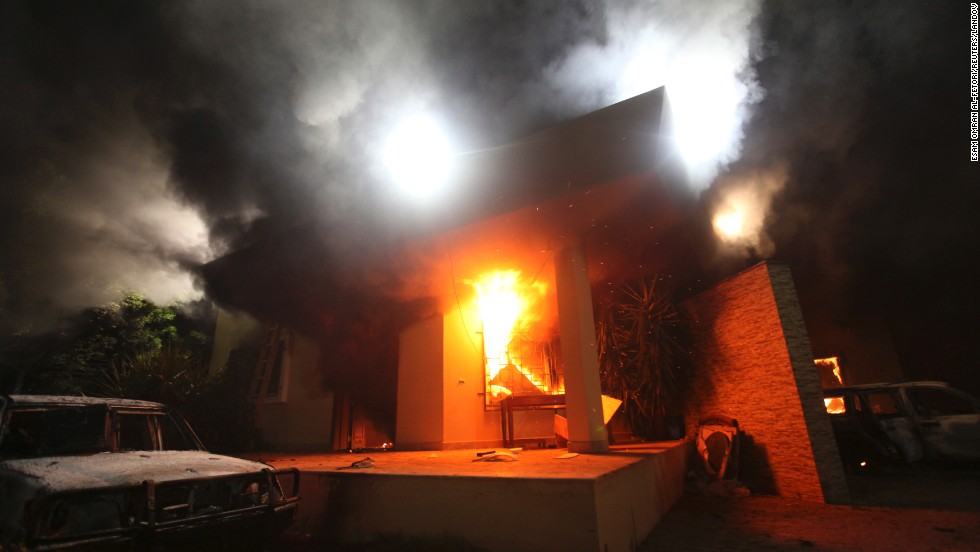
On September 11, 2012, the United States mission in Benghazi, Libya was attacked, causing the death of four Americans, including US ambassador Christopher Stevens. The attack was initially thought to be a spontaneous protest due to an anti-Islam video, but it was determined that the assault was a planned terrorist act. An independent review of the attack in December 2012 reported that there were "systemic failures and leadership and management deficiencies" in the US State Department and another report by the Senate Intelligence Committee in January 2014 stated that the attack was "likely preventable." However, in November 2014 the House Permanent Select Committee on Intelligence reported that there was no intelligence failure prior to the attack and no stand-down order to CIA operatives trying to assist the consular building. They also reported conflicting intelligence in the wake of the attack about the motive and cause (source).

Hillary Clinton was Secretary of State during the Benghazi attack, so her administration and handling of the situation has been highly scrutinized in the attempt to determine if the attack was preventable, and if so, who is at fault. On October 22, Clinton publicly testified before the House Select Committee.

The question of whether Clinton is responsible for allowing the attacks to happen has become an increasingly partisan issue, with Republicans more likely to be critical of Clinton's response  and Democrats more likely to believe that she did not mishandle the attack. Many Democrats were also critical for the need to further investigate the Benghazi attack. Also, given Clinton's current run for President, many Republicans hoped to use the Oct. 22 hearing to damage her campaign. However, many people were more impressed by Clinton's calm demeanor than by the mainly Republican line of questioning from the Committee (source).

The hearing did reveal that Clinton had told an Egyptian official and her family that the attack was done by a terrorist group, despite the current statements saying that the attack was due to the anti-Islam video. Clinton maintained that the conflicting reports were due to the confusing flood of information coming into the State Department and the "fog of war" (source).

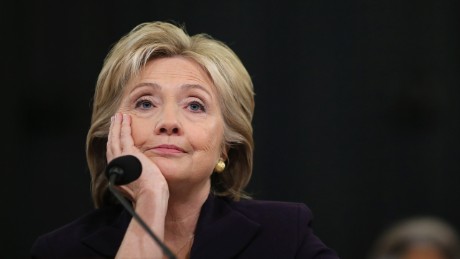
Pictures: US mission in Benghazi in flames the day of the attack(source), Clinton during the hearing (source).

Thursday, October 22, 2015

Pres. Obama publicly supports Black Lives Matter movement

During a panel discussion on criminal justice reform, President Obama openly defended the Black Lives Matter movement and stated that the more harsh and less fair treatment of black Americans by police officers is a real issue (sourceanother source).

Black Lives Matter is currently calling for a Black Lives Matter themed Presidential debate that focuses on important issues to the Black community, such as criminal justice reform, and what the candidates propose to do about these issues (Black Lives Matter source).

When President Obama first became president he was more distant from racially charged issues, something he was occasionally criticized for. For example, he was criticized by some African-Americans for his sub-par statement following the death of Michael Brown last year (source). However, as Obama's second term comes to an end, he has been more open with his opinions on controversial issues such as race, drugs, and crime.

"But I'm in my last term, I only got a year left, and it's not like my poll numbers are that high. I figure I can go ahead and say it," President Obama said in a speech about drug abuse in West Virginia yesterday, in which he talked of his own illegal drug use (source).

There is a growing bipartisan consensus in Washington, DC that sentencing reform for nonviolent crimes is needed. In fact, today the Senate Judiciary Committee voted to send legislation to the full Senate that would reduce mandatory minimum sentences for nonviolent crimes, reform the early release system, and create programs to help offenders return to their communities.

We have learned in class that a president's approval rating does go down as their term goes on, but that their effectiveness due to experience tends to go up. How do you think this trend will affect the passage of prison and police reform legislation? And because it is unlikely that these national issues will be solved while Obama is still in office, to what extent should the next president follow up with these issues (especially given that prison and sentencing reform has bipartisan support)? To what extent should candidates address these issues?

Photos: Obamablack lives matter


California's Slippery Slope

Since this topic came up in class, I wanted to get a bit deeper into the PAS conflict that will be testing our home state in the coming years as this law takes action. Many of us have heard the term slippery slope when regarding PAS due to its nature, but wether it is or is not something to worry about is almost as controversial as the topic itself.

If insurance companies are faced with prescribing patients with a prescription to help prolong their life, but that medication was more costly, would they choose to cover it? Or is it just as likely that they would offer to cover the prescription to end a patients life instead of that which would prolong it due to cost? Supporters of the law say that just because it may be covered by insurance will not push people to make the choice to end their lives. They add that the cost that would be saved would be insignificant enough to incentivise and pressure PAS to patients that did not want it.

Taking a life goes against the code of a doctor, taking a life is a federal offense, but PAS gets close to that line, and this is why people have such strong opinions about it. "The barbiturates prescribed to patients to end their lives cost about $1,500. Average healthcare spending in a patient's last year of life is $33,486, according to federal data." What is a persons life worth to you? What is is worth to keep a person happy in their final days? To remember them with family instead of with suffering? What are these lives worth to the insurance companies? To the hospitals? Is this a flaw in bureaucracy? Big business? Or just the way the world works?

Wednesday, October 21, 2015

Best College Towns?

Many of us are working our tails off trying to get into a good college, one with prestige as well as some sort of personal factor that makes it appealing to us, however overlooking the cities just for the sake of the education is not the safest way to go.  Hopefully factoring in the surrounding cities may make our jobs as college applicants just a bit easier. 

With one of the lowest crime rates, a prestigious school and relatively affordable housing Princeton is of course one of those colleges on lists of good college towns. However other towns offer other benefits, Kearney Nebraska offers one of the lowest unemployment rates in the whole country. Although we already discussed that these numbers may be skewed due to how numbers of those who are unemployed are taken, it is still reassuring that those who look for jobs seem to get them. Yet another interesting requirement that could attract people towards a particular town is the life, the entertainment and the food. Bolder seems to offer this diversity in culture and entertainment. 

What criteria would you have as most important in a college town? Which surprised you? what other towns besides those which I mentioned did you expect to hear? Does this complicate or help those of you who have no strong feelings about college and which institutions are right for you? 

Ballot initiative proposed to soften California's three strikes law

The California secretary of state approved the request to petition filed by a Half Moon Bay resident to add an initiative to the November 2016 ballot (source).  Currently, California's three strikes law requires sentences of at least 25 years for those convicted of three violently felonies (source). The proposed initiative would reduce the number of crimes that count toward California's three strikes law and make it easier for prisoners to petition judges the get their sentences reconsidered. According to the Legislative Analyst's Office, the proposed initiative could save the state several million dollars a year in prison expenses, but cost counties around $100 million a year because offenders would go to jail instead of prison. (For those wondering, jails are locally-operated short-term facilities, while prisons are state or federal long-term facilities.)

We've learned in class that individuals or groups of citizens can get their own propositions on state ballots, thereby directly influencing the state government and elections. We are also currently learning about the judiciary, and the necessary balance between consistency and discretion in enforcing the law.

What do you think of the three strikes law? What do you perceive to be the pros and cons? Do you think this grass root movement will be effective? How will softening it change the balance between consistency and discretion in the judicial system, if at all? How does changing the three strikes law contribute to the overall trend of prison and sentencing reform?

photo: Rich Pedroncelli/Associated Press

Tuesday, October 20, 2015

Illegal Rights

I understand giving people a better opportunity in life, helping wounded veterans walk, helping autistic people learn, its rewarding. I also understand why giving people an opportunity that they would not get in their country could be good too. Yet I still believe that Obama may be crossing the line.

I am a first generation American, my parents came here to escape the communist takeover in Poland, and to look for better opportunities. Yet the difference between my parents and the families of these immigrants coming in is that my parents were never illegal, and the other people who did come in illegally did whatever they could to become legal citizens as fast as possible; being a citizen was respectful, proper and it gave them pride to be considered not only Polish, European, or wherever they came from-- but American as well. and yet the immersion was made difficult for them. Now many illegal families do not care to even try to become US citizens, they take advantage of their ability to get California licenses, federal aid to go to schools, and other such things.

Giving people opportunities is a beautiful thing. However can we just agree that an immigrant does not have to, and possibly should not, be treated as equally as in need as an orphan girl, or a girl with only one leg. When a bunch of immigrants were let into europe from Syria and other neighboring countries the European economy almost collapsed under the pressure, would we be safe from that sort of thing? Are there ways to help those who need it and help create opportunities for those from less privileged countries without making them into their own sort of privileged or special needs students? Would it not be fair to limit the aid to those who are showing effort to gain citizenship into America instead of handing it out to everyone despite where they decide to place their loyalty?

The Lonely Death of George Bell

In a recent story by the New York Times, the writer follows what happens when George Bell, a man in New York City with few friends and no close relatives, died in anonymity last year, and why it took 4 months for his body to be cremated and 14 months for his estate to be settled. Although not a story about a current political event, I think that this story reveals some of the more hidden jobs and functions of government bureaucracy and ties in with our last unit.

Here's a summary of the bureaucracy involved when someone dies in anonymity:

A public administrator manages estates when there is no one else to do so, usually when there is no known heirs or will. They must evaluate a person's assets to determine the worth of the estate, and extracts a commission for handling the estate. This money is put toward the city's general fund and the public administrator office's expenses. Investigators who work for the public administrator go through the residences and belongings of the deceased, and determine if there is anything of value that can be added to an estate, from loose change to cars. The public administrator gives valuables like cars or antique watches to private companies that auction off the items. The proceeds of the auction are added to the value of the estate.

In the case of George Bell, the public administrator learned that Bell had an honorable military discharge, so the made a request to the National Cemetery Administration, which is part Department of Veterans Affairs (see, I told you there was bureaucracy involved.) When the National Cemetery Administration responded that George Bell did not qualify as a veteran because he had not seen active duty or died while in the military, the public administrator appealed. According to the article, "16 pages came back from the centralized satellite processing and appeals unit that could be summed up in unambiguous concision: No." Bureaucracy at it's finest.

New York City law specifies that a body cannot be cremated unless a corpse's identity is confirmed. In order to confirm that the body really was George Bell, the medical examiner needed x-rays from Bell's doctor. "A radiology provider had chest X-rays of George Bell dating form 2004. They were in a warehouse, though, and would take some time to retrieve...In late October, the radiology service reported: Sorry, the X-rays had been destroyed...Never mind, the X-rays were there. In early November, they landed at the medical examiner's office." George Bell's corpses' identity was confirmed, and he was cremated nearly 4 months after his death.

The death of George Bell involved city, state, and federal bureaucracies. It also showed that while the bureaucracy is slow, it does things that no one else can. How else do federal, state, and local bureaucracies affect everyday lives. How would the contracting of some of the jobs of the public administrator to private companies be beneficial? How would it not be?

Jim Webb withdraws from Democratic presidential race

Today Jim Webb, a former Senator and former Republican, announced that he was no longer campaigning for the Democratic presidential nomination. Most attention on the Democratic nomination race has been focused on Hillary Clinton and Senator Bernie Sanders, and in comparison Mr. Webb has raised little fundraising money and stood low in the Democratic polls. During the Democratic debate last week, Mr. Webb spoke for only about 15 minutes of the 2 hour debate, and he complained that the debate was staged as a showdown between Clinton and Sanders (source). Although dropping out of the Democratic race, Mr. Webb has that he might still run as an independent candidate (source). You can watch a video clip of his press conference here.

Although it is relatively easy to be listed has an independent, also known as third party, candidate--file as a candidate with the Federal Election Commission--succeeding in an independent campaign is incredibly difficult. Most news sources tend to focus on the candidates of the Democratic and Republican parties, and third party candidates tend to be obscured.

Does the media's focus on only a few candidates from each party detract from the democratic intent of the election process by obscuring other candidates? If so, is there any way for this to be fixed, or is the obscuring of certain candidates inevitable in an election? In this line of thought, does the increased difficulty of running an independent campaign also detract from the democratic intent of elections, or is it necessary to prevent just anyone from becoming President?

Photo: Jim Webb at the Iowa Democratic Party's Hall of Fame Dinner. Scott Olson/Getty Images North America. photo source

Monday, October 19, 2015

Migrants left, Rules stayed

Although migrants from Syria and the middle east, who were escaping the attacks from ISIS, are no longer flooding into Europe the countries who were most impacted by them at the time are still dealing with the aftermath. The countries economies could not deal with such a large flow of people and therefore had to create much more strict boarder laws.

The immigrants may have left/settled down/ or just stopped showing up in as large of groups but the easygoing laws between the countries in the European Union are long gone. Border controls in Germany will remain till at least the end of October and Hungary decided to go as far as to close its boarder with Croatia until further notice.

Do you think this problem was created by a lack of control within the bureaucracy? Would better decisions at the start have created a system that would allow those who need help in while still maintaining an open border up to current times? Or do you agree that no economy could have withstood the amount of immigrants coming in, no matter their intentions. Any ideas on how to make the boarders more open again without creating this drama again?

Sunday, October 18, 2015

Qaeda Cell Leader Killed in Airstrike in Syria, Pentagon Says

On October 15, a US airstrike in Syria killed Al Quaeda cell leader Sanafi al-Nasr. He was the highest-ranking leader of the Khorasan Group (learn more about them here: BBC Khorasan Group) which had been plotting attacks against the United States and Europe. He was also experienced in retrieving money and fighters for Al Qaeda.

American officials describe the operation as a drone strike which was used to prevent confrontation with Russian planes. The Pentagon claims that Al-Nasr is the fifth Khorasan leader to be killed by the US in four months. The US believes that the Khorasan group is the most capable of hurting American civilians and should be most intently focused on in order to prevent possible terrorist attacks.

People are debating about the effectiveness of the "decapitation strategy" which is when a terrorist group's leaders are killed. Some believe that by causing the fear of strikes, these terrorist groups will not meet as often or as openly and therefore make it harder to find them. They also believe that the decapitation approach causes terrorist group's to prepare for strikes and thus prepare deputies to succeed the deaths of their leaders. This makes the airstrikes rather ineffective.

How should the US be attacking these terrorist groups? Are airstrikes/decapitation strategy the most effective way of doing so? Does it make sense to fight violence with violence, and when does this cycle end? Should the US government heighten national security? Should there be something like the War Powers Act for these attacks that aren't considered war (or should the War Powers Act apply to this)? Ever since 9/11, how has the amount of federal government control changed and developed?

NY Times
Wall Street Journal

Saturday, October 17, 2015

Careful Calculus Guides Obama Administration in Health Insurance Projections

This week, secretary of health and human services Sylvia Mathews Burwell predicted that there will only be small gains in enrollment in private health insurance plans (under the Affordable Care Act) during the upcoming year. She predicts that enrollment will be millions of people below earlier projections. The White House aims to have 10 million people enrolled by the end of 2016, but at this point it is hard to find and insure people who have refused to sign up for the past two years.

Recently, Hillary Clinton has suggested that the ACA may not be affordable enough for some people. Some fail to pay their monthly premiums or can't pay for medical services. Those with the lowest incomes receive the largest subsidies, but those with higher incomes receive less financial assistance and thus marketplace coverage has begun to look less attractive. It seems that it will take much longer than expected for the marketplace to reach equilibrium.

The ACA was passed without any Republican votes and it seems that they are continuing to criticize the program, making many have doubts about its possible benefits. What will happen to Obamacare if GOP wins the White House?

This reminds me of class discussions about the ACA and the controversy surrounding the act. Do you think the Obama administration might give up on Obamacare? Is the ACA working? If it's beneficial for some but harmful to others, how can we balance those different sides of the spectrum to make more people content? How highly do you think people value health insurance? Should government be restructured so that an act cannot be passed when it only receives votes from one party?

NY Times
CNBC

Thursday, October 15, 2015

E.U. Beginning to Consider Large Deportation Plans for New Migrants

Isis' horrific attacks over many Middle Eastern families have caused others to flee by flying, or through the Mediterranean sea and into Europe. The amount of immigrants transporting in to Europe have been in the thousands, and the European Union is panicking.
Many European leaders believe their strategies to let in these fleers should be nothing but welcoming. Germany, for example, opened up office spaces to become shelters for some. However, that is not enough. Because there has been a huge, myriad amount of immigrants coming into these countries, many Europeans don't know what they can do to contribute in time, and as a result, many immigrants are homeless.
However, not every European country is as welcoming. Hungary has openly reflected its intolerable approach to these immigrants by strengthening their border control and tolerance to illegal immigrants. Immigrants who are caught illegally entering through the Serbian-Hungary border are instantly arrested and deported back to wherever they originally came from, no questions asked.
E. U. officials have stated that immigrants who "don't belong" in Europe, meaning they snuck in illegally, are the ones being targeted for deportation and arrest. Even countries like Germany, who stated previously want to aid to as many as possible, are being to look helpless.
This topic relates to the ongoing current event debates we have about this issue, like whether or not the U.S. should interfere more or less. My questions are, do you think Europe is blockading, as some would argue, a human's natural right of movement? Why or why not? Do you think Europe could continue sheltering more than 600,000 immigrants, or do you think it is time to publicize their capacity? Explain your thoughts.

Medicare Costs May Rise, Seniors at Risk

We already learned that many seniors live off a fixed income, and that this makes dealing with inflation difficult; as prices soar, they receive the same pay. Well, medicare prices may go up from $104 in the next calendar year. Medicare was started by the federal government and although it is up to the states to expand the coverage it does not cover all costs, doctors visits, prescriptions, even some surgeries have some out of pocket expense for these seniors.

At first glance it may be tempting to simply blame the government, their seniors--their problem. However is it really all the fault of the government? Per capita americans spend around $7,300 a year versus the United Kingdom which spends around $3,000 dollars per year per person. The UK is not a third world country, so we cannot blame low costs simply on quality, so could corporate greed be causing our insurance and our health care costs to rise? The government does not run hospitals just helps guarantee that people who qualify for medicare get some aid, can they be the only ones to blame.

Although I do think that seniors should receive the help from the government, my point is it is too simple to blame this problem completely on the incompetence of bureaucracy when it is not so simple. Thoughts about how the government could help? Could/should something be done about the corporate greed that is costing millions of americans thousands of dollars?

link to articleHealth care
insurance costs

Online Attacks on Infrastructure Are Increasing at a Worrying Pace

For the last four years, foreign hackers have infiltrated the Department of Energy's network 150 times through stolen source code and blueprints to water and oil pipelines and the power grids of the US. The number of attacks against industrial control systems has more than doubled since 2013, causing some people to fear that a "cyber-Pearl Harbor" could occur in the near future.

Many attacks have happened recently. The Department of Homeland Security was just looking into an attack against 1,000 European and American energy companies last year. There was also an attack on Sony and Televent. The most significant attack was on the world's largest oil company, Saudi Aramco, in 2012.

Like in Cold War situations, larger countries such as China and Russia have less of an incentive to attack the US because of the fear of retaliation. However, there has been concern about possible attacks by Islamic State militants who have been exploiting social media for their own personal gain.

Hackers have been increasingly finding new ways to hack into systems without being caught. With cyber and control systems, it's hard to know for sure who is the suspect. Forensic investigations have not been completely successful in solving such hacking cases because it's hard to tell what exactly has happened and if it was intentional or not.

How should the US go about increasing online national security? Can the Department of Homeland Security do something that would prevent these hacks from occurring, and how can we persecute those guilty of the crimes? When hacks occur, how does it affect company management/the bureaucracy? How is technology affecting security, both at a national and personal level, and is it worth the potential risks?

NY Times
Wall Street Journal Blog