Thursday, September 18, 2014

Kansas Political Drama


                                                                       (Wikimedia)
The New York Times just wrote an overview of a pressing current event in Kansas. It all started in 2012 when Tea Party Republican Governor Sam Brownback passed sweeping tax cuts that, among many things, cut the top income tax rate by 25 percent. These tax cuts produced large benefits for wealthy state residents, while coming at a cost. The state is projected to have large budget shortfalls, which could lead to (and in some cases already has led to) cuts in public services, namely education. Furthermore, there is a giant debate over whether these tax cuts produced the economic growth that the governor said they would when he passed them. Also, these cuts led to Moody's giving the state a credit rating downgrade. Some conservatives maintain that they are working, while other people argue that they are not. 

So now for the political drama: Because of the supposed failure of these tax cuts to produce the growth they were intended to produce and the way they could lead (and in some cases already have led) to cuts in public education, over 100 Republicans endorsed Brownback's opponent the upcoming Kansas gubernatorial election, Paul Davis. Now, the race is very active, with Paul Davis seemingly leading in the polls. 

Now, people were very surprised to hear that not only was a Democrat in the lead for governor, but Republicans were endorsing him, for a couple reasons:

1) People see Kansas as a very conservative state, and for good reason. It has a Cook Partisan Voting Index (a measure of how much a state or congressional district tilts Democratic or Republican) score of Republican+12 (for reference, California has a Cook PVI score of Democratic+7, while Virginia has an even one [so basically R+0 or D+0], and Oklahoma has a Cook PVI score of R+17).

2) It is an off year (there is no presidential election), and the President is NOT popular in Kansas. When it is an off year in a place with an unpopular president, the president's political party typically does really poorly (think of the 2006 midterms where Democrats won big and the 2010 midterms where the GOP won big).

But we have to remember that there are a couple factors (other than the very controversial tax cuts) that make this possible in Kansas's political climate:

1) Kansas has a long history of electing moderate Republicans. The biggest example would be Bob Dole, the Republican candidate for POTUS in 1996. Another would be current Kansas Insurance Commissioner Republican Sandy Praeger, who spoke out against her party even before this tax business arrived (she was a large proponent of implementing the Affordable Care Act "correctly," or as the administration intended it to be implemented, in Kansas, which didn't make her any friends within the Kansas GOP). Praeger is one of the Republicans endorsing Davis. I think that knowing that the Kansas political climate has been friendly to moderate Republicans before may have eased these GOP officials' concerns about possible political ramifications that could arise from endorsing Davis.

2) Kansas is a decently politically elastic state (not the most, but above average). Political elasticity is a measure of how willing voters in a state or are are to vote for people of different parties. It is basically of a measure of how many swing voters as a percent of the electorate (those who are "up for grabs" and aren't bound to vote for the same party each time) a state has. It is closely related to how many independent voters a state has, as a percentage of the population. BUT, be sure not to confuse an elastic state with politically balanced states like Florida or Virginia; a state could have a lot of independent voters, but of those who do vote for one party of another, there could be way more Republicans than Democrats, or vice versa, creating an imbalance and giving one party a clear advantage in elections. Kansas is one of these states—while it is elastic, on average, it votes solidly Republican, because while there are a good amount of swing voters, of the people who aren't there are way more who vote exclusively for Republicans than exclusively for Democrats (confused? Read Nate Silver's piece. It is awesome). So, this means that Kansas, while on average voting for Republicans, CAN elect Democrats, explaining why it isn't unreasonable to see Davis up in the polls, especially after this tax cut controversy. In fact, former HHS Secretary Kathleen Sebelius served as Governor of Kansas not too long ago, and from 2007 to 2009, Kansas sent an evenly-split US House of Reps delegation to Congress (there were two Democratic Reps from Kansas and two Republican Reps from Kansas). Meanwhile, Alabama, which is about as conservative as determined by Cook PVI, but MUCH less politically elastic, hasn't sent a House of Reps delegation to Congress that has been anything other than majority Republican since 1995 to 1997, when Democrats were more commonly elected to office in the South anyway (the switch of the Deep South from blue to red has been more gradual than the APUSH textbook suggested).

So, now for a couple questions:

  1. There is still an enormous debate over whether these tax cuts have been effective at promoting growth, and if they were worth the cost. What do you think? Here is a New York Times editorial criticizing the tax cuts, and here is an article from Reason, a libertarian monthly magazine, supporting the cuts. You can glance over these two articles to see what arguments and pieces of evidences you find convincing.
  2. How would you feel if a candidate you supported endorsed someone of the opposite party, maybe even someone you don't endorse? Are you furious at them for maybe not sticking up for their (or their party's) principles/candidates? Or do they earn points in your mind for being "independent"? Or both? Or neither?


Wednesday, September 17, 2014

Historic Scottish Independence Referendum Vote to Take Place Tomorrow

 
                                         (Source: Herald Scotland)                                  (Source: Yes Scotland)

Tomorrow, a landmark event will be taking place in Scotland as all Scottish residents who can vote (age 16 and over) will decide whether Scotland should secede from the United Kingdom. We can count on our fingers and toes the number of successful secessions that have taken place internationally, the majority of which we don't learn about in high school, as seen in the graphic below. 

(Source: The Washington Post)

The Scottish independence proposal requires a simple majority to pass. According to the polls, the likelihood of Scotland's secession is a solid maybe, as approximately 48% are in support of secession, with the nationalists (Better Together) against them. Any currently undecided voters could make a huge difference in the outcome of this event, as they hold the crucial vote which could sway the majority in either direction. I recognize that to many Scots, independence is always preferable to being oppressed and forced into a conglomerate of countries and cultures like the United Kingdom, but in the grand scheme of things, a failure to gain independence would not make the largest of impacts on the rest of the world. Its primary exports are salmon and whiskey, which are also exported from a variety of other countries, and they're just a small member state of a commonwealth. Many issues have abounded, such as which currency Scotland will use, the status of North Sea oil, and how border control and immigration will be handled. Are they worth it? I think not.

My questions to you, dear readers, are simple enough. What is your opinion on Scotland's bid for independence and why? Should they keep quiet and be happy that they are living in a stable commonwealth, or should they keep pushing for freedom from the United Kingdom and take each issue as it comes? What are the advantages and disadvantages to independence? Is this method of determining their independence practical or inefficient and dangerous when it comes to putting the power to decide in the hands of the people?

Tuesday, September 16, 2014

Wedge Issues & the 2014 US Senate Races

(Wikimedia Commons)

Alex Castellanos, a prominent Republican political strategist who you can see on CNN, said that Democrats “did win the culture war,” in an article from the New York Times (to be clear, not an article that he wrote, but one that he was quoted in). By “the culture war,” he really means the liberal vs. conservative social issues battles (mainly abortion and same sex marriage). The country is obviously swaying away from traditionally Republican positions on these issues to traditionally Democratic ones. These social issues are often considered “wedge issues,” issues that will divide an important voting block. The article’s main thesis is that, while Republicans use to be the ones exploiting these issues for political advantage, since public opinion has shifted on these issues, Democrats in the 2014 US Senate races are the now the ones using these issues for political advantage. For example, many saw same sex marriage as an issue that would scare some socially conservative hispanic voters (faith and family Democrats) away from the Democratic party, Democrats are using similar issues to scare socially moderate business conservatives (and especially the female ones or the male ones’ wives) away from Republican candidates. In short, Democrats are going on the offensive with issues that Republicans used to use against them in the same states.


What is especially fascinating is that public opinion has shifted so much that even Republicans in very culturally conservative states (such as Louisiana) are shying away from the issue (that being said, I don’t think Mary Landrieu, the Democratic candidate in that race, exactly wants her pro-marriage equality views to be blasted at voters either).


It is so interesting to me how far we have come since 2008 when neither Obama, Hillary, or John Edwards would support same sex marriage, even despite the pretty good evidence that at least one of them supported it privately. It is my speculation that neither Obama nor Clinton actually opposed it privately (as highly educated liberals I would expect them to support it), but opposed it publicly because they thought it would be a wedge issue that would divide the Democratic base (African Americans at the time, while voting over 90% for Democrats, staunchly opposed same sex marriage). Once, when asked by Ellen Degeneres whether a candidate that supported same sex marriage could win the presidency, Hillary responded “I don’t know.” To think that people are campaigning on this even in states like Virginia and North Carolina is insane.


So, the reason I posted this was 1) to introduce people to what a wedge issue is and 2) ask a few questions:


  1. In the US, there is a huge amount of single issue voters who vote based on primarily a candidate’s position on abortion In my opinion, social issues like this are accorded a huge amount of importance in politics—especially with younger people—relative to their actual policy implications (I think environmental issues would be the exception, but I classify those issues as economic issues rather than social ones). That’s not to say that these issues aren’t important, but, if we are to look at gay marriage, it is pretty clear that the tide is turning in the “right” (well, at least according to me and most of you) direction. Do you think there is too large of an emphasis on social issues in American politics? Should we take a word from Bill Clinton and think, “It’s the economy, stupid”http://en.wikipedia.org/wiki/It's_the_economy,_stupid? Or are social issues emphasized at an appropriate amount, or maybe not even emphasized enough?
  2. Why do social issue get so much emphasis and carry so much weight in American politics?

Monday, September 15, 2014

Paris Peace Conference and the Situation Regarding ISIS


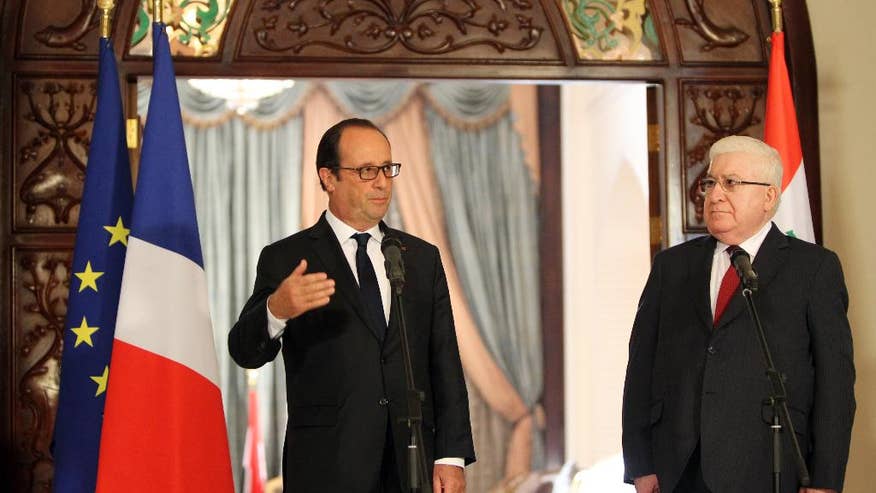
Today at exactly 9:15 Paris Time, the French President, Francois Hollande are opening the Paris Conference regarding the situation of Iraq and the terrorist group, ISIS. President Hollande clearly stated that "there was no time to lose" Both President Masum of Iraq and President Hollande of France were giving their thanks to the people who made it to the conference and they hoped that the conference would achieve a coalition that can combat the ongoing crisis of ISIS. Right now, Secretary of State John Kerry is currently in the conference to create an anti-ISIS coalition to combat ISIS.

Last Saturday, ISIS has released a recent video of the beheading of David Haines, a British aid worker. Prime Minister David Cameron has called ISIS' actions "an act of pure evil" according to NPR. According to CNN, these videos strike similarities with each other for they display the same type of video with an orange clothed victim and an executioner who most people people claim is the same executioner that both killed American journalists, James Foley and Steven Sotloff. The executioner may have been claimed to be a British citizen who works under ISIS according to some sources.

Most of these videos have been directed toward America who had been calling airstrikes on most key cities in Iraq. In this issue, I would say that the American government should involve themselves more in the issue. Although the U.S. is trying to prevent themselves from entering the fray, they should create a solution that could bring the rest of the hostages that ISIS hold home. I hope that this conference could bring forth a solution that could counter and ultimately destroy ISIS.

What should the U.S. do to combat the threats that ISIS made with regards to the execution of three people?
How could the Peace Conference achieve a coalition against ISIS?

Any more comments are gladly accepted. Please comment Below!

Sunday, September 14, 2014

Hillary Clinton and Her Return in Iowa


One phrase that says it all, "Hello, Iowa, I'm back!"

This Sunday, Hillary Clinton told reporters about her return in Iowa in order "to support candidates", however her return has marked the beginning of her presidential campaign for the 2016 presidential election. Her recent return in Iowa since her disappointing third place in Iowa, has led many people speculated about whether she was entering the 2016 political election.

According to CNN, she only went to Iowa to support Tom and Ruth Harkin, after Tom's 3 decades of being in the Senate, and other fellow candidates. But when she announced to the people that she was only supporting them, many people were upset and even urged her to run again for the 2016 presidential election. Many people including Hillary's former aids came to Iowa in support of Hillary. Although Hillary is considering about the election, her priority was the support of Tom Harkin.

I recognize Hillary myself as a capable candidate for the presidential election for she has the capabilities of handling the situation of the media and the political spectrum. With her as the president, not only she would be the first woman to be a president but she would make great change to the country. With beliefs aside, I respect Hillary's decision for considering about running for presidency. After being a Secretary of State for quite some time, she has all the time she needs to consider for election.

Should you consider Hillary Clinton as an efficient candidate for President?
If she were president, would she bring about good change for the better good of America?
Was she able to answer the media efficiently with her decision in electing for Presidency for 2016?

Please comment Below!

Tim Draper's Six Californias Fails to Reach 2016 Ballot

Local entrepreneur Timothy Draper's initiative to split California into six states has failed to reach fruition... for now.  The validity of some of the initiative's signatures was questioned, and with less than 100% of the required, verified signatures the plan cannot show up on the 2016 ballot.

(TechCrunch/Todd Trumbull/The Chornicle)

Draper's initiative is a prime example of 'devolution,' as the split would divide the government of the most populous state in the country into smaller geographic areas. However, public opinion remains critical. After the proposed plan went viral this year, several news sites critiqued the plan's apparent absurdity. Others lauded it as an attempt to split the wealthy areas of the state from the poorers ones, allowing rich places like Silicon Valley to make off with most of the benefits.

What do you think of this plan? What does this proposal mean for the nature of federalism?

Friday, September 12, 2014

School Mascot Controversiality

When you think of school mascots, what do you think of? There are quite a lot of mascots represented by various animals: Wildcats, Panthers, Swallows, Falcons, etc. A little more unconventional but fitting, considering the name, is us: the Aragon Dons. Now, what if I told you that there was a school using "the African Americans" as a mascot? Or perhaps, "the Chinese"?

This is none too far from the truth. Coachella Valley High School from California has a mascot known as "the Arab." This was depicted by a fierce looking man in a turban and facial hair, typically with swords. (See below)

The Arab mascot

For a couple of years now, the school has been under fire from the Arab-American community for misrepresentation of their culture. They go so far as to have kids from the high school dress in belly dancer outfits and dance around the Arab mascot during halftime. Many supporters of the school says it's alright for the school to display their pride in the Arab culture (even if they are non-Arabs themselves). Others argue that they've had the logo for so long, it isn't worth bothering them to change it now. Opponents of this school's mascot, however, explain the bastardization of Arab culture that occurs as a "symptom [of] systematic misrepresentation, dehumanization, and discrimination that occur against us daily." (Source) Finally, Coachella has agreed to change up their mascot: they will become the "Mighty Arabs", and they will switch out their current, stereotypical Arab for one who is more distinguished, a "stoic, strong-jawed man with a neatly trimmed beard." That way, both the Arab-American community is appeased, and the high school can continue on with their traditions.

However, I must say that I do not think this problem is solved. I think the simple fact that this high school uses "the Arab" as their mascot is a sort of objectification and bastardization of their culture, because they have to do these stereotypical "Arab activities" in order to be recognizable as Arabs. Just like how the Don has his sombrero and Spanish knight outfit, and the Tigers have their stripes, every mascot is supposed to have recognizable, distinguished features and behaviors. How can one do that with an Arab without being racist?

What do you think? Is it acceptable for a school to have this Arab (the new and approved one) as their school Mascot? Is their school tradition valid? If not, what can be done for this high school to become "politically correct"?

Thursday, September 11, 2014

Missouri New Abortion Laws

In my opinion, this article should be titled "The government gets to choose what happens to your body!" Today, Missouri enacted a 72 hour waiting period for women wanting abortions, the longest waiting period (tied with Utah and South Dakota) of the states. This was passed overriding the veto of Democratic Gov. Jay Nixon. Additionally, there is not even an exception clause to victims of incest and/or rape: they specifically rejected that amendment! Even though Roe vs. Wade ensured that abortions are to be legal up to a certain point, states continue to tack more and more conditions in order to make abortions harder and harder to get.

Political comic illustrating numerous requirements of an abortion

The new waiting period is supposed to give women a "reflection period." According to Republican Rep. Kathie Conway, if "you get a couple of more days to think about this pregnancy, think about where it's going, you may change your mind." Democrat Rep. Judy Morgan from Kansas City contests this, saying that this waiting period is "designed to demean and shame a woman in an effort to change her mind." Missouri already has a lack of accessible abortion clinics to the majority of the population: for example, St. Louis only has one abortion clinic, so some people go days out of their way to visit this clinic, only to be forced to wait 3 more days until they can have an abortion.

This makes me angry, because what a woman does with her body should be her decision, not the states. Even if she gets to have an abortion in the end, what gives the government the right to make it so hard for her? Each state has its own set of abortion registration requirements, and they vary in degrees of "freedom" women get to have over their own bodies. It makes me even angrier that in the case of Missouri, incest and rape victims are subject to the same laws. Imagine having to live with that violation growing inside of you, a cause for shame and depression and anger, and having the state tell you that you have to deal with it for a few more days until you can finally "cleanse yourself." When will this madness stop?

9 Month Waiting Periods?

What is your opinion on this highly controversial topic? Do you think it's okay for Missouri to raise their abortion waiting period? Where should the line be drawn when it comes to abortion rights? How can we change this? Note: I recognize that this is an area of great tension and controversy, so please be respectful in your answers!

One last "fun" political comic:

Government Intrusion

Reflecting on 9/11 Thirteen Years Later

Obama gave a speech memorializing 9/11 today. Take a look.

"We carry on because as Americans we do not give in to fear. Ever," he says, heavily implying a parallel to the current struggle against the ISIS. In fact, this oratory comes directly after yesterday's announcement to launch a new misson against Islamist regimes in Irag and Syria.

In the past, the president's 9/11 memorials seem to be more focused on the victims of the attack rather than its impact as a country as a whole:


Obama's older speeches are a much clearer homage to the determination and perserverence that carried the country out of momentary bleakness, whereas his latest speech reflects on the event in a much more distant, analytical manner.

Is this evolution indicative of a changing perspective of 9/11? Or does Obama simply utilize speeches as rationalization for his current agenda?

Wednesday, September 10, 2014

Apple's Bigger and... Better?

The latest in tech news is the September 8th unveiling of both the new iPhones, 6 and 6+, and the new Apple smartwatch.

However, many have been criticizing Apple's newest products, claiming that they now put form over function when it comes to marketing their products. According to this chart from Forbes, the 6 is nearly identical to the 5s, although you can see quite a large difference in the 6+:

Chart

As you can see, in order to get a phone that is actually technologically improved on, the 6+ would be a better deal: for just $100 dollars more. In fact, the main difference in the new iPhone 6 is its thinness and screen size: 4.7 inches long and 6.9 millimeters thick, as compared to the iPhone 5s at 4 inches long and 7.6 millimeters thick. Another thing it boasts is its new camera with "focus pixels," but otherwise, it is quite similar to the 5s.

Are you an Apple fan, into that iPhone hype? What do you think about Apple's marketing strategy - release two new iPhone's at a time (like the 5s and the 5c), but making one of them the much obviously better deal, for a higher price? How is this large scale, Wall Street corporation able to control such a huge percentage of the population, with people camping out for the new iPhone 6 since September 4th, and is it dangerous for them to have such a large sphere of influence?

Income and the College Dilemma

Today, Eduardo Porter of the New York Times published an article explaining the changes being wrought on the American school system of today, particularly in higher education.
The article cites worrying statistics. Although the U.S. has historically provided accessible secondary education to students of a wide variety of incomes, in recent years the rate of educational attainment in our country has fallen behind other developed nations. Nearly 60% of Russian 25 to 60 year olds, for example, have surpassed the education of their parents. In the U.S., the rate is about 30%.

Even though it is possible to interpret these numbers as other countries "catching up" to the educational standards of the U.S., it remains disconcerting that low-income american families are disproportionately choosing not to attend college, since income has increasingly become a factor in college attendance.

What are the solutions to this? Is it true that the public school system disadvantages poor students by locking them out of wealthier high school districts? Why aren't the people who would most benefit from college attending college?

Cheney and the Abandonment of Isolationism in America?


On the night of President Obama's speech last Tuesday, Former Vice-President Dick Cheney swooped in to Capitol Hill and urged many House Republicans to "embrace a strong military and reject a rising isolationism in his party", according to NY Times. Because of the recent attacks by ISIS, he has tried to find ways in which the U.S. would be able to intervene militarily in ISIS Occupied Lands.

Dick Cheney was also partially responsible for President Bush's decision to start the Iraq military campaign that ultimately led to the start of the Iraqi War. Due to his nature that the U.S. must involve themselves in international affairs, he has leaned towards more military intervention than diplomacy. When ISIS took over most of the lands in Iraq and in Syria, he became a big advocate for more military spending.

According to some sources like, New York Daily News, "former vice president called on his party to fight Obama’s cutbacks to military funding". Over the past few days, he has tried convincing many Republicans in Congress to support his cause for military intervention.

In my opinion though, I see that Dick Cheney's way of trying to solve for the crisis in Iraq is a bit extreme for it would stir a wide criticism in his part. Not only it would create a division between pacifists and warmongers who either desire diplomatic resolution or military intervention but also it would create a split in the National Government.

What do you think about this topic? Please comment below.

Tuesday, September 9, 2014

Cops Steal Money


Equitable Sharing sounds nice, doesn't it? It's the name of a program that encourages cops to steal cash without filing charges and keep the money to fund their own departments.

The program is billed as fighting drug trafficking by confiscating cash from suspicious individuals, however horror stories have resulted. Yesterday the Washington Post released an investigation of these stops that presents many shocking anecdotes.

One example:
  • Vincent Costello is driving from Florida to New York
  • He is searched after officers claim they smell drugs (none are found)
  • Police seize $32,000 in cash, as drugs often come from Florida and are sold in New York, plus the man was acting "unusually nervous." No charges are filed. 
  • After $9,000 in legal fees, the police agreed to return half of the cash they took. He is left with $7,000 out of his original $32,000.
Check out the entire article-- it's full of stories like this. Is every example of these tactics being used as bad as the ones referenced in the article? Probably not. But the fact that a nationwide program exists that allows for these events is outrageous.


Fourth Amendment:
The right of the people to be secure in their persons, houses, papers, and effects, against unreasonable searches and seizures, shall not be violated, and no Warrants shall issue, but upon probable cause, supported by Oath or affirmation, and particularly describing the place to be searched, and the persons or things to be seized.
Fifth Amendment:

No person shall be held to answer for a capital, or otherwise infamous crime, unless on a presentment or indictment of a Grand Jury, except in cases arising in the land or naval forces, or in the Militia, when in actual service in time of War or public danger; nor shall any person be subject for the same offense to be twice put in jeopardy of life or limb; nor shall be compelled in any criminal case to be a witness against himself, nor be deprived of life, liberty, or property, without due process of law; nor shall private property be taken for public use, without just compensation.

Are these programs constitutional under the 4th and 5th amendments?

Can this program be defended on moral grounds? Should police departments be able to pocket the money (and property) they confiscate?

http://www.washingtonpost.com/sf/investigative/2014/09/08/they-fought-the-law-who-won/?hpid=z1

Waiting for the Buyout

This afternoon, the Wall Street Journal posted an article claiming to have the inside scoop on a ongoing buyout deal between Microsoft and Mojang AB, the game developers behind the absurdly popular video game Minecraft. Keep in mind that this is an ongoing story and that the source quoted was anonymous.

                                                                                (Photo source: Flickr Creative Commons/Gage Skidmore)

An announcement like this is not out of the ordinary considering the corporate climate of late.

When Amazon agreed to buy video game streaming service Twitch no more than two weeks ago, many Twitch celebrities expressed apprehension over what would become of the site--and their rights as content producers.

Similarly, the merge of Comcast and Time Warner Cable, the two largest telecom companies in the country, was initiated this year and tagged with an exchange of $45 billion.

The last notable time that the government stepped in to halt an enormous corporate merger was the 2011 deal between AT&T and T-mobile. The Department of Justice argued that an enormous merge like this would stifle competition and hurt economic growth.

Do you believe that these mergers have gotten out of hand? To what extent does the video game industry mirror large corporate mergers? At what point should the government step in to protect consumers' economic interests, if at all?

Changes in Ferguson!

On Sept. 8th, Ferguson had it's "first major sign of change" since the shooting of Michael Brown. Previously there have been several significant changes to the Ferguson protests, including unveiling the police officer who shot Michael (Darren Wilson), as well as some negative consequences, like a Ferguson state of emergency that resulted in the National Guard being called in and a curfew being set for citizens.

However, there is finally some potential legislation on the rise that will hopefully improve the conditions in Ferguson and ensure this kind of police corruption does not occur again. The Ferguson city council is planning to establish a board of citizens as an asset to the police force in order to "provide guidance." Additionally, the Ferguson court system will be changed dramatically, including capping the amount of fines the city can take as revenue in order to prevent police from issuing tickets to receive more fines. When it comes to arrest warrants, Ferguson has one of the highest warrant to people ratio, according to this chart from the Missouri courts: Graph of the ratio of arrest warrants to people

The council is hoping that these new changes will prevent police harassment of the local black population, as has been the trend, not only in Ferguson but in surrounding areas too. Personally, even though I'm glad to see the city of Ferguson finally taking action (and when I say action, I do not count the last month's police action), I realize that the fight is not over. What I'm scared of is that people will look at this and say "look, Michael Brown and his supporters have won. The battle is over, and we can all go home." This is not true, nor will we be able to say this for a long, long time. As far as we've progressed in the civil rights movement, we've still so far to go – there is still so much prejudice and racism evident in the USA, and the African American population is still feeling the effects of slavery, segregation, and their whole extremely terrible history in the USA, putting them behind when it comes to socioeconomics.

What do you think of these pieces of legislation? Are they a huge victory for Michael Brown, or do we still need to keep fighting? What SHOULD the city be doing?

Monday, September 8, 2014

Net Neutrality Online Protest this Wednesday


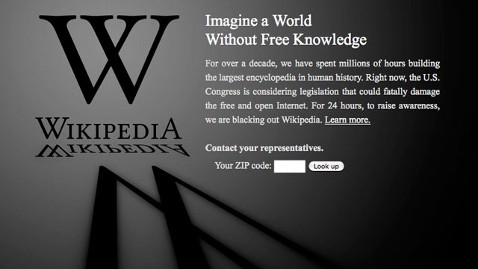
Remember the anti-SOPA internet protests? Wikipedia, Mozilla, Google and countless other sites blocked out content (ranging from Google's logo to Wikipedia's entire site).

http://abcnews.go.com/images/Technology/ht_wikipedia_dm_120118_wblog.jpg


Similar tactics will be employed this Wednesday as Netflix (as well as the regular crew consisting of Reddit, Mozilla, etc) will be displaying a loading icon on their sites to symbolize the slower service some predict will accompany less internet regulation (the sites will not actually load slower).

Think about the buzz-term "net neutrality." In the spirit of UnSpun, what would be a more objective term for the regulatory climate Netflix is lobbying for? Is it wrong of these companies to demand tight restrictions on internet service (neutrality), yet few to none when it comes to internet content (SOPA)?

http://www.nationaljournal.com/tech/netflix-to-join-internet-slowdown-protest-over-net-neutrality-20140908

A Resurgence in American Industrial Labor

America's modern economy has often been called a "service economy," notorious for outsourcing blue-collar, industrial labor to other countries. However, after the Great Recession of 2008, many business owners, especially in the middle of the country, see extracting America's own energy resources as a potentially lucrative business endeavor. Pictured below is one of energy giant Vallourec's thriving energy plants located in Ohio as described in a recent New York Times article. The plant is one of many that employs the environmentally questionable practice of "fracking," the process of forcibly drilling and extracting resources from sheets of rock.


Local energy production is booming. According to the article, American oil field production this year is up to about 11 million barrels per day compared to less than 7 million barrels per day in 2006. In addition, Ohio appears to be ripe for this kind of production with its decreasing unemployment rates.

Nevertheless, environmental opposition exists. This year, for example, California denounced the process of fracking and its potentially harmful effects on drinking water.

In my opinion, I do not think that a thriving local energy economy is worth the harmful environmental effects. What do you think? Should companies create energy initiatives on American soil? To tie this issue into our current unit, do you believe that regulating fracking falls under the "necessary and proper" powers of Congress in accordance with the commerce clause? Or should energy legislation be left up to the states? Perhaps a mix of the two (dual federalism)?


Legal Marijuana – Businesses say No

In recent years, it has become more and more common for the use of marijuana for medicinal purposes to be condoned. In fact, currently there are currently 23 states that have legalized the usage of medical marijuana. In most cases, there is a set age at which people can apply for a license to use marijuana, as well as a set limit for how much marijuana can be owned/purchased at any given time.

However, recently there arose a controversy in many legalized states, including Colorado: while the state itself allowed the usage of marijuana, businesses kept their "zero tolerance" policies that advocated for drug free employees. In a recent case, Brandon Coats of Colorado was fired for having positive drug test results; however, not only is he in a state where recreational marijuana is legal, but he also holds a pass for medicinal marijuana usage, due to his paralysis. He is attempting to sue his company, and if he wins, it could potentially mean the end of drug free policies for businesses across the state.

Personally, I think it's quite unfair for businesses to fire this man, especially due to the fact that he holds a medical marijuana pass. This isn't the only case either; earlier in August, Donna Smith of New Mexico was terminated from working at Presbyterian healthcare services for the same reason, and she also held a medical marijuana pass. What do you think is the reasoning of these businesses, and are they justified in firing this people for having positive drug test results? Additionally, should business policies "trump" state law, making it hard for those who legally smoke marijuana to find jobs anywhere? Who do you think will win in this court case... and why?

Sunday, September 7, 2014

CVS Discontinues Tobacco Products


As of this week, CVS is tobacco free. All other factors remaining equal, the company will make $2 billion less because of the change. CVS claims the change is due to tobacco products being incompatible with their values as a health-oriented chain. It was always ironic that CVS profited off both smoking and quitting (nicotine patches, etc), so the fact that smokers will no longer be tempted while trying to quit can only be seen as positive.

The key term above was all things remaining equal-- CVS clearly believes being on the right side of history in this regard will help their bottom line. And the company's stock price doesn't seem to argue (the official announcement came earlier this year). Is the market alone capable of ousting tobacco?


http://chart.finance.yahoo.com/z?s=CVS&t=1y&q=&l=&z=l&a=v&p=s&lang=en-US&region=US

This relates to the topic of "sin stocks:" is it wrong to make a profit off people doing something that is wrong? If your answer is yes, where does the line get drawn? (Tobacco, alcohol, weapons contractors, private prisons, abortion, etc...)

http://www.forbes.com/sites/jonathansalembaskin/2014/09/05/cvs-tobacco-position-is-a-great-first-step-for-the-brand/

http://www.investopedia.com/terms/s/sinfulstock.asp

Obama Announces Offensive Against ISIS

In the past month, the US has assisted the Kurdish and Iraqi military forces in their fight against ISIS (Islamic State of Iraq and Syria, which is not a recognized state and is an enemy of Iraq). America's military has launched "more than 130" airstrikes against ISIS. Today, Obama announced a plan for the US to take an offensive against ISIS, with an intent to "systematically degrade their capabilities" and to "reduce the territory they control".

Currently, Obama has no plan to put ground troops into the fight against ISIS. On the subject of ground troops, he said "this is not the equivalent of the Iraq War." Besides not using ground troops, this military offensive will differ from the Iraq War in that the US has indisputable evidence of wrongdoing by ISIS (notably executions of US journalists).

Questions:

1. US attempts to defeat opposing governments in the Middle East have historically led to much anger against the US for playing "world police." However, many Islamic states support this effort against ISIS. Does the US stand to gain diplomatically from its efforts?

2. Using airstrikes saves the lives of many US soldiers would otherwise risk being killed in combat. However, airstrikes are imprecise and inevitably end up killing civilians, as was seen in Gaza. Is it ethical for the US to use them in this situation?

Sources:

BBC
New York Times

Saturday, September 6, 2014

Governor Chris Christie Getting Ready for the Big Leagues?

New Jersey Governor Chris Christie recently returned from a business trip in Mexico, having met with many members of the Mexican government as well as CEOs and founders of several Mexican businesses. According to Christie, he is very impressed with recent achievements led by Mexican President Peña Nieto, and wants to deepen the economic relationship between the USA and Mexico. Additionally, he is looking to further New Jersey's business market and hopes to attract prospect businesses to open and invest in the state of New Jersey.

However, it seems more and more that this excursion is a set up for Christie to demonstrate his diplomacy skills, especially since he is potentially planning to run for the Republican party candidate for President. He jampacked his trip with many meetings in idealistic settings, supposedly trying to wade into the field of international politics in order to face off with his potential rival, Hillary Clinton.

Although I understand that publicity is always central to a politician's life, I still think Christie's trip might have been a little too... staged. According to New York Times, Christie met with a room of "2,00 cheering children, many of them waving the New Jersey flag – a crowd that would rival anything he might draw in Iowa." Perhaps that's a little over exaggerated, Christie, especially since the lunchroom where Christie ate that afternoon had more than a dozen patrons inside, and none of them recognized him.

Would you consider this trip to be a good strategy for a potential upcoming Presidential candidate? Do you have qualms about the way Christie set himself up, or is politics really an anything is fair game kind of world? Especially considering the fact that Christie did not focus on some of the more pressing issues of the American-Mexican relationship, was his trip really a valuable asset to deepening our relations?

Friday, September 5, 2014

Judge Finds BP "Grossly Negligent" in Gulf Oil Spill Ruling

On September 4, 2014, District Court Judge Carl Barbier ruled BP (British Petroleum) to have engaged in "willful misconduct" prior to the Gulf Oil Spill. This ruling took place in a civil trial in which the culpability of various participants was assessed. Due to this misconduct, the judge ruled that BP should be responsible for 67 percent of the penalties resulting from the spill. The remainder of the penalties are being shared by Transocean, the owner of the oil rig (30%) and Haliburton, a cement company (3%).

This prosecution is taking place under the Clean Water Act, which was passed in 1972 to fight the pollution of America's water sources. This act typically fines companies $1,100 per barrel of spilled oil, but in cases of gross negligence the fine goes up to $4,300. Assuming that appeals do not reduce the penalties, BP is estimated to pay 18 billion dollars. After this ruling was published, BP's stock value dropped by six percent.

Questions:

1. Does a set-in-stone number like $1,100 per barrel remain fair when the scale and difficulty of managing a disaster go so high? On one hand the colossal environmental and health hazard that BP caused merits it. On the other hand BP's recklessness may not have been so extreme as to merit 18 billion dollars.

2. BP shareholders likely had little to no knowledge of this misconduct, and virtually no control over the situation. Should shareholders be able to sue BP over this 6% loss due to BP's negligence?

Note - In a legal sense, shareholders are not entitled to anything under current laws. (Source)

Full articles:
Washington Post
BBC

A Farewell to Ms. Joan Rivers

On September 4th, America watched sadly as fellow comedian and actress Joan Rivers passed away, and the public promised to remember her for years to come as the amazing woman she was.

Or... was she?

Joan Rivers had said many, many controversial things during her time, the most recent one being this video regarding her views towards the current Gaza conflict. Joan, when told about the number of Palestinian deaths in Gaza, reacted by completely blowing it off and then telling the camera that they "deserve to be dead." This, of course, angered many people, fans and others alike.

However, why is it that once a person passes away, we find the media always remembers them in good spirits? The foul deeds are often forgotten in light of a tragic death until many, many years later, if at all. For example, many celebrities tweeted their support of Joan Rivers while she was in a coma, all of them praying that she would make it through.

More and more people have been calling the media out on their biased coverage by tweeting with #karma and claiming that Rivers "wrote her own epitaph by wishing death upon Palestinians."

What do you think of this controversial situation? Is it right for the media to remember Rivers in good graces, for the sake of her family/friends/fans? Or is it important for the media to acknowledge that Rivers is NOT the blessing that some make her out to be?

Thursday, September 4, 2014

Protests for $15/ hour Minimum Wage


Today a large (pre-planned) fast food strike and protest occurred. The protestors demanded the minimum wage be raised to $15 per hour, as well as more union influence (or the formation of unions). McDonalds claimed there were no service disruptions due to the strike which, if true, exemplifies why every movement to unionize the company has failed.

Non-strike protestors joined the movement, as a higher minimum wage would affect many workers and businesses outside of fast food. Many of the protestors sat in traffic, and were detained or arrested for their actions. Among those fined was Rep. Gwen Moore who tweeted

No, they risked arrest for blocking traffic. 


Today's events bring up two big questions.
  1. Is raising the minimum wage to $15/ hour a good idea?
  2. Is blocking traffic an effective protest method?

Wednesday, September 3, 2014

Fun New Prank: Swatting!


Watch out TPing, a fun new prank may soon take your place: Swatting.

How does it work? A playful prankster calls 911 and reports information of questionable validity-- white lies if you will. For instance, the brazen comic may pretend to be a man threatening to kill his wife and children. The police then kick in the (actual) man's door, and hold him at gunpoint despite the fact that he (probably) doesn't actually want to kill his wife.

It should seem old-school practical jokes such as coating houses with toilet paper, keying cars, and throwing bricks through windows are simply not hip enough.


Note: Feeding police false information has existed as long as police have existed, and according to the Wikipedia article the term "swatting" is at least 6 years old. However the ability to watch live-streamers get arrested from your sofa has accelerated the trend in recent weeks.

He could not have been playing a more perfect game for the circumstances. Although this is by far the most cinematic example (and most viewed), much worse examples exist including this local news story posted just hours before the time of this post. Some have had their homes invaded by misguided SWAT teams while their families are home-- an incredibly emotionally traumatizing experience... but SWAT raids can be more than emotionally damaging.


What should the evidence threshold be for holding citizens at gunpoint in their own houses? Is unverified "evidence" presented by a single informant enough to issue a search warrant? How much responsibility should police be forced to take for these events?

The right of the people to be secure in their persons, houses, papers, and effects, against unreasonable searches and seizures, shall not be violated, and no warrants shall issue, but upon probable cause, supported by oath or affirmation, and particularly describing the place to be searched, and the persons or things to be seized.

Friday, August 29, 2014

Another Ukraine Post

If you are reading this post I assume you have some back story on the events that have transpired over the past year over Ukraine and her neighbor Russia. I will not go into exuberant detail about Crimea or the "Ukrainian" rebels.

Most of Eastern Ukraine has a Russian majority and of course there is discourse and some fighting, but to the scale of anti-air to down jets, or stem pro-Kiev forces from making inroads on sparsely populated areas. Finland and other neighboring countries are on edge after Russian military exercise, and most of the former Warsaw Pact countries are looking to NATO or the UN to step in.

The rebels in Ukraine have been heavily armed and even trained to the handling of the weapons that have come out of seemingly the air. A good quantity of the international community is pointing at Russians to stop supplying and cease any operations close to the border.Ukraine is worried, they see their land and their people under threat from an oppressor that kept Europe under an Iron Curtain for close to 50 years. To just answer the question on how desperate Ukraine is getting they recently Applied for NATO membership, and leaving their neutrality in the dust, as more confusion grows at the borders of Ukraine. And more confusion grows from the U.S. to Kiev to straight to the minds of Russian citizens themselves. With no formal declaration of war or even a press conference to state where soldiers are being sent many families are wondering what happened to their sons, and are they at war with Ukraine? A question everyone has been asking for the last few months.

Obama recently said we would keep military intervention on the back-burner for Ukraine but would declare formal war if Poland or any other NATO country is threatened, should we protect Kiev and deeply scar Russian ties?

What are your views on Putin? What is your reaction toward this new "Premier" or new "Savior" depending on your views.

Beijing Continues to Threaten Hong Kong

In 1997 the People's Republic of China and Great Britain signed a deal allowing the city of Hong Kong to fall under China's rule on a set of conditions. These conditions set up that the merger would create one country but two systems, giving Hong Kong a pseudo-City State within Chinese borders. As a result Hong Kong as remained as a much freer part of China as it did not have to comply with Beijing's orders, creating their own currency, maintaining their own trade, taxes, and even the ability to drive on the left. They are 7 million strong in a relatively small area and

In more recent times pressures has been mounting on Hong Kong from all sides of life from the PRC. People in surrounding areas frequently try to sneak into Hong Kong's borders to take advantage of the stricter regulations placed on baby formula and also to try and get medicare from the HK hospitals. The PRC's state owned media outlets have continuously published stories slamming the democratic Hong Kong labeling them as unruly children and Dogs of Britain. Currently HK's political system is 12,000 business owners who vote on how the city should be managed, a pro-business wet dream, but in more recent years these owners have set up shop or have delicate ties to mainland China leaving them skewed to give up liberties to keep operation in the newest emerging consumer base. HK has staged several protests this summer with some in attendance of 800,000, the PRC has become more blatent that they would not allow universal elections in HK and has staged counter protests, sent in pro-Beijing quell the huge supporters. There is going to be another pro-democracy rally in september and the PRC has prepared by Sending in PLA forces to remind Hong Kongers who has the power. Most of us remember how domocile and forgiving the PRC can be when it comes to peacefully putting down protests.

It seems that the days of democratic Hong Kong may be numbered, should we as a nation or as a people say anything to protest China's human rights abuse?

What might go down if things turn for the worst during their next march or occupy?

Ebola Breakout

The "Ebola Outbreak" has graced the front pages of many of our news sources, yet the degree in which it has affected the people of West Africa has seldom crossed our mind. The tragedy happening in West Africa has attracted a lot of attention and hopefully this attention is used in order to combat this deadly disease. Not only is it a tragedy that the disease has occurred in concentrated areas which lack proper and basic medical care, but many of the people who contracted Ebola aren't aware that they have it. As a result of insufficient information on Ebola and it's rapid increase, it has spread like wildfire and many are concerned that it will spread even faster due to the congested living quarters in many places of West Africa. The disease continues to spread throughout West Africa and has taken the lives of approximately 1,552 people in the region.

What can we, as an international community, do in order to combat this deadly disease?

Also, feel free to discuss any other means of helping the people in West Africa that you think will be most effective.
 
 CNN article

Thursday, August 28, 2014

Black Rage

The image of a mother mourning her child is an image that evades racial and cultural differences. It speaks every language and it also speaks a language of its own. It speaks to the heart rather than being processed through the brain. I have seen that look before on my own mother's face and I have dealt with the emotions behind it. And somehow we have become distracted from the fact that a child has lost his life, and a mother has lost a child. Consumed by controversy and overwhelmed by an extensive array of opinions and personal beliefs, we forget that we have lost a child to a color. We have lost a child to the dispute over a color, and as ignorant and simple-minded as that sounds, it is true. We have lost so much and so many to the fight over color, the pigmentation of our skin. We have used the concept of color to try and differentiate between people. In order to fit the complexity of humankind into our small and sheltered brains, we have separated ourselves in every way we could.We have conditioned ourselves to see DIFFERENCES, yet we neglect our greatest common factor, our humanity.
This is only a small glimpse into the hell that is Racism, still very potent in America. It lies under the skin of our country, hidden by a cloak of oblivion and denial. It has created an African American culture that responds to the suppression with sometimes anger and resentment. Through music, fashion, art, behavior and attitude, this culture has thrived on retaliation. A veteran musician, Lauryn Hill, released a song responding to the events happening in Ferguson titled "Black Rage". The song samples the sound of music song "Favorite Things". It presents a powerful and deep insight into the deep scars and wounds left in the black community.

Listen to it.

China's Anti-Corruption Efforts Slowed by International Politics

In recent years, China's government has begun to escalate its efforts to hold corrupt government officials accountable. In what China's Central Commission for Discipline Inspection calls a "Fox Hunt", 762 people were extradited to China on corruption charges in the last year. Almost 1 billion dollars worth of stolen Yuan (Chinese unit of currency) were confiscated. The campaign has thus been successful to a degree. However, China has had major difficulties extraditing officials from certain countries including the US, the Netherlands, Canada, and Australia. In the US alone, more than 150 "economic fugitives" avoid accountability to Chinese courts.

China belongs to an intergovernmental organization (IGO) called INTERPOL, which works to facilitate cooperation among the world's police forces. This IGO is useful for purposes such as extradition of criminals. It currently has 190 member countries, including the US. However, two countries being members of INTERPOL does not guarantee extradition from one to another. Extradition treaties are necessary to ensure that, and China does not have any with the above four western countries. These countries are also unlikely to cooperate with China's extradition efforts due to their distrust in China's justice system. Concerns over torture and capital punishment are the main reasons for this reluctance.

Discussion Questions:

1. Are these western countries justified in intervening this way? Is letting criminals go unpunished worse than subjecting them to a system of justice that western countries see as inhumane?

2. Could this protection of corrupt officials encourage further government corruption in China?

Sources:
Telegraph
Reuters

Wednesday, August 27, 2014

U.S. and Iran, Hit and Run missions in Iraq against ISIS

ISIS has been working withen Iraq for sometime under several different names with the mission of creating a truly Islamic State, a nation that adheres strictly to the Quran, in the Middle East. They struck a huge power gain due to the instability in Syria and took mass swaths of land and have become so much of a new threat that President Bashar al-Assad has fallen off of western media's radar.

Their recent incursions into Kurd dominated Iraq have left the U.S. and it's allies a bit ticked off and Iran worried over it's borders. Separately both the U.S. and Iran have sent strikes to cripple Iraqi's ISIS and both have sent military advisors and equipment in order to support the current recognized leadership in Iraq. During this coordinated attacks, that have had close contact with each other, Iran and the U.S. have never had official open channels.

We hate them. Not as much as ISIS! Unfortunately we still have soured feelings toward Tehran and the feeling is mutual. Embargos, condemnations and overall bad mouthing have been exchanged between the two nations and the fact that we are fighting a common enemy and not taking this opportunity is despicable.

Do you think that we should extend an olive branch and be the ones to open channels toward ending this cold war we have with Iran?

How would some of our most important Middle Eastern allies deal with a joint mission against ISIS with Iran as an official ally?

U.S. Iran Daily Beast
USA Today

Hamas Agrees to Long-Term Truce with Israel

On Tuesday August 26, 2014, Israel and Hamas agreed to a ceasefire following a two-month escalation in their conflict which led to the deaths of more than two thousand people, mostly civilians. Palestinian president Mahmoud Abbas announced this agreement, hopeful that this ceasefire may allow the occupation and violence to end.

In this agreement, Israel made certain concessions. Israel agreed to reduce restrictions on border crossings from Egypt into Gaza. Additionally, Israel agreed to lift certain restrictions on fishing off the coast of Gaza, allowing fishers to fish up to six miles off of the coast.

Hamas considers these concessions to constitute a victory for itself and for Palestine. Many Palestinians also agreed with this sentiment, with thousands celebrating on the streets. However, Israeli officials noted that Hamas had previously rejected this settlement, and that this ceasefire could thus be seen as a victory for Israel.

Discussion Questions:

1. Both sides have reasons to believe they have "won" with this accord. Did the terms of the ceasefire favor either side? Which side?

2. Israel's enemies have broken ceasefires many times in the past. Is this ceasefire doomed to a similar fate, or does the Palestinian celebration of this ceasefire indicate a lasting peace?

Articles:
AlJazeera - A Middle-Eastern Source
CNN - A Western Source

Russia and Ukraine Part 2

Hours before President Putin of Russia met with the President of Ukraine in Belarus, Ukraine released videos of captured Russian soldiers which challenges Putin's claim that Russia had nothing to do with the conflict in East Ukraine. This puts new pressure on Putin to halt the "accelerating flow of military personnel and hardware" into East Ukraine. This is part of Russia's offensive against Ukrainian forces and in support of the rebels.

Despite being hypocritical, Putin continues to advocate for a cease-fire between the rebels and Ukrainian forces as perhaps a way to alleviate the stringent sanctions placed by the US and Europe on Russia's ability to tap into it's oil reserves after the annexation of Crimea 

What do you guys think? Is this another move by Putin to gain leverage like he did with the Crimea? Should the United States and other Western powers take a more forceful stance this time?


Monday, August 25, 2014

Should Schools Start Later for Teens' Health?

A little tangent from my usual content because I think this is relevant to all of us:

Pediatricians support many parents in pushing for a later start in the school day for teenagers. They say that making middle and high schoolers attend school before 8:30 "threatens children's health, safety and academic performance." Dr. Breuner states that teenager only get about 6-7 hours of sleep when they should be getting 10. On Monday, the American Academy of Pediatrics began calling on school districts to move start times to 8:30 or later.

Pushing school start times has its pros and cons. One benefit is more sleep. Increased sleep can decrease risk of car accidents and chances of depression and obesity while also improving performance academically. However, shifting start times would also require shifting after school activities and jobs. Additionally, elementary schools would still start at the same time, offsetting start times which might prove troublesome for siblings.

What do you think? Should school start later?

Egypt and the United Arab Emirates Team Up Against Islamist Militants

Twice in the past seven days, Egypt and the UAE have launched airstrikes on Islamist militants fighting to control Libya. The United States government was caught by surprise as Egypt and the UAE acted without informing the United States. Egyptian diplomats have been denying any involvement while Turkey and Qatar are firmly backing the Islamist militants.

The strike highlights the power struggle between the old Arab autocrats and Islamists in the aftermath of the Arab Spring. Egypt, Saudi Arabia, and the UAE have formed a block to exert influence over surrounding countries and to oppose the competing Islamist movements. Libya is the latest region of contention between the two sides.

I just wanted to raise a few questions:
Should the US constantly be informed about the operations and decisions of other countries?
The US is shying away from military intervention, but the United Nations and Western powers are seeking to broker a peaceful resolution. How extensively should other nations intervene if at all?

Thursday, August 21, 2014

"Im Awesome"

A few days ago I decided to follow Rick Perry on twitter because of a few inspirational words he shared with the citizens of Iowa, "I'm Awesome". Nothing is more reassuring than a public figure's absolute certainty and belief  in themselves. While this phrase may be out of context, Perry continues to show his strong belief in himself and his actions as he battles an indictment by the Grand Jury. Perry is charged/accused of "coercion and abuse of official capacity" because he decided he needed to veto funding for a program associated with Travis County's District Attorney Rosemary Lehmberg. Lehmberg was arrested for a DUI in 2013. He took to twitter in order to explain himself and his video is reminiscent of Law & Order in which it starts out with clips of a severely intoxicated Lehmberg doing the infamous "walk a straight line" test and continues to show her resisting her arrest and a very disturbing clip of her being restrained. But then Rick Perry emerges out of a dark screen, reassuring Texas that he stands behind his decision.

 All of my obnoxious sarcasm aside, Rick Perry is being indicted for something that his position as governor gives him the full right to. But I think the problem is that his issue is with the Lehmberg, not the Public Integrity Unit, and his intentions are not to affect the PIU but threaten Lehmberg to resign. There is also "evidence" (which has not been released yet) that Perry tried other ways in which to convince Lehmberg to resign. This "evidence" has not been revealed to the public yet and the case against Perry seems to weaken as he becomes more confident in his decision. While his intentions seem shady, Lehmberg did show a disturbing lack of good judgment and ethics and Perry just wants to protect his beloved state from such behavior. DON'T mess with Texas.

Do YOU believe Perry's only intentions are to punish Lehmberg for her reckless behavior?

Please discuss the validity of the indictment, and also discuss Perry's cinematic gem found on his twitter (@GovernorPerry), or anything else that needs to be explored.

Tuesday, August 19, 2014

When Should the Line Be Drawn Between Our Military and Our police?

This past Monday, President Obama pushed for a re-examination of programs that have equipped law enforcement departments with military-grade gear. Obama stated, "There is a big difference between our military and our local law enforcement, and we don't want those lines blurred," This was in response to the recent use of police force in dealing with the unrest in Ferguson, Missouri where police officers were seen carrying military-grade equipment.

This raises the question, "Is this necessary?" Many argue that the police should be using a proportional response and that Ferguson is an example of overwhelming force, a military doctrine. However,there is also the argument that the issue lies not only with the use of military equipment, but the lack of training and discipline that is seen in the military. The desire to give the police maximum protection is understandable and the Posse Comitatus Act limits the use of military personnel in enforcing state laws except under the most extreme circumstances. Therefore, providing military-grade equipment to state police departments provides a way to circumvent the issue, but does giving a much less disciplined and experienced group these kind of weapons really help in keeping order?

The psychological factor of having armored trucks and completely armed police officers must also be taken into account. Won't this just aggravate the population even more?

What are your opinions: Is this amount of force necessary? or will it just escalate the issue?

Friday, May 23, 2014

Monday, May 12, 2014

Clay Aiken’s Congressional Race Opponent Dies


Photo Source: The Washington Post

Keith Crisco died today after an “accidental fall” in his North Carolina home. Former “American Idol” contestant, Clay Aiken, is running for NC’s 2nd district. Clay Aiken was barely leading in the primaries, having less than 400 more votes than Crisco earlier this week. However, whatever the outcome of the primaries, there is still a very small chance Aiken would ever make it to Washington in the 2nd district.

Incumbent, (remember all those advantages they hold? Like “the franking privilege” and more importantly name recognition and resources etc.) Rep. Renee Ellmers (R), has a relatively guaranteed reelection.

This video is an interesting look at the approach Aiken is taking both in trying to appeal to voters (candidate driven elections, remember?) and how he is trying to change his image so he will be viewed more seriously than his “Idol” persona. Based on the video, to what kind of constituents is Aiken appealing? Do you think this video is effective?

We know that it is easier to be elected to the H.O.R. than the Senate, but what do you think? Is there any chance Aiken could win the district—does he have enough credibility? Will his star power win the election for him?

Feel free to respond to this post or review and discuss any part of elections/Congressional topics below. If you’re on the blog tonight it means you are taking a break from studying … to read more about government and politics. Kudos to you! Or, if you’re reading/commenting after the test, congratulations—you made it through the Gov. Exam!


Happy studying and best of luck on the exam tomorrow!